

Halfway between Toronto and Ottawa, many drivers see Kingston as a simple waypoint where Highway 401 bends along Lake Ontario. Spend even a few hours here, however, and it quickly becomes clear that Kingston is far more than a fuel stop. With its historic limestone skyline, lively waterfront, links to the Rideau Canal and Thousand Islands, and a compact downtown packed with independent restaurants, Kingston rewards anyone who slows down long enough to explore.
A Natural Pause on the Toronto–Ottawa Corridor
Geographically, Kingston sits in a sweet spot on the Toronto–Ottawa route. The drive from Toronto to Kingston usually takes around two and a half to three hours, with another two hours or so on to Ottawa, which makes the city an ideal midway break. For road trippers, that balance turns Kingston into a natural place to reset: you can arrive in time for lunch from Toronto, or linger over dinner before finishing the trip to the capital.
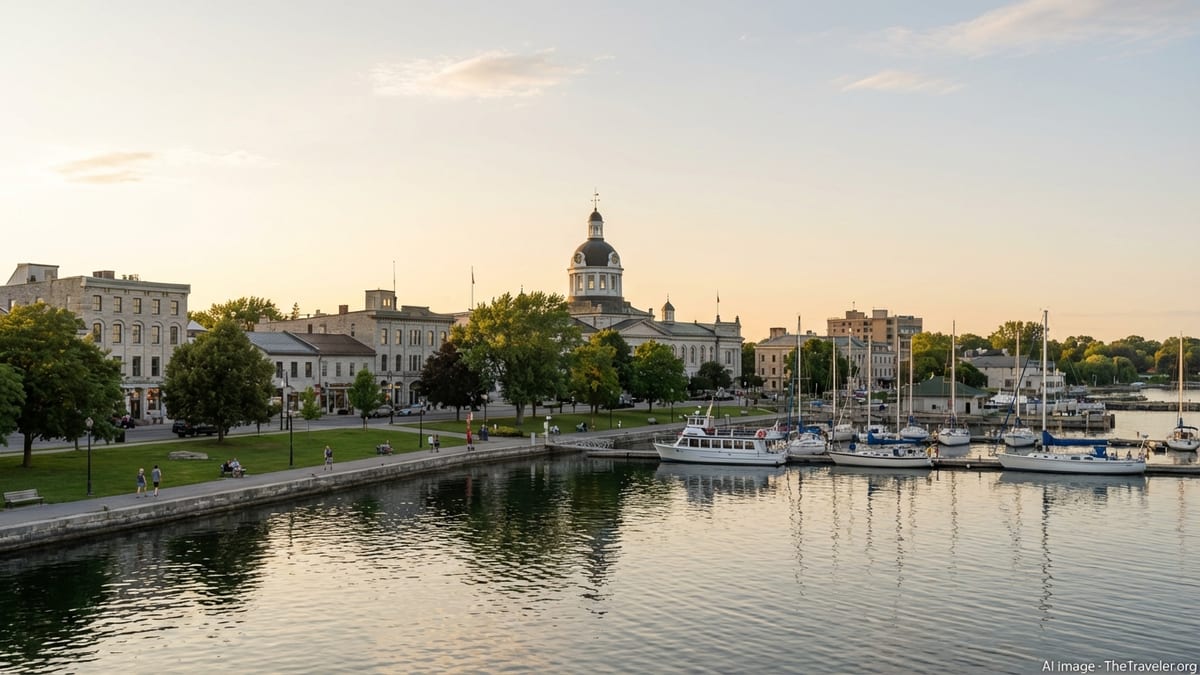
What sets Kingston apart from other highway communities is that the city is not built around the road. The historic core hugs the shoreline of Lake Ontario, a short detour from Highway 401, and much of what makes Kingston special is concentrated within easy walking distance of Confederation Park and the waterfront. That means even a brief stop can feel surprisingly immersive, offering lake views, heritage buildings and a sense of place that is rare on long-distance drives.
Because the city is large enough to support universities, a regional hospital, and a notable arts scene, there is an undercurrent of energy that travellers immediately feel. Cafes are busy with students, patios fill quickly on sunny days, and local events frequently spill into public squares. For drivers who have spent hours watching the highway blur by, that walkable, lived-in urban atmosphere is an invigorating contrast.
At the same time, Kingston is small enough that visitors do not need to battle big-city congestion or navigate complex transit systems. Parking near the waterfront is realistic, and once you are in the downtown core, most attractions are a short stroll apart. That combination of easy arrival and rich content is a major reason Kingston stands out among stops between Toronto and Ottawa.
Waterfront Views and Lake Ontario Fresh Air
Kingston’s waterfront is one of its greatest assets, turning an ordinary stop into a memorable lakeside break. The city sits where Lake Ontario narrows into the St. Lawrence River, with the entrance to the Rideau Canal and the broader Thousand Islands region nearby. This meeting of waterways gives the shoreline a sense of openness and movement, with sailboats, ferries and tour vessels coming and going in almost every season.
Confederation Park, located directly in front of Kingston City Hall, is often the first point of contact for visitors. Here, travellers can stretch their legs under mature trees, watch activity in the marina, and take in views toward Shoal Tower, one of Kingston’s distinctive Martello towers set in the water just offshore. Benches and open lawns make it easy to sit with a coffee and simply watch the lake, a welcome antidote to hours of highway driving.
Those with more time can follow the waterfront pathways east or west from the park. To the west, the trail leads past small pocket parks and university boathouses toward residential areas and lakeside green spaces. To the east, paths and viewpoints gradually reveal the harbour, the La Salle Causeway, and distant hints of Fort Henry on the far side of the Cataraqui River. Even on a short visit, the combination of fresh air, broad horizons and the constant play of light on the water can reset a traveller’s mood.
In warmer months, Kingston’s waterfront is also a gateway to the Thousand Islands. Sightseeing and dining cruises depart from the downtown harbour, allowing visitors to glimpse the outer edge of the island maze that stretches down the St. Lawrence River. For those driving between Toronto and Ottawa, such a cruise can transform a simple transfer day into a highlight of the entire trip.
Historic Limestone City With a National Story
Kingston’s core is sometimes called the Limestone City, and one walk around downtown makes it clear why. Nineteenth century buildings constructed from pale local stone line many streets, giving the area a unified and handsome appearance. Kingston briefly served as the capital of the united Province of Canada in the 1840s, and that period left a lasting architectural legacy that visitors can appreciate in a short stroll.
Kingston City Hall is one of the most striking examples. Completed in the mid-1840s with a large central dome and classical detailing, it was built on a scale that reflected the city’s former role at the political heart of the colony. Directly behind it, Springer Market Square has hosted public markets for more than two centuries and still comes alive on market days with local produce and vendors. For travellers in need of a break, the square offers a chance to experience Kingston as a functioning regional hub rather than just a scenic backdrop.
Just a few blocks away, the Cathedral Church of Saint George and other historic churches add to the city’s layered streetscape. Many structures remain in active use, housing restaurants, shops, galleries and municipal offices. This combination of architectural heritage and contemporary life makes a walk through Kingston feel like stepping into a living history book, where the national story is still part of daily routines.
History-minded visitors often connect their downtown wanderings with a short drive or walk up to Fort Henry, the 19th century fortification that guards the entrance to the Rideau Canal and Kingston Harbour. Operated today as a living history site, the fort offers sweeping views across the city and water, alongside guided tours and seasonal demonstrations that recall Kingston’s strategic role in the era of wooden ships and canal-based defense plans.
Rideau Canal Gateway and UNESCO Recognition
Another reason Kingston stands out among stops between Toronto and Ottawa is its connection to the Rideau Canal, a UNESCO World Heritage Site. The canal runs more than 200 kilometres between Ottawa and Kingston, and Kingston marks its southern gateway where the Cataraqui River meets Lake Ontario. This engineering work, completed in the early 19th century primarily for military purposes, remains one of the best-preserved slackwater canal systems in North America.
The UNESCO inscription for the Rideau Canal recognizes not only the waterway itself, but also its related fortifications and structures around Kingston. Shoal Tower in Confederation Basin and other defensives works are part of this broader network. For travellers, this means that within a compact area, you can encounter multiple elements of a World Heritage landscape without needing a full-day detour.
In practical terms, Kingston offers easy access to both the heritage and recreational sides of the canal. While many boaters travel the entire route between Ottawa and Kingston over several days, visitors passing through by car can still observe the system at its southern end. Views of canal-related infrastructure near the mouth of the Cataraqui River, along with interpretive signage in key areas, help explain how the waterway linked inland settlements to Lake Ontario and, by extension, to the wider world.
For road trippers, there is something satisfying about pausing in Kingston and realizing that the city anchors a historic transportation corridor that predates modern highways. Understanding that earlier network of rivers, lakes and canals adds depth to the simple act of driving between Toronto and Ottawa, and places the journey in a longer story of movement and connection.
Compact Downtown, Culture and Dining Within Steps
One of Kingston’s greatest strengths as a stopover is the compact nature of its downtown. From the waterfront and City Hall, a short grid of streets radiates inland, lined with low-rise limestone and brick buildings that now house cafes, independent shops, book and record stores, and a wide variety of restaurants. This human-scale layout means visitors can park once and explore on foot, an appealing prospect after hours in a car.
Café culture is particularly strong, thanks in part to the presence of Queen’s University nearby. Sidewalk patios quickly fill in warmer months, and even in cooler weather many spots create sheltered outdoor seating. Travellers can choose between quick, casual options for a fast turnaround and more leisurely restaurants that invite longer stays, from contemporary Canadian menus to international cuisines. The range is broad enough that both families and solo travellers can usually find something that fits their style and schedule.
Beyond food, Kingston’s cultural life adds texture to even a short visit. The city supports galleries, performance spaces and seasonal festivals that spill into public squares and along the waterfront. Depending on the timing of a stop, visitors may encounter live music in a park, an outdoor art market, or evening performances that make it tempting to extend an overnight stay.
Shopping is also pleasantly scaled for a break en route between big cities. Instead of large malls, downtown Kingston offers small boutiques selling local goods, outdoor gear, books, and homewares. This makes it easy to browse for a meaningful souvenir or practical travel item while still keeping the overall stop efficient.
Gateway to the Thousand Islands and Wolfe Island
While the Thousand Islands region extends east along the St. Lawrence River, Kingston is widely seen as the western gateway to this landscape of wooded islets, rocky shores and historic cottages. This connection adds another layer of appeal for those traveling between Toronto and Ottawa, especially in the late spring, summer and early fall when boat-based activities are in full swing.
From downtown Kingston, sightseeing cruises typically operate from April into October, offering everything from short waterfront excursions to longer trips that reach deeper into the island chain. Even the shorter cruises give passengers a taste of sheltered channels, shoreline landmarks and open lake views, providing a welcome change of scenery from the highway. Dining cruises, which combine meals with gentle travel among the islands, can serve as either a leisurely lunch stop or a memorable evening before continuing the drive the following day.
Closer at hand, the free ferry to Wolfe Island, which departs from the downtown waterfront, provides a simple way to extend a Kingston stop into the surrounding landscape. The crossing itself takes around twenty minutes and offers broad views back toward the city’s skyline and fortifications. On the island, quiet roads, rural scenery and waterfront vantage points contrast with Kingston’s denser urban feel, yet remain close enough that many travellers can incorporate a return trip within a few hours.
Because ferry operations and schedules can be affected by weather or mechanical issues, it is wise to check current conditions before planning a tight connection. When timings work, though, the combination of city atmosphere and nearby island calm is one of the experiences that makes Kingston a particularly rich stop between Toronto and Ottawa.
Universities, Neighbourhoods and Local Life
Although visitors often focus on Kingston’s historic downtown and waterfront, part of what makes the city distinctive is the presence of major educational and military institutions woven into the urban fabric. Queen’s University, with its stone academic buildings and leafy campus, sits just west of the core. The Royal Military College of Canada occupies a peninsula across the Cataraqui River, with its own training grounds and historic structures.
This concentration of institutions gives Kingston a year-round student and military presence that shapes local businesses, cultural events and street life. Cafes and restaurants cater to a younger crowd as well as long-time residents, and the city’s size makes it easy to see how everyday life plays out beyond the main tourist corridors. For travellers passing through, this liveliness can be refreshing, providing a sense that the city is not simply performing for visitors, but functioning as a vibrant community in its own right.
Neighbourhoods around downtown showcase a mix of historic homes, small parks and local schools, all within walking or short driving distance of the waterfront. For those who choose to stay overnight, many accommodation options sit within or near these districts, giving guests a chance to experience quieter residential streets in the early morning or evening, before and after the day-trip crowds disperse.
This glimpse of a lived-in city, rather than a purely seasonal resort, helps explain why so many people who first encounter Kingston as a convenient stopover later return for dedicated visits. The blend of institutions, neighbourhoods and natural setting creates a sense of place that is both grounded and welcoming.
The Takeaway
Seen from the highway, Kingston might appear to be just another signpost marking the midpoint between Toronto and Ottawa. Once you turn off toward the lake, however, a different picture emerges. Here is a city with a storied past as a former capital, a striking ensemble of limestone architecture, and a waterfront that opens out toward both the Rideau Canal and the Thousand Islands.
For road trippers, this means that a pause in Kingston can be as simple as a lakeside coffee and short stroll, or as involved as a fort tour, harbour cruise and overnight stay. The downtown core is compact enough to navigate on foot, yet dense with dining, culture and local life. The presence of universities and long-standing neighbourhoods gives the city an authenticity that many purely tourist-oriented stops lack.
In the end, what makes Kingston a standout stop between Toronto and Ottawa is its ability to offer genuine experiences within the constraints of a travel day. Whether you are breaking up the drive with a meal, seeking a scenic detour on the water, or looking for a place that might merit its own dedicated trip, Kingston rewards the decision to step away from the 401 and spend a little time by the lake.
FAQ
Q1. How long should I plan to stop in Kingston on a Toronto to Ottawa drive?
For a basic break with a short walk and meal, two to three hours can work. To tour a major site or take a cruise, consider a half day or overnight.
Q2. Is Kingston really halfway between Toronto and Ottawa?
Kingston lies roughly midway, with typical drive times of about two and a half to three hours from Toronto and about two hours from Ottawa, depending on traffic.
Q3. Do I need to leave Highway 401 to see Kingston’s waterfront and downtown?
Yes. You will exit the highway and follow city streets for a short distance, but the drive is straightforward and the waterfront core is relatively close to the 401.
Q4. Is Kingston walkable for a short visit?
Very much so. The historic downtown, waterfront, City Hall area and many restaurants are clustered within a compact, pedestrian-friendly area.
Q5. Can I visit Fort Henry during a brief stop?
If you have several hours, it is realistic to drive or walk up, tour the site and enjoy the views. For shorter stops, even seeing the fort from a distance adds context.
Q6. Are Thousand Islands cruises suitable as a break on a driving day?
Yes, if your schedule allows. Shorter cruises can fit into a half-day stop, while longer or dining cruises work best if you plan to stay in Kingston overnight.
Q7. Is the Wolfe Island ferry practical for travellers on a schedule?
It can be, but you should allow extra time for boarding, crossing and exploring, and always check current service conditions to avoid tight connections.
Q8. What is Kingston like in winter for a stopover?
Winters are cold, but downtown remains active with cafes, restaurants and indoor attractions, and the historic architecture is atmospheric even in snowy weather.
Q9. Are there good food options close to the waterfront?
Yes. The streets around City Hall and the harbour are lined with a wide range of restaurants, pubs, and cafes within a short walk of the water.
Q10. Is Kingston a good place to stay overnight instead of pushing straight through?
Many travellers find that breaking the trip with a night in Kingston makes the journey more relaxed and allows time to enjoy the city’s history and waterfront setting.