


The American Express Flying Blue Platinum card is designed for frequent Air France and KLM travelers who want to turbocharge their miles and enjoy a more premium experience. With a high annual fee but generous earning rates, travel protections and Flying Blue perks, it can be a powerful tool if it fits your habits and budget. Before you submit an application, it is worth slowing down to examine the fine print, run a few concrete numbers and check that you really will come out ahead.
Get the latest updates straight to your inbox!
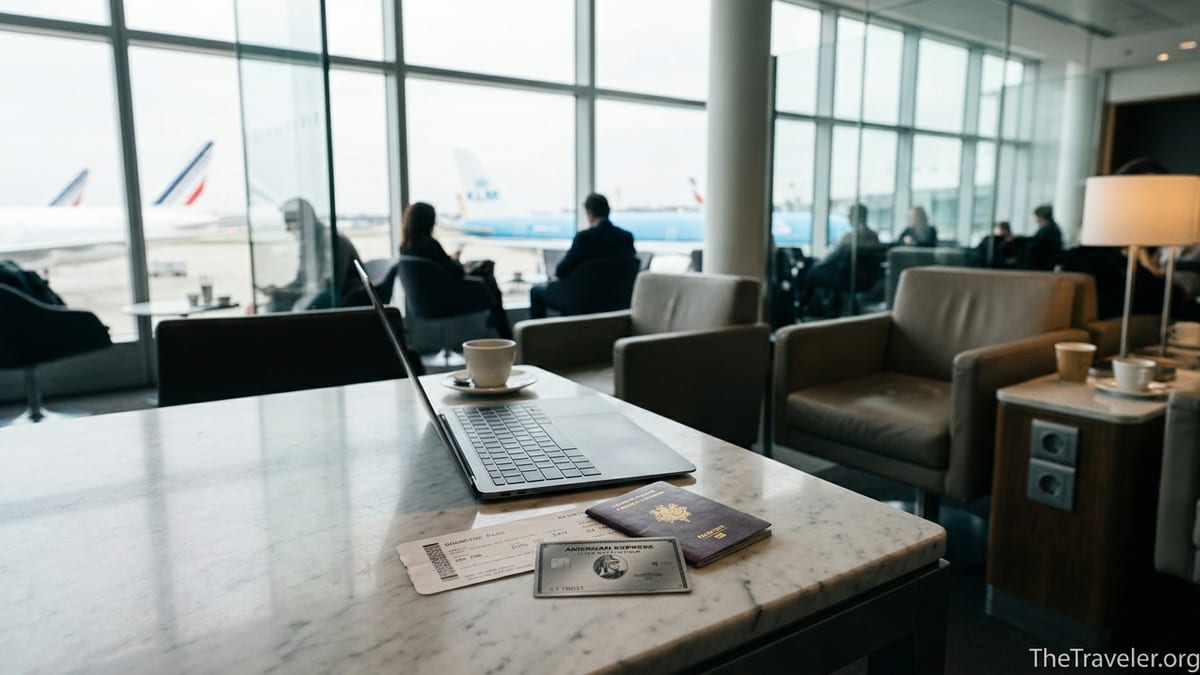
Understand Exactly Which Flying Blue Platinum Card You Are Applying For
The first check is to make sure you are looking at the right product. The American Express Flying Blue Platinum card is a co-branded card issued in several European markets such as France and the Netherlands, in partnership with Air France and KLM. It is different from the standard American Express Platinum charge card that many U.S. travelers know, and it has its own earning structure, insurances and annual fee.
For example, in France the “Carte Air France KLM – American Express Platinum” is a charge card with an annual fee of 66 euros per month, or about 792 euros per year, billed by American Express France. It earns Flying Blue miles directly and adds experience points (XP) toward Flying Blue elite status. In the Netherlands, the Flying Blue American Express Platinum card has a similar role for Dutch-based members, with local pricing and slightly different insurance terms.
If you mainly fly from the United States and already hold a U.S. Amex Platinum or another premium card, double-check that the card you are considering is the local Flying Blue co-brand, not a generic Amex product. The Flying Blue Platinum credit card is primarily targeted at residents of Air France and KLM’s European home markets, and the application will usually require a local billing address and bank account in the country of issue.
A useful practical step is to visit the Air France or KLM country website for your place of residence, navigate to the section that lists “Air France KLM – American Express” cards, and confirm the card art, annual fee and key benefits. That way you know you are reading the correct terms for your market.
Check Eligibility, Residency and Income Requirements
Before thinking about miles and lounge visits, confirm that you are actually eligible. The Flying Blue American Express Platinum cards are typically reserved for adult residents with a good credit profile in the issuing country. In France, for example, American Express expects applicants to be at least 18 years old, have a French bank account for direct debit, and meet internal income and creditworthiness criteria. In the Netherlands, applicants need to live in the country and prove regular income paid into a Dutch bank account.
Income thresholds are not always published, but in practice you should expect American Express to look for a stable salary and a history of on-time payments. As a rough real-world indicator, many French cardholders who are approved for the Air France KLM Amex Platinum report household incomes comfortably above the national average, often 40,000 to 50,000 euros per year or more, although the bank can approve or decline at its discretion.
Also check whether you must already be a Flying Blue member. For the Platinum co-brand in France, American Express explicitly requires you to hold a Flying Blue account number so that earned miles and XP can be posted correctly. Opening a Flying Blue account is free and can be done before you apply. If you fill out the Amex application without a valid Flying Blue ID, you risk delays or rejection.
If you have recently moved, another consideration is proof of address and local banking history. A Dutch applicant who only opened a bank account a month ago and works on a short-term contract may find it harder to be approved than someone who has been with the same bank and employer for several years. It is worth having recent pay slips, a work contract and bank statements ready in case the issuer asks for supporting documents.
Weigh the Annual Fee Against Your Real Travel Patterns
The American Express Flying Blue Platinum is one of the more expensive airline co-branded cards on the European market. In France, the fee of around 792 euros per year is split into monthly billing, which can make it feel smaller, but the yearly total is substantial. In the Netherlands, the fee is also in the high triple digits. Before you apply, take a hard look at whether your actual travel plans justify that cost.
A practical way to do this is to compare the fee to what you already spend with Air France, KLM and their partners. Suppose you are a Paris-based consultant who flies from Paris to Amsterdam twice a month and takes at least three long-haul trips per year to North America or Asia on Air France or KLM. If your total annual flight spend reaches 6,000 to 8,000 euros, the extra miles, XP and baggage or lounge benefits from the Platinum card could realistically yield several hundred euros of value each year, making it easier to recoup the fee.
On the other hand, if you live in Lyon and take one vacation flight per year on Air France plus a couple of low-cost carrier trips around Europe, you might struggle to use the card’s premium features. In that case, a mid-tier product such as the Air France KLM American Express Gold card, which has a significantly lower monthly cost and still includes free checked baggage on Air France and KLM, may be more appropriate.
Another real-world comparison is to ask what else you could buy for the same amount. A 792-euro fee is often enough to cover a week’s hotel stay for a couple in a mid-range European city or several economy tickets on a low-cost airline. If you would rather have those immediate trips than long-term points and status perks, the card might not be a good fit.
Understand Miles, XP Earnings and Your Status Strategy
One of the main reasons travelers apply for the American Express Flying Blue Platinum card is to accelerate their progress toward or maintain Flying Blue elite status. The Platinum card significantly boosts both miles and XP earnings compared with entry-level co-branded cards, but it is essential to understand how those rewards work in your situation.
In France, the Platinum co-brand earns up to 30 Flying Blue miles per 10 euros spent on eligible Air France and KLM purchases, and a lower but still attractive rate on everyday spending. Flying Blue has also tied XP to card use: the French Platinum card can generate a base annual XP bonus plus additional XP as you reach certain spending thresholds during the year, subject to an overall cap. These XP post directly to your Flying Blue account and count toward earning or renewing Silver, Gold or Platinum status.
In practice, that means you could combine flight activity and card spend to reach status tiers faster. For instance, imagine you already fly enough to reach 220 XP per year, just shy of the 300 XP needed for Flying Blue Platinum. Holding the Platinum American Express could add up to 80 XP annually when you meet the spending requirements, pushing you over the line without needing an extra mileage run. Real-world cardholders on French travel forums often mention using the annual XP bonus precisely to close this gap.
If your goal is more modest, such as moving from Explorer to Gold, you should still map out how many XP you typically earn from flights and how much spend you would realistically put on the card. A Dutch resident who spends around 1,500 euros per month on the Flying Blue Platinum credit card, including groceries, fuel and online shopping, may find that the combination of miles and XP over a year brings them comfortably into Gold territory, which then unlocks SkyPriority and lounge access when flying SkyTeam.
Evaluate the Welcome Bonus and How Quickly You Can Reach It
Another key factor to check before applying is the current welcome bonus and whether you can realistically hit the spend requirement without overstretching your budget. In France, recent public offers on the Air France KLM American Express Platinum card have advertised a welcome package of around 35,000 Flying Blue miles once you spend about 5,000 euros in the first four months. In the Netherlands, promotional campaigns have offered even larger bonuses, sometimes 70,000 miles or more, when applying for the Flying Blue American Express Platinum card and meeting a specified minimum spend.
To decide if that makes sense for you, convert the miles into real-world trips. A 35,000-mile bonus can often cover a return economy ticket within Europe on Air France or KLM during off-peak dates, or cover a one-way long-haul economy flight. Dutch promotions around 70,000 miles can get you close to a one-way or even return long-haul business-class award when combined with miles earned from flying. If you already plan a family holiday to Montreal or a series of work trips to New York with Air France or KLM, earning that bonus can have concrete value.
The spending requirement deserves equal attention. Spending 5,000 euros in four months is equivalent to about 1,250 euros per month. If your regular expenses, such as rent, utilities and groceries, cannot be paid with Amex, or if you normally charge only a few hundred euros a month to cards, reaching the threshold may require artificial spending or prepayments that do not suit your financial habits. A safer strategy is to look at your actual last four months of card-eligible bills and confirm that they naturally exceed the threshold.
Card issuers also tend to change welcome offers frequently. Before you apply, compare what is currently advertised on the Air France or KLM website for your market with what independent points and miles blogs report as typical or historically high bonuses. If the bonus at the moment is clearly lower than usual, and you are in no rush to gain XP, waiting for a stronger campaign could be sensible.
Review Travel Insurance, Purchase Protections and Conditions
Premium co-branded cards like the American Express Flying Blue Platinum come with layered travel and shopping protections, but the details matter. Before applying, take time to read at least the summary of insurance terms for your country, especially if you are counting on the card to replace separate paid travel insurance.
In France, the Platinum Air France KLM Amex card offers what American Express calls “maximum insurance and assistance.” When you pay for an eligible trip that includes an Air France, KLM or Transavia flight with your card or with Flying Blue miles, you can receive coverage for cancellation or trip postponement up to a high annual cap per insured person, as well as medical assistance while abroad. There is also purchase protection, which typically insures qualifying items paid with the card against theft or accidental damage for about 90 days after purchase, with set limits per incident.
However, these policies may include notable limitations. Some benefits may apply only if the booking is made entirely with the card or Flying Blue miles, and some categories of activities, such as certain adventure sports or hired vehicles, may be excluded. Excess amounts and upper limits also apply. For example, a family booking a ski trip to the French Alps should verify whether off-piste skiing or rented equipment is fully covered by the card’s travel insurance or whether a separate policy is still advisable.
As another concrete example, a Dutch cardholder renting a car in Spain through a third-party broker should read whether the Flying Blue Amex Platinum’s car rental insurance acts as primary coverage, secondary coverage or only as supplemental liability. Knowing this in advance can prevent expensive surprises at the rental counter if the agent tries to sell duplicate insurance products.
Consider Acceptance, Foreign Transaction Fees and Payment Behavior
American Express is not as universally accepted as Visa or Mastercard, particularly with smaller merchants in parts of Europe. Before applying for the Flying Blue Platinum card, think about where you normally spend money and whether you will realistically be able to route enough everyday purchases through Amex to justify the fee and optimize mile earnings.
For instance, large French supermarkets such as Carrefour or Leclerc, and many national chains in the Netherlands, do accept American Express, making it easy to put several hundred euros of monthly grocery and fuel spend on the card. By contrast, small neighborhood cafés or local tradespeople may still prefer payment by debit card or bank transfer. If you work as a freelancer and pay many invoices via bank transfer, your ability to generate miles from those expenses will be limited.
Also check the foreign transaction fee policy for your specific country version. Some European Flying Blue American Express cards charge a percentage fee on purchases made in non-euro currencies, often close to 2.5 to 3 percent. That means a 1,000-dollar hotel bill in New York paid with your card might incur 25 to 30 euros in extra charges. If you frequently travel outside the euro area, you may be better off combining the Flying Blue Platinum for euro spending and status building with a separate no-foreign-fee card, such as a local bank’s premium Visa or Mastercard, for purchases in dollars, pounds or other currencies.
Finally, confirm whether the card is a pure charge card or allows revolving credit. In France, the Air France KLM American Express Platinum card normally requires payment of the full balance each month by direct debit, which helps disciplined cardholders avoid interest but is not suitable if you intend to carry a balance. Some Dutch versions have limited installment options for specific airline tickets, but they are not meant as general-purpose financing tools. If you know you sometimes roll over balances, a different card with lower rates and no annual fee may be more appropriate, keeping the Flying Blue Platinum for those who pay in full.
Compare With Cheaper Alternatives and Airline Subscriptions
Before clicking “apply,” it is smart to compare the Platinum co-brand to more affordable products within the same ecosystem and even to non-card options. Air France and KLM also sell independent Flying Blue “Extra” subscriptions that provide various benefits such as extra miles per flight or occasional lounge access for a fixed yearly fee, separate from any credit card.
For many travelers, the Gold-level Air France KLM American Express card can be a compelling compromise. It has a markedly lower annual cost than the Platinum while still offering free checked baggage on Air France and KLM tickets, elevated mile earning on airline purchases and a smaller XP bonus each year. A frequent leisure traveler flying a couple of long-haul trips and a few European returns annually may find that Gold gets them most of the practical perks they care about, such as baggage and some extra miles, without the Platinum price tag.
Another angle is to look at non-Amex co-brands or bank-issued cards in your home market. For example, Bank of America issues an Air France KLM World Elite Mastercard for U.S.-based customers, with a much lower annual fee than European Platinum co-brands, and benefits more aligned to occasional transatlantic flyers. A U.S. resident who flies to Europe once or twice a year on Air France or KLM might find that product more cost-effective than trying to qualify for a European Amex Platinum.
Finally, consider whether putting the equivalent of the annual fee into paid seat upgrades, extra-legroom seats or occasional lounge day passes might bring you more tangible comfort than a premium card. If you rarely care about elite status but very much appreciate a comfortable seat, paying directly for those comforts rather than for a card that helps earn them indirectly can be a rational choice.
The Takeaway
The American Express Flying Blue Platinum card sits at the top of the Air France KLM co-branded range, with correspondingly high costs and rich benefits. It can be an excellent tool for frequent flyers who live in markets such as France or the Netherlands, regularly spend in euros, and actively pursue Flying Blue elite status. For these travelers, the combination of strong mile earning on Air France and KLM tickets, annual XP bonuses, included baggage, complimentary Flying Blue Extra subscriptions and solid travel insurance can more than justify the fee when used thoughtfully.
However, this is not a card to apply for lightly. Before you fill in the application form, check that you meet local eligibility rules, understand the exact version of the card for your market, and have a realistic plan to meet any welcome bonus requirements without distorting your spending. Run the numbers on how many miles and XP you can reasonably generate from your normal travel and expenses, and compare the value of those rewards to the annual fee and any foreign transaction charges you might incur.
If, after this analysis, the math still makes sense and you see concrete trips, upgrades and status benefits that the card can deliver, then the American Express Flying Blue Platinum may well deserve a place in your wallet. If not, one of the lower-fee co-branded cards or a different travel rewards product may better match your flying habits and financial comfort level.
FAQ
Q1. Do I need to live in France or the Netherlands to get an American Express Flying Blue Platinum card?
In practice you must apply in the country where the card is issued, which generally means having legal residence, a local address and a bank account there. Travelers based elsewhere, such as in the United States, are usually better served by local Air France KLM or general travel cards issued in their own market.
Q2. Does holding the American Express Flying Blue Platinum card automatically give me Flying Blue Platinum status?
No. The card does not instantly grant Platinum status. Instead, it awards Flying Blue miles and experience points that help you reach or renew status faster. You still need to earn the required XP total within your qualification period through a mix of flights and card-related bonuses.
Q3. How many miles can I expect to earn from regular spending on the Flying Blue Platinum card?
The exact earning rate depends on your country version, but the Platinum co-brand typically offers a higher rate on Air France and KLM purchases and a solid rate on everyday spending. For example, spending several thousand euros a year on airline tickets and a similar amount on daily expenses can realistically generate tens of thousands of miles annually.
Q4. Is the welcome bonus on the Flying Blue Platinum card worth chasing?
It can be, provided the spending requirement fits your genuine budget. A bonus of around 35,000 miles in France or 70,000 miles in some Dutch promotions can cover at least one return trip within Europe or a valuable contribution toward a long-haul business-class award. The key is to reach the threshold through expenses you would have made anyway.
Q5. How does the Flying Blue Platinum card compare with the Air France KLM American Express Gold card?
The Platinum card has a much higher annual fee but offers stronger earning rates, larger XP bonuses and more extensive insurance coverage, along with extras such as complimentary Flying Blue Extra subscriptions. The Gold card costs less and still provides free checked baggage and decent earning, making it a better fit for many leisure travelers.
Q6. Are foreign transaction fees a problem with the American Express Flying Blue Platinum card?
Many European versions of the card charge a percentage fee on purchases made in non-euro currencies. If you often spend in dollars, pounds or other currencies, these fees can add up and may outweigh the benefit of earning a few extra miles. In that case, pairing the card with a no-foreign-fee product can be wise.
Q7. Will I have trouble using the Flying Blue Platinum card in everyday life due to limited American Express acceptance?
Acceptance is generally good at larger retailers, airline websites and hotel chains in Europe, but some smaller merchants still do not take Amex. Before applying, think about your main spending categories. If most of your regular expenses fall with Amex-friendly merchants, you will find it easier to earn enough miles to justify the fee.
Q8. What kind of travel insurance is included with the American Express Flying Blue Platinum card?
The card typically includes coverage for trip cancellation or interruption when you pay with the card, medical assistance abroad, and purchase protection for items bought with the card. The exact limits, exclusions and conditions vary by country, so you should read your local insurance booklet carefully before relying on it for major trips.
Q9. Is it sensible to apply for the Platinum card mainly for one big trip?
Applying just for a single holiday rarely makes sense, because it is difficult for one trip to offset a full year of high annual fees. The card tends to be more rewarding for travelers who fly several times a year, either for work or leisure, and who can steadily earn miles and XP throughout the year.
Q10. What should I check on my own statements before deciding to apply?
Look at your last six to twelve months of travel and card spending. Note how much you spent with Air France, KLM and partner airlines, which of your bills can be paid with Amex, how often you travel outside the euro area and whether you usually pay your cards in full. If the pattern suggests high euro-based spend and frequent Flying Blue flights, the American Express Flying Blue Platinum card is more likely to be a good fit.