


More news on this day
A freight train derailment near a residential corridor in Bucyrus, Ohio, is prompting continued detours and a reduced evacuation zone after several cars left the tracks on Sunday evening, raising concerns about a tanker suspected of carrying hydrochloric acid.
Get the latest news straight to your inbox!
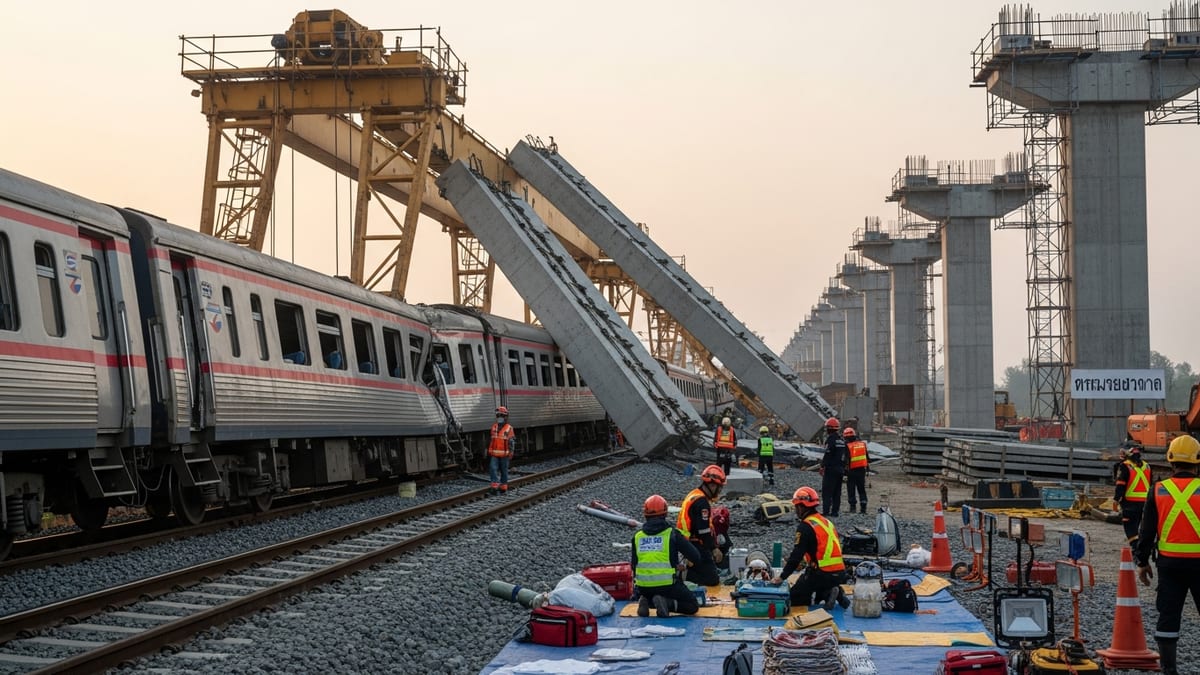
Where and when the Bucyrus derailment happened
Publicly available information shows that the derailment occurred on the evening of July 5, 2026, near the intersection of Whetstone Street and Auto Avenue in Bucyrus, a small city in north-central Ohio. The location is a mixed residential and light industrial area a short drive west of the city center, with local streets crossing an active freight line.
Regional news coverage indicates that a Norfolk Southern freight train was moving through the corridor when several cars left the tracks, including at least one tanker car. Early images distributed by local outlets show rail cars tipped or off the rails close to homes and small businesses, underscoring why emergency managers quickly moved to clear nearby properties.
Initial estimates from local agencies cited in news reports suggested that around six cars derailed, although assessments continued into Monday as railroad crews and hazmat specialists worked the site. The incident comes amid heightened public scrutiny of freight operations in Ohio following other high-profile derailments in recent years.
Chemical concerns and evacuation radius
According to published coverage and local public alerts, one of the derailed tankers was believed to be carrying hydrochloric acid, a corrosive chemical that can cause respiratory irritation and other health impacts at high concentrations. Out of caution, an evacuation order was first established for a radius of up to one mile around the site as teams evaluated whether any leak was occurring.
As overnight monitoring and inspections continued, subsequent updates from regional media reported that the evacuation zone was scaled back to roughly a quarter of a mile. Reports from outlets in Ohio on Monday morning indicated that crews on scene had not identified an active leak and that no immediate, widespread threat to the broader community had been found.
Even with no confirmed release, the presence of hazardous cargo has kept the area under close observation. Rail incidents involving tank cars can prompt extended closures while specialists confirm that valves, shells, and fittings remain intact. Travelers passing through Bucyrus may continue to see hazmat vehicles, fire apparatus, and railroad contractors working along the Whetstone Street corridor as the response and cleanup proceed.
Current travel disruptions in and around Bucyrus
For travelers, the most visible impact is local, focused on street closures and detours near the derailment. Public updates summarized by regional outlets indicate that Whetstone Street remains closed in the vicinity of the crossing, with estimates that it could take more than a day from Monday morning for the road to fully reopen as rail cars are re-railed or removed and track repairs are completed.
Drivers moving through north-central Ohio can expect detours around the affected crossing, particularly on neighborhood routes that typically handle local traffic. Navigation apps may not immediately reflect all closures, so motorists are likely to encounter barricades, cones, and police vehicles directing traffic away from the site.
Rail traffic through the corridor has been temporarily disrupted while the line is cleared and inspected. However, publicly available information has not indicated major knock-on effects for passenger rail or long-distance freight routing across the broader region, suggesting that impacts at this stage are primarily confined to the Bucyrus area.
For those staying in nearby communities or using Bucyrus as a stopping point on longer road trips, some short-term congestion is possible as local traffic diverts onto alternative routes. Travelers planning to pass through residential streets close to Whetstone Street may want to allow extra time or select state routes that bypass the immediate incident zone.
Local response, shelters and safety guidance
Reports from Ohio-based outlets describe a multi-agency response that includes local emergency management, fire and police departments, and railroad contractors working jointly at the scene. Cleanup crews have been focusing on stabilizing the derailed cars, verifying the integrity of the suspected acid tanker, and preparing the line for eventual reopening.
Publicly available information shows that an emergency shelter was opened at Bucyrus High School to support residents affected by the evacuations. Travelers who happen to be staying with friends or family inside the restricted zone may also be directed to such shelters if evacuations remain in effect or are adjusted while work continues.
Residents and visitors in Bucyrus are being advised through local news and public alerts to avoid the Whetstone Street and Auto Avenue area, follow any detour signs, and comply with instructions from on-scene personnel. Those with respiratory conditions are often encouraged in similar incidents to minimize outdoor exposure near any active response until authorities formally clear the area, although current reporting points to no confirmed large-scale release.
Hotels and short-term rentals in Bucyrus and neighboring towns have not been widely reported as affected, but some properties could be accommodating evacuees or response workers. Travelers with existing reservations may wish to confirm check-in details and parking arrangements, especially if they typically access lodging via residential streets near the derailment site.
What travelers should monitor in the coming days
For those planning trips through north-central Ohio, the Bucyrus derailment is a reminder that transportation incidents can quickly alter local conditions. Over the next day or two, the key variables for travelers are the timeline to reopen Whetstone Street, the status of the reduced evacuation radius, and any new findings from ongoing inspections of the tanker car.
Public coverage on Monday morning suggested that there were no serious injuries reported and no confirmed major chemical release. Even so, travelers passing nearby may see visible evidence of the response, from machinery lifting rail cars to environmental contractors checking soil and air around the tracks.
Those driving long distances across Ohio are unlikely to face large detours as a direct result of this incident, but anyone routing through Bucyrus itself should stay attentive to traffic advisories, especially during peak commuting hours. Visitors staying locally may want to keep an eye on regional news for updates on road status and any changes to the evacuation footprint.
As crews continue their work, the Bucyrus derailment is being closely watched in a state that has seen several high-profile rail incidents in recent years. For now, the disruption appears concentrated in a relatively small area, yet it remains an evolving situation that travelers would be wise to monitor until cleanup and rail operations fully return to normal.