

New England has long been the shorthand for crisp autumn air, clapboard coastal villages, and maple-drenched weekend escapes. Yet its popularity means traffic-clogged byways, booked-out inns, and prices that climb as predictably as the foliage reports. For travelers who love the spirit of New England but are ready for a different experience, a world of alternatives awaits. From Pacific fishing towns and Southern mountain hamlets to Canadian river cities, these destinations echo New England’s best qualities while adding their own distinct flavor.
Why Look Beyond New England Right Now
New England is not losing its appeal. Its historic main streets, rugged coastline, and blazing fall color remain as atmospheric as ever. But visitor numbers have risen steadily in recent years, particularly in peak foliage season and summer along the coast. That surge has brought heavier traffic on key routes, crowded trailheads, and accommodation prices that can surprise even seasoned travelers. For many, the charm now comes with a side of hassle.
At the same time, other regions around the United States and Canada have been investing in small-town tourism, outdoor access, and local food scenes. Formerly sleepy fishing ports now support creative restaurants and boutique inns. Mountain towns better known to locals than guidebooks are adding trails, festivals, and well-run state parks. For travelers, that means there are more places than ever to find the things they love about New England in landscapes that feel fresh and less scripted.
Looking beyond New England is not about replacement so much as expansion. Instead of yet another spin through the same leaf-peeping loop, you might watch fog pull off a Pacific headland, taste low-country seafood under moss-draped oaks, or follow larch forests turning gold beside a western river. The feel is familiar: walkable main streets, local shops, and outdoor adventures within a short drive. But the details are new, and often less crowded.
Below are seven regions that offer compelling alternatives, whether you are chasing coastal breezes, harvest flavors, historic architecture, or crisp air and mountains. Each one delivers the sense of discovery that first made New England famous, yet with its own distinct sound, smell, and color palette.
Pacific Coast Villages Instead of Cape Cod and Coastal Maine
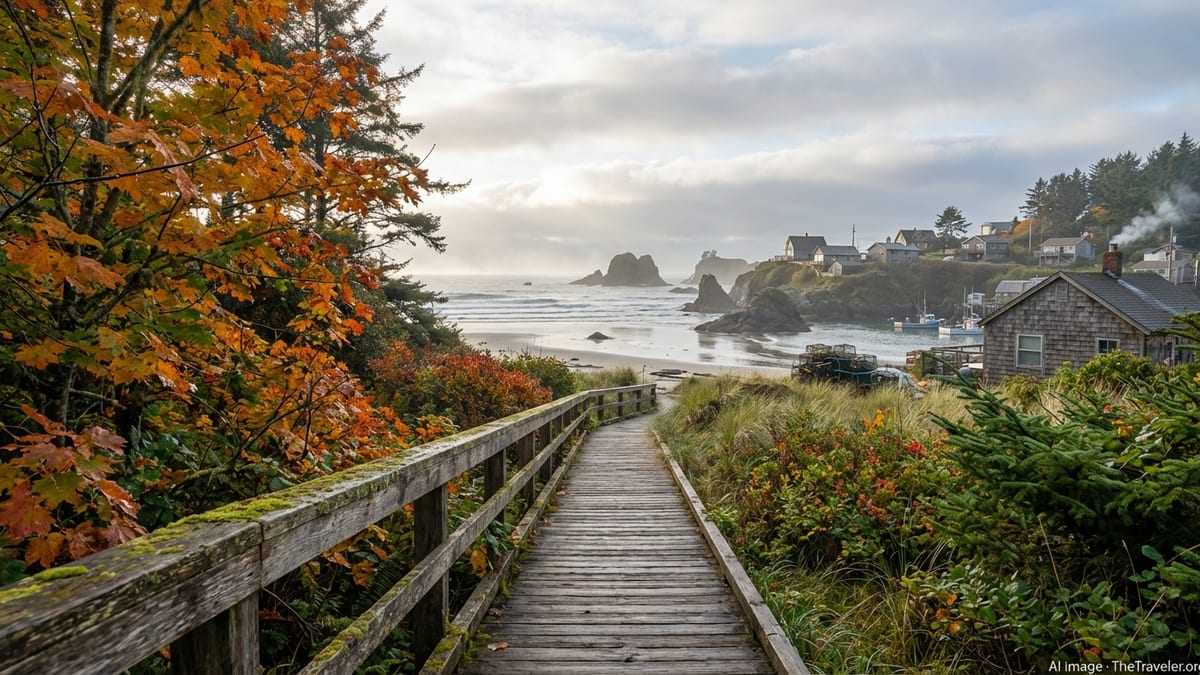
If you love New England for its shingled houses, sea-salt air, and working harbors, the Pacific coast can feel like a revelation. The atmosphere is wilder, the headlands steeper, and the light more dramatic, especially outside midsummer. Yet the same pleasures await: independent bookstores, family-owned seafood joints, beach walks, and the sight of fishing boats sliding past at dawn.
On California’s Central Coast, small towns such as Cambria have been singled out by national outlets as underrated beach escapes, with historic main streets, coastal preserves, and nearby wine country. The cliffs, cypress trees, and tide-swept beaches here feel very different from Cape Cod’s gentle dunes, but the effect is just as restorative. Daytimes are often bright and breezy; evenings cool quickly, inviting sweaters and slow walks above the surf instead of crowded boardwalks.
Farther north, the coasts of Oregon and Washington are dotted with compact towns that deliver much of what travelers seek around Rockport or Boothbay Harbor, yet with a Pacific Northwest twist. You might spend a morning exploring tide pools and sea stacks, then wander back to town for fresh Dungeness crab or locally roasted coffee. Many communities have invested in waterfront trails, restored historic buildings, and small-scale lodging that echoes the classic New England inn with a more contemporary, West Coast sensibility.
The practical advantages are significant. In shoulder seasons, you can often find last-minute rooms at reasonable rates, and beach parking tends to be more relaxed than in peak-season New England. Fog can roll in swiftly and weather is changeable, but for many travelers that shifting light is part of the coastal drama that makes these alternatives so memorable.
Southern Appalachia Instead of Vermont and New Hampshire
For travelers who time trips by peak foliage reports, Vermont and New Hampshire remain reference points. Yet the Southern Appalachians, stretching across western North Carolina, eastern Tennessee, and parts of Georgia and Virginia, arguably offer an even longer and more varied fall color season, with elevations that range from valley floors to some of the highest peaks in the eastern United States.
Mountain towns like Asheville and Boone combine walkable downtowns and thriving food scenes with quick access to ridgeline hikes and waterfall trails. In autumn, the hillsides layer into bands of color, with higher elevations turning first and lower valleys peaking later. That staggered timing means you can often find vivid color even if your travel dates are not perfectly aligned with a short northern window. Roads such as the Blue Ridge Parkway provide the sort of winding, view-filled drives many travelers associate with New England’s back roads, often with more expansive vistas.
Culturally, Southern Appalachia delivers a different but equally compelling sense of place. Instead of white-steepled Congregational churches, you might find clapboard mountain churches and music halls hosting bluegrass and old-time jams. Farm stands sell late-season apples alongside sorghum and country ham. Artistic communities blend traditional crafts with contemporary galleries. For travelers who appreciate New England’s blend of rural tradition and creative energy, this region offers another rich story to explore.
Weather is often milder than in northern New England, especially in late October and early November, making outdoor activities more comfortable. Hiking trails can still be busy around famous viewpoints, but overall visitor pressure is more diffuse across a vast mountain landscape. Lodging ranges from rustic cabins and family-run motels to polished inns, many of which remain more accessible on peak weekends than their northern counterparts.
Great Lakes Shores Instead of Rhode Island and the North Shore
New England’s maritime heritage is a strong pull, but it is not the only place in North America where water shapes daily life. Along the shores of the Great Lakes, compact cities and small towns hug bays and inlets with a distinctly coastal energy, even though the water is fresh rather than saline. The result can feel unexpectedly similar to a New England seaside break, with sailboats on the horizon and working harbors, yet the horizons are wider and the crowds often thinner.
Towns along Lake Michigan and Lake Superior, for instance, offer beaches, lighthouses, and piers where you can watch storms roll in or sunsets blaze across open water. In places like Michigan’s northwest coast, the combination of vineyards, orchards, and a growing food scene has drawn national attention. The rhythm of the day is familiar: morning walks along sandy strands or wooded bluff trails, an afternoon in town sampling local bakeries and breweries, and evenings spent lingering over dinner in historic downtowns that have been carefully preserved.
Seasonality here mirrors New England’s, but with small differences that appeal to repeat visitors. Summer lake temperatures can be pleasant enough for swimming into late August, while early fall weekends offer crisp air and bright skies without peak tourist density. Inland, rolling farmland yields apples, cherries, and wine grapes, infusing menus with a sense of harvest similar to what travelers might savor in coastal Massachusetts or Rhode Island.
Economically, former industrial ports have turned toward tourism and outdoor recreation, investing in waterfront promenades, public art, and restored warehouses. For travelers who enjoy seeing how communities reinvent themselves, these Great Lakes towns provide a narrative that feels both historic and forward-looking, in contrast to New England’s emphasis on preserving a more static vision of the past.
Pacific Northwest Cities Instead of Boston and Portland, Maine
For many travelers, New England’s appeal is as much about its small cities as its villages. Boston and Portland, Maine, offer walkable waterfronts, brick townhouses, and dense clusters of restaurants and bars, all within easy reach of day trips to beaches or countryside. If that is your template, the Pacific Northwest provides some compelling alternatives that mix maritime settings with contemporary culture and strong access to nature.
On the shores of Puget Sound and nearby lakes, mid-size cities have been gaining profile as destinations in their own right. They offer glassy waterfronts where kayakers glide past office towers, plus neighborhoods filled with independent cafes, breweries, and galleries. New restaurants and hotels, alongside investments in light rail and pedestrian infrastructure, have made it easier to explore without a car, echoing the urban convenience that draws many to Boston or Providence.
What differs is the surrounding landscape. Instead of New England’s low, forested hills, the horizon might be punctuated by snowcapped volcanic peaks and evergreen-covered islands. Ferry rides replace harbor cruises; whale-watching excursions seek orcas instead of humpbacks. Even on a short city break, it is often possible to fit in a morning hike or paddle followed by an afternoon among museum exhibits or food markets.
Rain is part of the bargain here, particularly from late fall through early spring, but locals embrace it with layered clothing and a culture that prizes cozy interiors. If your idea of a satisfying weekend involves ducking into bookstores and coffee shops between walks along a damp waterfront, these Pacific Northwest cities can deliver the same pleasures as a blustery day on Boston’s harborwalk, without the sense of retracing a familiar route.
Low Country and the Coastal South Instead of Coastal Connecticut
Travelers who love New England for its maritime history, seafood, and compact coastal towns might find an intriguing contrast in the Low Country and the broader coastal South. Here, the tide slips through marshes, live oaks trail Spanish moss over quiet side streets, and shrimp trawlers sit where lobster boats might in a northern harbor. The feeling is humid and languid rather than brisk, but the underlying appeal of historic seaports and close-knit islands is strikingly similar.
Cities such as Savannah and Charleston, along with surrounding island communities, have long been known for their preserved historic districts, cobblestone alleys, and antebellum architecture. Like Newport or New London, they mix grand houses with working docks and a deep sense of maritime legacy. Yet the food tells a different story: shrimp and grits in place of clam chowder, she-crab soup instead of lobster bisque, and rice-based dishes that reflect West African influences.
Smaller coastal towns and barrier islands across Georgia and the Carolinas provide an experience closer to New England’s more modest shoreline communities. You will find boardwalks, family-owned inns, and broad beaches backed by dunes, but also subtropical palmettos, maritime forests, and long, shallow creeks where kayakers slip past egrets. Shoulder seasons outside school holidays can be pleasantly quiet, with warm days lingering far longer into autumn than in the Northeast.
For travelers used to New England’s often brisk, tightly packed beach towns, the coastal South offers more space, milder temperatures, and a distinct cultural lens through which to experience life by the water. It is less about swapping lobster rolls for oysters than about broadening your sense of what an American seaside town can look and feel like.
Quebec and the St. Lawrence Instead of Rural New England
Those who cherish New England’s covered bridges, village greens, and stone walls often speak of feeling transported to another era. North of the border, Quebec’s countryside can deliver that same time-travel sensation, enhanced by a different language and architectural vocabulary. Towns along the St. Lawrence River and in surrounding valleys combine steepled churches, centuries-old farmhouses, and compact main streets with a distinctly French-Canadian flair.
The climate and topography here are still very much northeastern: maple forests blaze in autumn, rivers carve through gentle mountains, and snow arrives early and stays late. Yet the details diverge in delightful ways. Roadside stands might offer maple products alongside French-style pastries; village bakeries turn out crusty loaves that pair with local cheeses and ciders. Instead of a traditional New England inn, you might stay in an auberge set in a stone manor or on a farm that has welcomed guests for generations.
Spending time in Quebec’s smaller cities and towns also shifts the cultural frame. Markets and festivals reflect francophone traditions; street signs and menus invite you to navigate a second language, even though many locals speak English. For travelers who have exhausted the classic loops through rural Vermont and New Hampshire, this region offers a way to keep the familiar rhythms of a country weekend while layering in a richer sense of difference.
Reaching these areas has become easier over time, with improved highways and a greater range of lodging. Autumn remains a peak period, but many spots are still less known to international visitors than marquee New England villages. That can translate into quieter hiking trails, less competition for restaurant reservations, and the pleasant feeling of discovering a place that many of your friends have yet to visit.
Wine Country Hills Instead of New England Farm Country
Part of New England’s enduring draw lies in its patchwork of farms, orchards, and hilltop meadows. Apple picking, farm stands, corn mazes, and harvest festivals have become autumn rituals for many travelers. If you love that agrarian backdrop but want a fresh setting, wine country regions across North America can deliver a similar connection to the land with a more vineyard-forward personality.
In places such as California’s Central Coast, Oregon’s Willamette Valley, and emerging wine regions in other states, gentle hills are etched with vines, dotted with barns, and punctuated by small towns that come alive on weekends. Tasting rooms often share space with farm-to-table restaurants, cheesemakers, and markets selling local produce. The emphasis on seasonal eating and drinking feels familiar to anyone who has spent a weekend touring New England farm stands in October.
What differs is the sensory palette. Instead of crisp air scented with woodsmoke and cider, you might smell sun-warmed grapes, ocean breeze, or sagebrush, depending on where you go. Sunny afternoons stretch later into the year; patios remain comfortable well past the point when New England terraces pull in their chairs. Harvest season, typically late summer into early fall, adds an undercurrent of activity as trucks shuttle fruit and workers move quickly along the rows.
Many of these wine regions remain relatively uncrowded outside a few marquee weekends and festivals. Smaller towns offer inns, cottages, and boutique hotels that echo the intimacy of New England’s bed and breakfasts, often with views sweeping across vines to distant hills. For travelers who associate autumn travel with cozy interiors and conversations over local drinks, this pivot from orchards to vineyards can feel like a natural evolution rather than a departure.
The Takeaway
Choosing to go somewhere instead of New England is not a rejection of its charms. It is an acknowledgment that those charms now come at a premium, and that the qualities travelers prize most there exist in many other landscapes. Whether you head for Pacific coves, Appalachian ridgelines, Great Lakes harbors, southern marshes, French-Canadian villages, or sunlit wine valleys, you will find familiar pleasures reframed by new geography and culture.
Planning an alternative trip starts with asking what you truly love about New England. Is it the crunch of leaves underfoot, the feel of a historic main street at dusk, the taste of seafood eaten within sight of working boats, or simply the chance to slow down in a place with a strong sense of itself? Once you identify those core elements, it becomes easier to recognize them in other regions that may be quieter, more affordable, or simply less traveled by people you know.
In an era when popular destinations can feel saturated at peak times, the decision to look elsewhere can deepen your travel experience. It invites you to notice the nuances between coasts and mountains, to compare harvest traditions, and to see how different communities shape their relationship with land and water. You may find that the trip you planned as an alternative becomes its own new point of reference.
The next time a crowded foliage forecast or sold-out inn tempts you to stay home, consider it an opportunity instead. Somewhere beyond New England, a harbor, hillside, or riverside park is waiting with the same mix of color, flavor, and quiet that first made you fall in love with travel in the Northeast, yet filtered through a sky and story all its own.
FAQ
Q1. Why should I consider destinations outside New England if I love it so much?
New England remains beautiful, but high demand during peak seasons can mean traffic, crowds, and higher prices. Exploring alternatives lets you enjoy similar scenery and character with more space and often a different cultural twist.
Q2. When is the best time to visit these alternative regions for fall color?
In general, higher-elevation and northern areas peak from late September to mid-October, while lower, more southern regions hit their stride from mid-October into early November. Exact timing varies year to year, so checking local foliage reports close to your trip is wise.
Q3. Are these alternative destinations easier to book at the last minute than New England?
Often yes, especially in shoulder seasons and outside major holiday weekends. Smaller towns in the Pacific Northwest, Great Lakes region, or Southern Appalachia may still have lodging options when popular New England spots are booked months ahead.
Q4. Will I miss out on classic fall activities like apple picking and harvest festivals?
Not necessarily. Many alternative regions offer orchards, farm stands, and harvest events, though they may focus on local crops such as grapes, stone fruit, or regional specialties instead of strictly mirroring New England traditions.
Q5. How do costs compare between New England and these other regions?
Prices vary widely, but many travelers find that lodging and dining in less-publicized areas can be more affordable than in New England’s best-known resort towns, particularly during peak foliage or summer beach season.
Q6. Are these alternatives suitable for travelers without a car?
Some mid-size cities, especially in the Pacific Northwest and certain Great Lakes areas, are walkable and connected by public transit or regional tours. For rural towns and wine country, however, having a car or arranging local transport remains the most flexible option.
Q7. How different is the weather compared with New England?
Weather varies by region, but many alternatives offer milder late-season temperatures or longer shoulder seasons. For example, Southern Appalachia and the coastal South can stay comfortable for outdoor activities later into autumn than northern New England.
Q8. Can I find the same kind of historic charm outside New England?
Yes, though it takes different forms. Instead of white-clapboard churches and colonial houses, you might encounter Victorian storefronts, brick warehouse districts, or centuries-old stone villages, each with its own architectural story.
Q9. Are these destinations family-friendly?
Most of the regions discussed have ample family activities, from easy hikes and beach walks to museums, farms, and boat tours. As always, checking specific attractions and seasonal hours in advance helps ensure a smooth trip with children.
Q10. How should I choose which alternative region to visit first?
Start by deciding what you most want to replicate from a New England trip, such as coastal views, mountain hiking, or food and wine. Then match those priorities to the region that offers similar experiences in a new setting, factoring in travel distance, budget, and the time of year you plan to go.