

Connecticut may be one of the smallest U.S. states, but it offers a wide range of distinct places to stay, from historic seaports and university cities to leafy suburbs and rural retreats. Choosing the right base can shape your entire New England trip, whether you are chasing coastal views on Long Island Sound, exploring Yale and the state’s museums, or simply looking for a quiet village inn. This guide walks through the best areas to stay in Connecticut and highlights notable hotels in each, with an emphasis on atmosphere, walkability, and easy access to nearby sights.
How to Choose the Best Area to Stay in Connecticut
Connecticut is compact enough that you can cross it in a few hours, but each region has its own character. Coastal towns along Long Island Sound appeal to travelers who prioritize beaches, maritime history, and seafood. Inland cities like Hartford and New Haven are better for culture, dining, and events. The Litchfield Hills and the state’s northeastern "Quiet Corner" are ideal for visitors seeking rolling countryside, historic inns, and small-town charm. Thinking about what you want to do will help you narrow down the best base for your stay.
For first-time visitors, accessibility often matters. The southwestern corner of the state, including Greenwich, Stamford, and coastal Fairfield County, connects directly to New York City by frequent train service, making it easy for car-free travelers or those looking to split time between Connecticut and Manhattan. Those focused on museums, restaurants, and music might gravitate to New Haven or Hartford, while families often prefer coastal hubs like Mystic or Madison, where beach days and attractions are within a short drive.
Another consideration is season. Summer along the shoreline is peak time, with higher room rates around popular beaches such as Hammonasset Beach State Park in Madison and resort communities on Long Island Sound. Autumn is particularly beautiful in the northwest hills around Litchfield and Washington, when foliage peaks and country inns feel especially inviting. Winter and early spring can offer better value in many destinations, especially at upscale properties that position themselves as peaceful retreats with spas, fireplaces, and cozy common spaces.
Finally, budget and hotel style will influence where you stay. Connecticut has a mix of large branded hotels in cities and near interstates, charming independent boutiques in college towns and historic centers, and classic New England inns scattered through rural areas. Waterfront luxury properties and spa resorts tend to command higher rates, while inland chains near business districts and highways usually offer the best prices. Deciding whether you want nightlife and dining on your doorstep, or a quieter base with a short drive to attractions, helps refine your hotel search.
Best for Coastal New England Charm: Mystic and the Eastern Shore
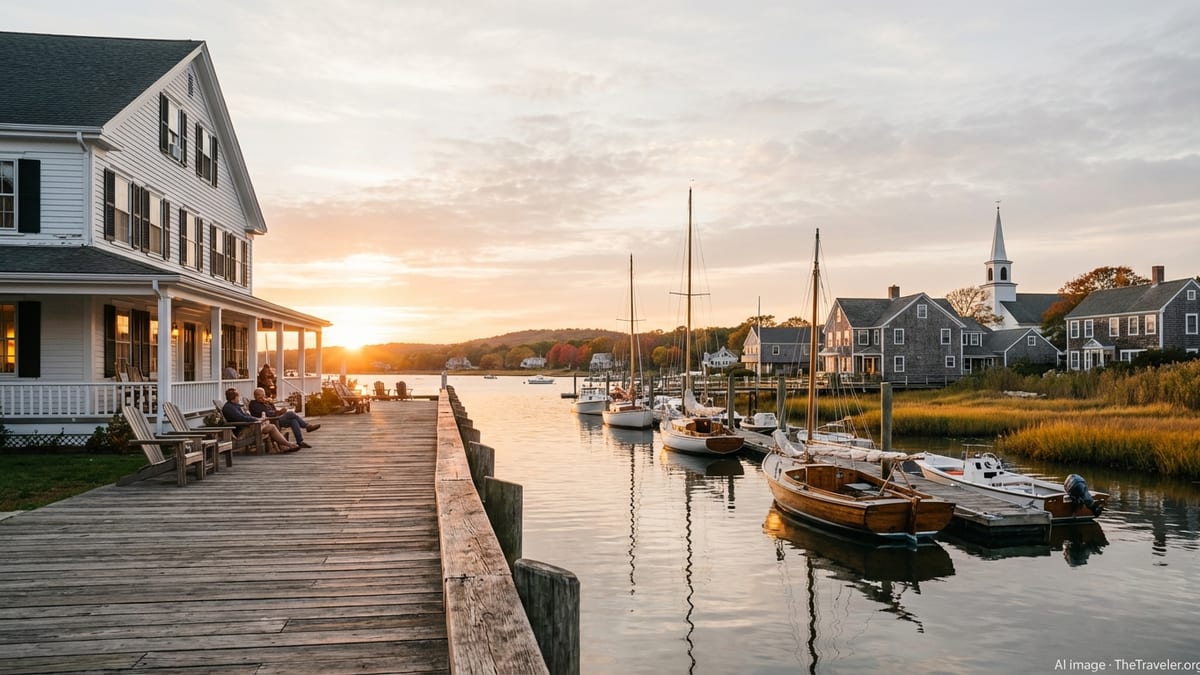
For many travelers, Mystic is the quintessential place to stay in coastal Connecticut. The historic seaport, riverfront drawbridge, and cluster of clapboard buildings give the town a classic New England look. Mystic makes a convenient base for visiting Mystic Seaport Museum, Mystic Aquarium, nearby state parks, and the small village of Stonington Borough, which offers a working harbor and narrow streets lined with historic homes. The compact downtown is walkable, so visitors can leave the car parked to explore shops, pubs, and waterfront dining.
The Mystic area offers a range of accommodations, from familiar hotel brands near the interstate to more atmospheric inns and boutique properties close to the river. Many travelers look for lodgings within a short stroll of the bascule bridge and the central shopping streets so they can enjoy evenings out without driving. Others choose stays slightly outside town along the Mystic River or toward Stonington to trade immediate walkability for quieter surroundings and water views. Whichever you choose, expect a laid-back coastal atmosphere rather than heavy nightlife.
East of Mystic, New London and Groton form another appealing option for visitors who want maritime flavor and easier access to transportation. New London’s compact downtown has a historic streetscape and a heritage trail that links dozens of sites across the city center, giving history-minded travelers plenty to explore on foot. Groton, just across the Thames River, provides quick access to Bluff Point State Park and other shoreline preserves, which are popular for easy hikes, birdwatching, and quieter beaches compared with the larger state parks. Together, these towns offer a combination of working waterfront character and practical midrange hotels, including several near the ferry terminals and train station.
Travelers using Mystic and the eastern shore as a base can easily explore nearby state parks, lighthouses, and small villages on day trips. Short drives connect Mystic with Stonington Borough, Watch Hill just across the Rhode Island line, and inland attractions such as vineyards and farm stands. With its combination of walkable town centers, maritime museums, and coastal landscapes, this region suits visitors who want the feel of a New England seaside escape without the long drives sometimes associated with larger coastal destinations.
Best for Beaches and Relaxed Escapes: Madison, Old Saybrook and the Central Shoreline
The central stretch of Connecticut’s shoreline between New Haven and New London is a strong choice for travelers prioritizing beaches and relaxed coastal stays. Madison, in particular, draws attention as the gateway to Hammonasset Beach State Park, the state’s largest shoreline park, which offers two miles of sandy beach, walking paths, and camping. The town itself is low-key, with a walkable village green, independent shops, and a handful of inns and small-scale hotels that lean into a refined but casual New England style.
Madison also has a notable luxury waterfront property that has gained national recognition in recent years for its setting on Long Island Sound, beachside restaurant, and classic New England architecture. Guests come for the combination of direct beach access, balconies or terraces facing the water, and seasonal outdoor programming such as live music and seaside dining. These kinds of stays tend to book well ahead for summer weekends, so early planning is recommended if your dates are not flexible.
Just to the east, Old Saybrook sits at the mouth of the Connecticut River and has long attracted visitors with its marinas, small-town main street, and cluster of inns. The town is associated with classic resort properties that combine water views, manicured lawns, and a mix of hotel rooms and cottages or suites. Many of these lodgings emphasize spa services, porch sitting, and on-site dining rather than being in the center of a dense urban area, which appeals to travelers seeking a restful base. Old Saybrook also makes a practical jumping-off point for short drives to charming villages like Essex and Chester along the lower river.
Other shoreline communities in this central section, including Guilford and Branford, offer a quieter and more residential feel. Here you will find smaller bed-and-breakfasts and inns in historic houses, often within walking distance of town greens that host seasonal events and farmers markets. These towns suit travelers who want an authentic Connecticut coastal environment, where harbor views and salt marshes are never far away but the atmosphere remains low-key. Access to New Haven by rail or road is straightforward, making it easy to combine city dining and cultural outings with more placid overnight settings.
Best for City Culture and Dining: New Haven
New Haven, home to Yale University, is Connecticut’s best choice for visitors seeking a city stay with a strong cultural and culinary scene. The downtown area is compact and walkable, centered on the green and the university campus. Travelers staying near Chapel Street, College Street, or Whitney Avenue can explore museums, libraries, theaters, and one of the state’s most vibrant dining scenes on foot. From celebrated pizzerias to Ethiopian, Southeast Asian, and contemporary American kitchens, New Haven offers an unusually diverse range of options for a mid-sized city and has earned regional attention for its restaurant week events and food festivals.
Hotel choices in New Haven span classic full-service properties, contemporary boutique hotels, and extended-stay options, most within a short walk of Yale’s main campus. Some occupy refurbished historic buildings with architectural character, while others are modern towers with familiar amenities. Many visitors prefer to stay directly downtown to be within easy reach of the university art galleries, the Peabody Museum, and the city’s main performance venues. Travelers arriving by train appreciate that the central business district is a brief taxi ride or manageable walk from Union Station, depending on luggage.
To the north of the core, the area around Whitney Avenue and historic clubs and institutions offers a slightly more residential feel while still linking quickly to campus and downtown. Stays here often appeal to travelers attending academic conferences, campus events, or weddings who want to be near but not directly in the busiest nightlife streets. Parking tends to be easier at properties slightly removed from the very center, which may matter for road trippers stopping in New Haven en route along the Interstate 95 corridor.
New Haven’s position in the middle of the state’s coastline also makes it a practical base for those interested in day trips. From the city, it is a manageable drive to coastal towns such as Madison, Guilford, and Branford, as well as inland parks like Sleeping Giant State Park in nearby Hamden. For visitors who want a combination of museums, live music, and good food in the evenings, balanced with daytime excursions to beaches or hiking trails, New Haven offers perhaps the best all-around urban base in Connecticut.
Best for Arts, History and Business Travel: Hartford and West Hartford
Hartford, Connecticut’s capital, works best for travelers with a focus on museums, performing arts, and convenient access to major highways. Downtown Hartford concentrates cultural institutions such as the Wadsworth Atheneum Museum of Art, one of the region’s most important art museums, along with the Connecticut Science Center and historic sites honoring writers like Mark Twain and Harriet Beecher Stowe. Visitors who stay in or near the central business district can often walk between major attractions, restaurants, and the riverfront while having ready access to interstates that lead to other parts of the state.
The city’s hotel stock includes larger branded properties that primarily serve business and convention travelers, as well as a handful of boutique options in refurbished historic buildings. Downtown hotels typically appeal to those attending events at the convention center, catching performances at the Bushnell Center, or passing through on regional road trips. In recent years, a growing number of smaller, design-driven hotels have appeared in and around the city, offering an alternative to standard chain decor for visitors who want more atmosphere along with modern conveniences.
Immediately west of Hartford, West Hartford has developed a reputation as one of the state’s most appealing suburban destinations, with a walkable commercial district known as West Hartford Center and the adjacent Blue Back Square. Here, visitors find a dense concentration of restaurants, wine bars, boutiques, and cafes that give the area an almost urban village feel. A flagship boutique hotel in the heart of this district has attracted national attention for its refined rooms, on-site spa, and respected restaurant, offering a more intimate experience than the larger towers downtown.
Staying in West Hartford is particularly attractive to travelers who want a mix of suburban calm and city access. Guests can stroll to dinner or drinks without worrying about downtown parking, then drive or ride-share into Hartford in less than 15 minutes for museums and performances. It is also a convenient base for visiting nearby towns in the Farmington Valley or hiking up to viewpoints such as Heublein Tower in Talcott Mountain State Park. For many weekend visitors, the combination of upscale lodging, strong dining, and manageable scale makes West Hartford one of the state’s most enjoyable places to stay.
Best for Upscale Retreats and Small-Town New England: Litchfield Hills and Western Connecticut
Northwestern Connecticut, often referred to as the Litchfield Hills, is the state’s go-to region for scenic countryside, antique shops, and traditional New England villages. Towns such as Litchfield, Washington, Kent, and Cornwall are surrounded by rolling hills, stone walls, and winding back roads that glow with color in autumn. This part of the state appeals most to travelers who value quiet, nature, and a slower pace over nightlife. Days tend to be filled with country drives, hikes to waterfalls and viewpoints, and browsing galleries and historic sites in small town centers.
The region also houses some of Connecticut’s most notable upscale country inns and destination resorts. Standout properties in and around Washington, for example, have garnered attention from national travel publications for their spa programs, gardens, and culinary offerings. One long-established inn with a connection to popular culture is frequently mentioned among the best resorts in New England, thanks to its blend of classic New England architecture, contemporary interiors, and extensive wellness facilities that include a notable spa and outdoor amenities. Such properties often position themselves as all-weather retreats, equally appealing for summer garden stays and winter weekends by the fire.
Not all accommodations in the Litchfield Hills are high-end resorts. Many visitors opt for smaller inns, bed-and-breakfasts, or simple motels in towns like Kent, New Milford, or Torrington. These can offer good value and a personal touch, especially for guests mainly interested in daytime exploration. Proximity to outdoor attractions like Kent Falls State Park, the Appalachian Trail, and scenic rural drives often matters more than on-site facilities. Travelers looking to explore multiple small towns in one trip might base themselves centrally in Litchfield or Washington and fan out in different directions each day.
Western Connecticut outside the Litchfield Hills, including communities like Southport, Fairfield, and Westport, balances coastal living with easy access to New York City. These towns feature a mix of small harbor areas, beaches, and handsome residential neighborhoods, along with a selection of hotels and inns that cater to both leisure and business travelers. Southport in particular is known for a refined boutique hotel that has attracted national media attention for its relaxing atmosphere, polished design, and well-regarded restaurant. For visitors seeking an upscale but understated base within striking distance of both Connecticut’s countryside and New York, this corner of the state is a strong candidate.
Best for Scenic Back Roads and B&Bs: The Quiet Corner and Northeastern Connecticut
The northeastern part of Connecticut, often called the Quiet Corner, offers a different kind of stay from the coastal towns and cities. This region is characterized by forests, old farmsteads, stone walls, and compact town centers, with a slower and more rural feel. Visitors come here for scenic drives along routes such as the National Scenic Byway that runs north to south through the area, for agricultural fairs, and for the sense of stepping into a quieter, more traditional side of New England.
Accommodation in the Quiet Corner tends to focus on small bed-and-breakfasts, historic inns, and countryside lodges rather than large hotels. Many of these occupy restored houses or farm properties and lean into cozy, home-style hospitality. Guests can expect hearty breakfasts, porches with views over fields or woods, and easy access to hiking and cycling routes. This style of stay particularly appeals to couples on a romantic weekend, travelers exploring New England by car, and anyone looking to disconnect from busier urban environments.
Towns such as Woodstock, Putnam, and Pomfret can serve as good bases for a Quiet Corner visit. Woodstock is known for its historic homes and annual fair, Putnam for its growing arts and antiques scene, and Pomfret for its rural landscapes and nature preserves. From any of these, you can reach regional highlights including vineyards on the Connecticut Wine Trail, sections of the Airline Trail suitable for walking or cycling, and small local museums. Evening activities tend to center on small-town restaurants, brewpubs, and inn dining rooms rather than late-night bars or clubs.
Because the Quiet Corner sees fewer large conventions or seasonal crowd surges than some coastal destinations, it can also be a practical choice for travelers seeking more stable room rates and last-minute availability, especially outside major event weekends. However, the smaller size of many inns means that the most atmospheric properties can still book out during fall foliage or popular local festivals. If your goal is to enjoy back roads, historic properties, and a strong sense of place, this region will reward a slower pace and a willingness to explore lesser-known villages.
The Takeaway
Choosing where to stay in Connecticut is ultimately about matching your interests to the right region. Coastal areas such as Mystic, Madison, and Old Saybrook are best for travelers who prize water views, maritime history, and easy access to beaches and state parks. City breaks in New Haven or Hartford offer more in the way of museums, theaters, and varied dining, while still allowing for quick day trips to the shoreline or nearby hiking destinations. The Litchfield Hills and the Quiet Corner deliver small-town charm and rural scenery that feel a world away from busy corridors, even though they are only a couple of hours from major metropolitan areas.
Connecticut’s compact size means you rarely have to commit to just one style of stay. Many visitors split their time between a coastal base and an inland inn, or combine a night in a city hotel with a weekend at a spa resort or country bed-and-breakfast. That flexibility makes the state a particularly good choice for short getaways and long weekends, as you can experience both harbor towns and hillside drives in a single trip. With thoughtful planning and realistic expectations about budget and seasonality, you can find a Connecticut stay that feels tailored to your own idea of New England.
Whether you are planning a summer beach holiday, a foliage road trip, or a quiet winter retreat, the state’s mix of coastal villages, cultural hubs, and rural hideaways offers more variety than its size suggests. Focus on what you most want to do, then choose a base that keeps your main experiences within easy reach. From waterfront boutique hotels and historic city landmarks to farmhouse inns on country lanes, Connecticut provides an array of places to stay that can turn a simple overnight into a memorable part of your journey.
FAQ
Q1. What is the best area to stay in Connecticut for first-time visitors?
For a classic introduction, many first-time visitors choose Mystic or New Haven. Mystic offers coastal charm and maritime attractions, while New Haven adds museums, architecture, and a strong dining scene within a compact, walkable downtown.
Q2. Where should I stay in Connecticut without a car?
New Haven, Hartford, Stamford, and West Hartford work well without a car thanks to train connections, walkable centers, and ride-share availability. Among these, New Haven and West Hartford are particularly appealing for their mix of restaurants, culture, and manageable scale.
Q3. What is the nicest beach area to stay in Connecticut?
Madison and Old Saybrook are popular choices for beach-focused stays, thanks to access to Hammonasset Beach State Park, small-town main streets, and a handful of waterfront or near-water hotels and inns along Long Island Sound.
Q4. Which Connecticut town is best for a romantic weekend?
For romance, consider a country inn in the Litchfield Hills around Washington or Litchfield, or a boutique waterfront hotel in Madison, Old Saybrook, or Southport. These areas emphasize scenic settings, spa services, and quiet evenings.
Q5. What is the best place to stay in Connecticut for families?
Families often enjoy staying near Mystic for its aquarium, seaport museum, and easy coastal outings, or in Madison and Old Saybrook for beach days and relaxed small-town settings. Larger chain hotels near attractions can offer pools and family-friendly room setups.
Q6. Where should I stay in Connecticut for nightlife and dining?
New Haven provides the liveliest mix of restaurants, bars, and music venues in a walkable area. West Hartford also offers a dense cluster of dining and nightlife options within its central shopping and entertainment district.
Q7. What is the best area to stay in Connecticut for fall foliage?
The Litchfield Hills and parts of the Quiet Corner are prime foliage destinations. Staying in towns like Litchfield, Kent, or Woodstock puts you close to scenic drives, farm stands, and hiking routes that show off autumn colors.
Q8. Are there luxury resorts in Connecticut worth a special trip?
Yes, several upscale resorts and boutique hotels in western Connecticut and along the shoreline have earned national recognition, especially in Washington, Southport, Madison, and Old Saybrook. Many combine spa facilities, refined dining, and landscaped grounds.
Q9. What is the most budget-friendly way to stay in Connecticut?
For value, look at inland cities and highway-adjacent hotels outside peak summer and foliage seasons. Places like Hartford, New London, and smaller inland towns often have more competitive rates than beachfront communities during the height of summer.
Q10. How many days do I need to explore Connecticut?
A long weekend is enough to sample one region, such as Mystic and the central shoreline or New Haven and nearby parks, but a week allows you to combine a coastal stay with time in the Litchfield Hills or the Quiet Corner for a broader view of the state.