

Hong Kong rewards spontaneous wandering, but its ticketing systems and attraction passes can feel anything but simple. Between Go City, Klook bundles, Octopus cards and various tourist transport passes, it is easy to buy the wrong product and end up paying more instead of less. This guide breaks down the major Hong Kong passes available in early 2026, how they really work on the ground, and which one makes sense for your style of trip.
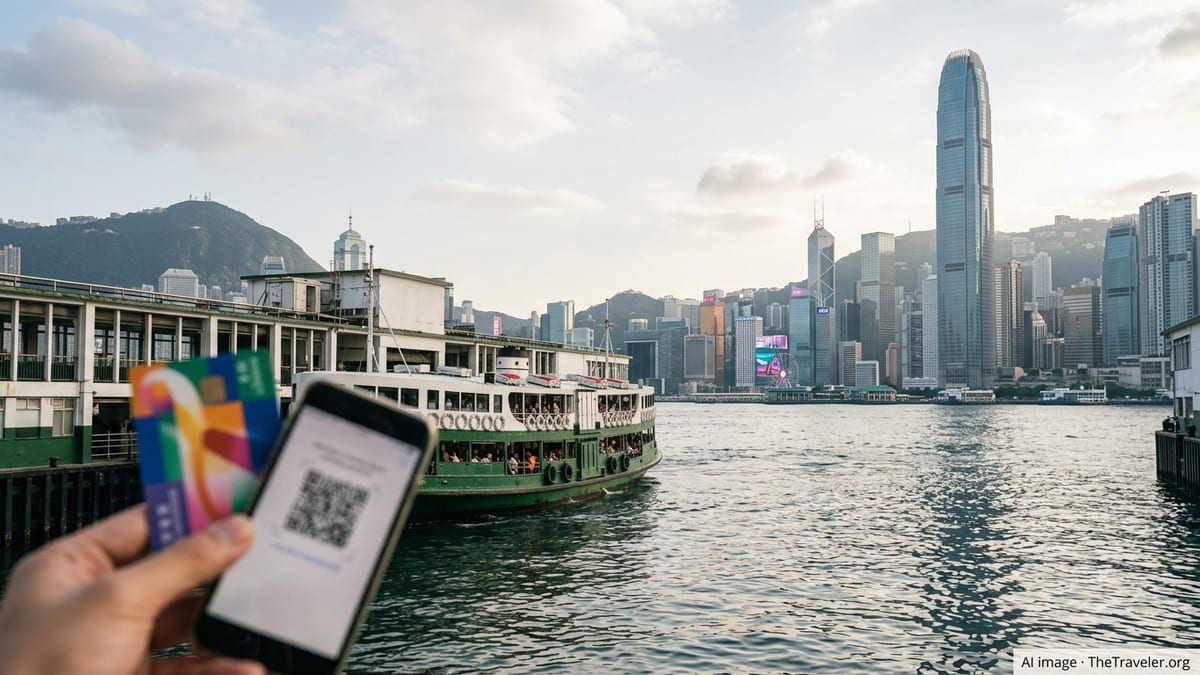
How Hong Kong Passes Work Today
Hong Kong used to be a city where the first thing visitors bought was an Octopus card, the contactless stored value card used on almost all transport and in many shops. That is still common, but contactless bank cards and phones now work across much of the network, and attraction passes have multiplied. The result is a mix of transport focused passes, attraction bundles and hybrid cards aimed at short term visitors.
On the attraction side, the main players are Go City and Klook, which both negotiate discounted admission to big name sights such as Ngong Ping 360, Peak Tram packages, walking tours and theme parks. You pay one price up front and then scan QR codes or e-vouchers at each venue instead of buying separate tickets. Savings depend heavily on how many high value attractions you fit into a few days.
On the transport side, the classic options are the standard or Tourist Octopus card, the MTR Tourist Day Pass and airport plus city rail packages such as the Airport Express Travel Pass. These mostly cover MTR and connecting rail or bus services and are separate from attraction passes. There are also short lived promotional passes, such as the Travel Super Pass launched by Octopus in late 2025 for peak holiday periods, but those tend to be seasonal rather than permanent fixtures.
Because passes often overlap, the key is to decide first what type of trip you are taking: an attraction heavy first visit, a food and neighbourhood trip with lots of short hops, or a quick stopover focused on the harbour and the Peak. Once that is clear, it becomes much easier to pick a pass that aligns with your itinerary instead of buying three products that all partially duplicate each other.
Go City Hong Kong: When an Attraction Pass Makes Sense
Go City sells Hong Kong passes in two basic formats: an Explorer Pass where you choose a fixed number of attractions, and an All Inclusive Pass which lets you visit as many included sights as you can within a set number of consecutive days. Both are delivered as mobile passes and include many of the city’s headline experiences such as Ngong Ping 360 cable car, Big Bus hop on hop off tours, Peak Tram plus Sky Terrace combos, harbour cruises and guided walking tours.
The company advertises savings of up to around half off regular ticket prices if you use the pass aggressively. In practice, the Explorer Pass works best if you know you will definitely do several big ticket experiences like Ngong Ping 360, a night cruise and a guided tour. The All Inclusive option suits travellers who treat sightseeing like a full time job for two or three days and are happy to schedule several time specific tours.
The advantages of Go City are clear if your stay is short but intense. It simplifies budgeting because many of your admissions are prepaid in one currency, which can be useful if you are watching exchange rates. It also gives structure to your days, since some activities require advance reservations through the Go City system. The flip side is less flexibility. If bad weather rolls in on Victoria Peak day or you simply burn out, unused value on the pass is your loss.
For a first time visitor staying three or four days and determined to hit several marquee attractions, a Go City Explorer Pass with four to six choices can offer good value. For slow travellers or repeat visitors focusing on neighbourhoods, markets and food, it often makes more sense to buy tickets one by one or use more targeted Klook deals instead of an all purpose attraction pass.
Klook Hong Kong Deals and Bundles
Klook acts as an online travel agent for tickets, tours and transport products across Asia, and Hong Kong is one of its strongest markets. Instead of one big pass, Klook typically offers a menu of individual tickets and themed bundles. You find everything from discounted Ngong Ping 360 tickets and Ocean Park admission to Peak Tram combos, airport transfers and even Disney Premier Access add ons that give priority access to selected rides.
Because Klook prices and promotions vary throughout the year, this platform suits flexible planners who are willing to compare options attraction by attraction. Often you will see modest discounts compared with buying at the gate, plus the convenience of English language booking and mobile QR codes. During peak seasons Klook sometimes partners with the Hong Kong Tourism Board and major operators for limited time promotions that effectively act like short term passes.
Klook also sells the Tourist Octopus Card, Airport Express tickets and various transport plus attraction packages. That can be handy if you want everything arranged before landing, though you should read the fine print about where to collect physical cards and what happens if plans change. For many travellers, the real strength of Klook is the breadth of smaller tours and experiences that rarely appear in big passes, such as food tours, neighbourhood walks and special event cruises.
If you prefer not to commit to an all inclusive attraction pass, using Klook as a price check against official ticket counters can stretch your budget without locking you into a rigid schedule. The best strategy is often to combine one or two high value Klook deals with a standard transport solution like Octopus or contactless card payments.
Octopus Cards and MTR Tourist Passes
The Octopus card remains the backbone of everyday life in Hong Kong. It is a stored value card accepted on the MTR, most buses, ferries, trams and many shops and restaurants. For visitors, it removes the need to fumble with coins or small notes for every ride. Multiple sources in late 2025 and early 2026 note that tourists can also pay directly with contactless credit and debit cards on the MTR and many buses, but acceptance is not yet universal in smaller outlets, so Octopus still offers extra convenience.
There are two main ways visitors use Octopus. One is to buy a standard or Tourist Octopus card on arrival, which may come preloaded with travel credit and usually does not require a refundable deposit in the tourist versions. You can top up at MTR stations, convenience stores and supermarkets. The second is to use the Octopus for Tourists app to hold a digital Octopus in your phone or watch. That app is useful if you want to top up using a foreign bank card, though some travellers report extra fees for those card funded top ups.
Alongside regular Octopus, the MTR sells specific tourist products. The MTR Tourist Day Pass offers unlimited rides on most MTR lines within 24 hours of first use, excluding the Airport Express, first class on the East Rail line and certain border stations. Official and independent guides updated for 2025 place the price in the mid range between a couple of single journeys and a full sightseeing day, which can be good value on an intensive day of hopping between multiple districts.
There is also the Airport Express Travel Pass, a card that combines one or two Airport Express journeys with three consecutive days of unlimited MTR travel excluding some premium services. Versions described in recent documentation typically include either a single or round trip from the airport plus citywide travel over three days, and can be a solid option for a compact city break where you stay in areas well served by MTR.
New and Seasonal Transport Promotions
In addition to permanent products, Hong Kong occasionally introduces limited time passes aimed at holiday peaks or specific events. A recent example is the Travel Super Pass announced by Octopus Cards in September 2025, described in official press material as a multimodal pass designed to enhance the visitor experience during Golden Week. That particular promotion was restricted to certain dates and sales locations at major cross boundary stations and was clearly framed as a temporary offer rather than a permanent tourist card.
The city’s tourism board and major operators also cooperate on seasonal campaigns. Press materials from mid 2025 highlight bundled discounts across attractions such as Hong Kong Disneyland, Ocean Park, the Peak Tram, Airport Express and harbour cruises during summer promotions. These bundles often appear as promo codes or special ticket categories rather than classic unlimited passes, and they tend to have firm start and end dates with quotas.
For visitors in 2026, the practical takeaway is that beyond core products like Octopus, MTR tourist passes and platform based deals from Go City and Klook, there may be short lived offers that stack extra value if your dates align. Because details and availability can change quickly, it is worth checking recent announcements from official tourism sources and major booking platforms in the weeks before your trip, rather than relying on an old blog post or guidebook.
However, you should be cautious about planning your entire budget around a promotion that has not yet been announced for your travel dates. Treat seasonal deals as welcome bonuses that might reduce costs or add a freebie, not as the backbone of your Hong Kong transport or sightseeing strategy.
Comparing Value: Go City vs Klook vs Local Transport Passes
When you put all the options side by side, the right Hong Kong pass depends less on which company sells it and more on how you plan to explore the city. Go City is strongest for first timers who want to string together several big name experiences in a short span. Klook excels as a flexible marketplace where you can pick and choose individual deals. Octopus and MTR passes remain the workhorses for everyday movement around the city.
In pure savings terms, you tend to get the biggest percentage discounts with Go City if you visit many premium attractions that each cost a substantial amount on their own. The downside is that you must keep up the pace and accept some constraints on timing due to advance reservations and operating hours. Klook’s savings are often smaller per ticket but more targeted. You can decide whether to buy just a discounted cable car ride or a combo that includes a meal or a tour without committing to a fixed attraction count.
Transport passes are different. Their value is tied to how intensively you use the MTR over a fixed period rather than how many attractions you enter. If you expect to take only two or three MTR journeys a day, a simple Octopus card or contactless card might be cheaper than a Tourist Day Pass. If you plan to zigzag between Kowloon, Hong Kong Island and the New Territories all day, unlimited use products can save not only money but also the minor stress of checking fares and balances.
One important nuance is that many popular sights are reachable on foot or via low cost transport such as trams and buses. It is entirely possible to spend three days in central Hong Kong and Kowloon, visit temples, markets and viewpoints, and never feel the need for a full attraction pass. In that scenario, a combination of Octopus for transport and a handful of Klook or official tickets purchased individually will likely beat any all inclusive pass on both cost and flexibility.
Which Pass Fits Your Trip Type?
For a classic first visit of three or four days packed with icons like Ngong Ping 360, the Peak Tram, a night harbour cruise and perhaps a guided walking tour, a Go City Explorer Pass covering four to six attractions is often the easiest fit. It simplifies planning, and the bundled admissions can undercut the combined gate prices if you actually use them. Pair it with either a standard Octopus card or the Airport Express Travel Pass for seamless movement between the airport and the city.
For a longer stay of a week or more, or a second visit where you are more interested in food, hiking and neighbourhoods than in big ticket attractions, Go City tends to be less compelling. In that case, focus on transport first: choose between Octopus and direct contactless card payments for everyday travel, then cherry pick any worthwhile Klook deals for specific days out, such as a discounted cable car ticket or a special event at a theme park.
For very short stopovers centered on the harbour, Victoria Peak and perhaps a quick visit to a single attraction, you may not need an attraction pass at all. A return Airport Express ticket or Airport Express Travel Pass, plus point to point tickets bought either through Klook or at the venues, keeps things straightforward. The MTR Tourist Day Pass might make sense if you are determined to see as many districts as possible in a single packed day between flights.
For budget conscious backpackers and slow travellers, the best pass is often no pass. Hong Kong’s street level pleasures, from dai pai dong food stalls to temple courtyards and harbourfront promenades, are either free or inexpensive. In that scenario, the main decision is whether to adopt Octopus as your all purpose wallet or rely on a mix of contactless cards and cash. Attraction passes become optional extras rather than essential tools.
The Takeaway
There is no single “best” Hong Kong pass, only products that make more or less sense for particular trips. Go City is a strong choice for short, attraction heavy itineraries where you will definitely use multiple high value inclusions. Klook is ideal as a flexible marketplace for individual tickets, small bundles and occasional limited time promotions that shave costs without locking you into a rigid plan.
Octopus cards and MTR tourist passes remain the backbone for getting around, especially when you move beyond the core visitor corridors. Even though contactless bank cards now work on much of the transport network, Octopus still adds convenience at smaller outlets and helps you glide through older gates and turnstiles without worrying about foreign card glitches.
The smartest strategy is to start with your itinerary, not the passes. List the attractions you genuinely care about, estimate how many MTR journeys you will realistically make each day, and only then compare the relevant passes and platforms. If a product saves money without forcing you into an exhausting schedule, it is worth considering. If it requires you to reshape your trip around the pass, you are probably better off without it.
With a little planning and realistic expectations, you can use Hong Kong’s web of passes to your advantage, trimming costs on big ticket days while keeping the freedom to wander through backstreets, markets and waterfronts whenever the city’s energy pulls you in a new direction.
FAQ
Q1. Do I still need an Octopus card if I have a contactless credit card?
Many visitors now use contactless bank cards on the MTR and major buses, but Octopus remains more widely accepted, especially in smaller shops and older turnstiles. If you plan to explore beyond the main tourist corridors or dislike occasional card glitches, an Octopus card still adds convenience.
Q2. Is the Go City Hong Kong Pass worth it for a first time visitor?
It can be good value if you plan to visit several high priced attractions such as Ngong Ping 360, harbour cruises and guided tours within a few days. If your itinerary focuses more on free sights, markets and neighbourhoods, buying separate tickets or using Klook deals is usually more economical.
Q3. What is the difference between the Go City Explorer and All Inclusive passes?
The Explorer Pass lets you choose a fixed number of attractions to visit at your own pace within a longer validity period. The All Inclusive Pass allows unlimited visits to included attractions during a short block of consecutive days. Explorer suits flexible planning, while All Inclusive suits intensive sightseeing.
Q4. Should I buy the MTR Tourist Day Pass?
The Tourist Day Pass is useful on days when you expect to take many MTR trips across the city. If you will only ride the MTR a couple of times, paying per journey with Octopus or contactless card is likely cheaper. Check current pricing and compare it with a rough tally of single fares for your planned routes.
Q5. What is the Airport Express Travel Pass and who should get it?
The Airport Express Travel Pass typically combines one or two Airport Express journeys with several days of unlimited MTR rides on most lines. It suits visitors staying in the city for about three days who expect to use the MTR frequently and prefer the speed and comfort of the Airport Express over road transfers.
Q6. Are Klook Hong Kong deals reliable?
Klook is widely used in Hong Kong and works as a broker for official tickets and tours, generally providing legitimate QR codes and vouchers. As with any platform, you should read recent reviews for individual activities, pay attention to cancellation policies and keep confirmation emails or screenshots available offline.
Q7. Can I mix a Go City pass with Klook tickets and Octopus?
Yes. Many travellers use a Go City pass for a core set of big attractions, buy one or two extra experiences through Klook and rely on Octopus or contactless cards for transport. The main thing is to avoid doubling up on the same attraction through different products.
Q8. How far in advance should I buy a Hong Kong pass?
Digital passes from Go City and Klook can usually be purchased close to your travel dates, though popular tours and time specific experiences may sell out. For MTR tourist passes and Octopus cards you can generally buy on arrival. In most cases there is no need to lock in attraction passes many months ahead unless you see a strong limited time discount.
Q9. What if my plans change after buying an attraction pass?
Each provider has its own refund and change rules. Go City typically offers a window for risk free cancellation on unused passes, while Klook policies vary by activity. Some tickets are fully flexible, others partially refundable and some completely non refundable. Always check the terms before purchasing.
Q10. For a week in Hong Kong, is an all inclusive pass better than paying as you go?
For longer stays, all inclusive passes rarely cover every day of your trip, so you may find they push you into cramming attractions into a short window. Many week long visitors have better experiences using Octopus or contactless cards for daily transport and selectively buying attraction tickets or Klook deals as interest and weather dictate.