


More news on this day
Croatia is entering the 2026 peak season with the confidence of a heavyweight Mediterranean destination, joining Spain, the United Kingdom, France, Germany, Italy, Greece and other European favorites on many travelers’ summer shortlists.
Get the latest news straight to your inbox!
From Rising Star to Core European Holiday Choice
Once considered a quieter alternative to the Western Mediterranean, Croatia is now firmly embedded in Europe’s tourism mainstream. Official figures for 2025 show more than 21 million arrivals and a record 110 million overnight stays, placing the country among the most visited destinations in the European Union and one of the leading markets in Southern Europe by volume. Publicly available statistics indicate that tourism already accounts for one of the highest shares of national GDP in the bloc, underscoring how central the sector has become to Croatia’s economy.
Comparative reports on Mediterranean travel trends place Croatia in the same competitive set as Spain, Italy, Greece and Portugal, with the Adriatic nation frequently cited as a “fast-rising hotspot.” While it does not yet match Spain’s nearly 100 million annual visitors, analysis from European and regional tourism bodies suggests that Croatia’s growth rate over the past decade has outpaced several longer-established rivals, particularly in the premium leisure segment.
At the same time, Croatia’s EU membership, adoption of the euro in 2023 and entry into the border-free Schengen area have reduced friction for travelers. Industry studies on the impact of these policy shifts note that easier cross-border movement and a familiar currency are encouraging more multi-country itineraries, placing Croatia naturally alongside Spain, France, Italy and Greece in pan-European trip planning for 2026.
Sector forecasts heading into this summer describe a climate of “cautious optimism,” with surveys of hotel and resort operators pointing to stable or slightly increased demand, even as global conflicts and inflation shape traveler behavior. Bookings are reportedly skewing later, yet expectations for modest growth in arrivals remain intact.
New Flights and Easier Access Boost 2026 Appeal
Access has become one of Croatia’s strongest selling points for 2026. Low-cost carriers and national airlines are expanding their networks, narrowing the gap with hubs in Spain, Italy and Greece. Ryanair has announced its largest ever summer schedule for the country, with more than one hundred routes across seven Croatian airports in 2026, significantly enhancing direct connectivity from secondary European cities.
National carrier Croatia Airlines plans to connect the country with 32 European destinations over 55 routes in the 2026 summer timetable, an increase on the previous year that includes additional frequencies on key leisure corridors. Company statements describe more than 19,000 scheduled flights between late March and late October, reflecting rising demand for both coastal gateways and city-break hubs.
Regional airports are also scaling up. Dubrovnik Airport has unveiled an expanded summer 2026 schedule, with more destinations and additional seat capacity during the peak months. Industry coverage characterizes Dubrovnik as an “Adriatic gateway,” linking cruise passengers, island hoppers and cultural travelers from major European capitals and an increasing number of long-haul connections via partner hubs.
Broader European mobility studies show that multimodal travel is reshaping how visitors move once they arrive. Research on 2026 travel and mobility trends notes that in countries such as Croatia and Greece, ferries and long-distance buses remain vital for stitching together island and coastal routes, enabling travelers to build complex itineraries without adding excessive hotel nights or rental car costs.
Design-Led Hotels and Authentic Adriatic Luxury
The surge in demand is being met with a new generation of hotels that aim to compete directly with the high-end offerings of Spain’s Balearic Islands, Italy’s Amalfi Coast and the Greek islands. Hospitality features in lifestyle and industry publications describe Croatia’s shoreline as entering a “new era of authentic luxury,” where design-forward properties are increasingly a reason to choose the destination in their own right.
From Istria to Dubrovnik, recent openings and major renovations emphasize integration with local communities rather than secluded resort enclaves. A flagship example is the comprehensive redevelopment of historic properties such as the Hotel Marjan in Split, undergoing an extensive investment program with a focus on wellness facilities, rooftop dining and elevated service levels aimed at the international premium market.
Analysts note that four and five-star hotels, along with upscale campsites and boutique stays, are showing the strongest performance heading into 2026. Reports indicate that investors are prioritizing sustainability, heritage preservation and locally sourced food and wine, aligning Croatia with broader European trends that favor “hotels with history” and experiences rooted in place over generic luxury.
This repositioning supports Croatia’s ambition to stand alongside France, Italy and Greece in the eyes of discerning travelers who might once have defaulted to better-known Mediterranean names. As rates climb, the challenge will be matching price with perceived quality, a tension highlighted in several industry surveys that warn against allowing the destination to be viewed as overpriced.
Coastal Icons and Inland Discoveries for Every Travel Style
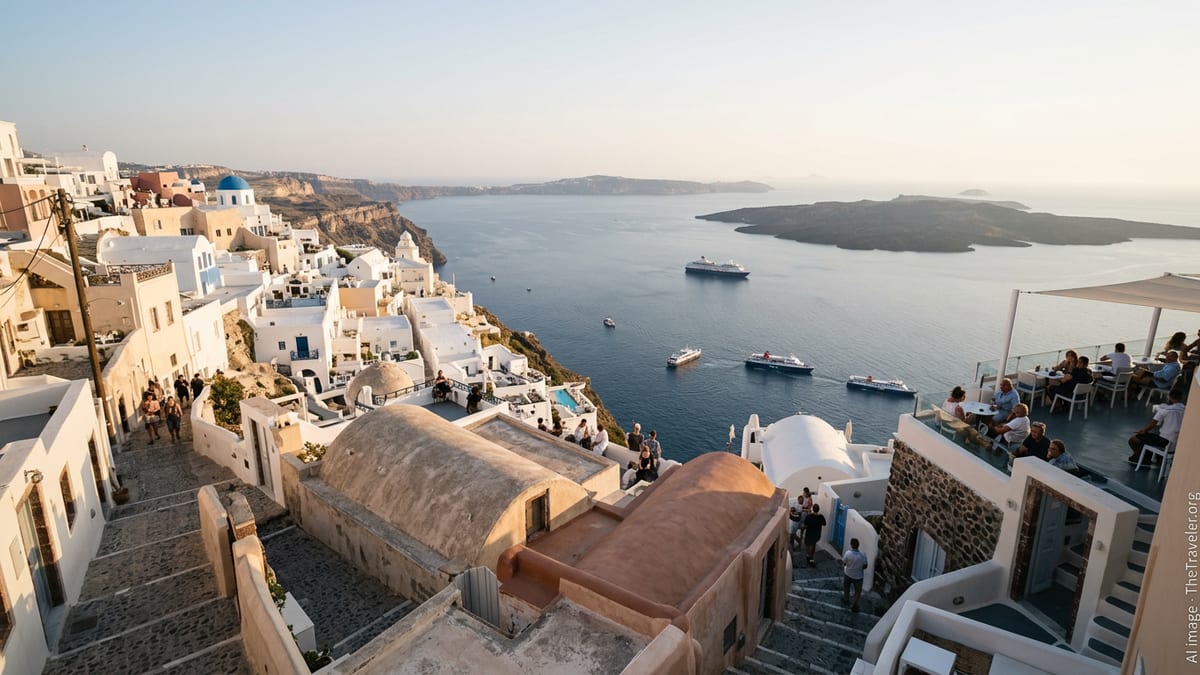
Croatia’s core appeal remains its geography. A jagged Adriatic coastline studded with more than a thousand islands, walled cities and clear waters continues to draw comparisons with the Greek archipelagos and Italy’s coastal towns. Popular hubs such as Dubrovnik, Split, Hvar and Rovinj are now fixtures on European cruise, yacht and island-hopping itineraries, often appearing in the same brochures as Santorini, Mallorca or the Côte d’Azur.
Travel guides and tour operators are increasingly promoting Croatia as a modular destination that can anchor a broader European trip. Visitors combine the medieval streets of Dubrovnik with wine tasting on the Pelješac Peninsula, sailing among the central Dalmatian islands or exploring the Venetian heritage of Istria, in patterns similar to how travelers pair Barcelona with the Costa Brava or Athens with the Cyclades.
Inland, national parks such as Plitvice Lakes and Krka offer lake and waterfall landscapes that contrast with the coast and appeal to hikers and families seeking respite from high-summer heat. Zagreb, often positioned as a smaller, more relaxed counterpart to city-break stalwarts like Prague or Vienna, benefits from improved rail and air connections and rising interest in year-round travel.
For 2026, planning resources aimed at American, British and German travelers particularly emphasize flexibility. With later booking patterns and tighter budgets, Croatia’s mix of camping, private apartments, villas and hotels allows visitors to adjust comfort levels while maintaining proximity to beaches, historic centers and ferry ports.
Croatia’s Competitive Edge in a Crowded European Summer
European tourism reports for 2025 and 2026 portray a Mediterranean region in which traditional leaders like Spain, Italy, France and Greece continue to dominate overall numbers, but where emerging or resurgent destinations on the Adriatic are capturing a growing share of demand. Studies by regional economic and tourism institutes list Croatia alongside Montenegro and Albania as markets that are “outperforming the broader landscape” in terms of growth and brand momentum.
Several factors underpin Croatia’s competitive position. The country offers many of the attributes that draw visitors to Western and Southern Europe, including historic architecture, coastal scenery, food and wine, and cultural festivals, yet in many areas it still retains a smaller-scale, less urbanized feel. In travel media coverage, Istria is frequently described as a “destination dupe” for Northern Italy’s coastal towns, offering similar stone-built villages and truffle-rich cuisine, often at more moderate price points outside the most saturated hotspots.
At the same time, Croatia is not immune to the pressures affecting its peers. Inflation, overtourism in certain historic centers and environmental concerns related to cruise traffic and coastal development are increasingly part of the conversation. National and local authorities have introduced new regulations and fees in recent years, mirroring policies in Spain, France and Greece aimed at spreading visitor flows and protecting heritage sites.
Even with these challenges, forecasts for the 2026 season suggest that Croatia is consolidating its place among Europe’s essential summer escapes. For travelers weighing where to spend their limited vacation days, the country now stands alongside Spain, the United Kingdom, France, Germany, Italy, Greece and other renowned European nations as a comparably compelling choice, combining ease of access, evolving infrastructure and a still-distinct sense of place along the Adriatic.