

Mexico’s residency system offers multiple pathways for foreign nationals, yet denial rates remain significant at both consulates abroad and immigration offices inside the country. Understanding why some Mexico residency applications are rejected is essential for relocation planning, risk assessment, and timing of a potential move. Rejections usually stem less from a single dramatic issue and more from accumulations of technical, financial, and procedural problems that leave officials with legal grounds to refuse the case.
How the Mexico Residency Decision Process Works
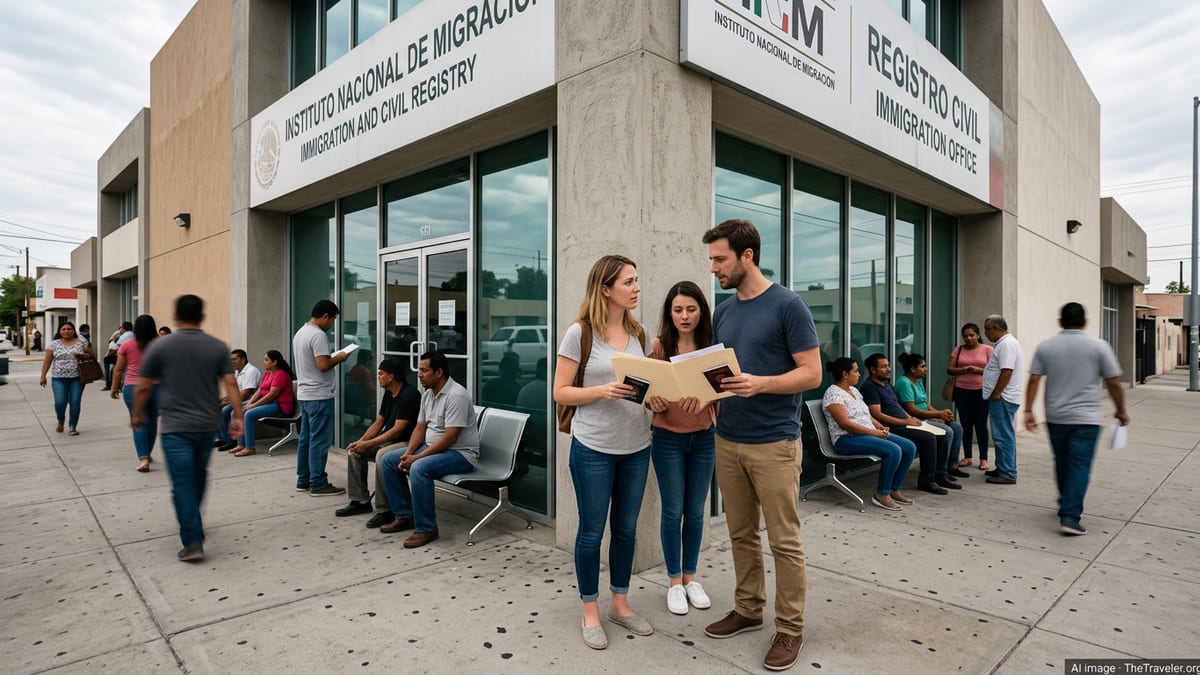
Mexico residency applications typically involve two decision stages. First, a Mexican consulate abroad assesses eligibility and issues a residency visa in the passport if approved. Second, once the applicant enters Mexico with that visa, the National Migration Institute (Instituto Nacional de Migración, INM) decides whether to exchange it for a resident card. Rejections can occur at either point: the consular stage or the in-country INM stage.
Decision makers are bound by Mexico’s Migration Law and its regulations, but they also exercise discretion within those rules. Consulates may scrutinize economic solvency, the credibility of documentation, and the consistency of the applicant’s declared purpose in Mexico. INM offices inside Mexico focus more on technical compliance, deadlines, prior immigration history, and document integrity. Applicants should therefore expect that approval requires not just meeting a published requirement but also presenting a file that is internally consistent and procedurally correct.
For relocation planning, this means that “meeting the rules on paper” does not guarantee approval. In practice, each stage functions as an independent risk gate. An applicant might clear the consulate but be refused by INM for paperwork or timing errors. Conversely, an applicant might be rejected at the consulate and never reach the in-country stage at all.
Prospective movers benefit from viewing the process as a compliance pipeline rather than a single yes/no decision. The more steps in that pipeline that can go wrong – such as translations, apostilles, appointments, and online forms – the higher the cumulative probability of a denial.
Financial and Economic Solvency Pitfalls
A major category of rejections involves failure to convincingly meet the economic solvency thresholds that underpin several residency categories. Mexican consulates publish minimum income or asset levels expressed in multiples of the Unidad de Medida y Actualización (UMA), a government index that is adjusted annually. In early 2026, many consulates require monthly after-tax income equivalent to roughly 300 UMA or average savings balances around 5 000 UMA or more, although exact figures and currency conversions vary by post and year.
Applications are often rejected when financial documentation is incomplete, inconsistent, or fails to match the consulate’s interpretive criteria. Common problems include presenting income that is too recent, irregular, or non-verifiable; using bank statements that do not clearly show account holder names; or relying on temporary deposits that appear to be borrowed funds. Some consulates give little weight to cash deposits without traceable origin or to income that is mostly commission-based without long-term history.
Another source of denial is misunderstanding which financial criteria apply. Economic solvency routes can be based on recurring monthly income (such as pensions) or on substantial investment/savings balances maintained over a set number of months. Some applicants prepare only one of these profiles even though the consulate expects a different one for the category chosen. If the officer concludes that income is unstable, not genuinely under the applicant’s control, or not high enough relative to the local threshold, the case may be refused even if the applicant believes they “technically” qualify.
Relocation planners should assume that financial requirements are a floor rather than a target. Income or savings that barely meet the threshold, or that depend on optimistic exchange rates, increase rejection risk. Providing clear, multi-month statements, tax returns where available, and evidence of long-term financial stability reduces the chance that a consular officer will exercise discretion against the application.
Documentation Errors, Inconsistencies, and Translation Issues
Technical documentation errors are one of the most underestimated reasons for Mexico residency denials. Mexican authorities place strong emphasis on consistency of identity data across all documents. Seemingly minor discrepancies such as a missing middle name, a misplaced initial, differences in accent marks, or inconsistent surnames between civil documents and passports have led to applications being refused or sent back for correction.
Problems are frequently reported when foreign birth certificates, marriage certificates, and divorce decrees do not align with Mexican naming conventions. For example, if a marriage certificate shows one spelling of a surname and the passport another, INM or a consulate may not accept the relationship or identity as properly proven. In family-based applications, errors in the Mexican spouse’s civil registry documents or unregistered marriages can cause rejections even when the relationship is genuine.
Another recurring issue is incomplete legalization or translation. Many civil documents must be apostilled or legalized in the country of origin and then translated into Spanish by approved translators. Submitting documents without apostilles where required, providing uncertified translations, or mixing languages within a file can all trigger rejection or at least suspension until corrected. Some offices strictly time-limit the validity of foreign documents and may reject those issued more than a set number of months earlier.
To reduce risk, prospective applicants should conduct a pre-filing audit of all personal and family documents. Matching names, dates, and places of birth across passports, civil records, and translations is a practical prerequisite. Where inconsistencies exist, it is often necessary to obtain corrections or supplemental documents in the home country before applying, which can materially affect relocation timelines.
Procedural Noncompliance and Missed Deadlines
Many Mexico residency rejections are not about eligibility but about procedure. After a consulate grants a temporary or permanent resident visa in the passport, the individual must typically enter Mexico within the validity period of that visa. Once in Mexico, there is a legal deadline – often 30 calendar days from entry – to submit the in-country application for the resident card at an INM office. Missing this deadline can result in the process being refused or reset, sometimes forcing the applicant to start over at a consulate.
Additional procedural obligations arise during the life of the residency. Holders are required to notify INM of changes of address, marital status, and certain employment changes within specified time limits, generally around 90 days depending on the case type. Failing to report changes can lead to fines and complications when renewing or changing status. In severe cases or after long periods of noncompliance, INM may determine that the status has lapsed or is no longer valid, effectively blocking renewals or upgrades.
Applicants also face procedural risks relating to appointments and online systems. Key steps, such as booking an appointment, printing standardized forms, and generating payment references, are managed through INM’s online platform. Periodic system errors, unavailable appointment slots, or incorrect form entries can cause deadlines to be missed. Some local INM offices are reported to be strict about rejecting files when dates on forms, entry stamps, or payment receipts do not align exactly with the legal timeline.
From a relocation planning perspective, the practical implication is that Mexico residency should not be attempted in a compressed travel window. Sufficient buffer time is necessary to handle appointment rescheduling, corrections to forms, or unexpected procedural requests without drifting past statutory deadlines that could trigger denial.
Immigration History, Status Violations, and Security Concerns
Another cluster of rejection reasons relates to an applicant’s prior immigration behavior and broader security profile. Under the Migration Law, authorities may refuse residency to individuals with serious criminal convictions, unresolved criminal proceedings, or backgrounds that could be viewed as compromising public security. Even in the absence of convictions, serious allegations or ongoing investigations can prompt closer scrutiny or denial.
Past immigration violations inside Mexico or in other countries can also negatively affect residency applications. Overstaying visitor entries, working without authorization, or repeatedly using short-term visits in a way that appears equivalent to de facto residence can prompt officials to question whether the applicant will comply with residency conditions. In some cases, prior deportations or administrative removals from Mexico lead to formal ineligibility for new residency, at least for a period of years.
Applicants sometimes underestimate the impact of mistakes made at the border or during previous stays. Entering via automated gates without correctly registering residency status, failing to keep proof of legal entry, or re-entering as a tourist while holding a resident card can generate status confusion. When INM records do not clearly match the status claimed in a new application, officials may elect to reject the case until the history is clarified, which often requires specialized legal assistance.
For those with complex histories, early professional review of prior entries, exits, and any encounters with immigration authorities is advisable. Identifying potential red flags before lodging a new application allows prospective movers to realistically assess whether Mexico residency is feasible at all or will require additional remediation steps.
Consular Discretion and Inconsistent Criteria Between Posts
Mexico’s consular network has considerable discretion in how residency eligibility standards are interpreted and applied. While national law and UMA-based minimums provide a common framework, individual consulates can and do differ on how strictly they verify finances, how they treat various income sources, and what supplementary documents they demand. As a result, an application that would likely be approved at one consulate may be rejected at another.
Applicants have reported denials where they appear to meet the published economic thresholds but are refused with minimal explanation, reflecting a discretionary judgment about risk or credibility rather than a simple numeric shortfall. Some posts may be particularly cautious about applicants whose stated intention is to live long term without clear ties to Mexico beyond lifestyle preferences. Others may focus heavily on documentation format and completeness, refusing to accept any documents that do not exactly match their preferred template.
There is no formal appeal mechanism in many consular situations beyond reapplying or trying at a different consulate with jurisdictional justification. This practical non-reviewability makes consular stage decisions especially important for relocation planning. A refusal at the consular gate can delay a relocation by months or render it impractical if financial circumstances cannot be improved.
Prospective residents should therefore treat the selection of consulate, understanding of its specific practices, and preparation according to its published checklist as strategic decisions rather than administrative afterthoughts. Gathering more documentation than the bare minimum, and ensuring that the narrative of the application aligns with the chosen residency category, can mitigate discretionary refusals but cannot eliminate them entirely.
Local INM Interpretation and Office-to-Office Variability
Even after passing the consular stage, applicants must navigate variability among local INM offices within Mexico. The Migration Law sets national rules, but day-to-day file handling is conducted by regional delegations, each with its own workload, appointment availability, and informal thresholds for documentation quality. Reports indicate that some offices rigidly reject applications over minor typos or formatting issues, while others are more willing to allow on-the-spot corrections.
Variability extends to how strictly offices enforce deadlines for renewals, changes of condition, or address updates, as well as how they handle cases involving prior status lapses or irregular entries. An applicant whose file is accepted in one state may encounter greater resistance when trying to renew or modify status in another state if records are incomplete or if earlier noncompliance is discovered.
This local variability effectively increases the number of potential failure points in the residency process. Applicants who change residence within Mexico, or who move between INM jurisdictions, may find that their assumptions based on experiences in one office do not hold in another. In extreme cases, an office may question the validity of previous decisions and refuse a new application on that basis.
From a relocation risk-management standpoint, understanding the typical processing climate in the intended state of residence is relevant. High-volume cities can experience backlogs and stricter file triage, while smaller offices may have fewer appointments but more individualized scrutiny. Either pattern increases the likelihood that procedural or historical issues, left unresolved, will contribute to rejection.
Risk Mitigation for Prospective Applicants
While the focus here is on why residency applications are rejected, the same factors can be used to build a preventive strategy. Prospective movers evaluating whether a relocation to Mexico is practical should realistically test their profile against known rejection drivers. Doing so early, before giving up housing or employment in the home country, helps avoid situations where a denied application leaves the individual without a stable base.
A practical framework involves four internal checks. First, a financial robustness test: income and savings should comfortably exceed current UMA-linked thresholds at the relevant consulate, with documented history over the requested number of months. Second, a documentation integrity audit: all civil documents should be checked for name, date, and place consistency, correctly apostilled, and translated as required. Third, a procedural readiness review: applicants should map key deadlines, including visa validity, entry windows, and INM filing time limits, and confirm they can remain in Mexico long enough to complete each step.
Fourth, an immigration history and risk review is necessary for anyone with prior overstays, removals, or criminal matters in any country. In such cases, the practical risk of rejection is higher, and relocation plans should incorporate alternative scenarios, such as needing additional legal processes or choosing a different destination country if Mexico residency proves unviable.
Using these checks, individuals can categorize themselves into lower, medium, or higher rejection risk. Those in higher-risk categories may still pursue residency, but with eyes open to the possibility of refusal and its implications for long-term relocation planning, family moves, schooling, and employment transitions.
The Takeaway
Mexico residency applications are rejected for a combination of financial, documentation, procedural, and discretionary reasons rather than a single predictable factor. Economic solvency thresholds based on UMA often operate as moving targets, and consulates apply them with differing degrees of strictness. Documentation inconsistencies, especially around names and civil status, routinely derail otherwise viable applications, while missed deadlines and unreported changes of circumstances can cause valid statuses to lapse.
At the same time, an applicant’s immigration and security history can surface late in the process and provide grounds for refusal even after significant time and resources have been invested. Overlaying all of this is institutional variability: consular posts and local INM offices differ in how they interpret rules, how they handle technical errors, and how much explanatory detail they provide with a denial.
For individuals evaluating whether a move to Mexico is practical, the central insight is that residency is not purely a legal eligibility question. It is a compliance project that requires adequate financial strength, carefully curated documents, calendar discipline, and tolerance for bureaucratic variability. Those who plan for these realities, rather than assuming a straightforward rubber-stamp process, are better positioned to avoid rejection or to absorb it into a broader relocation strategy.
FAQ
Q1. What is the most common reason Mexico residency applications get rejected?
The most common reason is failure to convincingly meet the economic solvency requirements, often due to incomplete or inconsistent financial documentation rather than pure income shortage.
Q2. Can minor name or date errors really cause a residency refusal?
Yes. Small discrepancies in names, initials, spellings, or dates between passports and civil documents can lead officials to question identity or relationships and may result in rejection.
Q3. If a consulate refuses my residency visa, can I appeal the decision?
In practice, formal appeal options are limited. Most applicants respond to a refusal by correcting issues and reapplying, sometimes at the same consulate and sometimes at another with proper jurisdiction.
Q4. How strict are the financial thresholds set by Mexican consulates?
Thresholds are treated as minimums, not targets. Applicants who only just meet the numbers, or rely on irregular income, face a higher risk of refusal at the officer’s discretion.
Q5. Can previous overstays in Mexico affect a new residency application?
Yes. Prior overstays, status violations, or confusion about past entries can prompt officials to doubt compliance and may cause delays, extra scrutiny, or outright refusal.
Q6. What happens if I miss the deadline to exchange my consular visa for a resident card?
Missing the in-country filing deadline can result in the application being rejected and may force you to restart the process at a consulate, adding cost and time.
Q7. Do all INM offices in Mexico interpret the rules the same way?
No. Local INM offices vary in strictness, appointment availability, and tolerance for file errors, which means outcome risk differs somewhat by location.
Q8. Can a clean criminal record guarantee my residency will be approved?
No. A clean record helps, but approval still depends on finances, documentation, procedures, and how officials interpret your overall profile and intentions.
Q9. Is it safer to apply based on savings or monthly income?
Neither route is universally safer. The better option is the one where you can clearly exceed the threshold with well-documented, stable funds over the required time period.
Q10. How early should I start preparing documents to reduce rejection risk?
Starting at least several months in advance is advisable to allow time for apostilles, certified translations, corrections of civil records, and gathering sufficient financial history.