

More news on this day
Two of Europe’s most popular winter-sun escapes, Tenerife and Lanzarote in Spain’s Canary Islands, now feature prominently on several 2026 “do not travel” and high‑risk lists compiled by insurers, risk consultants and nervous travelers, reflecting a mix of overtourism tensions, climate‑driven hazards and shifting public sentiment around mass tourism.
Get the latest news straight to your inbox!
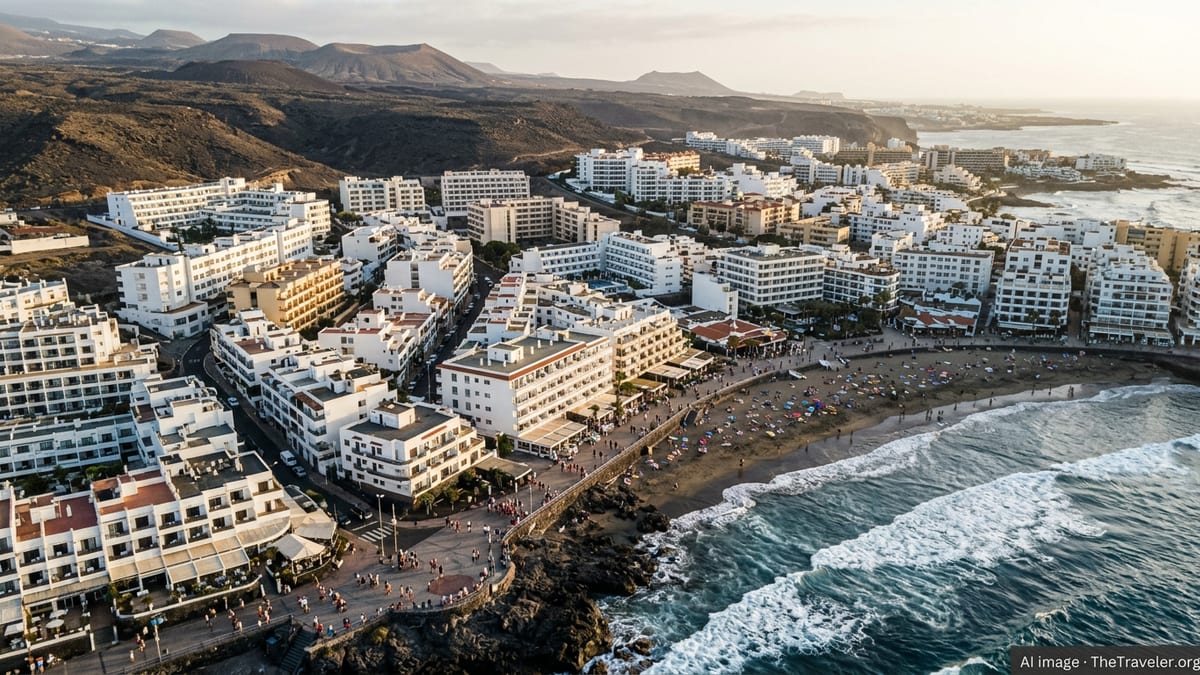
How “Do Not Travel” Labels Are Being Applied in 2026
Traditional government advisories from countries such as the United States and the United Kingdom continue to treat Spain, including the Canary Islands, as a moderate‑risk destination rather than an outright no‑go country, generally recommending only that travelers exercise increased caution. Publicly available advisories describe nationwide issues such as terrorism, petty crime and civil unrest, but they do not single out Tenerife or Lanzarote as places where all travel should cease.
The phrase “do not travel,” however, appears more frequently in 2026 in documents produced by private risk consultancies, travel insurers and corporate security teams. Global risk maps released ahead of the 2026 holiday season classify parts of Spain, including the Canary archipelago, as areas where travelers may face heightened disruption from protests, climate‑related events and infrastructure strain, even when overall security is rated as relatively stable.
At the same time, online travel forums, consumer sites and some media coverage increasingly use “do not travel” informally to flag destinations where visitors are likely to encounter social tension or environmental stress rather than direct physical danger. In this sense, Tenerife and Lanzarote have become symbolic flashpoints in a wider debate about where mass tourism is still welcome, and under what conditions it should continue.
The result is a perception gap: official country‑level advisories still emphasize general safety, while commercial and grassroots “do not travel” lists give more weight to quality‑of‑experience and ethical concerns. For would‑be visitors, understanding who is issuing the warning and on what basis has become as important as the headline phrase itself.
Overtourism Backlash: Protests, Graffiti and Local Anger
Over the past two years, Tenerife and Lanzarote have been at the center of some of Spain’s most visible anti‑tourism protests. Demonstrations that began in 2024 intensified as residents complained about soaring housing costs, low‑wage service jobs and environmental pressure linked to record visitor numbers across the archipelago. Coverage in European media has highlighted banners and graffiti carrying stark messages such as “tourists go home” and “your tourism, our misery,” capturing the frustration of locals who feel their islands have reached a tipping point.
Research on Spanish overtourism trends indicates that the Canary Islands, with a resident population of just over two million, received more than fifteen million tourists in 2024, putting a disproportionate burden on local infrastructure. Environmental organizations have supported calls from island groups for limits on new hotel construction and a moratorium on certain large resort projects, particularly on Tenerife, where activists staged hunger strikes over controversial coastal developments.
In Lanzarote, long‑running debates over water use, waste management and the impact of short‑term rentals have resurfaced as new visitor records were set. Local advocacy groups argue that budget flights and cheap package deals have encouraged a volume‑driven model of tourism that the island can no longer sustain without further degrading natural landscapes and pricing residents out of traditional neighborhoods.
These tensions have fed into the “do not travel” narrative by signaling to ethically minded travelers that their presence might exacerbate local grievances. While many residents still depend on tourism and welcome respectful visitors, the visibility of protests has prompted some travel writers, bloggers and insurers to advise clients to reconsider trips or at least to research local sentiment carefully before booking.
Climate and Weather Risks in a Changing Canary Islands
Beyond social tensions, Tenerife and Lanzarote are facing mounting climate and weather‑related challenges that factor into 2026 risk assessments. The Canary Islands have already experienced severe wildfires, notably a major blaze in Tenerife in 2023 that burned large swathes of forest and prompted widespread evacuations. Such events have raised questions about how future heatwaves and drought conditions might interact with tourist seasons concentrated in the driest months.
Recent European windstorm seasons have also brought powerful Atlantic storms across the region, with official meteorological bulletins noting hurricane‑force gusts, heavy rain and waves exceeding several meters around the archipelago during late 2025 and early 2026. While the islands’ infrastructure is generally resilient, these storms have resulted in temporary port closures, flight disruptions and warnings against coastal activities, all of which can significantly affect short‑term holiday plans.
Weather agencies have issued alerts for episodes of calima, the dust‑laden haze that periodically blows from the Sahara. Forecasts in February 2026 pointed to widespread haze, reduced visibility and unseasonably warm temperatures across the islands, factors that can aggravate respiratory issues and diminish the appeal of outdoor excursions. For travelers with health vulnerabilities, these advisories are increasingly relevant when assessing whether, and when, to visit.
Risk consultancies and some travel insurers now explicitly incorporate these environmental factors into their 2026 destination ratings. Tenerife and Lanzarote are not alone in facing such scrutiny, but their heavy dependence on outdoor leisure and fragile volcanic landscapes means that climate volatility has an outsized impact on the visitor experience.
What 2026 Travelers Should Check Before Booking
For tourists weighing a trip to Tenerife or Lanzarote in 2026, the presence of the islands on “do not travel” style lists does not necessarily imply an immediate threat to personal safety. Instead, it signals a higher probability of disruption, protest activity or ethical dilemmas around overtourism. Travelers are encouraged by publicly available guidance to review both official government advisories and independent risk assessments, paying close attention to sections covering demonstrations, environmental hazards and infrastructure conditions.
A key practical step is to examine travel insurance wording. Many policies differentiate between general caution advisories and explicit warnings against all but essential travel. Where a private risk map or corporate advisory labels a destination high‑risk, insurers may impose additional conditions, higher premiums or exclusions related to civil unrest or natural disasters, even if foreign ministries stop short of advising against travel altogether.
Prospective visitors may also wish to monitor local and national news from Spain to track any escalation in protests or legislative moves to restrict tourism. In recent years, Spanish regions have considered or introduced measures such as higher eco‑taxes, limits on short‑term rentals and caps on visitor numbers to certain natural sites. Similar policy shifts in the Canary Islands could alter the cost and character of a holiday on relatively short notice.
Finally, travelers who choose to go despite cautionary labels can reduce their footprint by opting for locally owned accommodation, using public transport where possible, avoiding environmentally sensitive areas during peak periods and respecting calls from communities to behave responsibly. For many residents, the question is not whether visitors should come at all, but whether those who do arrive contribute to the long‑term health of the islands rather than to their perceived decline.
A Symbol of Tourism’s Global Crossroads
The elevation of Tenerife and Lanzarote onto 2026 “do not travel” lists reflects broader global conflicts about the future of tourism. As destinations from Barcelona to Bali grapple with anti‑tourism protests, rising housing inequality and climate emergencies, the Canary Islands have become a high‑profile case study in how beloved holiday spots can struggle under the weight of their own popularity.
Published research and policy debates portray the archipelago as caught between economic reliance on visitor spending and the social and environmental costs that accompany it. Residents’ calls for fewer arrivals, higher‑spending guests and stricter environmental protections challenge long‑standing growth models that many tour operators and airlines still promote.
For now, Tenerife and Lanzarote remain open to travelers in 2026, with flights operating, hotels accepting bookings and no blanket state‑imposed ban on tourism. Yet their new visibility on risk maps and informal “do not travel” lists suggests that the decision to visit is becoming more ethically and practically complex. Holidaymakers contemplating these islands this year are being urged, implicitly and explicitly, to weigh not only sun and sand, but also their role in a destination approaching a crossroads.