

More news on this day
A new wave of rail itineraries linking Scotland with Switzerland, France and Germany is turning glass-roofed train journeys into winter’s most sought-after way to see Europe, as panoramic carriages sell out weeks in advance and tour operators reshape their cold-season offerings around snow-framed views from the tracks.
Get the latest news straight to your inbox!
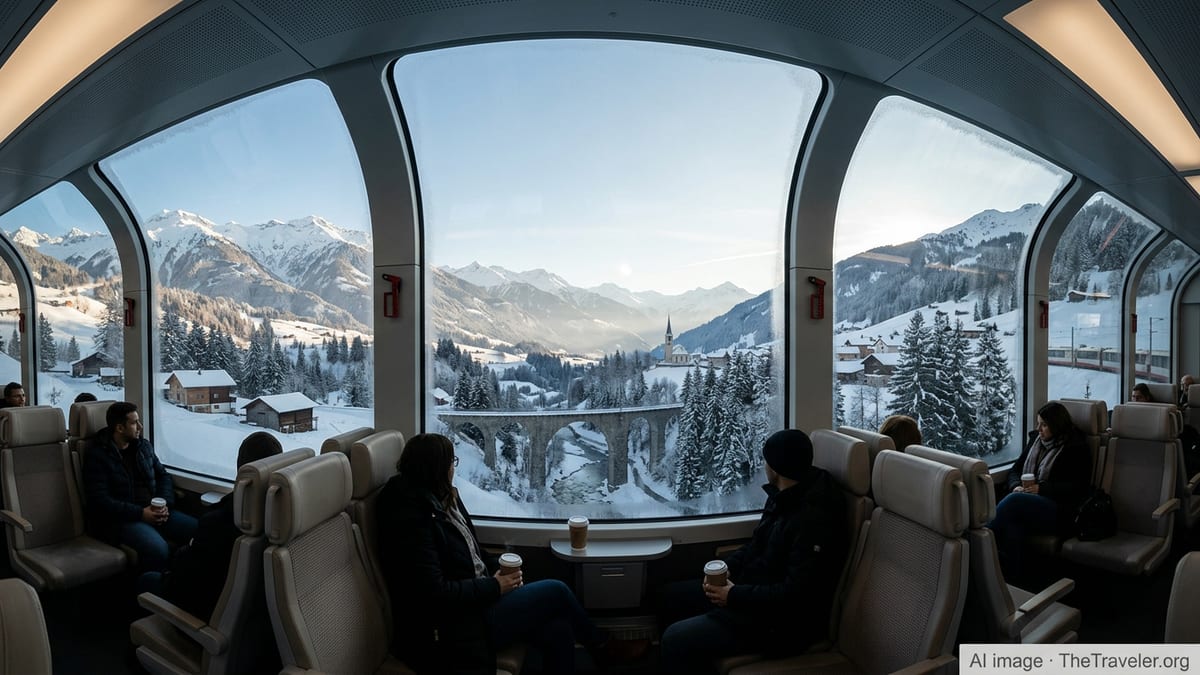
Scotland’s Scenic Lines Point North To A New Winter Obsession
Recent winter travel coverage has highlighted how Scotland’s rail network, including famed routes through the Highlands, is inspiring travelers to look for similarly immersive journeys across the continent, rather than defaulting to low-cost flights. Reports indicate that demand for off-peak rail tickets to and from Scottish hubs such as Edinburgh and Glasgow has risen alongside interest in onward connections into mainland Europe, as travelers search for slower, more scenic ways to move south in the colder months.
Industry brochures for 2025 and 2026 now routinely showcase combined rail holidays that begin on Scottish lines and continue via overnight services to the continent, positioning Scotland as a northern gateway to some of Europe’s most dramatic glass-roofed trains. Travel companies are promoting step-by-step itineraries that move from misty lochs and peat bogs to snowbound Alpine passes, all without leaving the rail network.
Commentary in European travel media suggests that this shift is part of a broader move toward low-impact, high-experience journeys. For winter rail fans starting in Scotland, the focus is no longer simply on reaching a ski resort or Christmas market; the draw is the continuous window-seat narrative that unfolds as landscapes change from Atlantic edge to high Alpine core.
Switzerland’s Panoramic Carriages Set The Benchmark
In mainland Europe, Switzerland has become the focal point for this trend, with glass-roofed trains such as the Glacier Express, Bernina Express and GoldenPass Express promoted as definitive winter experiences. Publicly available information from Swiss rail operators describes panoramic coaches with oversized windows curving into the roofline, designed so that snowfields, viaducts and jagged peaks remain in sight even on tight mountain turns.
Tourism platforms report that winter departures on these services increasingly book out well in advance, particularly in premium classes that guarantee window seats and uninterrupted views. The Glacier Express, often marketed as one of the slowest express trains in the world, is presented as a full-day traverse of deep gorges and high passes, while the Bernina line crosses a UNESCO-listed section of the Alps on a route known for frozen lakes and heavy snowdrifts along the track.
National and international travel magazines have repeatedly ranked these Swiss routes among Europe’s top winter journeys, citing their combination of reliable operations in snowy conditions and dramatic high-altitude scenery. The glass-roof concept, which started as a niche tourism product on a handful of lines, is now treated as a signature of Swiss winter rail travel, shaping expectations for similar experiences elsewhere on the continent.
France Adds Alpine Drama And High-Speed Access
France provides a crucial link in winter rail itineraries that start in the British Isles and end in the Alps, with high-speed services carrying travelers from northern cities to mountain gateways in a matter of hours. According to published timetables and tour descriptions, these trains connect major hubs with stations serving the French Alps, where regional and scenic lines take over and move deeper into snow-covered valleys.
Recent rankings of Europe’s best winter trains have highlighted French mountain routes that climb toward glaciers and high plateaus, often in refurbished carriages with enlarged windows designed for sightseeing. While not all services feature full glass roofs, operators have increasingly emphasized wide, floor-to-ceiling glazing, marketing the lines as moving viewing platforms for winter landscapes.
Travel features point out that, for many itineraries beginning in Scotland or northern England, France is now seen less as a destination in itself and more as a crucial, visually rich corridor that bridges the North Sea region and the heart of the Alps. The combination of high-speed access and scenic branch lines allows travelers to transition in a single day from maritime climates to deep snow, with the journey marketed as part of the holiday rather than a logistical step.
Germany’s Forest Routes Complete A Pan-European Arc
Germany has quietly added its own layer to the glass-roof narrative through lines threading the Black Forest and the Upper Rhine. Features in international travel outlets describe winter trains passing half-timbered villages and steep, tree-lined slopes, particularly on routes that trace the edge of the Rhine or cut across wooded uplands between France and Switzerland. Some long-distance services running between German and Swiss cities now include first-class panorama cars, giving passengers a broader field of view across riverbanks and valleys.
Cross-border schedules show how these German routes knit into the same network of panoramic journeys that travelers reach via Scotland and France. From a practical standpoint, they offer additional options for those piecing together multi-country rail passes, and they give winter travelers more scenic mileage on the way to or from Alpine hubs.
Published itineraries from rail-focused tour operators increasingly frame Germany as the middle chapter in a longer story that starts in Britain, dives into the Alps and returns via forested corridors lined with Christmas markets and riverside towns. The effect is to turn what might once have been considered a transit leg into another highlight, especially when low winter sun, mist and snow combine to soften the landscape as seen through wide windows.
Glass-Roofed Trains Turn Winter Into The Peak Season
The growing popularity of glass-roofed trains is also shifting how operators plan their seasons. Reports from rail tourism specialists suggest that winter, once seen as a quieter period outside the main summer holiday rush, is now a primary selling point for panoramic services. Snow cover, low-angle light and frozen rivers are marketed as reasons to ride in January or February rather than avoid the cold months.
Booking data shared in industry summaries indicates that demand for panoramic seats has risen to the point where reservations are recommended several months before peak festive and school holiday periods. This pattern holds across key routes in Switzerland, and similar pressure is emerging on popular winter lines in France and Germany that connect with the Alpine network.
From a traveler’s perspective, the emerging consensus in guidebooks and travel columns is that the most memorable way to cross Europe in winter is now by train, not plane or motorway. Beginning in Scotland and continuing through France, Germany and Switzerland, a network of glass-roofed and panoramic trains offers something close to a continuous moving observatory. Combined with growing concern about emissions and a desire for slower, more experiential journeys, that view from the carriage roofline appears to be turning winter rail travel into the season’s defining way to see the world.