


More news on this day
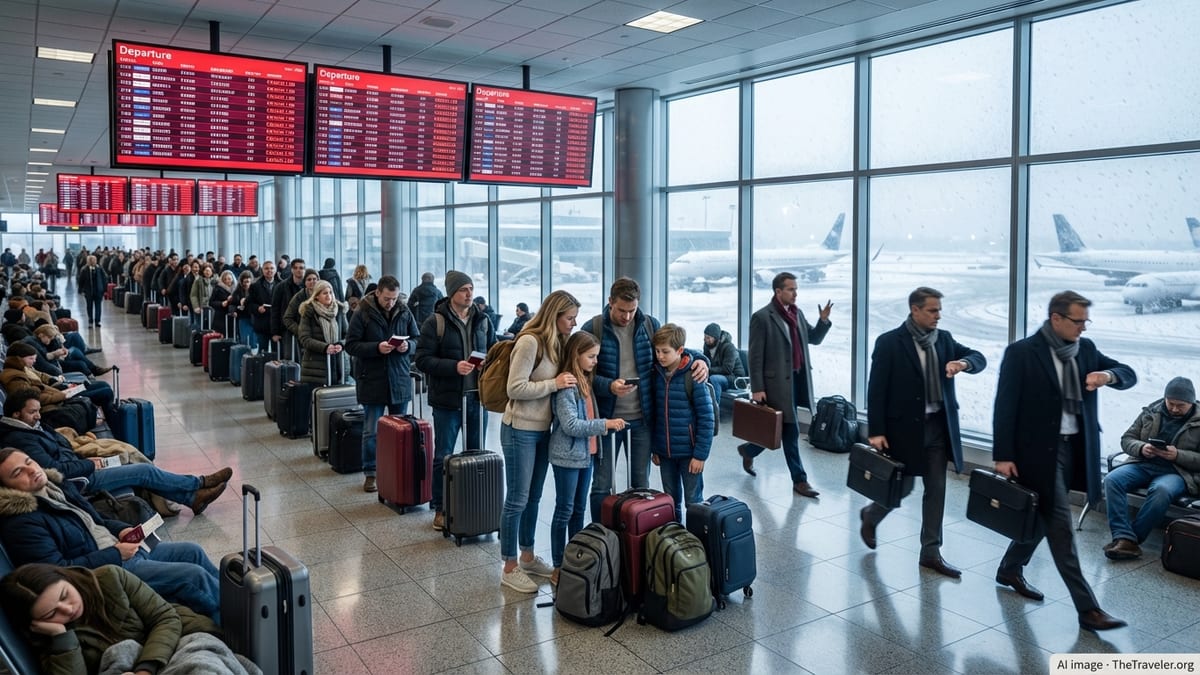
Wild weather is disrupting travel on multiple continents this week, as heatwaves, violent storms and gale-force winds trigger flight cancellations, rail slowdowns and hazardous driving conditions for summer travelers.
Get the latest news straight to your inbox!
Heatwave strains Europe’s railways and tourism hotspots
Across much of western and central Europe, an early-summer heatwave is pushing temperatures toward 40 degrees Celsius and placing intense pressure on transport systems heavily used by tourists. Publicly available information from European media and rail operators shows repeated warnings about slower services, train cancellations and reduced frequencies as tracks, overhead lines and older rolling stock struggle with prolonged high temperatures.
In the United Kingdom, coverage in national outlets indicates that rail companies have urged passengers to travel only if essential as temperatures climb under a rare red extreme-heat alert. Reports describe trains running at reduced speeds to protect steel rails from buckling, while some intercity services are curtailed to limit the risk of overheating on board. London’s busy commuter routes and underground lines are also operating under heat-related speed restrictions, lengthening journey times for residents and visitors.
On cross-border routes, operators are adjusting timetables and cutting some services outright. Information from travel advisories shows that at least a handful of high-speed trains between London and Paris have been cancelled on selected days, with operators citing adverse weather on their networks and offering affected passengers the option to rebook. In major cities such as Paris, Rome and Berlin, tourism coverage describes visitors queuing at fountains and seeking shade near landmarks as city authorities activate heat plans and advise against travel in the hottest hours of the day.
These conditions echo concerns raised in a recent report from the European rail sector on climate resilience, which found a sharp rise in extreme-weather-related delays over the past two decades. The current heatwave is acting as a real-time stress test, exposing the vulnerability of ageing infrastructure and non-air-conditioned trains just as peak holiday season begins.
Storms and flooding snarl air travel across the United States
In North America, severe thunderstorms, tropical downpours and localized flooding have disrupted air travel at several major hubs. Meteorological summaries and airline-status dashboards show repeated ground stops and delays at airports from Texas to the Midwest and the Northeast, as storm cells track along key flight corridors.
In the Chicago area, recent coverage from local outlets describes a ground stop for arrivals into O’Hare International Airport during an evening round of intense thunderstorms, with passengers urged to check their flight status as lightning, wind and heavy rain forced aircraft to hold or divert. According to published figures from airport monitors, hundreds of flights faced delays and a number were canceled as storms swept through the region.
Farther south, a violent stretch of weather linked to the remnants of Tropical Storm Arthur brought what meteorologists described as a once-in-decades rainfall event to parts of the Gulf Coast. Public information compiled by national media and the National Weather Service details widespread flooding, road closures and storm reports across several states. In Jefferson Parish, near New Orleans, storm-related damage included a freight train derailment, underscoring how heavy rain and saturated ground can ripple through both freight and passenger networks.
Forecasts for the coming days point to further instability across parts of the Midwest and Northeast, with weather services highlighting the potential for damaging winds, large hail and additional flash flooding. Travel waivers posted by some airlines for affected dates indicate that carriers anticipate continued schedule disruption as summer storms intersect with some of the busiest weeks of the year for domestic travel.
High winds and heavy seas hit southern hemisphere routes
While the northern hemisphere wrestles with heat and thunderstorms, powerful wind systems are battering transport links in parts of the southern hemisphere. Live local coverage from New Zealand on June 26 describes strong winds lifting roofs, downing trees and prompting warnings of potential restrictions on the Auckland Harbour Bridge as gusts approach highway safety thresholds.
Airports in affected regions are reporting weather-related disruption, with domestic flights canceled or delayed as airlines and air-traffic controllers adjust operations to shifting crosswinds and low cloud. Ferry operators have also warned of possible sailing cancellations as high seas and gale-force winds make some coastal and inter-island crossings unsafe. For travelers combining flights, road journeys and ferry legs, the compounding effect of each mode experiencing weather constraints can produce knock-on delays lasting many hours.
These episodes mirror a broader pattern seen earlier in the year, when successive storm systems across northern Europe and the North Atlantic led to temporary port closures, diversions of transatlantic flights and power outages in several countries. For long-haul travelers in particular, such conditions increase the risk that a localized weather event at a single hub can trigger missed connections across multiple continents.
Infrastructure under pressure as climate extremes intensify
Beyond the immediate travel headaches, this week’s disruptions highlight a deeper structural issue: many transport networks remain tuned to historical weather norms that are being rapidly overtaken by climate realities. A recent analysis from the European railway sector, for example, catalogued more than ten thousand extreme-weather incidents between 2005 and 2024 and identified a clear upward trend in disruption days as heatwaves, intense rainfall and windstorms become more frequent.
Similar concerns are emerging in aviation. Research cited in industry briefings notes that higher average temperatures can reduce aircraft performance, requiring longer takeoff distances and occasionally forcing payload restrictions at certain airports. Combined with more frequent severe thunderstorm outbreaks and heavier downpours, this can translate into more days each year where operations are constrained for safety reasons.
Urban road systems are also being tested. Prolonged heat can soften asphalt and deform road surfaces, while intense cloudbursts overwhelm drainage and create sudden, hazardous flooding at underpasses and low-lying junctions. When such conditions coincide with school holidays or long-weekend getaways, congestion can compound swiftly as drivers seek alternative routes at the same time that emergency crews work to clear debris and restore traffic signals.
For the travel industry, the pattern points toward a future in which seasonal norms offer less guidance and disruption becomes less of an exception and more of a recurring feature. Insurance products, booking policies and traveler expectations are all being reshaped as companies and customers adapt to journeys that are more exposed to sudden weather shifts.
What travelers can expect in the weeks ahead
Forecasts from national meteorological agencies and global climate-monitoring centers suggest that the coming weeks are likely to bring further rounds of extreme conditions. In Europe, the current heatwave may ease in some regions but could be followed by renewed hot spells later in the summer, with additional pressure on rail and urban transport systems. In the United States, the peak of the severe weather and hurricane seasons is still ahead, signalling continued risk of storm-related disruption at coastal and inland hubs alike.
Travel analysts note that airlines and rail operators are increasingly issuing pre-emptive waivers and flexible rebooking options when high-impact weather is forecast, reflecting a shift toward earlier, more proactive disruption management. Publicly available travel advisories encourage passengers to monitor forecasts closely, allow extra time for transfers, and consider earlier departures to avoid the hottest or stormiest parts of the day, particularly on routes known to be vulnerable.
For now, the common thread tying together heat-stressed European rails, storm-snarled American airports and wind-buffeted southern hemisphere routes is a growing recognition that “wild weather” is no longer an occasional anomaly. As June 2026 draws to a close, travelers planning trips in the months ahead are being reminded that flexibility, real-time information and a willingness to adapt plans are becoming essential tools for navigating a changing climate.