


Walk into a JW Marriott in Delhi, a Moxy in New York, or a Courtyard by the airport in Frankfurt and it can be easy to forget that all three belong to the same company. Yet that breadth is exactly why Marriott has become one of the biggest hotel companies in the world. In less than a century, the group has grown from a small family business in Washington, DC to a global giant with around ten thousand properties across more than 30 brands, serving everyone from budget road trippers to high-end luxury travelers.
Get the latest updates straight to your inbox!
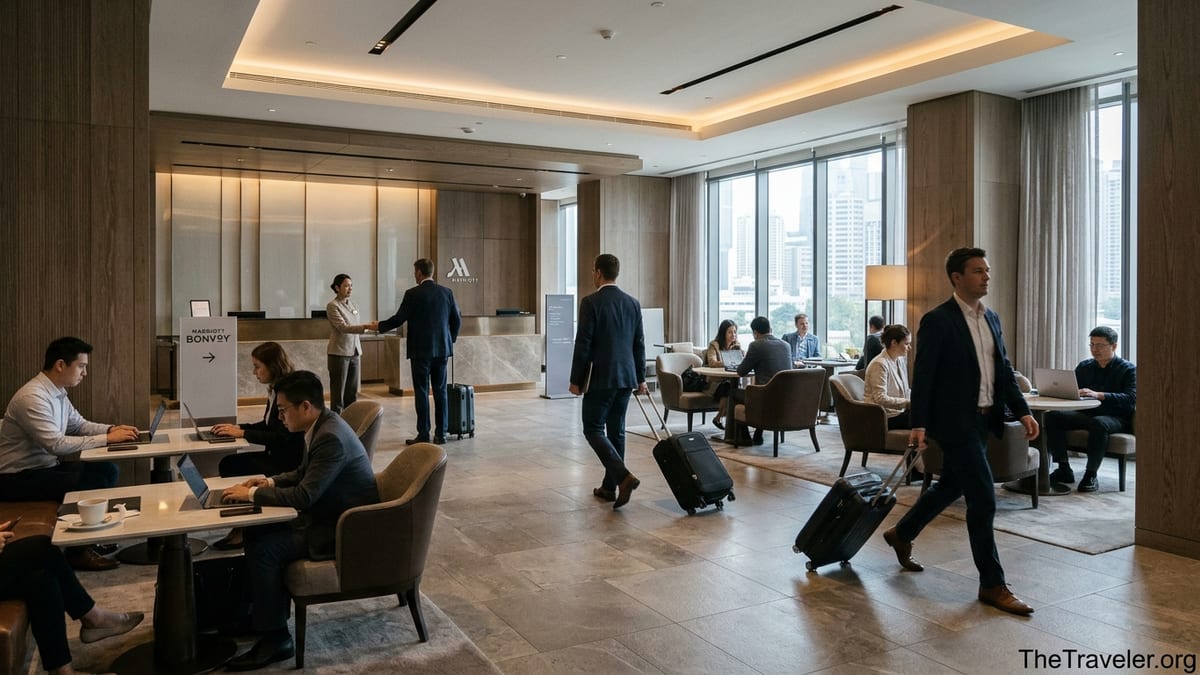
From Root Beer Stand to Global Hotel Giant
Marriott’s story begins far from the polished marble lobbies travelers see today. In 1927, J. Willard and Alice Marriott opened a modest nine-seat A&W root beer stand in Washington, DC, catering to hot, humid summers and thirsty office workers. Over the following years that stand evolved into the Hot Shoppes restaurant chain, then airline catering, and only in 1957 did the company open its first hotel, the Twin Bridges Motor Hotel near the new highways outside Washington. The shift from roadside restaurant operator to lodging company set the foundation for the global business travelers know today.
This long runway gave Marriott decades to learn operational discipline before scaling its hotel portfolio. By the time the company began rapidly adding hotels in the 1980s and 1990s, it already had deep experience managing food costs, staff scheduling, and high-volume service. Travelers still see traces of that food-and-beverage heritage in the way many Marriott hotels pay attention to breakfast buffets, banquet operations, and grab-and-go outlets. The brand’s ability to execute consistently at scale, honed in restaurants, helped it stand out once it began competing seriously in global hospitality.
For guests today, that origin story matters less than the result: when you arrive at a new Marriott-brand hotel in, say, Dallas or Dubai, there is a reasonable expectation that check-in, room cleanliness, and basic amenities will follow a familiar pattern. This confidence in the experience, built over nearly a century of trial and error, underpins Marriott’s success with both travelers and hotel owners who choose to fly its flags.
Owning Fewer Buildings, Controlling More Rooms
One of the biggest reasons Marriott could grow into a global giant is that it rarely owns the hotels you stay in. Instead of tying up billions of dollars in real estate, Marriott focuses on managing and franchising hotels on behalf of property owners. As of 2026, reports from the European business press note that Marriott directly owns only a tiny fraction of its roughly 10,000 properties worldwide, with the vast majority operated under franchise or management contracts. In practice, that means an investor in Texas or a family company in India builds or buys a hotel and pays Marriott for the brand, reservation system, and operating know-how.
For travelers, this asset-light model explains why you find Marriott brands in such varied settings. A TownePlace Suites off an interstate in Ohio might be owned by a small regional hotel group, while a Ritz-Carlton in Tokyo could be backed by a large institutional investor. Both plug into Marriott’s central booking engines and standards, but each building reflects its local owner’s design choices and investment level. Because Marriott is not financing every new property itself, it can grow much faster, signing dozens or even hundreds of new hotel deals in a single year, from midscale properties in secondary Chinese cities to beachfront resorts in Mexico.
Consider the JW Marriott Ranthambore Resort & Spa in India, opened in June 2026 and celebrated in Spanish financial media as the 10,000th Marriott hotel worldwide. That property, overlooking tiger habitat near Ranthambore National Park, represents millions of dollars from an Indian ownership group, not from Marriott’s own balance sheet. Yet it appears on Marriott’s website and app, earns and redeems Bonvoy points, and benefits from global marketing. The company collects fees; the owner hopes to profit from room revenue. This division of roles allowed Marriott to plant its brands in destinations that once seemed off the beaten path for international chains.
Building a Powerful Brand Portfolio for Every Type of Traveler
Marriott did not become a giant by betting on a single logo. Instead, it assembled a vast portfolio of distinct brands that speak to different price points and travel styles. By the mid-2020s, industry analyses counted more than 30 hotel brands under the Marriott umbrella, from luxury names like Ritz-Carlton and St. Regis to midscale workhorses such as Courtyard and Fairfield, lifestyle names like W and Edition, extended-stay options like Residence Inn, and newer affordable concepts including the City Express brand in Latin America.
For a traveler, this means Marriott can follow you throughout a single trip. You might start with a night at a Fairfield Inn & Suites near a suburban office park for around 140 to 170 dollars, move downtown to a sleek W Hotel where weekend rates can jump above 300 dollars, and then finish your journey in an extended-stay Residence Inn with a kitchen, typically priced somewhere in between. All three stays earn the same Marriott Bonvoy points and share similar booking, check-in, and mobile app experiences, even while their design and amenities differ substantially.
Strategic acquisitions played a huge role here. The 2016 acquisition of Starwood Hotels & Resorts folded iconic brands like Sheraton, Westin, St. Regis, W Hotels, Le Méridien, and Aloft into the Marriott family. Overnight, this gave Marriott a much larger luxury footprint, expanded its lifestyle offerings, and cemented its presence in key gateway cities. If you book a St. Regis in New York, a Sheraton in Buenos Aires, or a Westin in Singapore today, you are effectively staying with Marriott, even though many travelers still associate those names with the pre-merger Starwood era.
Marriott has continued to fill gaps in its portfolio. In Mexico and across Latin America, the purchase of the City Express brand helped it push into the budget and lower midscale segments popular with domestic business travelers, where room rates can be closer to 60 or 80 dollars per night. Studio-style “Series” concepts and flexible conversions such as Four Points Flex aim to give independent hotels a faster, cheaper way to join the system. Combined, these moves keep Marriott competitive against rivals like Hilton, Accor, and IHG, all of whom are racing to offer a brand for every type of traveler and every type of owner.
The Power of Marriott Bonvoy and Traveler Loyalty
Marriott’s loyalty program, now known as Marriott Bonvoy, is central to its scale. After the Starwood merger, Marriott unified Starwood Preferred Guest, Marriott Rewards, and Ritz-Carlton Rewards into a single scheme. Today, Marriott Bonvoy members can earn and redeem points at more than 9,000 participating properties worldwide across nearly all of the company’s brands, as well as with airline, car rental, and credit card partners. While Marriott does not constantly publicize an exact member count, industry observers consistently describe Bonvoy as one of the largest hotel loyalty programs in the world.
For frequent travelers, Bonvoy turns Marriott’s size into tangible benefits. A US-based consultant who spends half the year on the road might stay 60 nights across midscale brands like Courtyard or SpringHill Suites, reaching Platinum or Titanium Elite status. That status can then deliver suite upgrades at resorts in Hawaii, late checkout in European city hotels, and access to executive lounges where breakfast and evening snacks can sharply reduce out-of-pocket costs. On the leisure side, a family who puts all their everyday spending on a co-branded Marriott credit card can often accumulate enough points for a long weekend at a resort in Florida or the Caribbean, turning grocery shopping and gas purchases into a beach escape.
From Marriott’s perspective, this loyalty ecosystem is a powerful engine. Bonvoy gives the company rich data on traveler preferences and spending patterns, and it helps steer guests toward Marriott properties over competitors. Owners value being in a system where millions of members start their hotel search in the Bonvoy app, filtering cities by points redemption rates rather than browsing generic hotel sites. That helps Marriott sign more franchise and management deals, which in turn increases the number of hotels where guests can earn and redeem points, further reinforcing the cycle.
The program also deepens relationships beyond the room. Members can use points for concert tickets, culinary events, or once-in-a-lifetime experiences, like trackside viewing at a Formula 1 race or private dining with a well-known chef. These redemptions, along with co-branded cards issued with banks like Chase and American Express in the United States and abroad, allow Marriott to earn fee-based revenue that is less sensitive to traditional hotel cycles. For travelers, it means that choosing a Marriott hotel instead of a competitor can feel like a step toward a bigger reward rather than a one-off transaction.
Global Scale, Local Presence
Marriott’s rapid global expansion is another reason it ranks among the world’s largest hotel companies. By the early 2020s, company and industry data showed Marriott operating in more than 130 countries and territories, with roughly 1.5 million rooms and a development pipeline stretching from small regional cities to emerging tourism hubs. In some markets, such as parts of the Middle East and China, major urban skylines include multiple Marriott-affiliated properties within a few blocks of each other, each targeting a different niche.
For travelers, this reach translates into choice and convenience. In London, for example, you can pick from classic properties like the London Marriott Hotel County Hall overlooking the Thames, contemporary options like a Moxy in Shoreditch aimed at younger, design-conscious guests, or serviced apartments under brands like Marriott Executive Apartments for longer stays. In smaller cities, such as secondary markets in Poland or provincial capitals in China, Marriott’s arrival often brings the first internationally branded midscale hotel, reassuring global travelers about service standards and safety while also raising the bar for local competitors.
Marriott’s local presence is not just about flag planting. The company typically works with regional partners who understand local regulations, labor markets, and construction realities. A Fairfield in rural India, a Protea Hotel in South Africa, and an AC Hotel in Spain all sit under the same corporate umbrella but are shaped by local tastes and customs, from breakfast offerings to lobby design. This balance of standardized systems and localized execution enables Marriott to expand into new regions faster than if it relied on a single, rigid brand template.
At the same time, this global spread has lifted Marriott’s profile with governments and travel industry partners. Tourism boards often court Marriott when trying to attract new airlines or develop conference business, knowing that adding a convention-capable Marriott, Sheraton, or Westin can make a destination instantly more viable for international events. This creates a feedback loop in which Marriott’s presence boosts a city’s appeal, in turn driving more travelers through its hotels.
Technology, Direct Booking, and the Guest Journey
Behind the front desk and housekeeping carts, technology has quietly helped Marriott grow into a dominant hotel company. By investing heavily in central reservation systems, revenue management tools, and a robust app, Marriott can help individual hotel owners optimize pricing, fill rooms, and reduce reliance on costly online travel agencies. When a guest in Chicago starts searching for a room in Miami for next weekend, Marriott’s systems analyze demand, adjust rates, and highlight upsell options that can add revenue without dramatically increasing costs.
For travelers, one visible result is a smoother planning and stay experience. A guest landing at New York’s JFK Airport late at night can use the Marriott Bonvoy app to check in to a nearby Aloft, receive a digital room key, and head straight to their room without stopping at the front desk. Elite members can choose welcome gifts and request late checkout in the app, while families can use room preferences to ensure cribs or connecting rooms are noted in advance. These tools help Marriott compete not only with traditional hotel rivals but also with vacation rental platforms, where guests increasingly expect frictionless digital experiences.
Technology also enables Marriott to refine its brand segmentation. By analyzing booking data, the company can see, for example, that younger travelers are drawn to open-lobby, bar-centric concepts like Moxy, or that extended-stay brands perform especially well near large hospitals and technology campuses. That information informs where new hotels open and which brands are pushed in which markets. For owners, it reduces the risk of picking the wrong flag for a location; for travelers, it means more often finding a hotel that feels like it was built with their needs in mind.
At the same time, Marriott’s scale gives it leverage in digital partnerships. The company can negotiate prominent placement in corporate booking tools, bundle hotel stays with airline or rail packages, and secure better terms from payment processors. All of this supports the company’s ability to keep fees competitive for hotel owners, which in turn makes the Marriott system more attractive when developers choose a brand for their next project.
Weathering Crises and Adapting to New Travel Trends
Marriott’s path to becoming one of the largest hotel companies has not been smooth. The group has lived through multiple recessions, geopolitical shocks, and a global pandemic that temporarily brought international travel to a standstill. Yet its combination of diversified brands, flexible contracts, and global footprint has allowed it to bounce back relatively quickly when conditions improve. During downturns, midscale and extended-stay brands often hold up better as essential and long-stay travelers continue to move, while luxury resorts rebound strongly once high-end leisure demand returns.
The Covid-19 pandemic offered a striking example. While 2020 saw unprecedented drops in occupancy across the industry, Marriott later reported strong recovery in leisure-driven markets, from US national park gateways to coastal drive-to destinations. Hotels in places like Florida, the US Rockies, and the UAE’s beach resorts often led the rebound as domestic travelers swapped long-haul flights for closer-to-home escapes. Because Marriott has properties at almost every price point in these destinations, it could capture demand from families seeking affordable rooms as well as from travelers booking premium suites with private terraces or villas.
Marriott has also been willing to follow changing travel patterns. As more travelers mix work and leisure, so-called “bleisure” stays, the company has pushed designs that blur traditional categories: co-working style lobbies, larger in-room desks, 24-hour fitness centers, and better in-room coffee. Extended-stay brands such as Residence Inn and Element, along with long-stay serviced apartments, have benefited from remote workers who split time between cities or take months-long assignments. Meanwhile, the rise of social-media-driven travel has encouraged lifestyle brands like W, Moxy, and Edition to emphasize distinctive design, rooftop bars, and photogenic public spaces.
None of this is unique to Marriott, but its size amplifies the impact. When the company decides to roll out a new bedding standard, add more USB-C charging ports, or change breakfast offerings across an entire brand, tens of thousands of rooms are affected. That scale helps keep Marriott competitive with newer concepts and alternative accommodations that are also vying for traveler attention.
The Takeaway
Marriott did not become one of the biggest hotel companies in the world by accident. Its rise rests on a blend of early operational discipline, a decisive shift to an asset-light business model, relentless brand-building, and a loyalty program that turns occasional guests into repeat customers. Smart acquisitions, particularly the 2016 purchase of Starwood, expanded its reach into luxury and lifestyle segments, while a strong focus on technology and direct booking helped keep costs in check for hotel owners and experiences consistent for travelers.
For guests, Marriott’s scale translates into practical advantages: a wide choice of price points and styles in most major destinations, the chance to earn and redeem points almost anywhere you travel, and the comfort of familiar standards whether you check in at an airport Courtyard or a far-flung resort. For hotel investors and developers, the company offers a powerful distribution engine, global brand recognition, and finely tuned operating systems that can make the difference between a struggling property and a profitable one.
Marriott still faces challenges, from competition with other global giants and alternative accommodation platforms to debates over loyalty value and the pressure to deliver more personalized service at scale. Yet its ability to adapt, diversify, and leverage its size has repeatedly kept it at or near the top of the industry. For travelers, that likely means that for years to come, wherever you go in the world, a Marriott-branded property will not be far away.
FAQ
Q1. How many hotels does Marriott have worldwide?
Marriott’s portfolio passed the 10,000-hotel mark in June 2026, covering a broad range of brands and price points across more than 130 countries and territories.
Q2. Does Marriott own the hotels it operates?
In most cases, no. Marriott primarily uses franchise and management contracts, so properties are usually owned by separate investors or real estate companies that license a Marriott brand.
Q3. What are some of Marriott’s most well-known brands?
Famous Marriott brands include Ritz-Carlton, St. Regis, JW Marriott, W Hotels, Westin, Sheraton, Marriott Hotels, Courtyard, Residence Inn, Moxy, AC Hotels, and Fairfield.
Q4. What is Marriott Bonvoy and why is it important?
Marriott Bonvoy is the company’s loyalty program. Members earn and redeem points across thousands of hotels, enjoy elite benefits like upgrades and late checkout, and often use co-branded credit cards to accelerate rewards.
Q5. How did the Starwood acquisition change Marriott?
The 2016 acquisition of Starwood Hotels & Resorts instantly expanded Marriott’s luxury and lifestyle presence by adding brands like Sheraton, Westin, St. Regis, W, and Aloft, and helped create one of the world’s largest hotel loyalty ecosystems.
Q6. Is staying with Marriott usually more expensive than other hotel chains?
Not necessarily. Marriott’s portfolio ranges from budget-friendly brands like City Express and Fairfield to ultra-luxury properties, so prices can vary widely depending on brand, city, and travel dates.
Q7. How does Marriott compare to other major hotel groups like Hilton or IHG?
Marriott generally leads by number of rooms and hotels, while Hilton and IHG compete strongly in specific regions and segments. All three run large loyalty programs and wide brand portfolios, so the best choice often comes down to personal preference and where you travel most.
Q8. Can I earn Marriott Bonvoy points without staying in a hotel?
Yes. In many countries you can earn points through co-branded credit cards, car rentals, dining partnerships, and experiences, then redeem those points later for hotel stays or other rewards.
Q9. Are all Marriott hotels the same quality around the world?
Standards are generally consistent within each brand, but quality can vary by property because most hotels are independently owned. Reading recent guest reviews and checking photos is still a good idea before booking.
Q10. Is Marriott a good choice for long stays or remote work?
Often yes. Extended-stay brands like Residence Inn, TownePlace Suites, Element, and some serviced apartments offer kitchens, larger workspaces, and laundry facilities that can make long stays and remote work more comfortable.