

More news on this day
Winter Storm Hernando has unleashed another round of travel turmoil at Philadelphia International Airport, where 44 flight cancellations and 89 delays on Tuesday are rippling across key routes to the United States, Canada and the Caribbean island of Aruba.
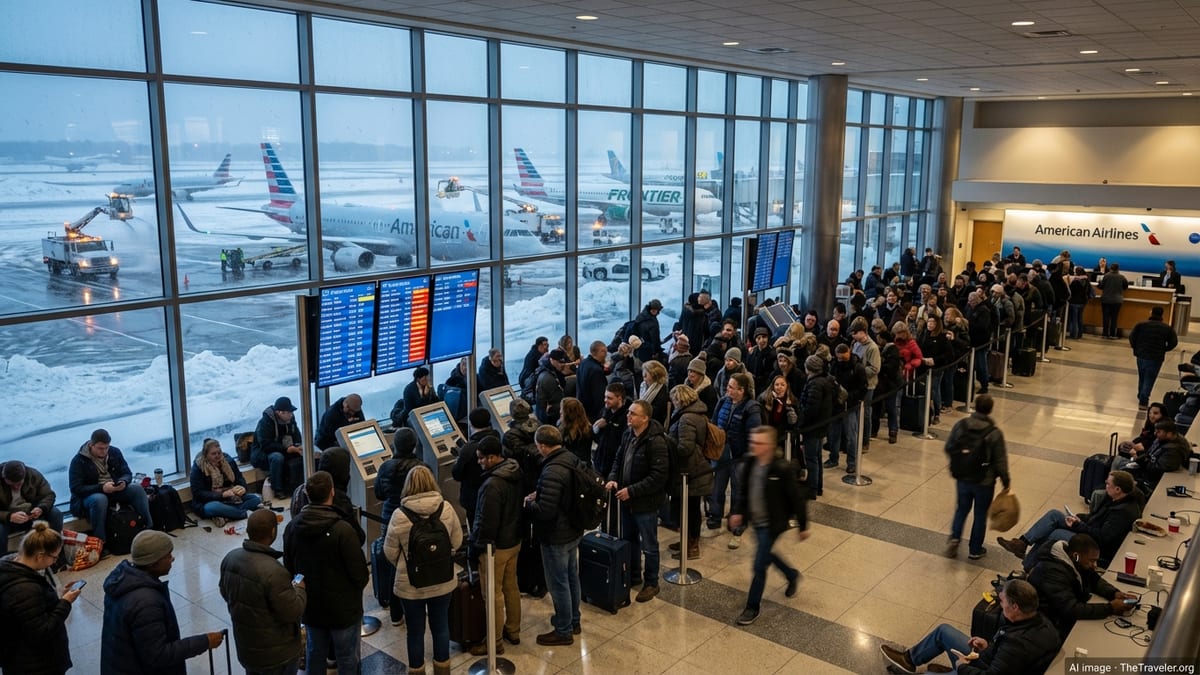
Storm-Battered Network Feels Fresh Strain at Philadelphia
The latest disruptions at Philadelphia International come as airlines across the Northeast attempt to restart operations after Hernando’s blizzard conditions forced large-scale shutdowns over the weekend and into Monday. The powerful nor’easter, part of the February 2026 North American blizzard, buried the region in heavy snow and high winds, triggering more than 10,000 flight cancellations nationwide since Sunday and leaving crews and aircraft scattered across the network.
Philadelphia has been among the hardest-hit hubs, with the storm dumping around a foot of snow at the airport and forcing carriers to scrap the majority of departures at the height of the weather system. While runway clearing and de-icing operations have allowed flights to resume, Tuesday’s tally of 44 cancellations and 89 delays underscores how fragile the recovery remains as airlines work through residual backlogs.
Airlines have been forced to juggle aircraft positioning, crew duty limits and lingering weather constraints as they rebuild schedules. Even after skies cleared over much of the Mid-Atlantic, knock-on effects from earlier shutdowns in New York, Boston and other Northeastern gateways continued to cascade through Philadelphia’s connections.
Passengers transiting PHL reported crowded terminals, long lines at customer service counters and a scramble for limited remaining seats on later flights. Many had already endured prior cancellations or missed connections during the weekend, only to face additional schedule changes as airlines fine-tuned their recovery plans.
American and Regional Affiliates Lead Disruptions
American Airlines and its regional partners are bearing the brunt of Tuesday’s operational strain in Philadelphia. As the airport’s dominant carrier, American is responsible for a significant share of the 44 cancellations and 89 delays, with many affected flights operated by regional affiliates Piedmont Airlines and Republic Airways that feed domestic and cross-border routes.
Piedmont, which runs a dense network of short-haul services to smaller cities along the East Coast and into the interior United States, has seen multiple rotations scrubbed as crews and aircraft remain out of position. Republic, another critical regional partner, has been contending with similar pressure on routes into the Midwest and Canada, including connections that typically rely on smooth flows through PHL to maintain on-time performance.
Frontier Airlines, which has expanded its presence in Philadelphia in recent years with ultra-low-cost leisure routes, has also reported cancellations and rolling delays as it navigates the complex post-storm environment. For cost-focused carriers with tighter scheduling margins, any prolonged disruption can quickly ripple across their limited fleets, forcing tough decisions on which routes to prioritize.
American has issued weather waivers for affected customers, allowing many travelers to rebook without change fees. However, with seat availability constrained and crew resources stretched, same-day alternatives remain scarce on certain high-demand routes, prolonging the ordeal for passengers seeking to salvage business trips or vacations.
Routes to Canada and Aruba Hit by Ongoing Knock-On Effects
While Philadelphia’s domestic network has absorbed much of Hernando’s initial blow, international links from the airport are also feeling the strain, particularly flights to Canada and the Caribbean. Services to Montreal and Toronto, already hampered by snow and operational challenges at both ends, have been vulnerable to last-minute adjustments as airlines triage their fleets and prioritize core trunk routes.
Travel to Aruba’s Queen Beatrix International Airport has similarly been affected by the storm’s domino effect. Earlier rounds of cancellations from Northeastern hubs left aircraft out of position and created backlogs of stranded vacationers in both the United States and on the island. As carriers attempt to clear those backlogs, some Philadelphia–Aruba services have experienced delays or schedule changes, complicating travel plans for winter sun seekers returning home or heading south for long-planned holidays.
Airport authorities in Aruba have already warned of congestion and longer processing times on days following major North American storms, when waves of rebooked passengers and repositioned aircraft tend to arrive in clusters. For Philadelphia-based travelers, that has translated into a higher risk of rolling delays, gate changes and tight connections on onward legs throughout the Caribbean and Latin America.
Canadian airports, meanwhile, are dealing with their own winter weather challenges, compounding the difficulty of restoring punctual cross-border operations. Even when conditions improve on one side of the border, restrictions, de-icing queues and crew duty clocks on the other side can force airlines to cancel or significantly delay flights that rely on precise timing to stay on schedule.
Travelers Face Long Lines, Limited Options and Mounting Frustration
For passengers in Philadelphia on Tuesday, the numbers behind Hernando’s impact translated into hours of uncertainty. Long lines formed at airline counters as travelers sought rebooking help or compensation, while others huddled around departure boards watching flight statuses flip between on time, delayed and canceled.
Many travelers expressed understanding that airlines cannot control winter weather, but voiced frustration with what they described as limited communication and difficulty accessing real-time information. As staffing resources were stretched, some passengers said they were encouraged to use mobile apps or automated phone systems, only to find inconsistent updates or a lack of clear alternatives.
Families returning from school breaks, business travelers trying to make key meetings and international visitors transiting PHL all faced tough choices, from overnight hotel stays to renting cars for long drives when flights vanished from schedules. With airport hotels filling quickly during major disruptions, some passengers reported camping out in terminal seating areas while they waited for rebooked flights the following day.
The emotional toll has been particularly acute for those heading to or from milestone events such as weddings, funerals and medical appointments. For them, each additional delay or cancellation carries stakes that go far beyond inconvenience, amplifying the sense of helplessness as yet another winter storm upends carefully planned itineraries.
Airlines Pivot to Recovery as Storm System Moves On
With Winter Storm Hernando now exiting the region, airlines at Philadelphia International are shifting focus from active storm response to recovery and schedule normalization. Carriers are gradually restoring frequencies on key domestic corridors, adding extra seats where possible and using larger aircraft on select routes to accommodate stranded travelers.
Industry analysts note that recovery from a major blizzard can take several days, even after skies clear. Aircraft and crews need to be repositioned, maintenance checks rescheduled and complex connection banks rebuilt. For hub airports like PHL, where many flights depend on tight coordination of arrivals and departures, a single missed inbound aircraft can cascade into missed connections across dozens of downstream flights.
Travel experts advise passengers scheduled to fly into or out of Philadelphia over the next 24 to 48 hours to monitor their flight status frequently, confirm contact details with their airline and allow extra time at the airport for check-in and security. Flexibility, they say, remains the most valuable asset as carriers work through the final stages of Hernando-related disruptions.
Although Tuesday’s 44 cancellations and 89 delays at PHL represent a significant improvement from the storm’s peak, the episode serves as another reminder of how vulnerable the modern air travel system remains to extreme weather. As airlines, airports and regulators continue to grapple with the operational and climate realities of increasingly volatile winters, travelers can expect more days like this one, where a single storm far beyond the runway’s edge reshapes journeys across an entire continent.