


More news on this day
Europe’s ambitious new Entry/Exit System for policing its external borders is drawing sharp warnings from the global tourism industry, with new research suggesting that prolonged delays and technical snags could drive away up to 41 million visitors and wipe out around 45 billion dollars in travel spending across the Schengen area in 2026.
Get the latest news straight to your inbox!
New Border System Raises High-Stakes Tourism Alarm
Fresh analysis commissioned by the World Travel & Tourism Council indicates that persistent disruption linked to the Schengen Entry/Exit System, or EES, could significantly depress long-haul demand for European trips next year. The research models the impact of extended queues, system glitches and perceived travel hassle on four of Europe’s largest long-haul source markets and concludes that as many as 41 million potential arrivals could be lost if current problems harden into a new normal by 2026.
According to publicly available information, the at-risk spending is estimated at about 45.4 billion dollars in 2026 prices, reflecting both direct outlays by visitors and wider effects across accommodation, transport, attractions and retail. The figures underscore how sensitive long-haul travel can be to perceived friction at the border, particularly after years in which Europe has depended on strong demand from markets such as the United States, Canada and parts of Asia to support recovery.
The warning lands at a delicate moment for European tourism authorities, which are under pressure to demonstrate that the digital overhaul of border controls can coexist with a competitive, visitor-friendly experience. Industry analysts note that the EES is being judged not just on security outcomes but also on whether travelers feel welcome and confident planning trips months in advance.
EES Rollout Brings Queues, Missed Flights and Patchy Experiences
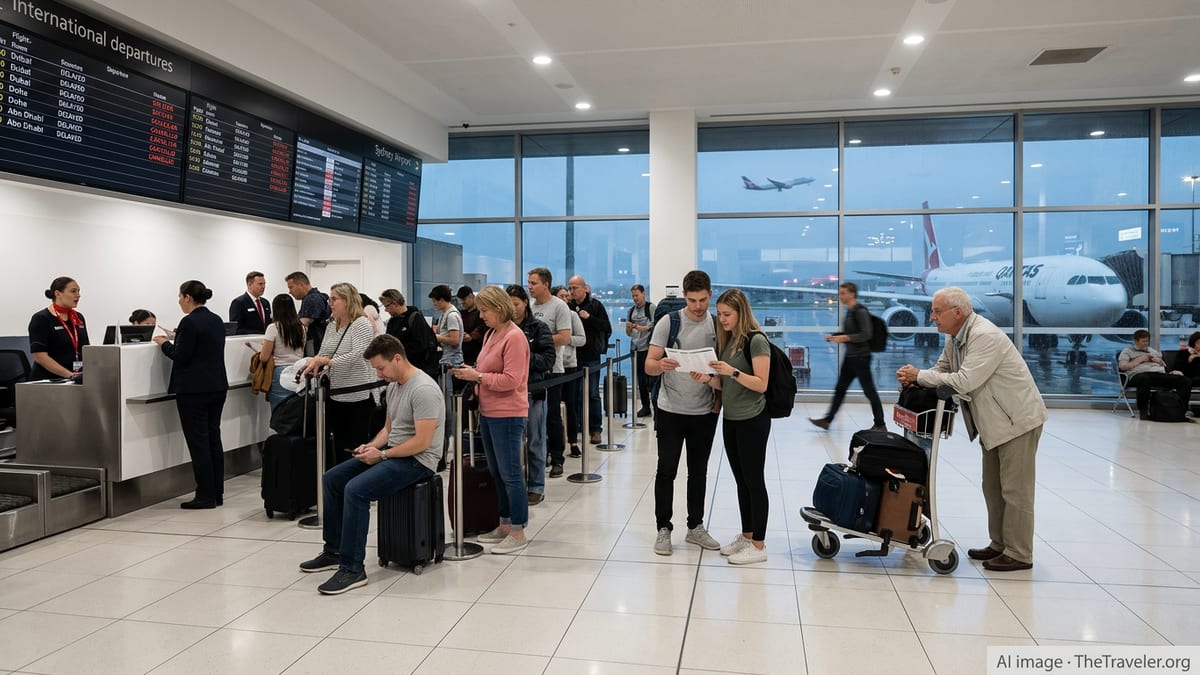
The Schengen Entry/Exit System, fully operational at external borders since April 2026 following a long-delayed rollout, replaces manual passport stamping for non-EU short-stay travelers with biometric registration and automated checks. Early months of operation have been marked by long lines at some major gateways, with reports from European and national media describing waits of one to three hours and isolated cases of missed flights at airports that struggled to calibrate staffing and equipment.
European Commission reporting on the State of Schengen, along with independent coverage from outlets such as Euronews and The Guardian, has highlighted a mixed picture. While a substantial volume of crossings is being processed and border authorities stress that the system is functioning, travelers recount widely varying experiences, from near-normal processing times to severe congestion at peak hours, especially at airports with tight transfer windows and at busy land crossings popular with UK visitors.
Sector observers say these operational growing pains are not unexpected for a border project of this scale, but warn that the damage to sentiment could be lasting if visible queues and social media complaints persist into successive holiday peaks. For long-haul travelers planning expensive, once-a-year trips, the perception of chaos at arrival gates can easily tip decisions toward alternative destinations in Asia-Pacific, the Americas or the Middle East.
Delays and Confusion Put Long-Haul Source Markets on Edge
The WTTC-backed research focuses on four major long-haul markets that underpin Europe’s high-value tourism segment. While the specific countries are not detailed in every public summary, broader surveys by the European Travel Commission point to softer intentions among prospective visitors from the United States, Canada, Japan, South Korea and other distant markets, where higher costs and rising complexity are already dampening enthusiasm for European trips.
Analysts note that these travelers typically stay longer and spend more per trip than regional visitors, magnifying the revenue impact of any downturn in arrivals. If even a fraction of potential visitors decide to postpone or redirect their travel because of fears about border delays, the aggregate loss quickly climbs into the tens of billions of dollars. Travel trade publications report that some tour operators and airlines are already adjusting itineraries and advising clients to allow longer connection times when entering the Schengen area.
Publicly available commentary from airport and airline associations in Europe also reflects concern that, without further streamlining, EES bottlenecks could collide with seasonal peaks such as Easter, summer and year-end holidays. Industry bodies have called attention to particularly sensitive gateways that combine heavy leisure demand with complex infrastructure, arguing that any perception of repeated breakdowns will be disproportionately amplified in long-haul markets watching Europe from afar.
Policy Choices Now Will Shape Europe’s 2026 Travel Season
With forecasts for 2026 arrivals and spending already being revised to account for the EES impact, attention is turning to the policy levers that could reduce the risk of a tourism slump. The WTTC analysis and related commentary by travel industry groups point to several priorities, including accelerating deployment of digital pre-registration tools, expanding automated gates, and intensifying staff training to shorten the first-registration process for travelers who have not yet been enrolled in the new system.
Reports indicate that some member states are moving faster than others to promote national or EU-backed mobile apps that allow visitors to complete key steps before reaching the border, reducing time spent at kiosks and counters. There is also ongoing discussion about how to align the maturing EES with the planned launch of the European Travel Information and Authorisation System in late 2026, so that the combined effect of new requirements does not further deter high-value markets.
Economic modeling cited in public documents suggests that even incremental reductions in average processing times could prevent substantial losses in 2026, by restoring confidence among hesitant travelers and enabling airports to handle peak flows more smoothly. Conversely, if border checks remain unpredictable and visibly congested through next year’s early travel seasons, the upper-end risk of 41 million lost visitors and roughly 45 billion dollars in forgone spending may move closer to reality.
Tourism Sector Pushes for Balance Between Security and Welcome
Beyond the immediate numbers, the EES debate is becoming a litmus test for how Europe balances border security and traveler experience in an era of heightened digital controls. Publicly available statements from tourism bodies emphasize that the sector does not dispute the goals of better monitoring overstays and strengthening external borders, but argues that implementation must avoid turning first impressions at European airports and ports into negative, time-consuming ordeals.
Travel analysts note that other destinations have faced similar tensions when introducing biometric systems, with outcomes highly dependent on investment in infrastructure, coordination across agencies and clear communication to the traveling public. For Europe, where tourism is a major employer and a pillar of many national economies, the stakes are particularly high as policy decisions made in 2026 will influence perceptions well into the decade.
The coming months are therefore seen as critical for rebuilding traveler confidence ahead of the 2026 and 2027 peak seasons. If authorities and industry partners succeed in smoothing EES operations and explaining the benefits to visitors, Europe could retain its status as the world’s most visited region while modernizing its borders. If not, the WTTC’s scenario of tens of millions fewer arrivals and tens of billions in lost spending may become a defining story of the continent’s post-pandemic tourism landscape.