

New England rewards travelers who look beyond the postcard lighthouse and village green. Tucked into its forests, islands, mill towns, and granite peaks are places that feel wholly their own, shaped by odd geology, bold art, stubborn history, and wild weather. From an ice fortress built anew each winter to a rocky Atlantic outpost where cars are banned, these 11 destinations capture a side of New England that is surprising, immersive, and unforgettable.
1. Ice Castles, New Hampshire: A Winter World Built From Scratch
On cold midwinter nights in North Woodstock, New Hampshire, a frozen city quietly glows at the foot of the White Mountains. The seasonal Ice Castles attraction is rebuilt each year using hundreds of thousands of hand-placed icicles, shaped into towering walls, tunnels, slides, and caverns that reach several stories high. Underfoot, the snow crunches. Overhead, LED lights pulse inside the ice, turning it from glacier blue to rose and violet as you walk. It feels like stepping into an alternate version of winter, designed purely for wonder.
The structure is not static. Crews begin growing and harvesting icicles in early winter, and they continually spray, sculpt, and reinforce the walls as temperatures rise and fall. In recent years, milder winters across northern New England have forced builders to adapt with thicker walls and new techniques, but the result for visitors remains the same: a short-lived, immersive landscape that exists only for a few weeks each year before melting back into the Ammonoosuc River valley.
What makes Ice Castles unique is the way it transforms New England’s most familiar season into something playful and interactive. Children line up at ice slides and squeeze through keyhole tunnels, while adults linger in quiet alcoves, listening to water drip inside ice caverns. It is equal parts art installation, engineering project, and family outing, set against the dark pines and ridgelines of the Western White Mountains.
Because it is entirely dependent on weather, no two years at Ice Castles are exactly alike. That impermanence heightens its appeal. Plan ahead if you hope to go in the heart of winter, and pair your visit with snowshoeing, skiing, or a ride on a nearby scenic winter train for a full immersion in New Hampshire’s coldest, most magical months.
2. Block Island, Rhode Island: An Offshore Refuge Without Chains or Traffic Lights
A short ferry ride south of the Rhode Island mainland delivers you to Block Island, a windswept, eight-square-mile island that feels far removed from New England’s busy coastal resorts. There are no traffic lights here, and national chain stores are effectively absent. Instead, roads curve past stone-walled pastures, weather-beaten farmhouses, and salt marshes where egrets and oystercatchers patrol the shallows. More than two-fifths of the island is permanently protected open space, creating a rare sense of wildness so close to the East Coast’s urban corridor.
Block Island’s most dramatic features are its bluffs. At Mohegan Bluffs, a long set of stairs descends the cliff face to a narrow, wave-tossed beach backed by 150-foot clay walls. From the top, the Atlantic seems endless, and on clear days you can trace the curve of Long Island to the west. Elsewhere, the North Lighthouse stands sentinel amid rolling dunes and grasslands, an austere, almost otherworldly setting that feels worlds apart from the bustle of Newport or Providence.
What sets Block Island apart is how quietly it protects its own character. Historic inns and Victorian-era houses cluster around Old Harbor, while casual seafood shacks, ice cream stands, and locally owned shops define the small commercial districts. Bicycles and mopeds remain a preferred way to get around, and it is still possible to find an empty cove or a quiet inland trail even at the height of summer.
Visit in shoulder seasons for an especially distinct experience. In late spring and fall, migratory birds funnel through the island’s thickets and fields, drawing birders from around the region. The air is cooler, the crowds thin, and the island’s mix of solitude, sea wind, and subtle charm feels uniquely New England yet unlike anywhere else.
3. MASS MoCA and North Adams, Massachusetts: A Factory Town Turned Art Lab
In the far northwest corner of Massachusetts, the former mill city of North Adams has reinvented itself as one of the country’s most surprising art destinations. At its heart is MASS MoCA, the Massachusetts Museum of Contemporary Art, housed in a sprawling 19th-century brick factory complex that once produced printed textiles and later electronic components. Today those same cavernous buildings host some of the largest galleries for contemporary art in the United States, featuring monumental installations that simply would not fit in conventional museums.
Walking across the campus is part of the experience. Brick alleyways frame glimpses of the Hoosic River, smokestacks punctuate the skyline, and steel trusses hover above courtyard performance spaces. Inside, artists take advantage of long sightlines, high ceilings, and industrial remnants. Visitors might encounter entire rooms filled with immersive light and sound, massive sculptures that span multiple stories, or wall drawings that unfold across multiple galleries.
Outside the museum, North Adams itself has shifted from industrial decline to creative experiment. Cafes, small galleries, breweries, and artist-run spaces thread through the downtown streets, and festivals bring live music and film to the city at various times of year. The surrounding Berkshire hills rise steeply from the valley, so even as you explore art and architecture, the edges of town feel close to forest.
The combination of scale, setting, and experimentation makes this corner of New England feel singular. Few places so fully blur the lines between factory and gallery, or between working-class mill history and contemporary culture. Visitors who come for a day at MASS MoCA often find themselves staying longer, using North Adams as a base for hiking, leaf-peeping, or skiing in the surrounding highlands.
4. America’s Stonehenge, New Hampshire: A Mysterious Hilltop of Stone Chambers
On a wooded rise in the town of Salem, New Hampshire, a cluster of stone chambers, standing slabs, and low-walled enclosures has sparked debate and curiosity for generations. Known today as America’s Stonehenge, the privately run site occupies roughly 30 acres of hilltop forest and exposed bedrock. Visitors follow signed paths past roofed stone rooms, narrow passages, and carved drains that channel water across the ledges.
The origins of the site are still a matter of study and controversy. Archaeologists have documented Indigenous presence in the region for thousands of years, and there is evidence that parts of the hill were altered by colonial and later land use. Some enthusiasts claim ties to ancient, pre-Columbian builders, but mainstream scholars generally view those theories with skepticism. Rather than offering a neat origin story, the hilltop invites questions about how people have reshaped this particular piece of granite over centuries.
What feels unique here is not only the stonework but the atmosphere. The chambers are low and cool even on hot summer days, and moss creeps along the edges of roof slabs. Narrow windows and odd sightlines encourage visitors to imagine alignments with solstices and stars. Interpretive panels outline various theories without insisting on a single narrative, leaving space for visitors to draw their own conclusions.
Unlike many New England historic attractions that are tightly bound to one era or one famous figure, America’s Stonehenge occupies a blur of archaeology, folklore, and roadside curiosity. Combined with its modest on-site museum, snowshoe trails in winter, and resident alpacas that graze nearby, it offers a distinctly offbeat stop on the region’s well-traveled heritage circuit.
5. The Schoodic Peninsula, Maine: Acadia’s Wild, Quiet Side
Most visitors to Acadia National Park head straight for Mount Desert Island, home to Bar Harbor and the park’s most famous carriage roads and peaks. Across Frenchman Bay, however, the Schoodic Peninsula offers a very different experience, with the same dramatic geology and surf but a fraction of the crowds. Here, a loop road hugs a shoreline of dark diorite ledges and pink granite boulders, where waves explode into white spray and seabirds wheel overhead.
Schoodic’s forests feel wilder and more spacious than the busier parts of Acadia. Black spruce and fir lean into the wind, and long views stretch toward the open Atlantic. Pullouts along the park road reveal tide pools teeming with barnacles, mussels, and periwinkles, and on stormy days the air fills with salt mist as breakers slam into the rocks. Inland, modest summits like Schoodic Head offer quiet hiking and sweeping views of the bay and the mountains of Mount Desert beyond.
What makes Schoodic feel uniquely itself is the combination of raw coastal energy and stillness. The nearby village of Winter Harbor remains small and low-key, with a working harbor, seasonal art studios, and simple eateries that cater more to locals and repeat visitors than to cruise ship crowds. At night, with less light pollution than many parts of coastal New England, the peninsula can offer striking views of stars and, on rare occasions, faint northern lights.
For travelers who want the drama of Acadia without the tour buses, Schoodic is a revelation. It demonstrates that even inside one of the country’s most popular national parks, New England still holds room for solitude and a direct encounter with wind, rock, and sea.
6. Provincetown, Massachusetts: At the Edge of the Cape, A Creative Frontier
At the very tip of Cape Cod, where the land finally runs out into the Atlantic, Provincetown sits on a narrow spit of sand surrounded on three sides by water. The town has long drawn people who felt out of step with mainstream New England: fishermen from distant coasts, playwrights and painters experimenting with new forms, and later LGBTQ+ travelers seeking a welcoming place to live and vacation. The result is a compact, walkable community that feels both deeply rooted and joyfully unconventional.
Commercial Street, the town’s main artery, threads between harborside wharves and wood-shingled buildings filled with galleries, bookstores, cafes, and performance spaces. Side lanes lead to guesthouses flying rainbow flags, while sandy footpaths cross the dunes into Cape Cod National Seashore, a protected landscape of windswept beaches and scrub pine. At low tide, the harbor empties into shimmering sand flats, and you can watch fishing boats tilt gently at their moorings while gulls patrol the shallows.
Provincetown’s year-round creative energy is what makes it stand apart. Summer brings a full calendar of theater, drag shows, literary events, and art openings, along with whale-watching tours that head out to Stellwagen Bank. In the shoulder seasons, the town quiets but does not fall asleep. Writers occupy long-term rentals, painters turn wharf buildings into studios, and the light over the dunes grows softer and more introspective.
Few places in New England combine such a sense of geographical edge with social openness and artistic risk-taking. Walk from a historical plaque on the Mayflower Pilgrims’ first landing site to a contemporary gallery in minutes, and you are crossing centuries of cultural change in a single small town at the end of the road.
7. The Quechee Gorge and Central Vermont’s River Valley
Just off the interstate in central Vermont, the land suddenly drops away into a narrow chasm carved by the Ottauquechee River. The Quechee Gorge, sometimes called Vermont’s Little Grand Canyon, reaches depths of around 160 feet, with the river flashing between rock walls far below. A highway bridge spans the gorge, and from its pedestrian walkway visitors can peer straight down at the water as it swirls over ledges and boulders.
Unlike many scenic lookouts that are quickly checked off and forgotten, Quechee invites closer exploration. Trails wind along the rim and descend through mixed hardwood forest to the river’s edge, where swimmers and anglers gather in warm weather. In autumn, the gorge becomes a vertical palette of color, as maples, birches, and oaks paint the steep slopes in red, gold, and orange while mist rises from the cold water below.
Beyond the gorge itself, the surrounding valley has cultivated a distinctive mix of rural charm and quiet innovation. Nearby Woodstock offers a classic New England village green, while local farms, cheesemakers, and glassblowers open their doors to visitors. The river that carved the gorge also powered early industry here, and old mill buildings have found second lives as shops, studios, and inns.
The pairing of dramatic geology with a gentle, craft-centered culture gives this corner of Vermont a special character. It is easy to arrive expecting a quick roadside view and end up spending a day or more following the river upstream, sampling local products, and watching the light shift on the walls of the gorge.
8. Stonington Borough, Connecticut: A Seafaring Village Between States
At the southeastern tip of Connecticut, almost brushing the Rhode Island line, tiny Stonington Borough occupies a narrow peninsula pointing into Fishers Island Sound. It is one of New England’s most atmospheric coastal villages, yet it retains a working waterfront and a sense of scale that feels intimate rather than polished. Narrow streets are lined with 19th-century houses in muted colors, and many front doors open almost directly onto the sidewalk.
Down at the docks, weathered fishing boats tie up alongside small sailboats, and stacks of lobster traps share space with coils of rope and bait barrels. The presence of an active commercial fleet sets Stonington apart from purely recreational harbors. On foggy mornings, the sound of engines and gulls feels like a reminder that, here, the ocean is still a workplace as well as a view.
Stonington’s location has always been a bit liminal. It looks across the water toward New York’s Fishers Island and out toward the Atlantic shipping lanes, while inland highways lead quickly to Mystic and the casinos of eastern Connecticut. Yet the borough has resisted large-scale development. Instead, it has cultivated small restaurants, independent shops, and a town green that hosts modest seasonal events, all within walking distance of the sea.
For travelers, Stonington offers a rare combination of quiet streets, lived-in authenticity, and easy access to larger regional attractions. Time your visit for late afternoon, when the sun drops behind the village and lights begin to glow in the old captain’s houses, and you will understand why this tiny borough feels so distinct in a crowded stretch of New England coastline.
9. The Quiet Corner, Connecticut: Stone Walls, Back Roads, and Deep Calm
In northeastern Connecticut, far from the state’s urban centers and commuter rail lines, a swath of rolling countryside has become known as the Quiet Corner. This is a region rather than a single town, a place where two-lane roads wander past historic farms, forested hills, and villages with white steeples and modest main streets. For visitors used to the congested interstates of southern New England, the sense of space and slowness here can be startling.
The Quiet Corner has long drawn travelers in search of traditional New England scenery and culture. Dry-laid stone walls stripe the woods and meadows, tracing long-abandoned property lines. Historic houses cluster around town greens in Woodstock, Pomfret, and Brooklyn, while classic general stores and independent diners anchor small crossroads. Scenic byways such as Route 169 offer long, uninterrupted stretches of pastoral views.
What makes the region feel unique is the depth of its quiet. Unlike more famous rural areas that have been heavily commercialized, much of the Quiet Corner still revolves around working agriculture, local schools, and small community events. Vineyards and breweries welcome visitors, but large resorts and outlets remain rare. Outdoor recreation tends toward the simple and low-impact: walking the converted Airline Trail along a former railbed, paddling slow rivers, or wandering through historic house museums and small local fairs.
Travelers who take the time to explore this part of Connecticut often describe it as stepping into an earlier version of New England, one in which the landscape and village rhythms still set the pace. It is not a place of dramatic vistas or headline attractions, but that is exactly what makes it stand out in a region better known for crowded coasts and mountain towns.
10. Portland, Maine’s Working Waterfront and Arts District
Portland, Maine, has become famous in recent years for its food scene, craft breweries, and photogenic brick downtown. What continues to make the city feel unique, however, is the way its working harbor and creative community coexist within a compact peninsula. From the cobblestones of the Old Port, you can smell bait and diesel from the fish piers even as you browse contemporary galleries or sip coffee in a minimalist cafe.
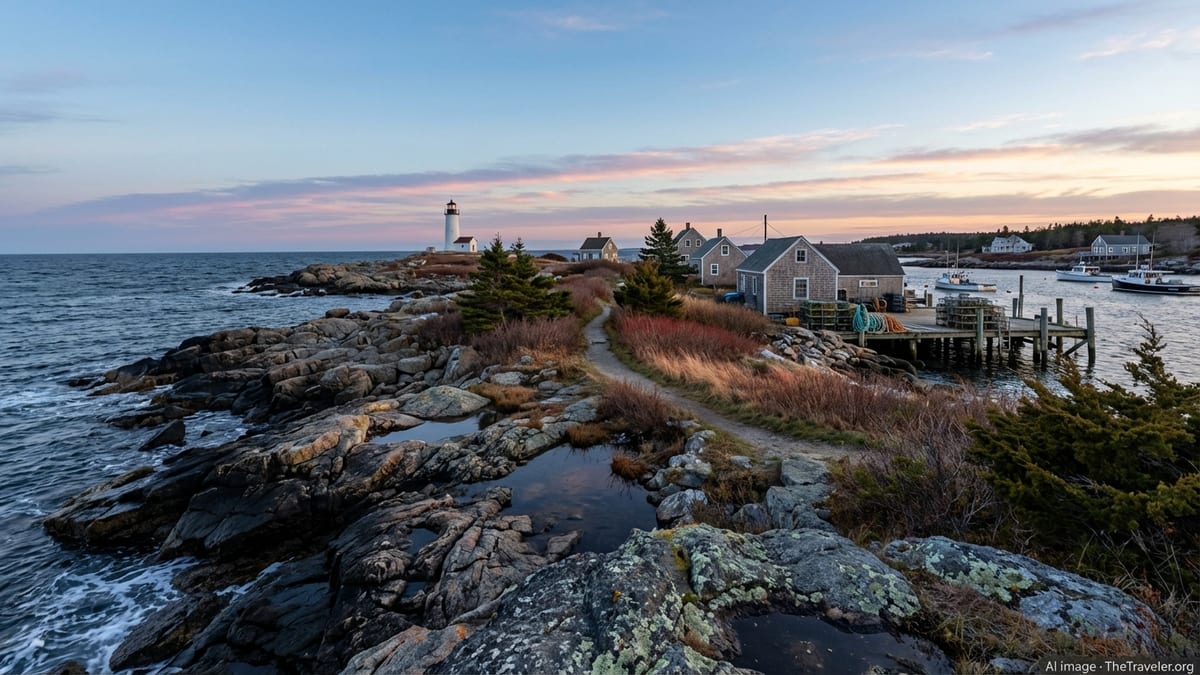
Along Commercial Street, low-slung wharf buildings jut into the harbor, many of them still occupied by seafood dealers, lobster wholesalers, and marine supply businesses. Stacks of traps, plastic tubs of bait, and piles of buoys crowd the piers, while island ferries and tour boats jockey for space among lobster boats and small tankers. Unlike some coastal cities where the industrial waterfront has been moved out of sight, in Portland it remains central to the city’s identity and economy.
Just uphill, the Arts District gathers museums, theaters, and studios along Congress Street and its side lanes. Here, galleries host openings, street murals brighten brick walls, and independent bookstores share blocks with record shops and small venues. The proximity of this creative corridor to the harbor, combined with the city’s modest size, means you can easily spend a morning photographing working docks and an afternoon exploring contemporary art without ever getting in a car.
Portland’s combination of blue-collar grit and polished culture gives it a distinctive energy within New England. The city feels both approachable and dynamic, with a year-round population that keeps restaurants, music venues, and markets humming long after peak tourist season ends. For travelers who want a coastal destination that is neither sleepy nor overly manicured, Portland’s blend of work and creativity is hard to match.
11. The Northeast Kingdom, Vermont: A Frontier of Forests and Dark Skies
In the far northeastern corner of Vermont, the aptly named Northeast Kingdom stretches from the spine of the Green Mountains toward the Canadian border. This rural region encompasses deep forests, cold lakes, and small towns scattered along river valleys. Distances are longer here, cell coverage can be patchy, and many roads narrow quickly once they leave the main highways, but that sense of remoteness is part of the appeal.
The landscape feels wilder than much of southern New England. Moose occasionally appear on back roads at dawn, loons call across lakes on summer evenings, and in winter, snow lies deep in the woods. Lakes such as Willoughby, flanked by steep cliffs that drop straight into the water, have an almost fjordlike quality. Small ski areas and cross-country centers dot the hills, and snowmobiles buzz along groomed trails when the conditions are right.
At night, the Northeast Kingdom offers some of the darkest skies in New England, away from the light domes of Boston, Hartford, and Montreal. On clear, moonless evenings, the Milky Way can be visible to the naked eye, and meteor showers streak across a sky that feels vast and close all at once. For travelers accustomed to city lights, simply stepping outside to look up can feel like a revelation.
What makes the Northeast Kingdom uniquely itself is its balance of resilience and quiet. Residents have built small, creative businesses around outdoor recreation, local food, and the arts, yet the region still feels firmly anchored in the working landscape of logging, agriculture, and small-scale industry. Visitors who are willing to drive a bit farther and slow down will find a New England that is both rugged and unexpectedly welcoming.
The Takeaway
New England’s reputation often rests on familiar images: covered bridges, foliage-lined roads, rocky coasts with classic lighthouses. Those are real and worth seeking out, but they tell only part of the story. The region’s most distinctive places are often the ones that do not fit the postcard mold, where old factories morph into art labs, offshore islands decide to stay car-light and quietly wild, and frozen castles arise for a few fleeting weeks each winter.
Visiting spots like Ice Castles, the Schoodic Peninsula, Provincetown, or the Northeast Kingdom invites travelers to see New England as a living, evolving landscape rather than a static collection of clichés. These are places where geology, weather, history, and human creativity collide in surprising ways. They reward unhurried exploration, off-season visits, and a willingness to follow side roads or seasonal ferry schedules just to see what feels different on the other side.
Whether you are drawn to the glow of sculpted ice, the call of seabirds over protected headlands, or the quiet rhythm of inland farms and forests, New England holds corners that feel truly unique. Seek them out, linger a little longer than you planned, and you may find that your idea of the region expands into something richer and more unexpected than you imagined.
FAQ
Q1. What is the best time of year to experience these unique New England places?
The ideal season depends on the destination. Ice Castles and the Northeast Kingdom shine in winter, while Schoodic, Block Island, Provincetown, and Stonington are at their best from late spring through early fall. Shoulder seasons often bring fewer crowds and a more local feel.
Q2. Are these destinations suitable for travelers without a car?
Some, such as Portland, North Adams, and Provincetown, can be reached and enjoyed largely on foot once you arrive, with regional buses or ferries helping at the edges. More rural areas like the Quiet Corner, the Northeast Kingdom, and parts of coastal Maine are easiest to explore with your own vehicle.
Q3. How far in advance should I book lodging in these areas?
For peak summer visits to coastal destinations and fall foliage trips in Vermont and New Hampshire, booking several months ahead is wise, especially on weekends. In winter and shoulder seasons, you often have more flexibility, though special events or holiday periods can still fill accommodations quickly.
Q4. Are these places family friendly?
Yes, most of the destinations highlighted here welcome families. Ice Castles, Block Island’s beaches, the Quechee Gorge area, and Portland’s waterfront are especially appealing to children, though parents should be mindful of safety near cliffs, strong surf, and cold weather conditions.
Q5. What should I pack for a trip that includes both coastal and inland New England stops?
Weather in New England can change quickly, so versatile layers are essential. Bring a waterproof shell, warm midlayers, comfortable walking shoes, and sun protection for coastal walks. Even in summer, evenings by the ocean or in the mountains can feel cool.
Q6. How can I visit these unique places responsibly?
Stay on marked trails, respect private property, and follow local guidelines about wildlife, tides, and weather. Support locally owned businesses, reduce waste by carrying reusable bottles and bags, and be considerate of year-round residents who share their communities with visitors.
Q7. Are there accessibility options at these destinations?
Accessibility varies. Larger institutions such as MASS MoCA and many sites in Portland offer ramps, elevators, and detailed accessibility information. Natural areas like Schoodic and Quechee Gorge have some accessible viewpoints but more limited access on rugged trails. Checking ahead with specific sites is recommended.
Q8. Can I combine several of these places in one trip?
Yes. Many travelers link coastal Maine with Portland and Schoodic, or pair North Adams and the Quechee Gorge on a loop between Massachusetts and Vermont. With careful routing, you can design a weeklong road trip that samples both shoreline and mountains without rushing.
Q9. What kind of budget should I expect for visiting these areas?
Costs vary widely by season and location. Coastal towns in midsummer tend to command higher lodging and dining prices, while inland regions and off-season visits can be more affordable. Choosing guesthouses, local diners, and free outdoor activities helps keep budgets manageable.
Q10. How far in advance should I secure tickets for Ice Castles and similar seasonal attractions?
Popular time slots at Ice Castles often sell out, particularly on weekends and during school holidays. Once ticket sales open for the season, booking as soon as you know your dates provides the best chance of securing your preferred evening and entry time.