


More news on this day
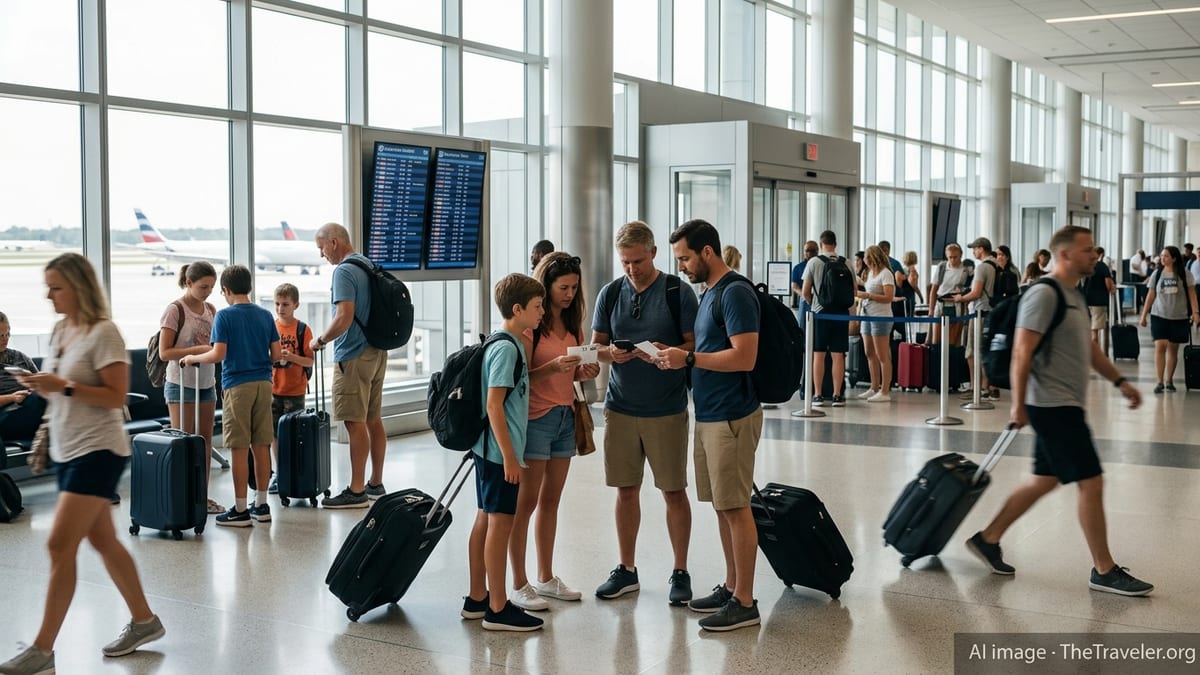
Americans are preparing for a busy year of travel in 2026, with recent surveys showing more trips, larger marquee vacation budgets and growing reliance on digital tools, even as high prices and uneven economic confidence continue to shape where and how people plan to go.
Get the latest news straight to your inbox!
More Trips, Bigger Budgets Despite Cost Pressures
Industry forecasts point to travel demand in the United States remaining resilient in 2026, with total travel spending expected to grow in real terms as leisure trips outpace a slower recovery in business travel. Projections compiled by the U.S. Travel Association indicate that inflation-adjusted travel spending could reach well over 1.3 trillion dollars in 2026, extending a steady post-pandemic expansion in domestic journeys and outbound trips.
Consumer surveys suggest that many Americans intend to travel more often rather than less, even if they are still sensitive to prices. A recent analysis by Deloitte reports that travelers are planning roughly the same number of summer trips as last year, but are setting aside significantly higher budgets for their longest getaway, with marquee trip spending projected to rise by double-digit percentages compared with 2025. That pattern points to households trimming around the edges while preserving at least one major vacation.
At the same time, not all travelers are increasing their spending. Research across several consultancies describes a split market in which higher income and frequent travelers are driving most of the growth, while more cost-conscious households scale back or stay closer to home. This so-called K-shaped pattern is expected to shape 2026 travel behavior, with some Americans upgrading to premium experiences and international itineraries, and others concentrating on shorter, value-focused trips within driving distance.
Road Trips, Beaches and the American Heartland
Surveys of traveler intent indicate that traditional vacation types remain dominant in 2026, but the mix of destinations is shifting. Polling referenced by AAA and other travel providers shows that road trips continue to rank among the most popular plans for the coming year, alongside beach breaks and visits to major metropolitan areas. New data from car rental and lodging companies similarly highlight renewed interest in classic driving routes and regional loops that combine small towns, outdoor recreation and mid-sized cities.
Several trend reports point to the American heartland gaining ground as a favored region for these itineraries. Booking and search data compiled by large online travel agencies show rising demand for inland states offering lakeside escapes, national and state parks, music and food scenes, and historically themed routes at generally lower price points than coastal hotspots. Analysts note that these areas often deliver more affordable lodging and dining, which appeals to families and younger travelers juggling tighter budgets but still intent on traveling.
Coastal destinations are also expected to remain strong, particularly for sun-seeking breaks and milestone celebrations, yet observers say that the high cost of peak-season beach travel is nudging some Americans toward shoulder seasons or alternative shorelines. Many travelers appear willing to trade marquee resort towns for secondary beaches or less crowded coastal regions if it allows them to preserve longer stays or add extra experiences such as guided activities and local tours.
AI, Apps and the New Planning Toolkit
Digital tools are set to play a larger role in how Americans plan and book their 2026 trips. Multiple research efforts, including surveys by Deloitte, PwC and AARP, indicate that a growing share of travelers now use artificial intelligence tools, recommendation engines and price-tracking apps to shape itineraries, compare options and hunt for deals. Younger adults in particular report using AI-based services to generate destination ideas, refine routes and surface lesser-known attractions within their budget.
Among older travelers, adoption is also climbing. A recent AARP travel trends report finds that adults aged 50 and over are prioritizing travel as a key discretionary expense and are increasingly willing to test new planning tools if they help extend budgets or simplify complex trips. Many in this cohort expect to take multiple journeys in 2026, including international vacations, and are relying on a mix of traditional travel advisors and online platforms enhanced by automation.
As planning habits evolve, travel companies are investing heavily in more personalized search and booking experiences. Industry outlooks describe efforts to combine rich imagery, reviews and transparent pricing into unified interfaces that can suggest complete trip packages in a few steps. Analysts say that as these systems improve, they are likely to influence where Americans go by surfacing emerging destinations, off-season bargains and bundled offers that might not have been obvious in a more manual search process.
Blurring Lines Between Work and Leisure
The blending of business and leisure travel, often referred to as bleisure, is expected to remain a key feature of American travel behavior in 2026, even as overall corporate travel growth moderates. Industry research suggests that some of the most active business travelers are reevaluating the number of work trips they take, but are more inclined to extend the ones they do undertake by adding vacation days or bringing family members along.
Data cited in recent travel outlooks indicate that remote and hybrid work patterns continue to support longer stays and more flexible itineraries, particularly among knowledge workers who can operate from different time zones. Extended weekends, work-from-anywhere weeks and periodic relocations within the United States are increasingly common, with travelers choosing accommodations that offer reliable connectivity, kitchen facilities and proximity to both urban amenities and outdoor spaces.
Some analysts point to the rise of slower, more immersive travel styles within this group. Rather than racing through packed multi-stop tours, many American travelers are choosing fewer destinations but staying longer, spending more time in neighborhoods outside central tourist districts and seeking experiences that feel closer to everyday local life. This shift has implications for everything from local transportation patterns to the types of restaurants and cultural venues that benefit most from visitor spending.
Demographics, Events and the Global Picture
Demographic trends are set to play a significant role in shaping where Americans go in 2026. Younger adults, particularly members of Generation Z and younger millennials, are more likely to report plans for multiple trips, including international travel, adventure experiences and festival-oriented journeys. At the same time, older adults are driving substantial demand for cruises, guided tours and multigenerational vacations that bring together children, parents and grandparents.
Major events are another factor influencing itineraries. Economic analysts have noted that the 2026 calendar is punctuated by large-scale sporting and cultural gatherings in North America, including international soccer matches and anniversary commemorations that are expected to generate additional domestic trips. Airlines, hotels and local tourism offices are preparing for spikes in traffic to host cities and surrounding regions, with some already reporting early bookings and premium pricing around key dates.
On a global level, outlooks from international tourism organizations anticipate that worldwide travel will continue to grow in 2026, but at a more moderate pace than the immediate post-pandemic rebound. For Americans, that environment may translate into busy but slightly less volatile conditions, with improved airline capacity and lodging supply in some markets offset by geopolitical uncertainties and local capacity constraints in others. Observers say travelers who plan early, remain flexible on dates and destinations, and make use of emerging digital tools are likely to be best positioned to navigate the year ahead.