


More news on this day
Chiltern Railways is among several major intercity operators being added to a UK government-backed disruption scheme designed to stop passengers being left out of pocket or stranded when their train is cancelled, with expanded cross-operator ticket acceptance due to begin on Sunday, September 20, 2026.
Get the latest news straight to your inbox!
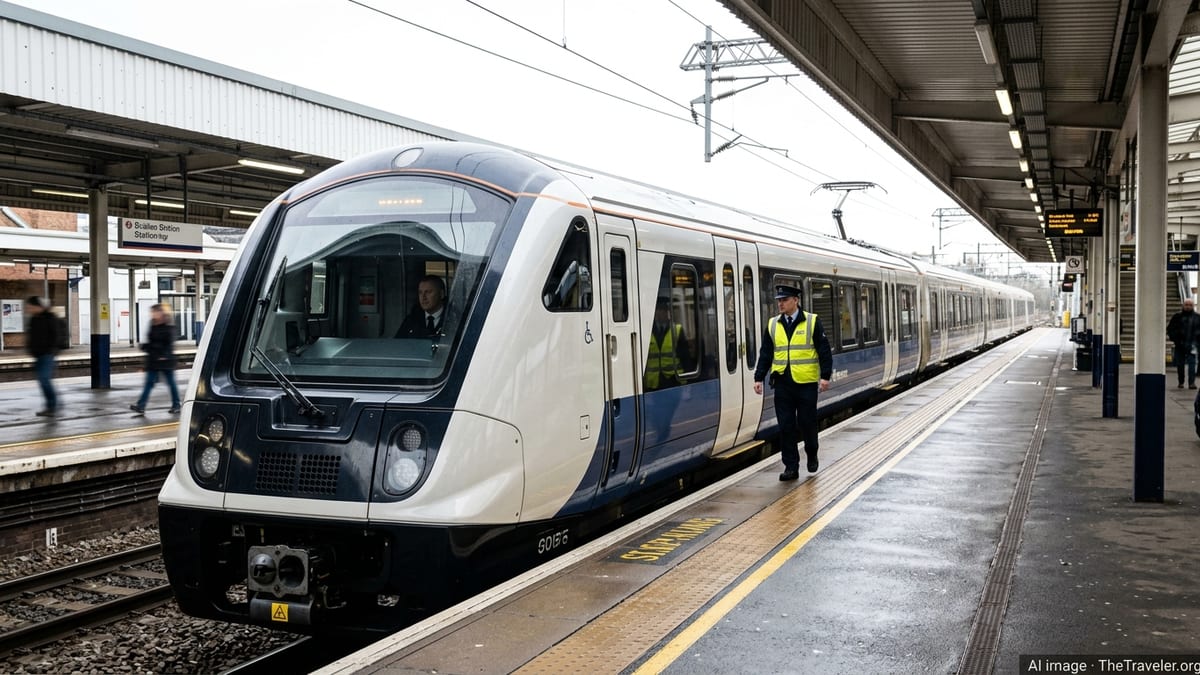
What the expanded disruption scheme changes from September 20
Published coverage and government information indicate the change is focused on one of the most common pain points during disruption: tickets that are valid only on a specific operator becoming effectively unusable when a cancellation forces passengers to look for alternatives. Under the expanded arrangement starting September 20, passengers whose train is cancelled will be able to complete their journey on another participating operator’s service at no extra cost, rather than buying a new walk-up fare and seeking reimbursement later.
The Department for Transport has described the initiative as an expansion of cross-operator ticket acceptance beyond the set of publicly owned operators where such acceptance has already been in place. From September 20, the expanded list includes CrossCountry, Great Western Railway, Avanti West Coast and Chiltern Railways, bringing more long-distance routes into the scheme and broadening the number of alternative trains passengers may be able to use when cancellations hit.
For travelers, the practical effect is expected to be most noticeable on corridors where multiple operators provide realistic alternatives, such as London to the Midlands and North West, and routes that feed into London terminals. The change is also expected to matter most on days with widespread disruption, when the difference between waiting hours for the next same-operator service and taking a different operator’s next departure can decide whether someone makes a flight, a connection, or a same-day return.
Why Chiltern’s inclusion matters on key routes
Chiltern Railways is a core operator on the London Marylebone corridor, serving destinations including High Wycombe, Banbury, Oxford Parkway and Birmingham Moor Street, with additional connections across its network. Its services often provide an alternative path into and out of London compared with operators serving London Euston or London Paddington, which can be critical when disruption concentrates on a single main line or terminal.
The expanded scheme is positioned to reduce the need for passengers to navigate complex rules around ticket restrictions during high-stress moments. Chiltern’s own customer guidance has historically emphasized that operator-restricted tickets generally must be used with the named operator and that missing an Advance train can mean buying a new ticket. With the new cancellation-focused scheme, the goal is to remove that financial and procedural barrier when the trigger is a cancellation rather than a passenger missing a departure.
Chiltern’s inclusion also comes at a notable moment for the operator. Publicly available parliamentary materials indicate Chiltern Railways’ services are scheduled to transfer into public ownership on September 20, 2026, the same date the ticket-acceptance expansion is set to begin. That alignment is likely to draw attention from commuters and leisure travelers who rely on the Marylebone route and want clarity on what, if anything, changes when disruption strikes.
How it is expected to work in practice for passengers
Government information on the new arrangement indicates the expanded scheme applies when a passenger’s train is cancelled and they need to travel on another operator to complete their journey. In those circumstances, the passenger should be able to transfer to an eligible service without paying again. Published coverage suggests the original ticket is intended to serve as proof of entitlement, reducing the need for passengers to secure a new ticket before boarding a different operator.
However, travelers may still need to make quick, informed decisions. Not every operator, route, or ticket type will necessarily be covered in every scenario, and disruption plans can vary by geography and severity. Passengers should check live running information and disruption advice before boarding an alternative service, particularly when the alternative involves a different London terminal or a materially different route that could affect validity.
There is also a distinction between this scheme and longer-standing passenger rights. The National Rail Conditions of Travel set a baseline expectation that, where it reasonably can, a train company will provide alternative means of travel to a destination or overnight accommodation if necessary when disruption prevents completion of a journey. The expanded scheme is aimed at making the immediate “get me moving” step simpler by broadening when passengers can use another operator’s train directly, rather than relying on ad-hoc acceptance or later reimbursement.
What to watch next: communication, crowding, and consistency
One of the biggest tests will be how consistently the rules are communicated at the point of disruption. Past industry reviews have highlighted that unclear or conflicting messaging about ticket acceptance can create confusion for passengers and frontline staff, especially when multiple operators and routes are involved. If the expansion is to deliver on its promise, passengers will need straightforward guidance on which services they can board and what to show, without being bounced between channels.
Crowding management is another practical consideration. When cancellations occur, allowing passengers to switch operators more easily can help people reach their destinations sooner, but it can also shift demand onto already-busy trains. Operators may need to balance the intent of the scheme with safe capacity constraints, particularly on peak commuter flows into London and on popular weekend leisure departures.
For now, the most important date for travelers is Sunday, September 20, 2026. Passengers who travel on routes where Chiltern, Avanti West Coast, Great Western Railway or CrossCountry provide overlapping or complementary options may want to factor the expanded acceptance into contingency plans, especially for trips with tight onward connections or time-sensitive arrivals.