


Southeast Alaska feels designed to be explored from the water.
Its coastline unfolds through glacier-carved fjords, forested islands, narrow channels and sheltered bays. Whales move through the region’s productive waters, bears forage near the shoreline and tidewater glaciers descend from mountain valleys into the sea.
The Inside Passage alone extends for around 500 miles along Alaska’s Pacific coast, connecting wildlife-rich waterways with communities, glaciers and vast areas of rainforest. Activities across the region include kayaking, hiking, glacier viewing, fishing and learning about Alaska Native cultures.
Large cruise ships offer one way to see this landscape, but private expedition yachts provide a different experience. Smaller vessels can enter quieter waterways, adjust their daily plans and give guests more time to explore beyond established ports.
For travellers considering this type of journey, here are seven things to expect when exploring Southeast Alaska by private yacht.
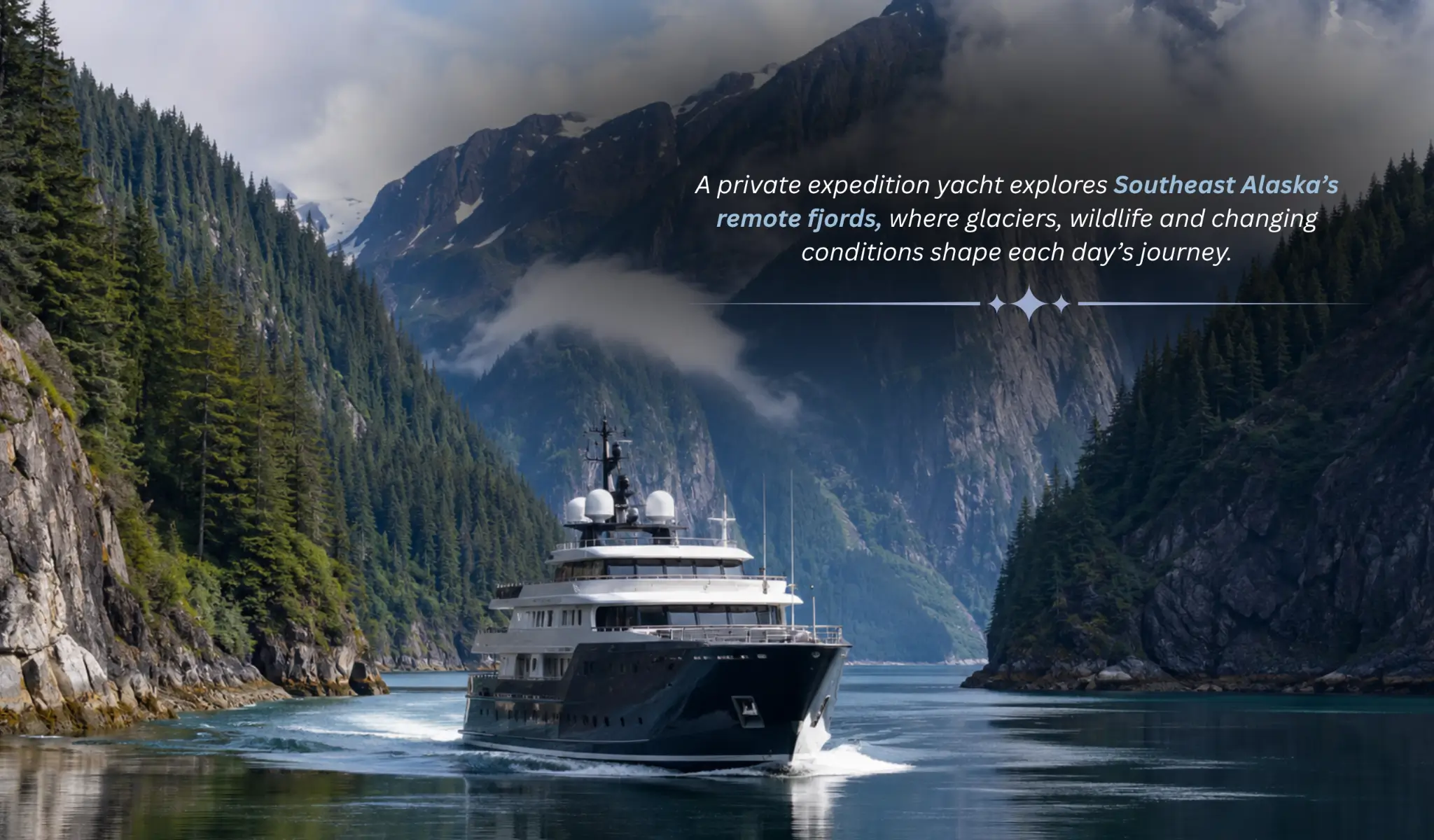
1. The itinerary will remain flexible
A private yacht expedition may begin with a carefully planned route, but the schedule is unlikely to remain completely fixed.
Weather, tides, wildlife activity and local conditions can all influence what happens each day. A planned landing may be postponed because of wind, while an unexpected whale sighting could encourage the yacht to remain in one area longer.
This flexibility is one of the defining differences between private expedition travel and a conventional cruise. A large ship typically follows an established timetable, arriving and departing from scheduled ports at specific times. A private yacht can often make more considered decisions around the interests of a smaller travelling party.
EYOS, a pioneer in private expedition travel, describes adaptability as central to its Alaska journeys. Its teams may adjust plans when wildlife becomes active, a secluded anchorage opens up or conditions create an opportunity to explore a smaller inlet.
As the EYOS Expeditions team explains:
“Alaska unfolds in rhythm with the landscape, a place where glacial calving, roaming brown bears, and remote fjords set the pace of the day. EYOS has known this wilderness since 1981, and with a vessel like Hanse Explorer, we can take guests into the smallest coves and quietest inlets, turning Alaska into a true expedition frontier.”
This flexibility allows the journey to respond to the destination rather than forcing the landscape into a rigid schedule.
2. You can reach quieter fjords and inlets
Not every expedition vessel offers the same type of journey.
Lindblad’s National Geographic Venture and National Geographic Quest, for example, each accommodate around 100 guests and were designed with a shallow draft to enter narrower waterways.
UnCruise operates vessels carrying between 22 and 86 guests. These provide a small-group atmosphere while offering scheduled programmes of kayaking, hiking, wildlife viewing and other guided activities.
Private Southeast Alaska yacht charters offer a more personalized model. EYOS builds its expeditions around a single charter group, allowing the route, activities and pace to reflect that group’s interests, subject to weather, safety and environmental regulations. Its Southeast Alaska experiences can include kayaking through narrow inlets, rainforest hikes, flightseeing and visits to tidewater glaciers.
No format is automatically better for every traveller.
A small expedition ship may suit people who enjoy meeting other passengers and joining a structured programme led by naturalists. A private yacht may appeal to families or groups seeking greater privacy and more influence over how their days are organised.
3. Wildlife encounters will be unpredictable
Southeast Alaska offers opportunities to observe humpback whales, orcas, sea otters, seals, Steller sea lions, bears, bald eagles and other wildlife. The Alaska Department of Fish and Game describes the region’s wildlife-viewing opportunities as ranging from whales in Frederick Sound and bears in Hyder to bald eagles in Haines and birds along the Stikine River.
A private yacht can provide useful flexibility when animals are active. The vessel may be able to slow down, change direction or wait at a respectful distance rather than following a tightly controlled sightseeing schedule.
Yet no credible expedition should guarantee a particular encounter.
Wild animals do not follow an itinerary. Their movements depend on feeding patterns, season, weather, tides and numerous other conditions. Even in well-known wildlife areas, sightings vary from one day to the next.
An experienced expedition leader or naturalist helps guests understand what to look for. A group of circling seabirds may indicate feeding activity below the surface, while changes along a salmon stream can suggest that bears are nearby.
The value of specialist guidance lies not only in locating wildlife, but also in interpreting its behaviour and ensuring that encounters remain safe and responsible.
4. Glaciers will shape much of the experience
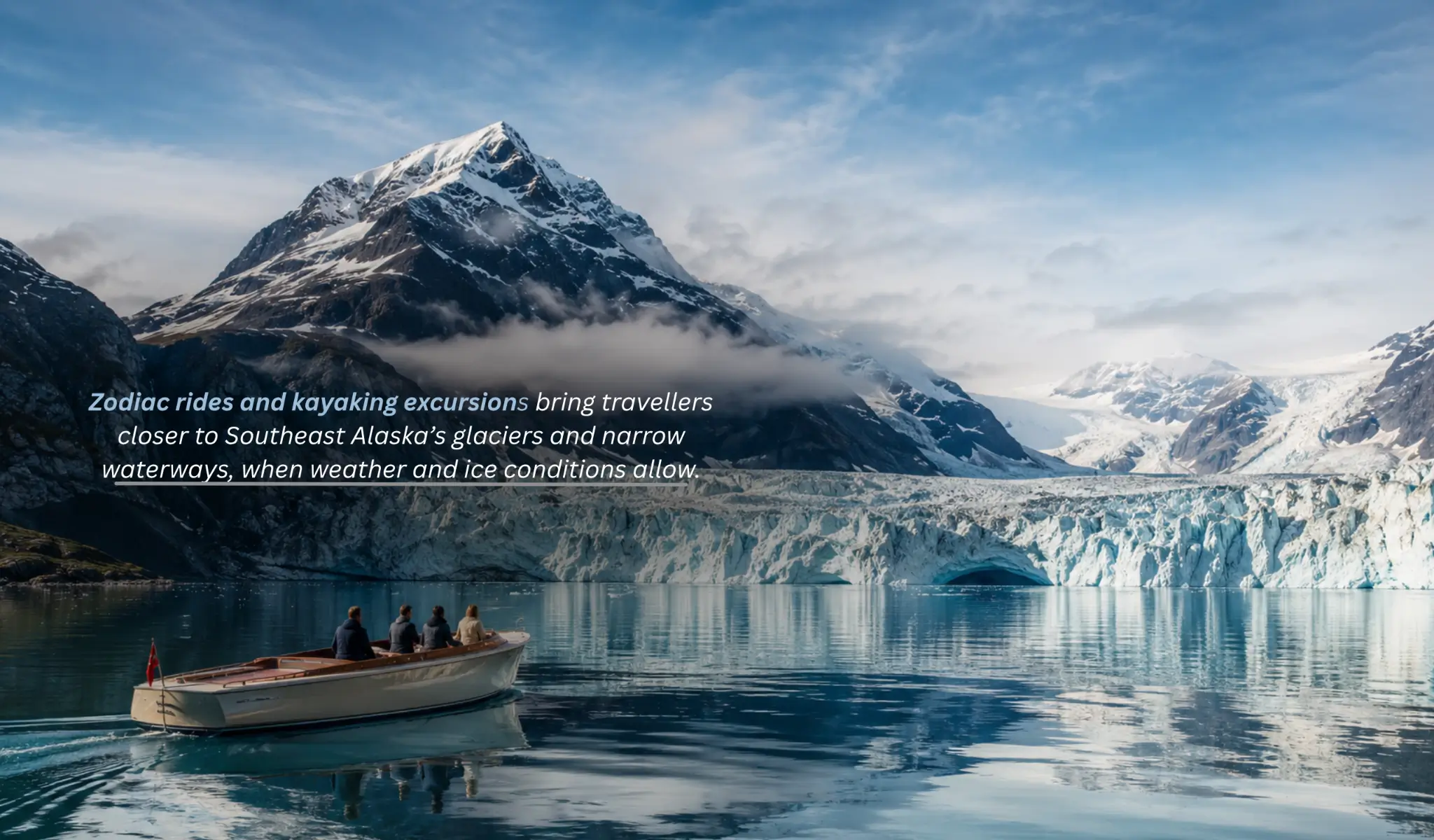
The physical character of Southeast Alaska was created by ice.
Glaciers carved the region’s deep fjords, mountain valleys and complex coastline. Today, visitors can still see tidewater glaciers meeting the sea, floating ice moving through narrow channels and waterfalls descending from steep rock faces.
Areas such as Tracy Arm combine dramatic scenery with tidewater glaciers and opportunities to see harbour seals, whales, mountain goats and bears.
From a private yacht, glacier exploration may take several forms. Guests could watch from the main deck, transfer into a Zodiac-style tender for a closer perspective or kayak in calmer water where conditions allow.
Distance and safety remain essential. Glaciers can calve without warning, sending large sections of ice into the water and creating powerful waves. Captains and expedition leaders determine how closely vessels can approach.
Travellers should also expect the scenery to change constantly. Fog can hide a glacier before lifting suddenly. Floating ice may alter an intended route. Sunlight can turn blue ice vivid for a few minutes before the cloud returns.
This is not a landscape that offers the same view twice.
5. The adventure continues beyond the yacht
A private yacht serves as a mobile base rather than the entire destination.
Days may include kayaking, wildlife observation, rainforest hiking, photography, fishing or exploring the shoreline by tender. The exact activities depend on the yacht’s equipment, the interests of the group and prevailing conditions.
Small expedition craft, kayaks and paddleboards allow guests to explore closer to the shoreline. Landings may lead to rainforest walks, glacial viewpoints, beaches or areas where wildlife activity can be observed safely.
Lindblad’s Alaska, UnCruise and EYOS expeditions include kayaking, paddleboarding and Zodiac exploration in glacier-carved waterways. Their private yacht journeys also include kayaking, tender excursions, photography, fishing, rainforest hikes and flightseeing. The programme can be adapted to different interests and activity levels, although conditions and the expedition leader’s judgement always come first.
A private itinerary allows the expedition team to consider different interests and abilities, although safety and environmental conditions always take priority.
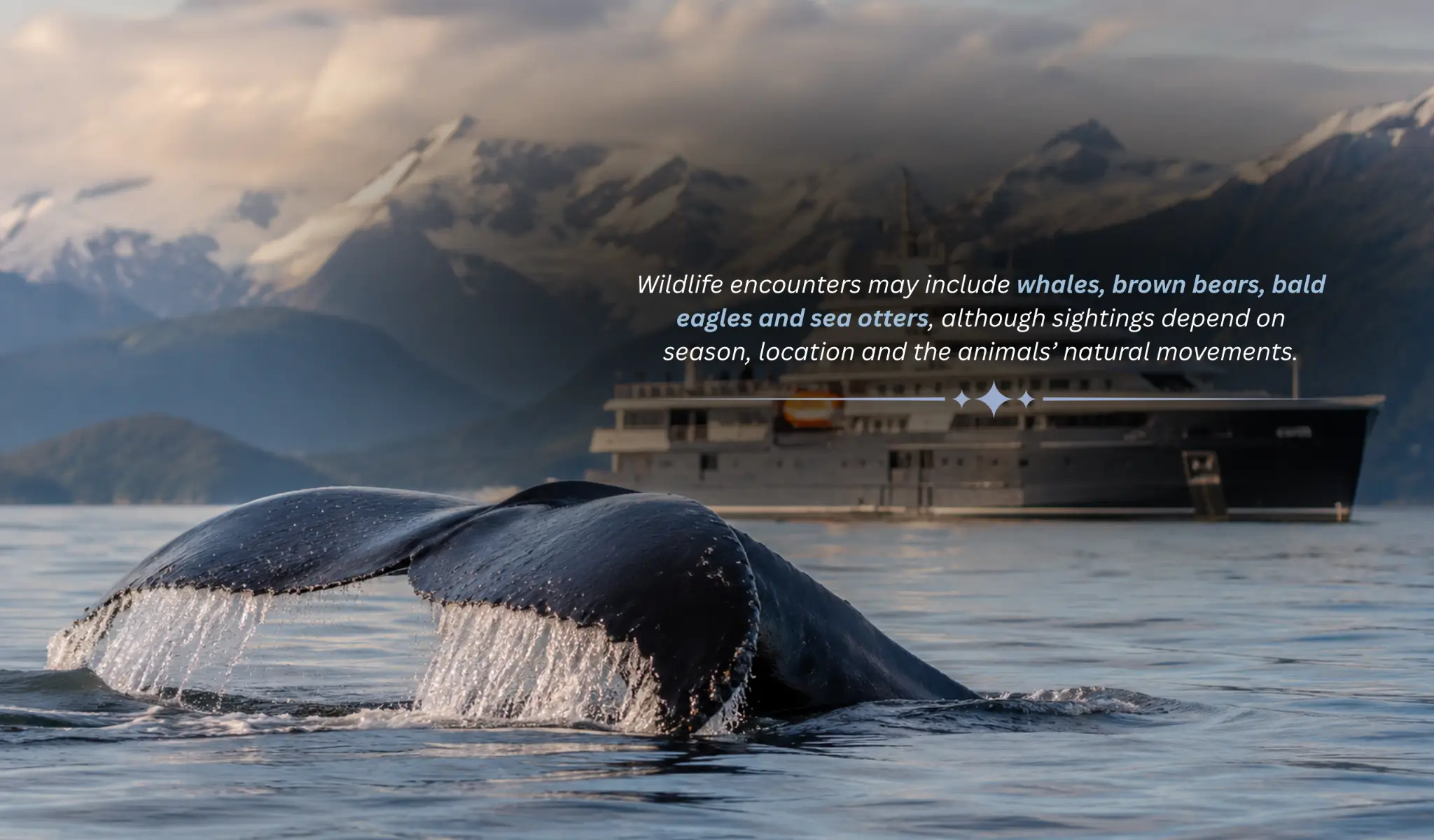
6. Comfort supports the expedition
Private yachting brings a level of comfort that is not always associated with wilderness travel.
After several hours outside, guests can return to warm cabins, prepared meals and sheltered viewing areas. Some expedition yachts also carry kayaks, specialist photographic equipment, fishing gear and tenders that support a wider range of activities.
The standard of accommodation varies according to the selected yacht. Companies like EYOS work with different expedition vessels and consider the yacht’s range, equipment, ice capability, layout and crew when matching it to a journey.
Comfort should not separate travellers from the environment. Ideally, it makes sustained exploration possible.
Rain, cold wind and long days on the water can be tiring. A warm place to recover allows guests to remain enthusiastic when another early wildlife excursion or glacier approach becomes possible the following morning.
In this setting, luxury is not only about cabin size or dining. It is also about privacy, time, expert support and the ability to experience remote places without rushing.
7. Expert leadership matters as much as the yacht
The vessel may be the most visible part of the journey, but a successful expedition depends heavily on the people planning and leading it.
Southeast Alaska requires knowledge of tides, weather, wildlife behaviour, landing locations and local operating requirements. Expedition leaders must decide when an excursion is worthwhile, when conditions are becoming unsafe and when an unexpected opportunity deserves a change of plan.
Local and Indigenous knowledge also matters. Southeast Alaska is home to living Alaska Native communities whose histories and cultures are inseparable from the region. Cultural experiences should therefore be approached respectfully and presented as opportunities to understand contemporary communities, not as staged glimpses into the past.
Different operators bring different strengths. The teams include expedition leaders, naturalists and photographers with experience operating in remote environments.
The strongest expedition teams do not attempt to control the wilderness. They help guests respond to it safely, patiently and with a better understanding of what they are seeing.
A more personal way to experience Alaska
Southeast Alaska is not a destination that can be reduced to one glacier, one whale sighting or one famous port.
Its appeal lies in the combination of water, ice, forest and wildlife, and in the way those elements change from one channel to the next.
A private yacht provides the freedom to experience that landscape at a slower and more responsive pace. It can move beyond established cruise routes, remain longer when conditions are rewarding and use smaller boats to reach places that might otherwise be missed.
There will still be uncertainty. Rain may change the day’s activities, wildlife may remain out of sight and some waterways may be inaccessible. Those possibilities are part of travelling through a genuine natural environment.
For the right traveller, that uncertainty is not an inconvenience. It is what makes the expedition feel real.