


More news on this day
More than 800 passengers arriving on Virgin Atlantic flights at Orlando International Airport faced a chaotic five-hour wait for their checked baggage, with several travelers reporting that they were warned they could be arrested if they attempted to leave the federal inspection area without their bags.
Get the latest news straight to your inbox!
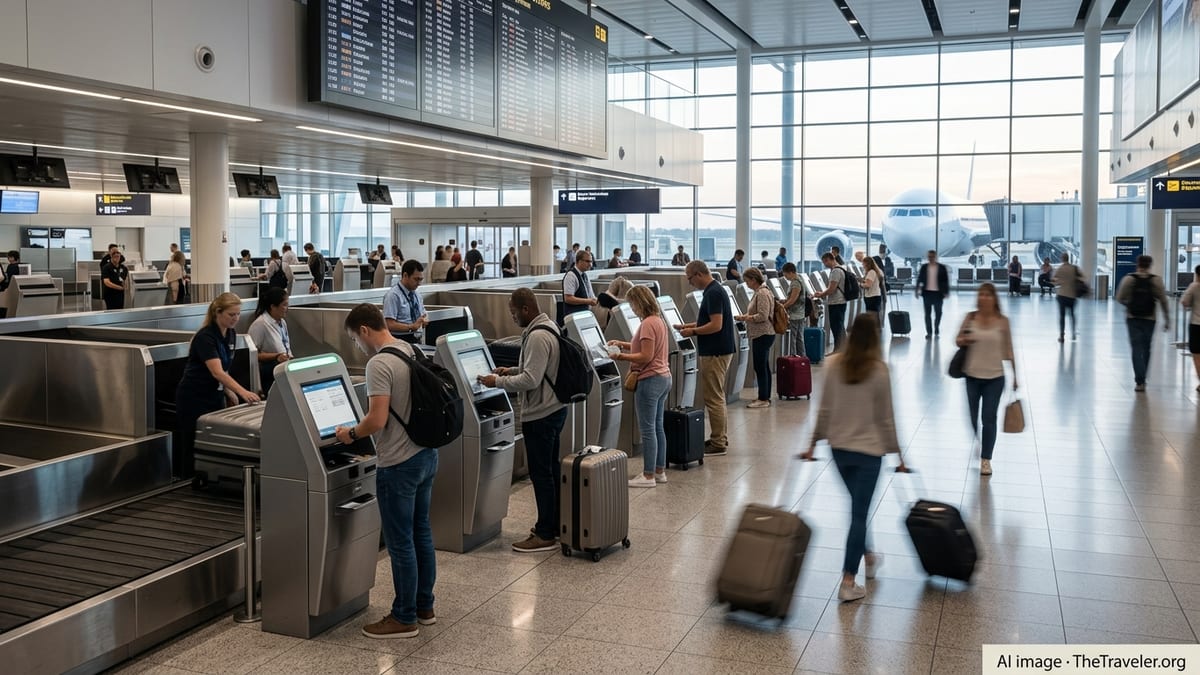
Hours-Long Baggage Backlog Snares International Arrivals
According to published coverage, the disruption unfolded on the evening of June 28 at Orlando International Airport after at least two Virgin Atlantic flights from the United Kingdom arrived to find no checked bags on the carousel. Passengers described remaining confined in the federal inspection zone, where international arrivals must collect luggage before clearing customs.
Local news reports and travel industry outlets indicate that the delay stretched to around five hours for some passengers, with total affected headcounts exceeding 800 people drawn from multiple long-haul flights. Many of those travelers had already spent eight to nine hours in the air before encountering the bottleneck at baggage claim.
Accounts posted on social media and recounted in regional coverage describe a crowded, tense scene in the customs hall, with families, older travelers and young children waiting late into the night. At least one person reportedly collapsed during the delay, prompting an emergency medical response inside the terminal.
Airport officials and the airline have attributed the disruption in part to weather-related operational issues that complicated baggage handling earlier in the day. However, passengers arriving during the affected window experienced the impact primarily as an extended, unexplained wait in a secure area where they were not permitted to exit freely.
Disputed Accounts of Arrest Threats
What turned a severe inconvenience into a wider controversy were reports that passengers were told they could face arrest if they attempted to leave the customs area without their checked baggage. Several travelers recounted being informed that they were not allowed to exit the federal inspection zone without their luggage and that doing so could result in detention.
Travel coverage summarizing the incident notes that some passengers interpreted these instructions as a direct threat of arrest, particularly those who were unfamiliar with U.S. entry procedures or were arriving in the country for the first time. One widely shared account questioned what might have happened to a traveler who chose to leave anyway, raising concerns about potential referral to an immigration detention facility.
Airport representatives, as cited in local reporting, have disputed the characterization that passengers were threatened with arrest by airport staff or local police, while acknowledging that the need for international arrivals to remain with their baggage inside the customs area can be strictly enforced. Official statements referenced in news coverage emphasize that no mass arrests took place, and there have been no public indications that any individual traveler was taken into custody in connection with the delay.
The contrasting narratives highlight how high-stress conditions, unfamiliar rules around international arrivals and inconsistent messaging can shape passengers’ perceptions of coercion, even when authorities maintain that they are simply enforcing customs and security protocols.
Operational Strain at a Peak Leisure Gateway
Orlando International is one of the busiest leisure gateways in the United States, with a high concentration of international holiday traffic from the United Kingdom and Europe. Recent travel data and reporting have documented sustained pressure on major U.S. hubs as pent-up demand, staffing constraints and frequent thunderstorms create bottlenecks across airline and airport operations.
In this case, the baggage disruption coincided with a broader pattern of summer strain across the system, in which ground handling, security screening and staffing challenges have repeatedly combined with weather to produce cascading delays. Publicly available aviation statistics show that baggage-handling complaints and general customer-service grievances have risen in the past year, reflecting travelers’ mounting frustration with irregular operations.
For international flights, interruptions in baggage handling can be especially complex. Passengers are often required to retrieve checked luggage and present it to customs officials before rechecking or exiting, meaning that missing or delayed bags can effectively trap hundreds of people in secure areas not designed for extended occupancy. When multiple widebody aircraft arrive in quick succession, the number of affected passengers can quickly reach into the hundreds, as occurred in Orlando.
The Orlando incident underscores how vulnerable high-volume leisure airports are to even a single point of failure. Once baggage belts stop moving in the customs area, the knock-on effects extend beyond inconvenience to touch on health, safety and legal concerns for travelers who feel they have little choice but to wait.
Passenger Rights and Limited Remedies
While the federal government in the United States sets rules for tarmac delays and certain refund obligations, there are fewer clear-cut protections when a flight has technically arrived and passengers are held up by baggage issues and customs processing. Consumer advocates note that compensation for baggage delays on international itineraries is typically governed by international treaties and airline contracts of carriage, which may cap reimbursement amounts and focus on documented out-of-pocket expenses rather than the time spent waiting.
Publicly available airline policies usually allow for reimbursement of essential items such as clothing and toiletries when checked bags are delayed, but they do not typically address situations in which travelers are physically confined in customs areas for hours while waiting for their luggage to appear. In the Orlando case, early reports have not indicated any large-scale compensation program beyond standard claims procedures, leaving many passengers to pursue individual remedies.
Travel experts cited in recent coverage advise affected passengers to document events carefully, including timing, any written notices and receipts for incidental costs. They also suggest filing complaints both with the airline and with the U.S. Department of Transportation’s aviation consumer office if travelers believe carrier handling of delays or communications was unreasonable.
For future trips, frequent travelers often recommend placing medication, critical documents, electronics and at least a day’s worth of clothing in carry-on bags whenever possible. Although that practice would not have eliminated the Orlando delay, it can reduce the practical impact when checked luggage is inaccessible for extended periods.
Growing Scrutiny of Airport Treatment During Disruptions
The Orlando baggage episode joins a series of recent high-profile incidents that have drawn attention to how airports and airlines manage passengers during severe disruptions. In past years, widely reported tarmac delays, security incidents and mass cancellations have prompted questions about the balance between safety, security and customer dignity during long waits.
Advocacy groups and civil liberties organizations have periodically raised alarms about the language used by airport staff and law enforcement when travelers are confined in secure zones, particularly in cases where warnings about security rules are perceived as threats of arrest. The Orlando situation, in which hundreds of mostly leisure travelers allegedly heard arrest referenced in connection with leaving the baggage area, has renewed those concerns.
Industry observers note that as airports grow busier and more dependent on complex staffing and technology, clear and consistent communication becomes a key factor in preventing routine delays from escalating into perceived civil-rights issues. Transparent explanations about the cause of disruptions, realistic timelines and information about available recourse can all help defuse tension during long waits.
For now, the Orlando incident stands as another example of how the weakest link in the passenger journey, in this case baggage handling at a major U.S. tourist gateway, can transform an otherwise uneventful flight into a protracted ordeal for hundreds of travelers navigating unfamiliar rules and high-stress surroundings.