

Italy rewards slow, region by region exploration, but you do not always need a full week in each place to understand its personality. Smartly planned day trips let you sample coastal villages, vineyard hills, alpine lakes and volcanic ruins while still sleeping in a major hub. The following ten day trips, each tied to a different Italian region, blend practical feasibility with atmosphere, so you can see more of the country without rushing through it.
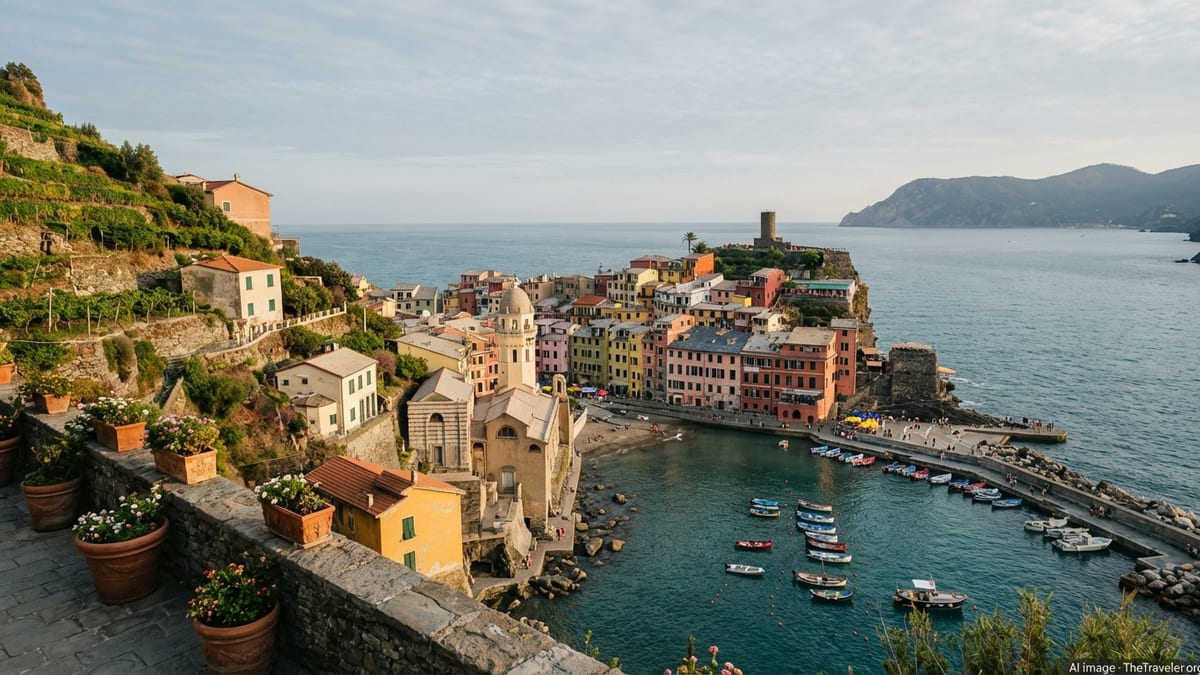
Liguria: Cinque Terre from La Spezia or Genoa
Cinque Terre has become one of Italy’s most recognisable landscapes, a string of five former fishing villages painted in sorbet colours along a cliff lined stretch of the Ligurian Sea. Trains and hiking paths link Riomaggiore, Manarola, Corniglia, Vernazza and Monterosso, making it realistic to experience several villages in a single day. The area is a protected national park and UNESCO site, so cars are heavily restricted and arrival by rail or boat is both easier and more sustainable.
For a relaxed day trip, base yourself in La Spezia, which sits just south of the park and has frequent local trains into the villages. Many visitors aim to combine short sections of coastal hiking with hops on the regional train, purchasing a day card that covers both rail travel and trail access. When trails close due to weather or maintenance, the train network still allows you to move between villages for swims, photo stops and simple seafood lunches in harbourside trattorie.
If you are staying farther away, Genoa and even Milan offer early departures that reach La Spezia in time for a full day on the coast. That said, crowds in peak summer can be intense, so spring and early autumn are often more comfortable, with milder temperatures for hiking and better odds of finding quiet corners above the villages as the light softens over the sea.
Tuscany: Medieval Siena from Florence
Tuscany is famous for its rolling hills and hill towns, but one of the easiest and most rewarding days out focuses on a single city: Siena. Trains and regional buses connect Florence to Siena in around ninety minutes, delivering you directly into a compact historic centre that is easy to navigate on foot. The medieval streets still curve toward Piazza del Campo, the shell shaped main square that fills with life in late afternoon when day trippers and locals order coffee or aperitivo at outdoor tables.
Many travellers pair the square with Siena’s cathedral complex, whose black and white striped facade and inlaid marble floor illustrate the wealth that flowed through the city in the Middle Ages. Ducking into side streets reveals quieter corners: small osterie serving pici pasta, artisan workshops, viewpoints over the sienese countryside and fragments of medieval walls that survived later development. Because the centre is largely pedestrian, you can move between these elements at an unhurried pace, without negotiating heavy traffic.
For visitors with an extra hour or two, it is possible to combine Siena with a short foray into the surrounding hills, perhaps to a winery or to the smaller tower town of San Gimignano. Still, there is value in treating Siena as a standalone destination. Doing so turns the journey into a focused glimpse of Tuscan civic life, past and present, that pairs naturally with time in Florence but feels distinct in rhythm and scale.
Lombardy: Lake Como from Milan
Northern Italy’s lakes offer a different mood from the south, with alpine backdrops, villas framed by cypress trees and lakeside promenades where the pace slows with each ferry crossing. Lake Como is the classic choice for a Lombardy day trip, accessible from Milan in around an hour by train. From the town of Como itself, regular ferries fan out along the lake, allowing you to reach destinations such as Bellagio, Varenna and Menaggio in time for lunch.
A typical day might start with a walk through Como’s historic centre, a blend of medieval streets and elegant 19th century architecture, before boarding a mid morning boat toward the so called golden triangle of villages in the mid lake area. Sitting on the open deck provides the best views of terraced gardens, grand villas and forested slopes rising straight from the water. Many travellers opt for a ferry pass that allows unlimited hops between central villages, making it easy to improvise stops for gelato, short hikes to viewpoints or visits to lakeside gardens.
Weather matters here. Clear days showcase the snow capped peaks to the north and encourage lingering on terraces, while overcast skies can make the lake feel moody and introspective. In either case, returning to Milan on an evening train lets you experience two very different faces of Lombardy in a single day: the urban energy of Italy’s financial capital and the calm, almost theatrical beauty of its most celebrated lake.
Campania: Pompeii and Vesuvius from Naples
For many travellers, the region of Campania is defined by its volcanic coastline, and no day trip captures this better than a combined visit to Pompeii and the slopes of Mount Vesuvius. Naples functions as the most practical base, with frequent local services on the Circumvesuviana line delivering passengers to stations near the archaeological park in well under an hour. Once through the gates, the scale of Pompeii quickly becomes apparent: this was a full Roman city, not a villa, and the grid of streets, public baths, frescoed houses and amphitheatre invite thoughtful wandering.
Because the site is large and often hot, many visitors choose targeted routes, focusing for instance on the forum area, a handful of well preserved homes and the plaster casts that have made Pompeii so famous. Audio guides or reputable guided tours can help interpret what you are seeing without slowing you down. After a few hours among the ruins, those with reasonable fitness often continue up Vesuvius itself, either on a structured excursion or by bus to the higher car parks followed by a short hike to the crater rim.
Standing at the top, looking back over the Bay of Naples and down toward Pompeii, reinforces the proximity of city and volcano that still shapes life in the region today. Weather and access can affect both the crater path and some sections of the ruins, so it is wise to check local conditions before setting out. When they are open, though, combining archaeological immersion with a walk on the volcano that buried the city creates one of Italy’s most powerful single day experiences.
Emilia Romagna: Food and Cars around Bologna
Emilia Romagna may not have the immediate name recognition of Tuscany or the Amalfi Coast, but it is a favourite among food focused travellers. Bologna, the regional capital, lies at the centre of an efficient rail network that makes day trips into the surrounding area straightforward. Within an hour by train you can reach Modena or Parma, two small cities closely tied to ingredients that appear on menus worldwide: traditional balsamic vinegar in Modena, and cured ham and aged cheese in Parma.
A well planned day might begin in Bologna’s own market quarter, browsing stalls piled with fresh pasta and local produce under the historic porticoes. From there, a short train ride delivers you to Modena for a late morning tasting at an acetaia, where aged vinegar is produced in attic barrels and served in careful drops rather than poured. Later, continuing to Parma reveals another facet of the region’s culinary reputation, from prosciutto aging cellars to cheese warehouses lined with wheels of Parmigiano Reggiano.
Those more interested in engineering than food can travel instead to nearby Maranello, home to Ferrari, or to the broader so called motor valley where Italian sports car brands cluster along the highway. These sites can usually be reached by a combination of regional trains and local buses or private transfers. Whether you focus on flavours or engines, you return to Bologna in the evening with a clearer sense of why Emilia Romagna is often described as one of Italy’s most generous and good humoured regions.
Lazio: Tivoli Villas from Rome
Rome itself can easily fill a week, yet a short journey east reveals an entirely different side of Lazio. The town of Tivoli sits in the hills roughly thirty kilometres from the capital and is home to two major UNESCO listed sites: Villa d’Este and Hadrian’s Villa. Regular trains and buses mean you can reach Tivoli in under an hour, making this one of the simplest day trips to arrange on your own while staying in Rome.
Villa d’Este is best known for its terraced Renaissance gardens, dense with fountains, grottoes and water features that cascade down toward views of the Roman countryside. The interplay of water, shade and stone offers a welcome contrast to the often sun baked ruins back in the city. Hadrian’s Villa, a short transfer away, preserves the remains of an enormous imperial retreat, with pools, colonnades and fragments of decorative statuary hinting at the luxury once enjoyed here.
Visiting both in one day requires an early start and a bit of planning, but the combination of exuberant Renaissance design and more austere Roman remains illustrates the long continuity of elite life around Rome. Many travellers find that after several intense days among the crowds in the historic centre, a day in Tivoli’s gardens and open spaces brings welcome visual variety and a slower pace without requiring a long journey.
Veneto: Verona from Venice
Veneto is often equated almost entirely with Venice, but the region’s mainland cities deserve attention too. Verona, reachable from Venice by direct train in roughly an hour, offers a more grounded sense of northern Italian life while still providing plenty of romance and history. The old town unfurls along the Adige River, with arched bridges connecting neighbourhoods of pastel coloured houses, stone churches and piazzas lined with cafes.
Verona’s best known landmarks include a remarkably well preserved Roman amphitheatre that still hosts summer performances and the balcony that has long been associated, however loosely, with Shakespeare’s Juliet. Away from these hotspots, wandering through residential streets reveals quieter courtyards, small wine bars pouring local Valpolicella and stylish but unhurried shopping streets. Because the centre is compact, you can comfortably explore on foot without needing public transport once you arrive.
A Verona day trip pairs well with several days in Venice, giving you a contrast between the lagoon’s waterbound environment and a classical Italian city built around river, squares and surrounding hills. Travelling by train keeps the day relatively low stress, and because services run into the evening, you can time your return to coincide with sunset walks along the Adige or an early dinner on a terrace overlooking the river.
Piedmont: Langhe Vineyards from Turin
In Italy’s northwest, the region of Piedmont trades coastal drama for a patchwork of vineyard hills and distant alpine peaks. Turin, the elegant former capital of the country, serves as a refined base, with arcaded boulevards and grand cafes. From here, travellers head south into the Langhe and Roero areas, associated with some of Italy’s most respected red wines and seasonal white truffles. Reaching smaller towns such as Alba, La Morra or Barolo usually involves a mix of regional trains and local buses or a dedicated tour, but the effort pays off in views and atmosphere.
A typical Langhe day might focus on one or two hill towns, leaving time to walk among vineyards, visit a cellar for a tasting and linger over a long lunch made up of regional dishes. The hills here rise gently rather than dramatically, and roads snake between them, revealing alternating patterns of vines, hazelnut groves and small forests. Villages cluster around church spires and castle towers, with viewpoints that look out over neatly terraced slopes to the distant wall of the Alps on clear days.
Autumn is particularly evocative, with harvest in full swing and truffle markets active on weekends in towns like Alba, but spring and early summer offer greener landscapes and slightly cooler temperatures. Returning to Turin in the evening, perhaps along the banks of the River Po, you have the sense of having stepped into a quieter, slower Italy for the day without sacrificing the cultural offerings of a major city base.
Apulia: White Towns of the Itria Valley from Bari
Far in the southeast, Apulia curves around the heel of Italy’s boot, with a coastline on both the Adriatic and Ionian seas and an interior of olive groves and limestone ridges. Bari, a lively port city and regional hub, anchors many itineraries and works well as a jumping off point for the Itria Valley. This inland area is known for its whitewashed hill towns and conical roofed trulli houses, a style of construction that gives the town of Alberobello its distinctive skyline.
Regional trains and buses connect Bari with Alberobello and nearby towns such as Locorotondo and Martina Franca, though schedules can be more limited than in the north, so checking departure times in advance is important. Once there, you can easily explore on foot, wandering narrow lanes, dipping into small churches and sampling local specialities such as orecchiette pasta and pungent olive oil. Outside the most visited streets, everyday life continues at a relaxed pace, with older residents chatting on benches and children playing in small squares.
Many travellers choose to focus on one or two towns rather than trying to see everything in a single day, allowing time to sit on a terrace and simply observe the rhythm of southern Italian life. Light here can be intense in summer, bouncing off white stone, so spring and autumn often provide a softer, more forgiving experience, along with slightly cooler temperatures for walking up and down the valley’s gentle hills.
The Takeaway
Planning day trips by region lets you experience Italy as a mosaic of distinct landscapes and local cultures rather than as a single, homogeneous destination. From Ligurian cliffs to Piedmontese vineyards, from Lazio’s Renaissance gardens to Campania’s volcanic ruins, each excursion peels back a different layer of the country. The key is to respect travel times, focus on one coherent area per day and leave space for unstructured moments, whether that is an unscheduled coffee in a quiet piazza or an extra ferry ride to watch the light change over a lake.
Using regional hubs such as Florence, Milan, Naples, Rome, Bologna, Venice, Turin and Bari gives you flexibility, access to public transport and the comforts of a city base. From there, these ten day trips open windows onto Italy’s diversity without demanding constant hotel changes or long, draining transfers. Choose the combinations that match your interests, travel in shoulder seasons where possible and you will discover that some of your strongest memories come not from headline cities themselves but from the days you spend exploring just beyond them.
FAQ
Q1. Are these day trips in Italy realistic without renting a car?
Most of the trips described here are feasible using Italy’s rail and bus network, especially those from major hubs such as Rome, Florence, Milan and Naples. In more rural regions, like parts of Piedmont or Apulia, an organised small group tour or private driver can make logistics easier.
Q2. Which Italian day trips are best for first time visitors?
For a first trip, popular choices include Cinque Terre from Florence or Genoa, Siena from Florence, Pompeii from Naples and Tivoli from Rome. These combine straightforward transport with well signposted sights and plenty of visitor infrastructure.
Q3. When is the best time of year to plan these regional day trips?
Late spring and early autumn typically offer the best balance of pleasant weather and manageable crowds. High summer can be very hot in places like Pompeii or the Itria Valley, while some coastal services and smaller attractions operate on reduced schedules in mid winter.
Q4. How early should I start my day to make the most of a day trip?
Leaving between 7:00 and 8:30 in the morning usually allows for a full day on the ground, especially for destinations one to two hours away. Early departures also help you stay ahead of tour groups and midday heat in popular sites.
Q5. Do I need to book train tickets for these day trips in advance?
For high speed trains, such as those linking major cities, advance booking is recommended to secure seats and better fares. Regional trains, which serve many of the day trip destinations, usually do not require reservations, but checking timetables and potential disruptions a day or two ahead is wise.
Q6. Are guided tours worth it for places like Pompeii or the Langhe wine region?
Guided tours can add context in complex archaeological sites and simplify logistics in areas with limited public transport. In Pompeii, a knowledgeable guide can help you focus on the most significant sections. In rural wine regions, tours or drivers allow you to taste safely and reach smaller producers that are difficult to access on your own.
Q7. How should I budget for a typical Italian day trip?
Costs vary widely by region and season, but you can expect to pay for return transport, any entrance fees, meals and occasional local transfers such as ferries or buses. Planning a rough daily budget and leaving a little extra for spontaneous tastings or viewpoints with paid entry keeps surprises to a minimum.
Q8. What should I pack for these day trips besides the usual essentials?
Comfortable walking shoes, a refillable water bottle, sun protection and a lightweight layer for cooler mornings or boat rides are useful across regions. For coastal or lake destinations, pack a small towel and swimwear, while in religious sites it is prudent to have clothing that covers shoulders and knees.
Q9. How can I avoid crowds on popular routes like Cinque Terre or Lake Como?
Traveling outside peak months, starting early in the day and spending time in less central villages are all helpful strategies. On lakes and coasts, taking slightly slower ferries rather than only the most direct services can lead you to quieter stops and viewpoints.
Q10. Is it better to focus on one region for several day trips or to change bases often?
Staying in a single hub for several nights and taking multiple day trips usually results in a more relaxed experience than changing hotels every day or two. You gain familiarity with one city while still sampling different corners of its surrounding region.