


More news on this day
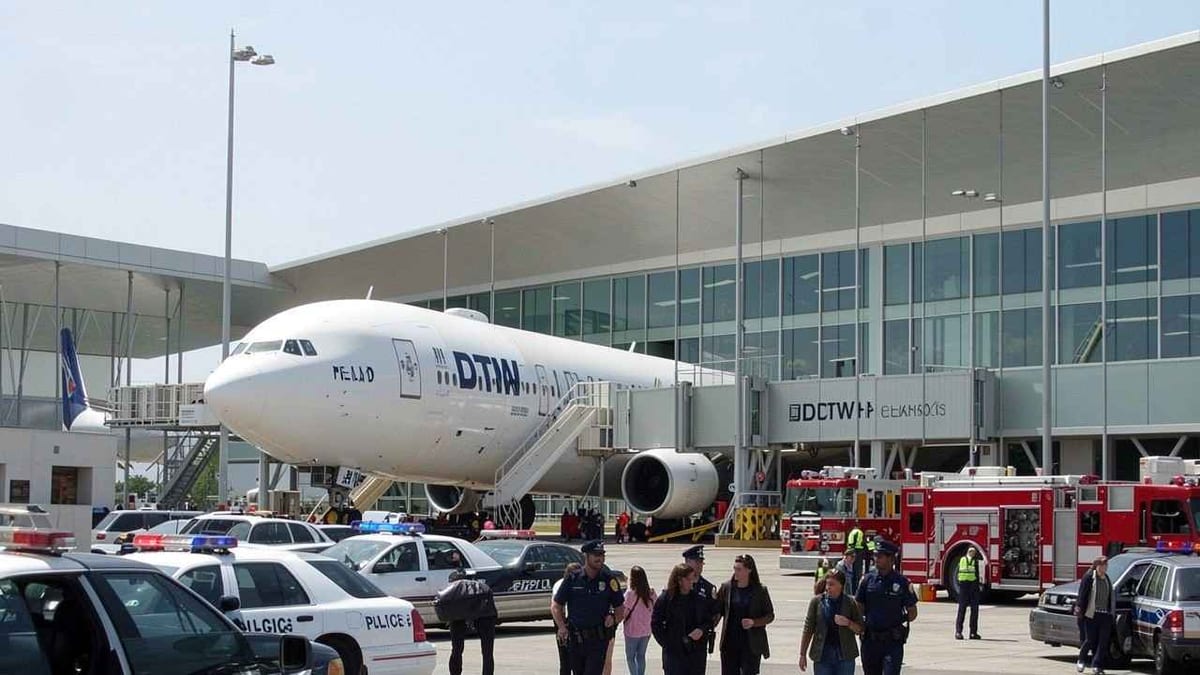
American Airlines flight AA1424, a Boeing 737-800 service scheduled from Dallas–Fort Worth to Chicago O’Hare, diverted to Minneapolis–Saint Paul after a mid-route change, according to real-time tracking data and publicly available flight information late Wednesday.
Get the latest news straight to your inbox!
Mid-Route Change Alters Routine Dallas–Chicago Service
AA1424 is a regularly scheduled domestic service operated by American Airlines on the busy corridor between Dallas–Fort Worth International Airport and Chicago O’Hare International Airport. Publicly accessible schedules list the flight with an expected journey time of around two and a half hours, typically operating in the evening period with a Boeing 737-800 aircraft.
On the latest rotation, tracking data and third-party flight information tools indicate that the jet departed Dallas–Fort Worth as planned but later deviated from its filed route toward Chicago. Instead of continuing to O’Hare, the aircraft turned north toward Minneapolis–Saint Paul International Airport, where it ultimately landed, ending the sector short of its intended destination.
The diversion effectively transformed the flight into an unscheduled Dallas to Minneapolis segment, leaving passengers short of Chicago by several hundred miles. The change unfolded while the aircraft was already airborne, meaning customers and observers first learned of the diversion through flight-tracking platforms as the route arc shifted on live maps.
Public data sources list AA1424 as operating with on-time performance in recent days, underscoring how swiftly conditions can change on U.S. domestic routes. In this instance, what began as a routine point-to-point service between two major hubs concluded at a third airport in the Upper Midwest.
Possible Factors Behind the Minneapolis Diversion
As of the latest available information, no single confirmed trigger for the mid-route change had been publicly detailed. Diversions of this type can occur for a variety of reasons, including weather disruptions near the destination, air traffic control constraints, operational considerations around crew hours, or precautionary technical checks on the aircraft.
Chicago O’Hare has been under periodic pressure from weather-related disruptions, and American Airlines has posted general travel alerts for the Chicago area covering early to mid-June. Those broader notifications describe flexible rebooking options for affected customers when storms or other irregular operations impact schedules. While they do not name AA1424 specifically, they highlight the kind of operational backdrop in which diversions can arise.
Industry practice on U.S. carriers, including American Airlines, is to prioritize a safe and orderly diversion when conditions en route or at the destination change. Flight-tracking records commonly show aircraft diverting to nearby or strategically located airports that can provide the necessary ground support while minimizing additional flying time. Minneapolis–Saint Paul, a major Upper Midwest hub, offers extensive facilities, multiple connecting options, and the runway infrastructure to handle a Boeing 737-800 without difficulty.
Publicly available academic and industry analyses of airline operations note that diversions, while disruptive for travelers, are a standard component of commercial aviation risk management. Operators routinely adjust routes mid-flight in response to evolving conditions, often before passengers receive a detailed explanation of the underlying cause.
Impact on Passengers and Downline Operations
The diversion of AA1424 is expected to ripple through travel plans for customers booked on the Dallas to Chicago leg, as well as any passengers with onward connections from O’Hare. In similar cases across the U.S. network, travelers typically experience a combination of missed connections, rebooked itineraries, and in some instances overnight delays while airlines work within aircraft and crew availability limits.
Publicly shared accounts from recent American Airlines disruptions show how a single diverted sector can require multiple follow-on adjustments, from reaccommodating customers onto later departures to repositioning aircraft for the following day’s schedule. At large hub airports such as Dallas–Fort Worth and Chicago O’Hare, these operational reshuffles often intersect with broader weather patterns and congestion, compounding the complexity of restoring normal operations.
In Minneapolis, passengers from AA1424 were expected to disembark and await further instructions on how they would be transported to Chicago. Based on typical industry practice, options can include a later American Airlines departure, rebooking on partner or competing carriers, or ground transport in certain regional scenarios. The specific arrangements for this flight had not been fully detailed in publicly accessible information at the time of writing.
For travelers caught in similar situations, airline policy documents and consumer advisories recommend monitoring airline mobile apps, airport displays, and customer communication channels frequently, as rebookings and gate changes may update multiple times before a new departure is confirmed.
American Airlines’ Broader June Disruption Context
The diversion of AA1424 comes as American Airlines navigates a period of heightened operational strain across portions of its network. Public travel alerts issued by the carrier in early June reference weather-related impacts across the U.S. East Coast and around Chicago, paired with limited-fee change windows for affected customers over several days.
At the same time, widely reported episodes earlier in the year have highlighted how storms, airspace congestion, and resource constraints can trigger waves of delays, cancellations, and diversions at major U.S. hubs. Public postings from travelers on aviation and airline forums throughout 2026 describe extended waits, overnight disruptions, and multiple itinerary changes linked to weather systems moving through key connection points such as Dallas–Fort Worth, Chicago O’Hare, and Charlotte.
Within that context, AA1424’s diversion is one of several irregular operations incidents affecting American’s domestic services as the busy summer travel season builds. Historical trend data compiled by flight-tracking services show that such events tend to cluster around major weather systems and peak demand periods, with carriers later seeking to normalize operations by repositioning aircraft and adjusting schedules.
Industry observers note that large U.S. airlines have expanded use of digital tools to notify customers when flights are delayed, rerouted, or diverted, although traveler experiences still vary significantly depending on airport conditions and staffing levels at the time disruptions occur.
What Travelers on AA1424 Can Expect Next
For customers booked on AA1424’s Dallas to Chicago sector, the key questions now center on onward travel from Minneapolis and any potential changes to their remaining itinerary. Public guidance from American Airlines indicates that, during irregular operations connected to weather or similar circumstances, passengers are generally offered rebooking on the next available flight to their ticketed destination at no additional fare, provided routing stays broadly consistent.
Travelers who began their journey on AA1424 with same-day connections in Chicago may need new routings altogether, particularly if original onward flights departed while the aircraft was diverting to Minneapolis. In comparable situations at other U.S. airlines, re-accommodation often involves an overnight stay when the available replacement flights are fully booked or depart the following day.
Consumer advocates regularly advise passengers on disrupted flights to document boarding passes, receipts, and any written communication from the airline, which can assist with post-trip claims for out-of-pocket expenses. While U.S. regulations do not require airlines to provide compensation for weather-related delays, internal customer service policies sometimes allow for travel credits or goodwill gestures, especially when disruptions are prolonged.
As more detailed performance data for AA1424’s latest diversion becomes available over the coming days, it is expected to add to a growing dataset on how American Airlines and other major carriers manage mid-route changes during the 2026 summer travel period. For now, publicly visible tracking records confirm that a flight intended to connect Dallas and Chicago instead concluded in Minneapolis, providing another example of how quickly even familiar domestic routes can change once an aircraft is in the air.