


More news on this day
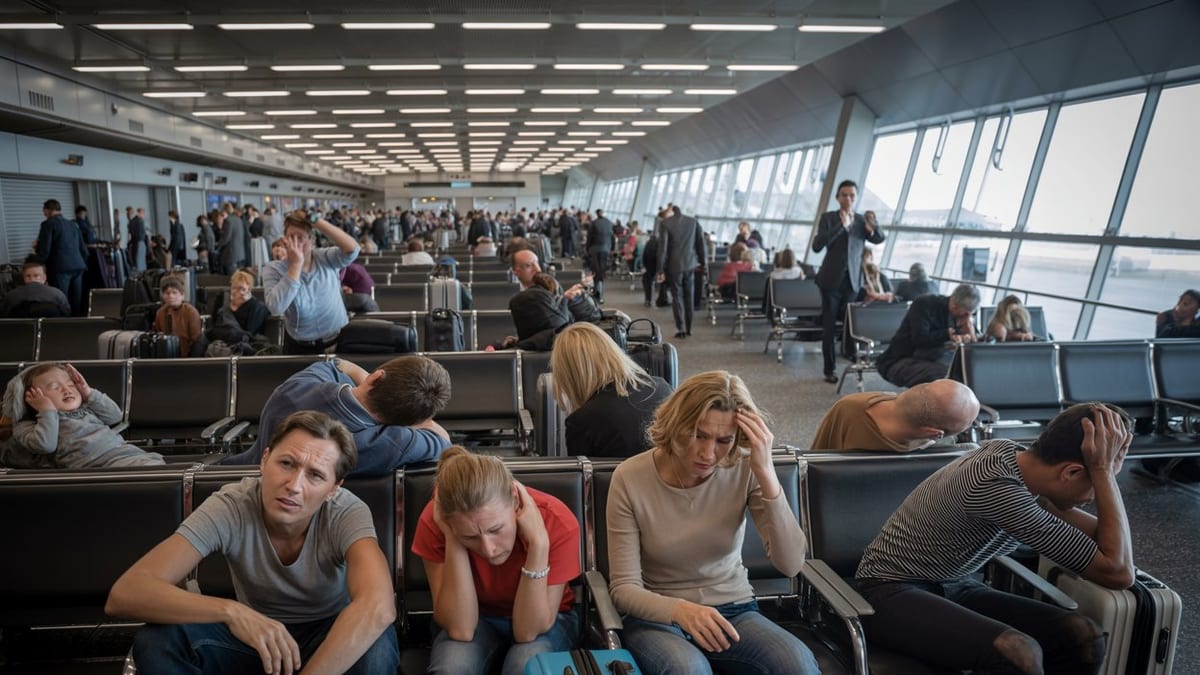
Flight disruptions are once again rippling across the air travel network as a fresh wave of cancellations at multiple carriers leaves passengers stranded in airports, compounding the fallout from Spirit Airlines’ sudden shutdown earlier this year.
Get the latest news straight to your inbox!
From Shutdown to Stranded: Spirit’s Collapse Sets the Tone
When Spirit Airlines abruptly ceased operations in early May, thousands of travelers were left mid-journey with no flights home, no onward connections and uncertain access to refunds. Published coverage at the time described future ticket holders as effectively grounded overnight after the carrier’s final flight landed at Dallas–Fort Worth just after midnight on May 2.
The shutdown was linked in public reports to the sharp rise in jet fuel prices and the financial stress of rerouting around Middle East conflict zones, pressures that made Spirit’s ultra-low-cost business model unsustainable. With no gradual wind-down and limited advance warning, the end of operations created an immediate scramble for seats on competing airlines.
Other carriers responded by offering so-called “rescue fares” and capped one-way tickets aimed at stranded Spirit customers, according to business and industry coverage. While those measures helped some travelers complete their trips, capacity was limited, meaning many passengers endured long delays, multiple connections or last-minute detours simply to reach their original destinations days late.
Consumer advocates noted at the time that the Spirit collapse underscored how vulnerable point-to-point, low-fare travelers can be when a carrier disappears from the market. Unlike passengers on larger network airlines, many Spirit customers had few alternative nonstop options and little built-in redundancy on their chosen routes.
Fresh Disruptions Hit Smaller Carriers and Regional Routes
In recent days, disruptions have not been confined to the legacy airlines that dominate major hubs. In the Pacific Northwest, regional operator Kenmore Air canceled all flights on Friday, July 24, after one of its floatplanes crashed in Washington State’s San Juan Islands the previous day. Local news coverage reported that the company halted its scheduled services for safety and operational reasons, leaving island residents and summer visitors temporarily cut off from a key air link.
Kenmore Air publicly indicated that customers affected by the one-day shutdown would be contacted with options to rebook or receive refunds once operations resumed. Flights returned on Saturday, but travelers who had planned tight connections or short weekend stays effectively lost entire travel days as a result of the canceled services.
On the other side of the Atlantic, regional disruptions have also been felt in Greenland’s remote communities. Recent travel forums and regional reports describe passengers in Nuuk and Ilulissat struggling to secure hotel rooms when weather-related cancellations left them overnight at the airport. With limited accommodation and infrequent flights, even one scrubbed departure can cascade into multi-day delays for travelers heading to or from the Arctic.
These smaller-scale disruptions highlight how travelers outside major hubs are particularly exposed when a single carrier or route goes offline. With fewer daily frequencies and fewer competing airlines, rebooking options can be scarce, turning what might be a few hours of inconvenience in a big city into days of uncertainty in remote destinations.
Middle East Conflict and Weather Create a Volatile Summer
Beyond individual airline decisions, broader geopolitical and weather patterns are driving cancellations that strand passengers far from home. The ongoing Iran conflict and associated airspace closures across parts of the Gulf region continue to disrupt normal flight paths, prompting reroutes, longer flying times and, in some cases, outright flight suspensions.
Recent European travel coverage notes that Air France temporarily suspended flights to Riyadh, Dubai and Beirut through late July due to the evolving security situation. Other carriers have reduced frequencies or halted certain Middle East routes altogether, while some regional airlines have been forced to turn flights back midjourney after nearby airports were affected by the conflict.
Those decisions, made on safety and risk grounds, leave travelers in transit hubs facing canceled connections and unplanned overnight stays. Many itineraries that previously relied on Middle Eastern hubs as convenient transfer points now involve complex rerouting via Europe, Asia or Africa, stretching journeys well beyond their original schedules.
At the same time, severe summer weather in North America continues to trigger rolling ground stops and cancel flights at major airports. Recent advisories from European and U.S. carriers warn of disruptions at New York area airports, where thunderstorms and congestion regularly force airlines to trim schedules. A single afternoon of storms can ripple into missed connections and overnight delays for passengers flying in from distant origins.
Travelers Report Long Delays and Limited Support
As cancellations mount, travelers are turning to social media, online forums and passenger advocacy groups to document experiences of being stranded. Recent posts describe overnight stays in terminals, long lines at customer service counters and difficulty securing hotel vouchers or meal assistance when flights are canceled for reasons classified as outside the airline’s control.
Reports from U.S. and European airports indicate that passengers on low-fare carriers and basic-economy tickets are often the most exposed when disruptions hit. With fewer reciprocal agreements between airlines, rebooking can be slower and more expensive, particularly during peak holiday periods when alternative flights operate close to capacity.
Industry observers point out that the current wave of disruptions recalls earlier high-profile meltdowns, including major IT outages that previously left thousands of travelers sleeping on terminal floors while airlines struggled to restore systems and reposition crews. Recent letters from lawmakers and regulators cited those events as evidence that carriers must do more to ensure resilience and customer care when operations falter.
Labor groups and pilot associations have also drawn attention to the strain on crews, particularly at carriers dealing with both weather and scheduling system issues. Public statements from unions representing flight crews in the United States highlight cases where pilots and cabin staff themselves were left without timely hotel arrangements or clear duty schedules during operational breakdowns.
What Stranded Passengers Can Do Right Now
With cancellations coming from multiple directions, travel experts and consumer advocates are refocusing on practical steps passengers can take when flights abruptly disappear. Public guidance from airlines, regulators and independent advisers generally stresses acting quickly, using mobile apps and online tools to search for alternative routes rather than waiting solely in airport lines.
Published advice also recommends that travelers keep essential items and one change of clothes in carry-on bags, anticipate the possibility of overnight stays and retain receipts for necessary expenses such as food or lodging, which may be partially reimbursable depending on airline policies and the reason for cancellation.
Travel industry analysts note that, in the wake of Spirit’s collapse and ongoing geopolitical volatility, flexible tickets and travel insurance products that cover missed connections and cancellations are gaining renewed attention. While these options add to upfront costs, they can provide valuable backup when a carrier halts operations or a key hub suddenly shuts down.
For now, the pattern is clear: whether due to financial collapse, regional conflict, weather or operational failures, another round of airline cancellations is leaving travelers in limbo worldwide. As peak summer travel continues, passengers face a heightened need to monitor their flights closely, understand their rights and be prepared to improvise when their carefully planned journeys are thrown off course.