


More news on this day
Hundreds of passengers at Ahmedabad’s Sardar Vallabhbhai Patel International Airport have faced long waits, missed connections and abandoned holiday plans in recent days after repeated flight cancellations and extended delays, concentrated on SpiceJet services during the peak Diwali travel period.
Get the latest news straight to your inbox!
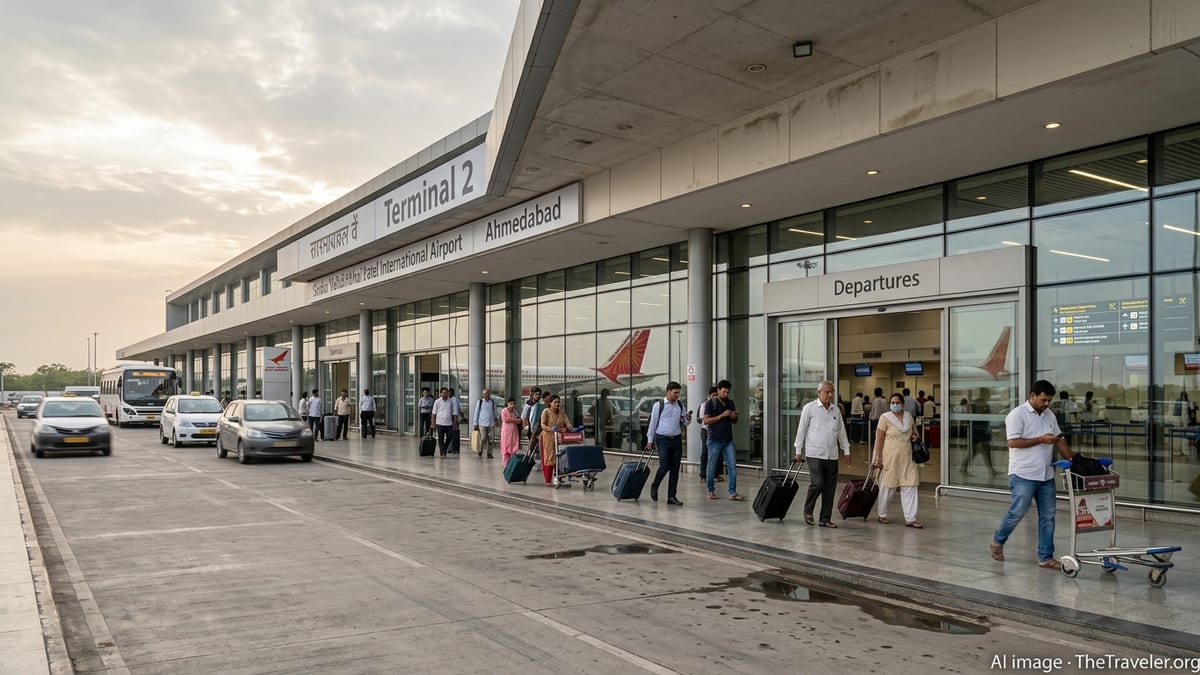
SpiceJet Ahmedabad–Dubai service cancelled amid Dubai dues row
Flight disruption at Ahmedabad intensified on 13 November 2026 when SpiceJet’s morning service from Ahmedabad to Dubai was cancelled, leaving dozens of outbound and returning passengers stranded at the international terminal. Published coverage indicates that the flight was pulled from the schedule after operations involving the carrier at Dubai were suspended over pending airport dues, cutting a key Gulf link for travelers from Gujarat at the start of a busy holiday weekend.
Reports from Indian media describe passengers who had planned to fly from Ahmedabad to Dubai for work or post-Diwali breaks, as well as those returning to jobs in the United Arab Emirates, finding the check-in counters closed and the flight status marked as cancelled. With no immediate replacement service available on the same route and festive season fares on other airlines already elevated, many faced the prospect of rebooking at significant extra cost or delaying travel by several days.
Publicly available information on Gulf schedules shows that until 11 November SpiceJet operated one daily Dubai rotation from Ahmedabad alongside services from Mumbai, Jaipur, Amritsar and Delhi. The suspension of these flights has abruptly removed capacity on some of the most in-demand sectors, pushing additional pressure onto rival carriers and contributing to higher last-minute fares for travelers between western India and the Gulf.
While the underlying financial dispute is centered at Dubai, the operational impact is most visible to travelers at Indian departure points such as Ahmedabad, where passengers arrive at the airport expecting a routine international departure only to discover that their flight can no longer operate.
Diwali rush magnifies impact of domestic cancellations
The international disruption has come on top of a series of domestic cancellations and delays at Ahmedabad during the Diwali week. Local news outlets in Gujarat report that multiple SpiceJet flights from 7 November onward were cancelled or heavily delayed, particularly on busy holiday weekend days, leaving passengers waiting inside the terminal for hours or searching for last-minute alternatives as festival travel peaked.
One widely reported incident on 9 November involved an Ahmedabad–Srinagar flight where around 189 passengers were stranded for more than 12 hours before the service failed to depart at all. The delay and subsequent cancellation disrupted carefully planned Diwali trips to Kashmir and forced some travelers to abandon prepaid hotel bookings and local onward arrangements.
Separate coverage from Ahmedabad-based newspapers highlights that passenger footfall at the airport climbed to tens of thousands per day during the festival period, with evening and late-night departures particularly congested. Against that backdrop, irregular operations on selected domestic routes created longer queues at check-in desks, more crowded boarding areas and growing frustration among families traveling with children and elderly relatives.
Flight statistics compiled from the first 10 days of November show that overall cancellations at Ahmedabad remained a small percentage of total movements, but the clustering of disrupted services on specific carriers and routes, combined with the seasonal rush, meant the impact was concentrated and highly visible to affected passengers.
Stranded passengers report limited information and rebooking options
Accounts from stranded flyers at Ahmedabad describe difficulty in securing clear information or timely rebooking when flights were cancelled close to departure. In some cases, passengers reported learning of cancellations only after arriving at the airport and queuing for check-in, while departure boards initially showed repeated short extensions to delays before flights disappeared from the screens.
Media reports and social media posts indicate that travelers on the cancelled Ahmedabad–Dubai service on 13 November were advised to seek refunds or rebookings through normal customer service channels rather than being offered immediate placement on other airlines. For many, this meant navigating call centers, online forms or third-party travel agents while still inside the terminal, often with limited assurance about when they would next be able to travel.
On domestic routes, some passengers reported being shifted to later flights on the same day or the following day, but those options were constrained by high seat occupancies during the festive period. Others opted to purchase tickets on different airlines at higher walk-up fares to avoid missing connecting trains, tour departures or start dates for work and study commitments.
These experiences have fed into a wider public debate among Indian travelers about airline reliability during peak travel seasons and the importance of transparent, real-time communication of schedule changes, particularly where cancellations are linked to broader financial or operational challenges at a carrier.
Operational constraints at Ahmedabad intersect with airline issues
The recent wave of cancellations has unfolded at a time when Sardar Vallabhbhai Patel International Airport is managing its own operational constraints. Aviation documentation shows that Ahmedabad has been subject to various notices and supplements in 2026 related to runway re-carpeting, temporary closures during daylight hours earlier in the year, and ongoing work on taxiways and ground infrastructure. While the major runway closure periods concluded in late September, some taxiway restrictions remain in force.
Flight-tracking analyses for early November note apparent drops in recorded movements at Ahmedabad on specific days, which specialists attribute to gaps in crowdsourced tracking coverage rather than an actual collapse in scheduled operations. Nonetheless, temporary reductions in capacity during infrastructure work earlier in the year have required schedule adjustments and slot management by airlines, adding another layer of complexity to network planning into and out of Ahmedabad.
Against this backdrop, the financial and operational pressures reported at SpiceJet have had a sharper effect on its Ahmedabad operations than on airlines with larger, more diversified fleets. Industry-focused coverage suggests that the carrier has been cancelling between 15 and 20 flights per day nationwide in recent days, out of a schedule of around 65, implying that nearly a third of planned services are not operating. Ahmedabad, as one of its key domestic and international points, has featured prominently among the airports where passengers feel the impact.
Other airlines serving Ahmedabad, including full-service and low-cost competitors on domestic sectors and Gulf routes, continue to operate the bulk of scheduled services. However, when one carrier withdraws capacity suddenly on busy routes such as Dubai or major domestic holiday destinations, the remaining operators can struggle to absorb the displaced demand at short notice.
What affected passengers can do next
For travelers caught up in the disruption at Ahmedabad, the most immediate priority is to confirm the status of their specific flight directly with the operating airline or through an official booking reference, rather than relying solely on third-party travel portals. Publicly available flight-status tools and airline mobile applications can offer near-real-time updates, although the recent cancellations illustrate that schedules may still change at short notice.
Passengers whose flights have been cancelled are generally entitled under Indian civil aviation rules to a choice between a refund and rebooking on a later service, as well as basic assistance at the airport in cases of long delays. Exact entitlements can depend on factors such as the timing of the cancellation notice and the reason given by the airline. Consumer-rights organizations urge travelers to retain boarding passes, booking confirmations and any written communication from carriers, as these documents support later claims.
Travelers with onward connections from other cities or countries may need to contact all transport providers involved in their itinerary, including rail operators and tour companies, to minimize downstream penalties from missed departures. Where travel insurance has been purchased, policy terms should be checked carefully to determine whether airline insolvency, operational disruption or missed connections are covered events and what documentation is required.
For future trips from Ahmedabad, especially during peak periods such as Diwali, industry commentators recommend building more buffer time into complex itineraries and monitoring airline performance trends before booking. While the current problems are concentrated on a single carrier, the events of early November have highlighted how quickly disruption at one airline and one airport can ripple across international and domestic travel plans for passengers across India and the Gulf region.