

More news on this day
Air Arabia will launch a new daily non-stop service between Sharjah and Rome Fiumicino from July 1, 2026, a move expected to strengthen tourism flows and business connectivity between the United Arab Emirates and Italy while expanding low-cost travel options between the Gulf and Europe.
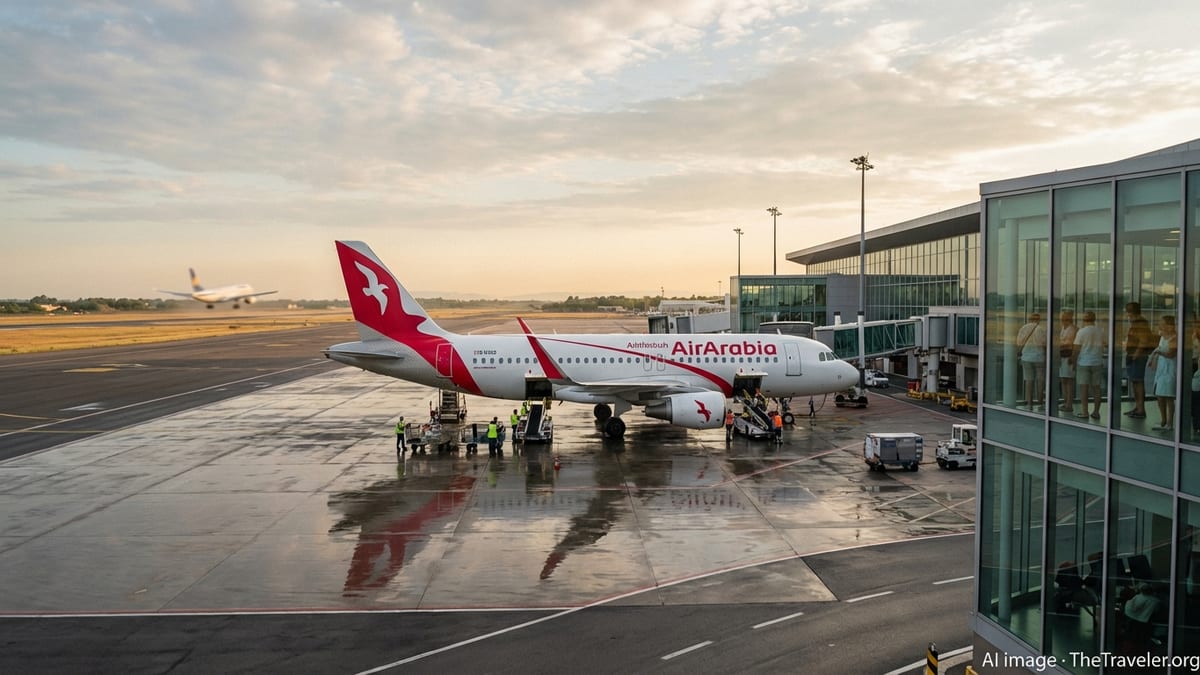
New Daily Route Strengthens UAE–Italy Air Links
The new Sharjah–Rome route will operate between Sharjah International Airport and Rome Fiumicino Airport, using Air Arabia’s latest Airbus A320neo aircraft. The service gives passengers a direct, point-to-point connection between one of the UAE’s fastest-growing aviation hubs and Italy’s busiest airport, eliminating the need for connections through third countries.
Rome becomes Air Arabia’s second Italian destination from Sharjah, complementing existing flights to Milan Bergamo and cementing the airline’s position as a key low-cost bridge between the Middle East and major European gateways. The launch also comes amid rising demand from UAE residents and visitors for affordable access to European capitals during the peak summer season.
Until now, travelers heading from Sharjah to Rome have typically relied on one-stop connections via hubs such as Istanbul or Doha. The new daily non-stop service shortens overall journey times, simplifies itineraries and offers a more predictable schedule for both leisure and corporate passengers.
Timings and Fleet Designed for Connectivity and Comfort
From July 1, 2026, the route is scheduled to operate daily, with rotations structured across the week to provide consistent seven-day connectivity. Morning and afternoon departures are timed to align with onward European connections in Rome and with late-evening banked departures from Sharjah to regional and long-haul destinations across the Air Arabia network.
The flights will be operated by Airbus A320neo aircraft, which offer improved fuel efficiency and reduced emissions compared with earlier-generation single-aisle jets. The type also provides a quieter cabin and updated interiors, an increasingly important consideration as passengers weigh comfort alongside price when choosing low-cost carriers.
By deploying newer aircraft on the Sharjah–Rome sector, Air Arabia is able to balance operational efficiency with competitive fares, positioning the route as an economical alternative to services from larger Gulf hubs. The configuration maintains the carrier’s trademark high-density, all-economy layout while offering one of the more generous seat pitches in the regional low-cost segment.
Boost for Tourism Between Sharjah, Rome and Beyond
Tourism officials and airport executives on both sides expect the new service to stimulate two-way visitor flows. For UAE-based travelers, Rome’s appeal lies in its blend of heritage and lifestyle, from ancient landmarks and museums to fashion, cuisine and access to Italy’s wider rail network, which opens onward journeys to cities such as Florence, Naples and Venice.
For Italian and European visitors, Sharjah offers a different proposition from neighboring Dubai, positioning itself as a cultural and family-focused destination with a strong emphasis on museums, heritage districts and coastal leisure. The emirate also serves as a springboard to desert experiences and to the broader UAE, including business hubs in Dubai and Abu Dhabi reached by road within a few hours.
Industry analysts note that direct low-cost flights often encourage longer stays and multi-destination itineraries, as travelers combine Rome with other Italian regions or pair Sharjah with side trips across the Gulf and into South Asia or North Africa using Air Arabia’s wider network. The daily frequency is expected to support package deals from tour operators on both continents, particularly during school holidays and peak summer travel.
Business and Trade Connectivity Set to Deepen
Beyond tourism, the new link is anticipated to support growing trade and investment between the UAE and Italy. Rome Fiumicino functions as a key European entry point for business travelers, while Sharjah has been promoting itself as a hub for small and medium enterprises, logistics, and light manufacturing that serve markets across the Middle East, Africa and the Indian subcontinent.
The daily schedule offers Italian companies more flexible access to client meetings, trade fairs and regional headquarters in the UAE, while Emirati and expatriate entrepreneurs gain more predictable access to Italian institutions, export partners and industrial regions connected by rail and domestic air from Rome. The route’s low-cost model may be particularly attractive for small firms and start-ups seeking to control travel budgets while maintaining regular in-person contact.
Airport representatives at Rome Fiumicino have highlighted that the arrival of Air Arabia broadens the airport’s portfolio of carriers serving the Arabian Peninsula, underlining a wider European trend of rebuilding long-haul and medium-haul connectivity after recent years of disruption. Sharjah’s role as a transfer point for traffic bound for emerging markets is expected to further enhance Rome’s status as a versatile gateway for both leisure and business segments.
Strategic Step in Air Arabia’s European Expansion
The Sharjah–Rome launch follows a series of European additions by Air Arabia, including new services to Munich, Prague, Warsaw Modlin and other cities over the past year. Together with existing routes such as Milan Bergamo, Athens and Vienna, the Rome service forms part of a broader strategy to build a dense, pan-European network radiating from Sharjah.
By steadily adding daily or high-frequency connections into key European markets, the airline is positioning itself to capture demand from price-sensitive travelers who are increasingly open to flying via alternative hubs rather than traditional mega-hubs. The strategy also leverages Sharjah’s lower airport charges and the carrier’s lean cost base to sustain competitive fares even as fuel and operating costs fluctuate.
Aviation observers say the Rome route underlines how low-cost carriers in the Middle East are moving beyond regional point-to-point flying and into longer-range segments that historically were dominated by full-service airlines. If passenger response to the Sharjah–Rome service is strong through its first summer, further capacity increases and additional Italian or Southern European destinations could follow as Air Arabia continues its network build-out into 2027.