


More news on this day
Air Canada is scaling back its schedule across key Canadian hubs as a series of severe weather systems disrupt operations at Toronto, Montreal and Vancouver, triggering higher levels of cancellations and extensive rerouting across its network.
Get the latest news straight to your inbox!
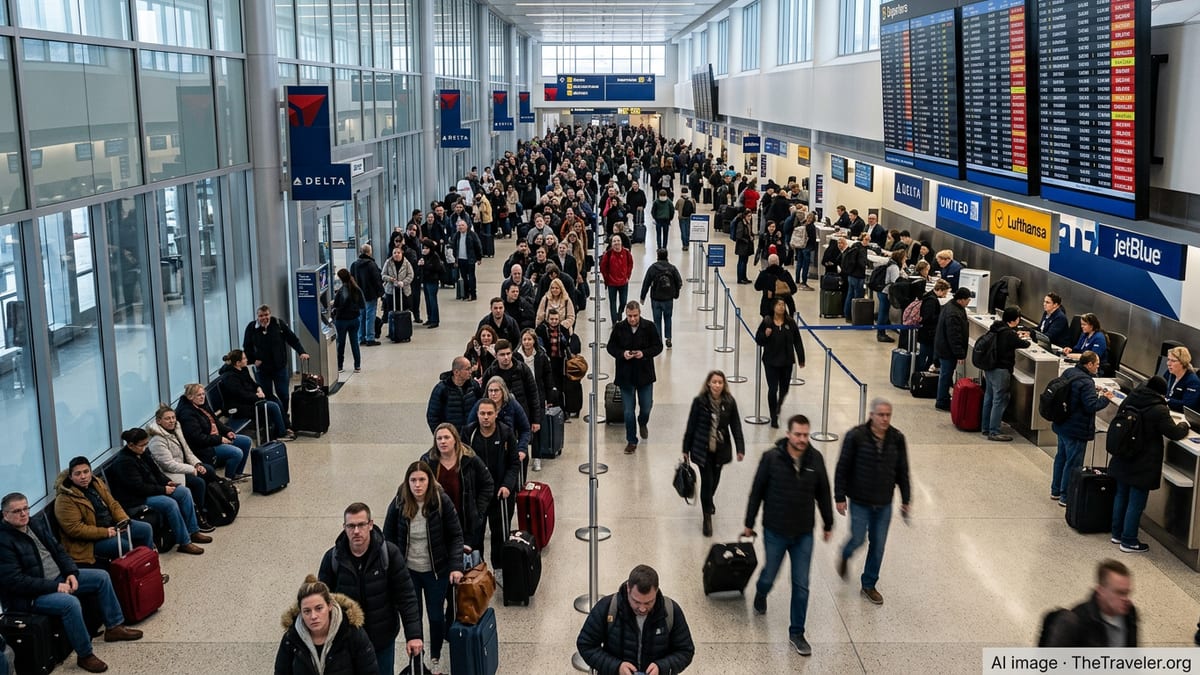
Storm Systems Target Canada’s Busiest Airports
Recent winter and early summer storm patterns have converged on southern Ontario, Quebec and coastal British Columbia, bringing high winds, poor visibility and rapidly changing conditions at Canada’s three largest airports: Toronto Pearson, Montreal Trudeau and Vancouver International. Publicly available flight-tracking data and industry analyses indicate that Air Canada has responded by cancelling an increased number of departures and arrivals through these hubs as conditions deteriorate.
Weather-related disruption has hit all three regions at different moments. In central Canada, fast-moving snow and freezing rain systems have periodically reduced runway capacity at Toronto and Montreal, while in Vancouver a mix of Pacific storm fronts, low cloud and heavy rain has complicated arrivals and departures on key eastbound routes. When multiple hubs are affected within the same operational window, airlines face a sharper reduction in schedule resilience and fewer options to reroute passengers.
Analysts note that Canadian carriers regularly prepare for winter conditions, but the intensity and overlap of recent systems have left less room to recover between storms. As a result, even short-lived weather events have produced outsized knock-on effects across domestic and transborder routes, especially where aircraft and crews cycle repeatedly through the same hubs during the day.
Reports from passengers and aviation data providers show that some long-haul and transcontinental flights linking the three hubs have been preemptively pulled from the schedule when forecasts show conditions approaching operational limits. This approach aims to keep aircraft and crew out of the most heavily impacted periods, even if skies later appear clearer than predicted.
Rising Wave of Cancellations and Network Ripples
Published coverage of recent disruptions points to a measurable rise in cancellations across Air Canada’s network whenever severe weather converges on its major hubs. Data snapshots compiled by travel and consumer sites for early June, for example, show clusters of same-day cancellations and significant delays on flights into and out of Toronto, Montreal and Vancouver as storms moved through eastern and western Canada.
These cancellations are not limited to routes with obvious weather exposure. When a storm system forces the suspension of operations at a hub airport for several hours, the immediate effect is the grounding of departures. Once conditions improve, however, the airline may lack available aircraft, rested crew or open slots to operate subsequent flights as planned. This creates a secondary wave of cancellations or rerouting on services that are not directly weather-bound but depend on aircraft cycling through affected hubs.
Observers describe this as a ripple effect that can reach smaller Canadian cities and select U.S. destinations. Flights that would normally operate non-stop from regional airports may instead be merged, rerouted or removed from the schedule so that aircraft can be repositioned to recover key trunk routes linking the main hubs. Passengers on these services are being rebooked through alternative connections, often with extended total journey times.
In several documented disruptions this year, travelers reported same-day notifications that previously confirmed flights were “unable to operate” due to weather and operational constraints. While some services were replaced with later departures, others were removed entirely, with passengers re-accommodated via different hubs or on the following day.
Operational Strategy: Preemptive Cuts and Capacity Management
Industry commentary suggests that Air Canada has leaned more heavily on preemptive cancellations as a strategy to manage severe weather. Instead of waiting until conditions close in and aircraft are already on the ground with passengers, the airline increasingly trims its schedule in advance when forecasts project high risk at a hub, particularly during peak traffic windows.
This approach is designed to limit the number of customers stranded at airports and to maintain a more predictable operation for the flights that do depart. By cancelling selected services ahead of time, the airline can concentrate resources on core domestic and international routes, preserve crew duty time, and keep more aircraft in position for use once conditions ease.
At the same time, this strategy contributes to a visible rise in cancellations on public tracking platforms whenever significant storms appear in the forecast. Travelers checking their itineraries in the days leading up to a major weather event may see flights disappear from the schedule or be replaced with alternate routings through less affected airports.
Operational data and passenger accounts also indicate increased use of aircraft swaps and last-minute schedule adjustments. In practice, a narrow-body aircraft planned for a regional route might be reassigned to a busier domestic trunk or international sector, while passengers on the original flight are rebooked through another hub. Such changes can reduce the total number of cancellations but still translate into longer journeys and missed connections for affected travelers.
Passenger Impact Across Domestic and International Routes
The expanded wave of weather-linked cancellations is being felt most acutely by passengers traveling on connecting itineraries through Air Canada’s hubs. Travelers scheduled to connect in Toronto, Montreal or Vancouver on the same day as a storm risk losing their onward flight if the inbound service is delayed or cancelled, even when the final destination itself is not experiencing bad weather.
Reports indicate that some domestic travelers have had non-stop flights replaced with itineraries involving additional stops or overnight stays. In other cases, passengers on long-haul services to Europe, Asia and the United States have faced significant delays when their aircraft and crews are late arriving from weather-affected hubs in Canada.
For travelers, one of the more visible signs of heightened disruption has been long rebooking queues at airports and heavy call volumes to airline support channels during weather events. While many customers can self-service changes through airline apps and websites, those requiring complex re-routing or international connections often need human assistance, adding to congestion during peak disruption periods.
Travel forums and social media posts show a mix of experiences. Some passengers report efficient automatic rebooking and same-day alternatives, while others describe multi-day delays, overnight hotel stays and the loss of prepaid arrangements at their destination. Outcomes typically depend on route choice, fare type, and how early in the disruption cycle changes are made.
Guidance for Travelers Facing Weather-Driven Cancellations
Consumer advocates and travel planners recommend that passengers flying with Air Canada during active storm periods build additional flexibility into their itineraries. This can include allowing extra connection time, avoiding the last flight of the day on critical legs, and monitoring both airline notifications and weather forecasts for hub airports, not just final destinations.
Publicly available information from regulators and passenger rights groups emphasizes that weather-related cancellations are generally categorized as outside an airline’s control, which may limit compensation in some jurisdictions. However, carriers typically provide options such as free rebooking within a specified time window or refunds where flights are significantly disrupted.
Experts suggest that travelers consider travel insurance policies that explicitly cover weather disruption and review the conditions attached to changeable or refundable fares. While such options often carry higher upfront costs, they can provide additional flexibility when major storms affect multiple hubs on the same day.
With forecasters signaling continued volatility in seasonal weather patterns, Air Canada and other carriers that rely on major Canadian hubs are likely to keep using advance cancellations and schedule thinning as tools to manage risk. For passengers, staying informed and building redundancy into travel plans remains the most reliable way to navigate a period of heightened weather-related disruption across the country’s busiest air corridors.