


More news on this day
An American Airlines Airbus A321 operating as Flight AA2081 made an unscheduled diversion to Tampa, disrupting evening operations across Florida airports and stranding hundreds of travelers in an already stretched summer system.
Get the latest news straight to your inbox!
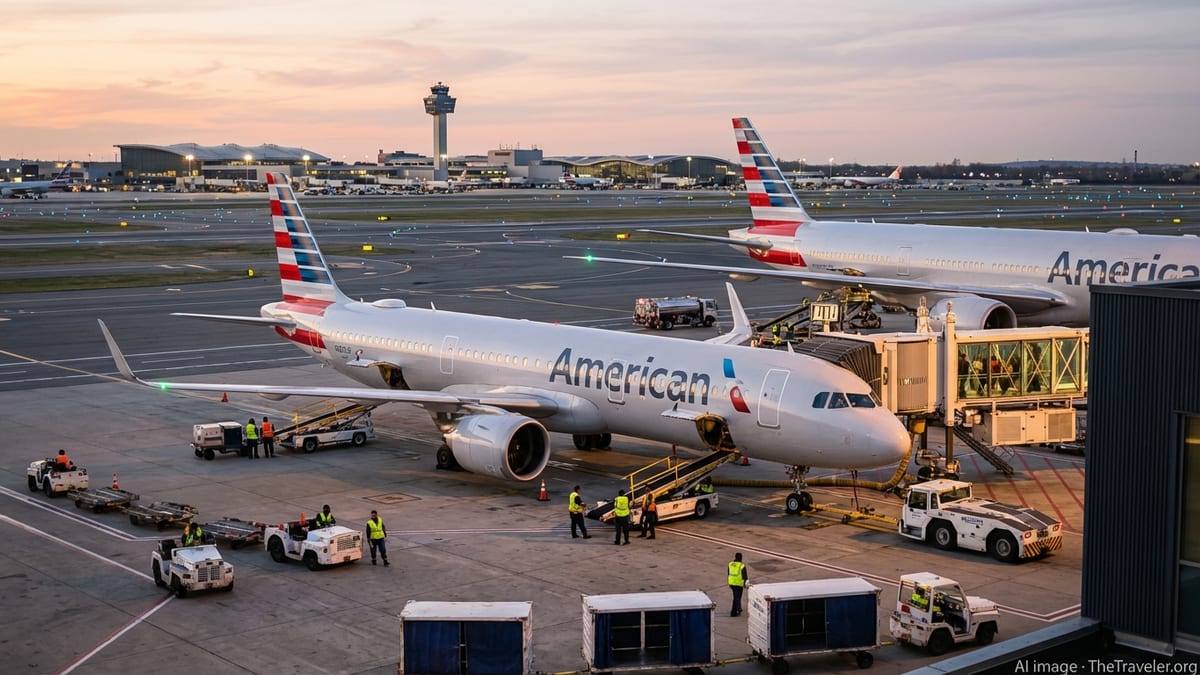
Unscheduled diversion forces abrupt change of course
Tracking data and publicly available flight information indicate that American Airlines Flight AA2081, operated by an Airbus A321, was forced to abandon its planned routing and divert to Tampa International Airport. The aircraft, which had been operating normally through initial climb and cruise, turned toward Florida’s Gulf Coast after the crew reported an unspecified in-flight issue that required a precautionary landing.
Reports from flight tracking platforms show the A321 descending steadily into Tampa, where it landed without further incident. There have been no credible indications of injuries among passengers or crew, and available data suggests that the diversion was handled as a controlled, precautionary measure rather than an emergency landing involving fire services on the runway.
While precise details on the triggering cause had not been formally outlined at the time of writing, operational logs and schedule changes point toward a combination of technical concerns and complex air traffic conditions that made Tampa the most viable option for a swift, safe landing.
The incident unfolded against the backdrop of an already tight summer schedule for American Airlines and other major carriers, with high load factors across Florida routes, lingering weather-related congestion and broader industry pressures linked to fuel costs and crew availability.
Knock-on delays ripple through Florida’s air network
The diversion of AA2081 quickly cascaded into broader disruption for American Airlines’ network in Florida. Once the Airbus A321 was taken out of its planned rotation, subsequent flights relying on the same aircraft and crew began to show delays and schedule adjustments, spreading the impact from Tampa to other hubs and focus cities in the region.
Publicly available departure boards and airline status tools showed rolling delays on American services into and out of Tampa, with some passengers reporting extended waits, gate changes and rebookings onto later flights or different routings through Charlotte, Dallas Fort Worth and Miami. The knock-on impact was particularly acute for travelers holding tight evening connections onto last-bank departures.
Florida’s airspace is among the most densely trafficked in the United States, especially during peak travel periods. Even a single narrowbody aircraft being pulled from its schedule can create a domino effect, especially when fleets are operating near full utilization. With aircraft and crew already tightly scheduled, there is limited slack to absorb an unexpected diversion without visible disruption to passengers.
As AA2081’s passengers were accommodated in Tampa, inbound flights converging on the state’s airports were met with longer taxi times, minor ground holds and heavier queues at security and customer service desks, adding to the perception of a system under strain.
Passenger experience: missed connections and overnight headaches
Travelers connected to AA2081 and its downstream flights reported a familiar pattern of disruption: missed connections, last-minute hotel searches and uncertainty about when their journeys would resume. Social media posts and forum discussions described long lines at rebooking counters in Tampa and other Florida airports as passengers attempted to salvage weekend plans.
Some travelers connected with AA2081’s schedule reported being automatically rebooked via alternate hubs or rerouted through less direct paths to reach their final destinations. Others noted that options were limited by high load factors, with remaining seats scattered across multiple later departures, adding hours to door-to-door travel times.
For international passengers and those traveling to smaller regional airports, the diversion created additional complications around customs, baggage transfers and minimum connection times. In several reported cases, travelers chose to overnight in Florida rather than attempt complex, multi-stop rebookings arriving well after midnight.
The episode highlighted ongoing passenger frustration with irregular operations across major U.S. carriers. Commentary on travel and airline forums frequently points to a perception that recovery from delays and diversions has become slower, with fewer spare aircraft and crews available to mount quick rescue flights when schedules begin to unravel.
Operational strain in a fragile summer schedule
The AA2081 diversion landed at a time when American Airlines, like many peers, is managing a delicate balance between strong demand and constrained resources. Airlines across the United States have recently adjusted route networks, citing high fuel prices, shifting demand patterns and the lingering operational effects of global disruptions.
Industry coverage shows that carriers have been trimming some marginal or near-transcontinental routes, particularly from major hubs, in an attempt to concentrate aircraft where demand is strongest and yields are highest. This strategy can improve financial performance but also leaves less margin to absorb unexpected events such as diversions, severe weather or air traffic control initiatives.
Florida’s airports sit at the intersection of these pressures. They serve as gateways to vacation destinations, cruise ports and seasonal second homes, which means demand surges at particular times of year. When an aircraft like the AA2081 A321 is taken out of rotation abruptly, the immediate problem is not only the disrupted flight but a cascade of repositioning challenges, from where to source replacement aircraft to how to keep crews within duty time limits.
Analysts and aviation observers note that such incidents underline the importance of robust contingency planning and transparent communication. While diversions for safety and operational reasons are an accepted part of commercial aviation, the broader impact on travelers often depends on how quickly airlines can realign assets, issue clear updates and provide practical support on the ground.
What travelers should know about diversions and Florida disruptions
AA2081’s forced detour into Tampa serves as a reminder that diversions can occur even on routine domestic flights and even in calm weather. For passengers, the event underscores the value of monitoring flight status closely, maintaining access to airline mobile apps and preparing flexible backup plans when traveling through busy hubs and seasonal hotspots like Florida.
Aviation safety data shows that diversions for technical concerns, medical events or airspace constraints are relatively rare compared with the total number of flights operated daily, and that such maneuvers are typically carried out as precautionary measures. In many cases, the aircraft lands without incident, as available information suggests occurred with AA2081, and the main consequence is disruption to schedules rather than direct safety risk.
Nonetheless, the operational fallout can be significant. Travelers passing through Florida in the hours after the AA2081 diversion encountered crowded terminals, long customer service queues and constrained same-day rebooking options. For those planning tight connections, particularly onto the last flights of the evening, the episode illustrates the risk of minimal buffers in a system already running near capacity.
With peak summer travel continuing and airlines cautioning that recovery from disruptions may remain uneven, passengers on American Airlines and other major carriers in Florida are likely to face sporadic bouts of similar turbulence on the ground, even when skies above appear clear.