


More news on this day
A Southwest Airlines Boeing 737-700 operating as Flight SWA2818 made an unplanned diversion to Jacksonville International Airport on Saturday, causing knock-on delays and schedule disruptions across multiple Florida airports as crews, aircraft and passengers were abruptly rerouted.
Get the latest news straight to your inbox!
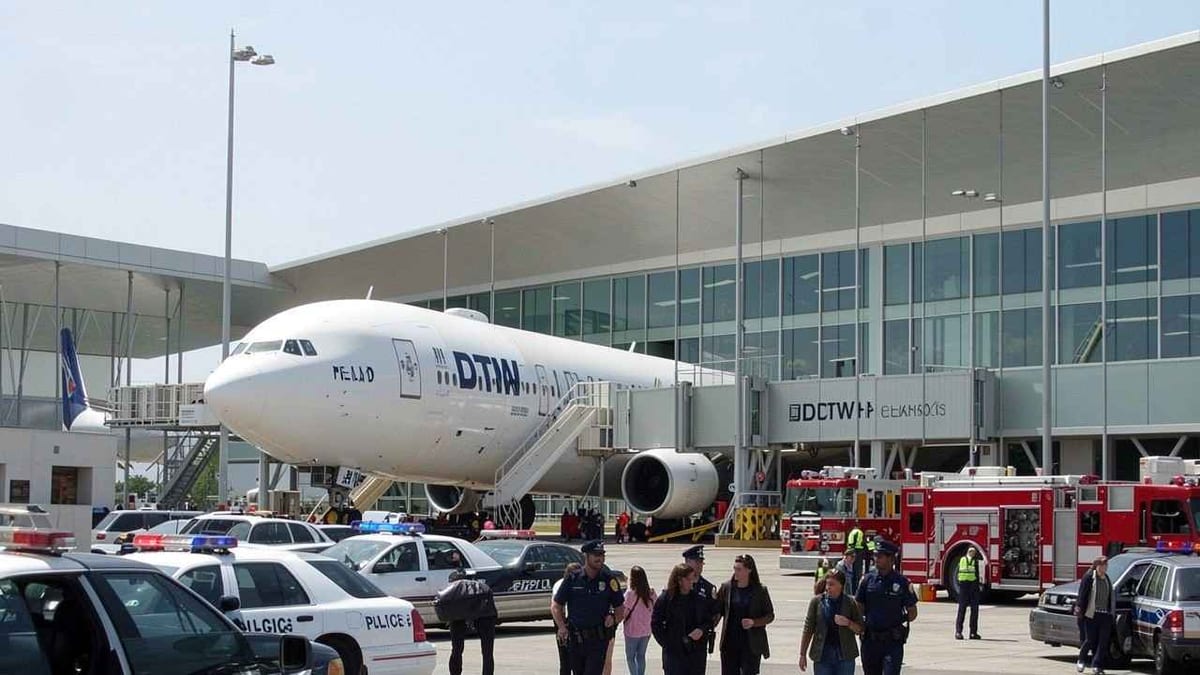
Unscheduled Diversion Brings Boeing 737-700 Into Jacksonville
Publicly available flight-tracking data and local media reports indicate that Southwest Airlines Flight SWA2818, operated with a Boeing 737-700, diverted to Jacksonville International Airport after its crew requested an urgent rerouting while en route. The flight, which had been operating normally earlier in the day, deviated from its filed route and headed for Jacksonville, where it landed safely.
Initial data did not immediately clarify the precise cause of the diversion, but early indications point to an in-flight issue significant enough that the crew opted to discontinue the original routing. There were no immediate reports of injuries, and the aircraft taxied to the gate under its own power, according to tracking feeds and airport operations updates made available to the public.
The diversion brought a sizable narrowbody aircraft and a full complement of passengers into Jacksonville unexpectedly, stretching available gates and ramp resources at an airport already handling a busy weekend schedule. As airport staff worked to offload passengers and assess the aircraft, ground operations slowed, triggering visible congestion on arrival and departure boards.
Jacksonville International Airport is a regular station in Southwest’s network, but the unplanned arrival of SWA2818 during an already busy summer travel window created logistical challenges. Crews had to be reassigned, and the aircraft’s sudden removal from its intended route began to reverberate across the carrier’s tightly timed Florida schedule.
Ripple Effects Across Florida Airports and Travelers
The decision to divert SWA2818 to Jacksonville quickly translated into a wider operational ripple for Southwest’s Florida network. Schedules showed rolling delays on associated rotations, as the 737-700 that had been expected to operate onward legs was now out of position. Passengers in cities awaiting that aircraft began to see departure times slip, particularly on short-haul routes that rely on rapid turns.
Florida travelers reported extended waits, gate changes and, in some cases, missed connections as the afternoon progressed. According to publicly accessible flight-status boards, a series of Southwest departures in and out of Jacksonville, Orlando and Tampa began posting delays ranging from 45 minutes to more than two hours as planners reworked aircraft and crew assignments.
The disruption came during an already stressed period for the regional aviation system. Recent weather systems, including heavy rain and thunderstorms over the Southeast, had left airlines with little spare capacity. With crews and aircraft already operating near regulatory and operational limits, an unscheduled diversion like SWA2818’s left fewer options to recover quickly, amplifying the impact on passengers throughout the state.
Reports from major airline-tracking platforms show that late-day operations remained fragile, with some flights departing nearly on time while others experienced cascading delays. For many travelers, the practical effect was extended time at the gate, long lines at customer service counters and last-minute scrambles to rebook connections.
How a Single Diversion Cascades Through an Airline Network
A diversion such as the one involving Southwest Flight 2818 illustrates how a single unplanned event can ripple through a point-to-point network. Southwest typically relies on frequent, tightly sequenced flights rather than traditional hub-and-spoke operations. When an aircraft is forced to deviate from its route, the effect can quickly propagate along its subsequent schedule.
Once SWA2818’s 737-700 was diverted to Jacksonville, any later segments assigned to that tail number needed to be reassessed. Dispatchers and operations planners are tasked with finding a replacement aircraft, adjusting crew pairings in line with duty-time regulations, and ensuring maintenance requirements are still met. Each of those changes can require shifting aircraft and employees between cities, which then affects other flights.
Publicly available data on Southwest’s Florida routes show heavy utilization of the Boeing 737 fleet, especially during peak travel days. When utilization is high and operational slack is minimal, even a single disruption can transform into a chain of schedule changes affecting thousands of passengers. This phenomenon is especially visible in states like Florida, where multiple busy leisure and business markets are closely linked by short hops.
Industry analysts note that while diversions are relatively rare compared to the total number of flights operated, they are among the most operationally complex events to absorb. In addition to caring for the passengers on the diverted flight, airlines must rebalance the rest of the network in real time, often while contending with weather, air traffic management programs and airport congestion.
Jacksonville Airport Operations Stretched During Peak Period
Jacksonville International Airport, which serves as a significant regional gateway for Northeast Florida, experienced a spike in activity as SWA2818 arrived unexpectedly. Gate assignments had to be revised to accommodate the incoming Boeing 737-700, and ramp crews re-prioritized tasks to handle the sudden influx of baggage, catering and ground services.
Live departure and arrival boards for Jacksonville showed knock-on delays to other carriers as well, suggesting a period of elevated congestion on the airfield and at terminal facilities. When an unplanned diversion arrives, standard turnaround times can lengthen, especially if specialized staff or equipment must be repositioned within the airport environment.
Passengers connecting through Jacksonville reported extended waits and, in some instances, rebookings as the airport’s operations center worked with airline staff to sequence departures. The situation was complicated by broader regional weather patterns that had already produced scattered delays in the Southeast, leaving limited buffer across the system to absorb additional strain.
Airport information channels indicated that staff deployed additional customer-facing employees to help direct passengers and manage lines. While operations gradually stabilized later in the day, the episode highlighted the sensitivity of Florida’s airport network to unexpected events, particularly at smaller or mid-sized facilities that may not have the same surge capacity as the state’s largest hubs.
What Travelers Should Know After Diversion-Driven Disruptions
The diversion of Southwest Flight 2818 underscores how quickly normal travel plans can change, especially during the peak summer season. Travel experts typically advise that when a significant event such as an urgent diversion occurs, passengers monitor airline mobile apps and airport screens closely, as rebookings and gate reassignments may be processed incrementally rather than all at once.
According to publicly available airline policies, affected passengers are generally rebooked on the next available flights without additional fare when disruptions are related to operational or safety decisions. Travelers with tight connections or onward plans, such as cruises or time-sensitive meetings, often choose to contact the airline through digital channels to explore alternate routings while still in the terminal.
In Florida’s dense air travel market, where multiple airports can serve as substitutes for one another, some travelers respond to disruption by shifting itineraries between cities such as Jacksonville, Orlando, Tampa and Fort Lauderdale. However, same-day availability can be limited when a large number of passengers are impacted by a single operational event, as occurred following the SWA2818 diversion.
For now, schedules indicate that Southwest is working to realign aircraft and crews across its Florida network following the Jacksonville episode. As airlines continue to operate at high load factors and with limited spare capacity, events like the SWA2818 diversion serve as a reminder of the complex and often fragile choreography underlying modern commercial air travel.