


More news on this day
Services on Japan’s busy Tokaido Shinkansen were suspended for several hours after a person entered the tracks near Hamamatsu Station and was struck by a southbound Nozomi train, causing widespread disruption along the high speed corridor.
Get the latest news straight to your inbox!
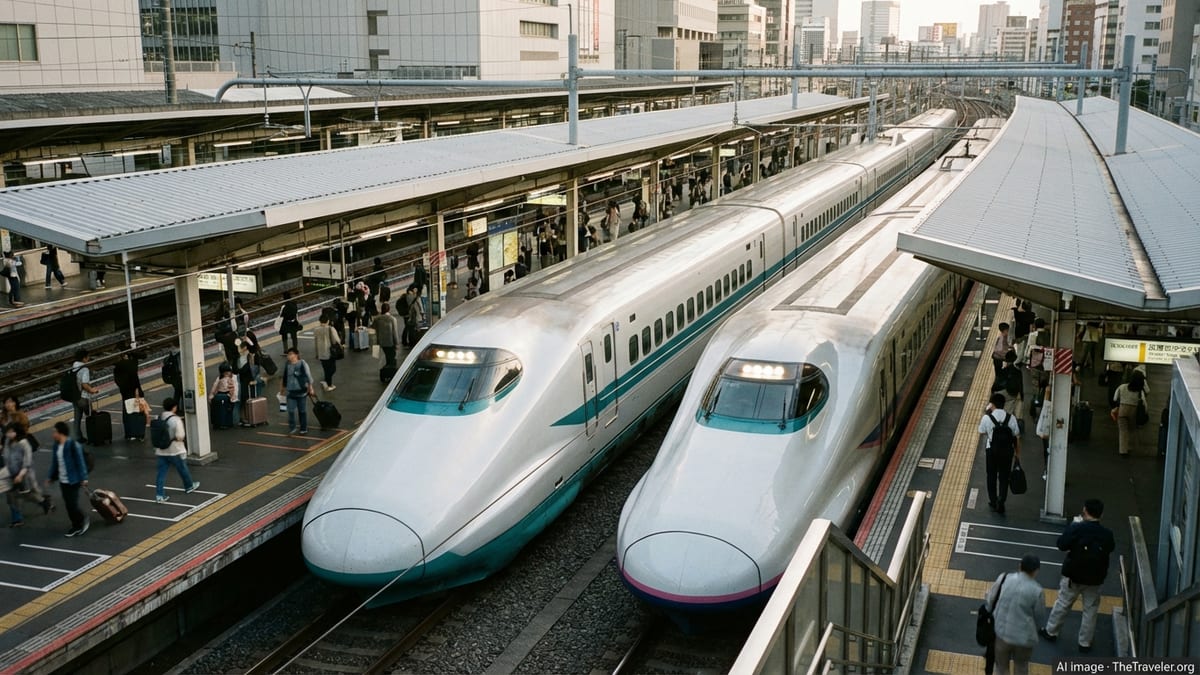
Major high speed artery brought to a standstill
According to public broadcaster coverage and other local reports, the incident occurred on the afternoon of June 19 near Hamamatsu Station on the Tokaido Shinkansen, which links Tokyo with Osaka and Fukuoka. An individual is reported to have entered the right of way and been hit by Nozomi 49, one of the fastest and most heavily used services on the line.
Published information from rail operators and media indicates that services were halted in both directions while emergency responders and railway staff secured the scene and safety checks were carried out. Trains already in motion were stopped between stations or held at platforms, and passengers were instructed to remain on board as staff assessed how and when to move each service.
The disruption affected a route that normally carries hundreds of thousands of passengers a day between the greater Tokyo, Nagoya, Kyoto, Osaka and western Japan regions. Even a short suspension on this corridor typically ripples through the national rail network, as connecting limited express, commuter, and regional services adjust to missed or heavily delayed Shinkansen arrivals.
Initial accounts shared by affected riders describe announcements advising that services had been suspended due to a “person on the tracks” at Hamamatsu and that safety procedures were being followed before any train could resume its journey.
Passengers face delays, terminations and crowded alternatives
Travelers on board trains in the vicinity of Hamamatsu reported being stopped for extended periods before being allowed to continue to the next major station. In some cases, southbound services terminated early at Shin-Osaka instead of continuing toward Hakata, requiring passengers to transfer to later departures or switch to conventional lines.
Onboard announcements and station information boards indicated knock-on delays of an hour or more on some services once limited operations restarted. As often happens during Shinkansen disruptions, seats on unaffected trains quickly filled, leaving some travelers standing in non-reserved cars or waiting for later departures with available capacity.
Local media coverage notes that passengers heading for evening flights, business appointments or hotel check-ins in western Japan were among those scrambling to reorganize plans. At hub stations such as Nagoya and Shin-Osaka, station concourses became congested as travelers sought updated departure information, refunds, or revised seat reservations.
Despite the disruption, there were no immediate reports of injuries among passengers aboard the Shinkansen involved in the collision, and rail operator notices emphasized that train movements would only resume once safety along the affected section had been fully confirmed.
How the Tokaido Shinkansen manages incidents
The Tokaido Shinkansen is globally known for its punctuality, but rail specialists note that any incident involving a person or obstacle on the tracks triggers strict protocols. When sensors or driver observations indicate a potential impact or intrusion, operations control typically halts movements in the area, and in many cases along a wider stretch of line, until staff can verify track conditions.
Publicly available company documents show that Central Japan Railway Company has invested heavily in advanced monitoring systems, fencing, and patrols aimed at reducing trespass and ensuring that objects or individuals cannot easily access the high speed right of way. However, incidents still occur several times a year, and each one can lead to cascading delays as the tight timetable is disrupted.
Because Shinkansen trains cruise at speeds of up to 285 kilometers per hour on the Tokaido route, any confirmed collision requires detailed inspections of the train set and infrastructure. Those checks often force the withdrawal of the affected train from service and may temporarily reduce the number of available trainsets, leading to cancellations or short turns later in the day.
Rail analysts point out that even with robust contingency planning, the combination of high frequencies, long-distance travel patterns and limited path capacity makes rapid recovery challenging when an incident blocks a key section of the line.
Implications for domestic and international travelers
The timing of the suspension posed particular challenges for tourists and business travelers moving between Tokyo, Kyoto and Osaka, where itineraries often rely on the Shinkansen’s reputation for near clockwork reliability. Travel forums quickly carried first-hand reports from visitors stuck on platforms or on board stationary trains, along with advice on how to claim partial refunds or rebook seats after an extended delay.
For international visitors unfamiliar with Japan’s rail rules, sudden cancellations can be confusing. However, ticket offices and multilingual information counters at major stations typically provide assistance in arranging alternative routes, and staff may allow passengers to board later trains without additional charges when delays are caused by operational incidents.
The disruption also underlines the importance of building time buffers into itineraries that depend on same-day transfers to airports or long-distance connections. Travel planners in Japan often recommend leaving several hours of margin around critical events such as international flights, especially on busy travel days when a single suspension can affect dozens of departures and arrivals.
While air services between Tokyo and Osaka provide an alternative, many travelers prefer to wait for Shinkansen operations to stabilize rather than switch modes at short notice, particularly when baggage, seat availability, and airport access times are taken into account.
Focus on safety as services gradually resume
As evening approached, information from railway companies indicated that services on the Tokaido Shinkansen were being progressively restored, though with significant residual delays and some trains still cancelled or operating on modified schedules. Riders were advised via station displays and in-carriage announcements to check the latest departure information before boarding.
Rail commentators note that, in the aftermath of such incidents, operators often review fence lines, surveillance coverage and station procedures at the location involved to understand how the person reached the tracks and whether additional measures are warranted. Previous cases elsewhere on the network have prompted changes such as higher barriers, more extensive platform cameras and increased patrols during certain time periods.
Despite the immediate disruption and inconvenience, publicly available statistics on Shinkansen operations continue to show an overall record of strong safety performance compared with many other long-distance transport modes. Nevertheless, the Hamamatsu incident is likely to reinforce ongoing discussions within Japan about balancing open station environments with additional safeguards to keep high speed rail corridors secure.
For travelers planning upcoming journeys on the Tokaido Shinkansen, the episode serves as a reminder to verify train status before departure and to remain prepared for occasional, if rare, interruptions on one of the world’s most intensively used high speed railways.