


More news on this day
An Air Canada itinerary expected to take about 11 hours to Europe reportedly stretched into a roughly 40-hour slog of missed connections and rebookings, capped by a 15 euro airport food voucher that drew fresh attention to what airlines must provide during long disruptions.
Get the latest news straight to your inbox!
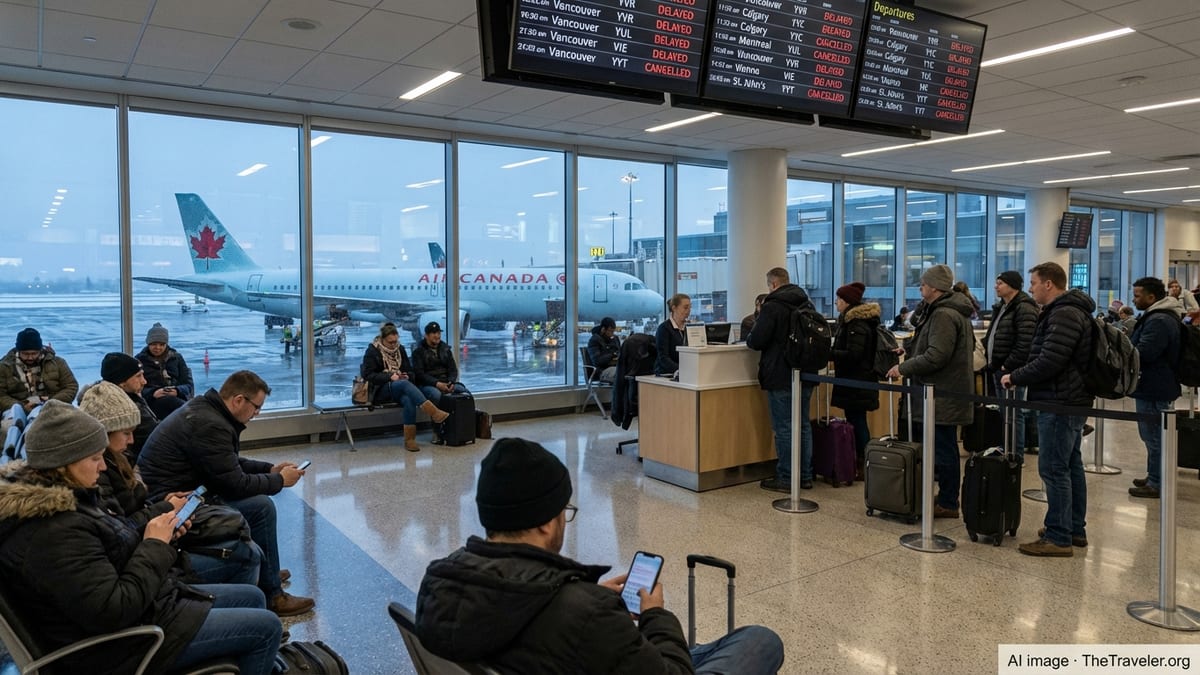
A small voucher, a very long delay
Published coverage describing the trip frames it as a case study in how quickly a routine transatlantic plan can unravel when initial delays cascade into missed onward flights. The traveler’s account, circulated widely online and in follow-up commentary, centers on the mismatch between the length of the disruption and the immediate assistance offered at the airport.
While meal vouchers are a common tool airlines use during irregular operations, the “15 euro” figure stood out because it was reportedly the main on-the-spot support provided for food during an extended airport wait. In practice, voucher amounts can vary by airport, local pricing, and airline policy, and may be constrained by what the issuing carrier can provide through that specific station’s arrangements.
The story has resurfaced in broader discussion about passenger rights, as travelers compare the kinds of assistance they receive in Europe versus Canada and the U.S., and how the same disruption can trigger different obligations depending on where the delay occurs and which rules apply.
What Canadian rules say airlines owe during major disruptions
In Canada, the Air Passenger Protection Regulations set minimum standards for how airlines must treat passengers during flight delays and cancellations, including requirements related to rebooking and “standards of treatment” such as food and drink in reasonable quantities, communication, and in some cases hotel accommodations and transport.
Publicly available guidance from the Canadian Transportation Agency describes these assistance obligations as applying in situations that are within an airline’s control, and also in situations within the airline’s control but required for safety, once certain thresholds are reached. The thresholds and details depend on the circumstances and the type of disruption, and passengers are typically expected to pursue compensation or reimbursement by filing a claim with the airline.
Air Canada’s own publicly posted conditions of carriage and disruption notices also reference these Canadian rules, describing meal assistance as “reasonable quantities” tied to the length of the wait, time of day, and airport location. The airline’s documentation also outlines compensation amounts under the Canadian framework for qualifying delays, with amounts tied to arrival delay at the final destination when the cause is within the airline’s control.
Rebooking standards can matter as much as cash compensation
For many travelers, the most immediate concern during a disruption is not compensation but getting to the final destination quickly and with minimal extra cost. Canadian rules and regulator guidance emphasize that rebooking obligations can require airlines to place passengers on the next available flight operated by them or partner airlines, and in some circumstances within a defined window.
That distinction matters when disruptions happen at busy hubs with limited seat availability, or when a delay causes a downstream misconnect that turns a same-day arrival into an overnight or multi-day journey. In these cases, the airline’s ability to secure space on another carrier, provide hotel arrangements, and give clear instructions can shape the passenger’s experience more than the value of a single meal voucher.
For travelers connecting to or within Europe, confusion can also arise when passengers assume European Union compensation rules automatically apply. Published explanations of EU rules generally indicate that EU-style compensation is most clearly triggered by departures from EU airports (and in some cases EU/EEA carriers), meaning eligibility can hinge on routing and operating carrier, not simply the trip’s endpoint.
What travelers can do immediately when a delay starts compounding
When a delay threatens a connection, documentation becomes critical. Passengers benefit from saving boarding passes, receipts, and screenshots of delay notifications and posted departure times, because claims later typically turn on timelines, routing, and the reason category assigned to the disruption.
Travelers can also ask the airline, in the moment, what assistance is being offered and in what form, including whether food is voucher-based, whether reimbursement is possible when vouchers are unavailable, and whether overnight accommodation is being provided or must be booked independently and claimed later. Policies can differ by location and staffing, and published regulator guidance in Canada notes that passengers generally must submit claims to the airline within set time limits.
Finally, it can help to confirm whether the ticket is a single itinerary or separate bookings. A single ticket can strengthen a passenger’s position for rebooking to the final destination when a misconnection occurs, while separate tickets may shift the risk to the traveler even if the first flight is late.
Why this episode is resonating now
Airline disruptions have become a persistent pain point as demand remains high and operational shocks, from aircraft availability to weather and air traffic constraints, continue to ripple through schedules. Against that backdrop, stories featuring specific, tangible details, such as a 15 euro meal voucher after an exceptionally long delay, tend to spread because they translate complex consumer-protection rules into an easily understood measure of perceived fairness.
In Canada, the Canadian Transportation Agency continues to publish passenger-facing guidance on assistance, compensation, and complaint processes, and it outlines how passengers can escalate disputes if they believe minimum obligations were not met. Separately, airlines including Air Canada publicly highlight that different jurisdictions can impose different requirements depending on itinerary and location.
For travelers planning transatlantic trips, the practical takeaway is that the best protection is often a mix of knowing the applicable rules, acting quickly during a disruption to secure rebooking, and keeping records in case a later claim is needed, especially when the immediate on-the-ground support feels out of step with the scale of the delay.