


More news on this day
Civil society and legal groups across East Africa are pressing Kenyan authorities to allow Zimbabwean human-rights lawyer Brian Kagoro into the country after reports indicated he was prevented from completing travel to Nairobi, including being removed from a flight in Addis Ababa despite a Kenyan court order linked to his earlier deportation.
Get the latest news straight to your inbox!
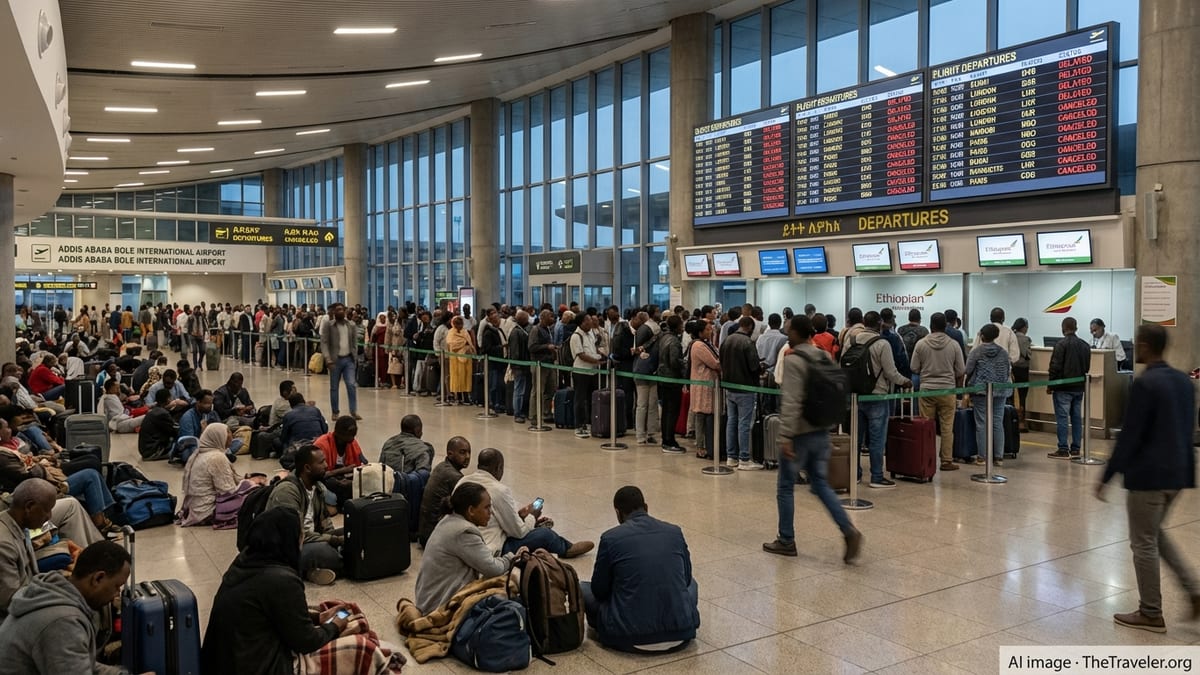
What happened at Addis Ababa and why it matters to travelers
Published coverage in Kenya described an incident in which Kagoro was removed from a flight in Addis Ababa while traveling to Nairobi, an episode that civil society groups framed as a test of whether a court order would be respected in practice. The latest reporting tied the disruption to his attempt to return to Kenya after an earlier removal from Nairobi in February 2026.
While the dispute centers on a prominent regional advocate, it also highlights how immigration actions and aviation operations can intersect in ways that affect passengers in transit. Addis Ababa’s Bole International Airport is a major hub for East Africa connections, and the Addis Ababa to Nairobi route is one of the region’s busiest, served by multiple airlines on scheduled nonstop services.
For travelers, the practical takeaway is that disruptions can arise not only from weather or mechanical delays but also from documentation checks, watchlists, and last-minute immigration or security decisions that can occur at check-in, at the gate, or even after boarding processes begin.
Background: the February 2026 denial of entry and deportation
Publicly available human-rights and legal-advocacy reports describe Kagoro as a long-time pan-African civil society figure and a senior leader associated with Open Society Foundations’ Africa work. Those reports say he was denied entry on arrival at Nairobi’s Jomo Kenyatta International Airport on February 22, 2026, detained for hours, and then deported.
Multiple civil society statements from 2026 argued that the process used against him did not meet basic due-process expectations, including access to legal representation and clarity on the legal and factual basis for the decision. Some coverage also noted that he was declared “persona non grata,” a label that can trigger immediate travel consequences even if a passenger holds valid travel documents.
In the months after the February incident, Kenya’s Law Society and regional legal bodies were reported to have pursued court action challenging the removal, and coverage indicates that conservatory orders were later issued in connection with that litigation. The renewed travel attempt, and the Addis Ababa disruption, were widely presented by supporters as part of an effort to see those court directives implemented.
Civil society demands and the court-order question
Recent coverage in Kenyan media, alongside statements reproduced by legal and rights organizations, shows a coordinated push by civil society groups calling for Kagoro to be allowed to enter Kenya. The demands have emphasized compliance with court processes, written reasons for entry decisions, and an end to what they describe as intimidation of civic actors.
The Kenya Human Rights Commission has publicly called for reversal of the decision barring Kagoro and has sought explanations from Kenya’s immigration and security institutions, according to its published statements. International civil society networks have also circulated detailed accounts of the February 2026 episode, urging Kenyan institutions to disclose the circumstances and to respect rights protections for human-rights defenders.
Separately, legal organizations including the Pan African Lawyers Union have been cited in published coverage linking the latest disruption to a High Court order directing that Kagoro be granted entry, and expressing concern that his attempt to travel was blocked before he could even reach Kenyan territory.
Kenya’s wider immigration enforcement climate adds sensitivity
The Kagoro case has unfolded amid heightened scrutiny of immigration enforcement in Kenya in 2026, including public debate over the treatment of foreign nationals, work permits, and business operations. In early September 2026, Kenya’s National Commission on Human Rights publicly urged a rights-based approach to enforcement actions involving foreign nationals, warning against profiling and abuses.
In parallel, rights groups have recently urged lawful, proportionate, and non-discriminatory enforcement, reflecting concern that high-profile actions can contribute to xenophobic narratives or create uncertainty for visitors, workers, and business travelers. This broader backdrop has made the Kagoro dispute more politically and socially charged than a routine immigration disagreement.
For travelers and the tourism sector, the reputational stakes are significant. Nairobi is a key gateway for safaris, business travel, and regional connections, and reports of opaque entry decisions can raise concerns among conference organizers and international visitors who need predictable border procedures.
What travelers can do when entry or boarding is disputed
Cases like this are unusual, but they underline standard precautions for anyone transiting through major hubs such as Addis Ababa en route to Nairobi. Travelers benefit from carrying printed and digital copies of passports, visas or e-visas, onward or return itineraries where required, and any supporting letters related to the purpose of travel, particularly for conference attendance, advocacy work, or professional engagements.
If a traveler is denied boarding or refused entry, documentation matters. Keeping written notices, boarding pass reprints, baggage tags, and any official paperwork provided at the airport can be essential for later complaints or legal steps. Where possible, travelers often seek clarity in writing on the specific reason for denial, although that is not always provided.
Because rules and enforcement practices can change quickly, passengers are best served by checking airline travel-document tools, verifying visa and entry conditions before departure, and allowing extra time for check-in and transit formalities. When disputes arise, the immediate experience can vary widely depending on whether the issue is airline document compliance, an immigration instruction, or a security-related decision.