

More news on this day
A deepening jet fuel shortage across Cuba has triggered a fresh wave of flight suspensions, with Air France becoming the latest major carrier to halt its Havana route and joining a growing list of Canadian and Russian airlines cutting services as the island’s tourism lifeline frays under an escalating energy crisis.
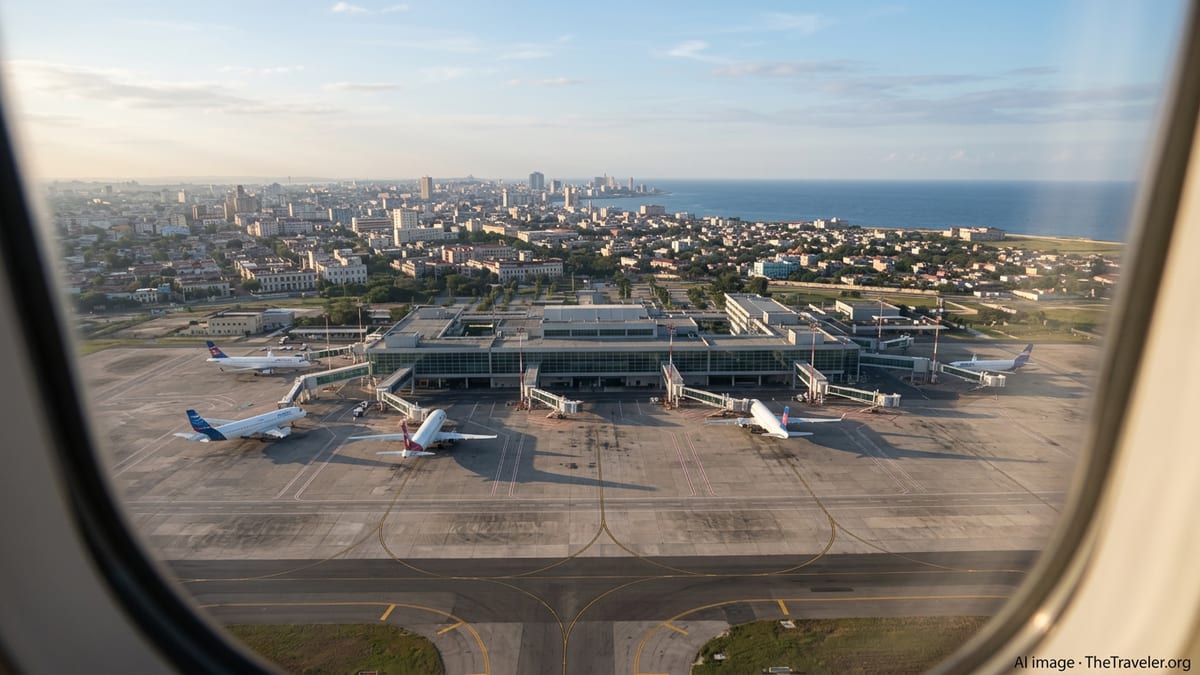
Air France Halts Paris–Havana as Fuel Crisis Drags On
Air France confirmed on Wednesday that it will temporarily suspend flights between Paris-Charles de Gaulle and Havana from March 29 until at least June 15, citing the island’s worsening fuel shortage and its knock-on effects on economic and tourist activity. The carrier currently operates three weekly flights to the Cuban capital with widebody aircraft and had already been adding a refueling stop in the Bahamas on the return leg to work around unreliable supplies on the island.
The French flag carrier said customers booked on affected flights will be contacted individually and offered rebooking options, vouchers or full refunds. For many Cubans and European travelers, the route has been one of the few direct gateways between Cuba and Europe, especially as travel via the United States remains heavily restricted for most island residents.
Air France’s move comes after Cuban aviation authorities quietly extended a formal notice to airlines warning that no jet fuel would be available at the country’s main international gateways until at least early April, prolonging what was initially presented as a month-long disruption. Faced with mounting operational complexity and costs, the airline opted to pause the route entirely rather than continue patchwork workarounds.
Canadian Carriers Pull Back as Jet Fuel Runs Dry
Canadian airlines, which have long filled Cuba’s beach resorts with winter sunseekers, were among the first to react to the jet fuel shock. Air Canada suspended its Cuba services in early February after receiving official notices that aviation fuel would no longer be commercially available at any of the island’s nine international airports from February 10. The airline has been operating empty southbound flights for several days to repatriate roughly 3,000 customers who were already on holiday when the crisis escalated.
Shortly afterward, WestJet and Air Transat also announced temporary suspensions of flights to Cuba, citing the same fuel constraints and operational risk. Data compiled from aviation analytics firms suggest that, taken together, those decisions could remove more than 1,700 flights from schedules by April, erasing a significant portion of Cuba’s peak-season capacity from Canada, historically its single largest tourism source market.
Some carriers initially attempted to preserve limited service by carrying extra fuel from Canada or adding technical stops in third countries, such as the Dominican Republic, to refuel. But industry consultants say those measures sharply increase costs, complicate crew planning and reduce payload, making many leisure routes marginal or loss-making at a time when demand remains fragile.
Russian and Other Foreign Airlines Forced to Reroute
Beyond North America and Europe, the fuel crunch has rippled through Cuba’s newer tourism source markets, particularly Russia. Airlines such as Rossiya and Nordwind, which helped drive a surge in Russian arrivals to resorts like Varadero and Cayo Coco in recent years, have reportedly pared back or temporarily suspended some flights as local refueling became impossible and longer routings via alternative fuel stops eroded profitability.
Carriers from other countries, including Spain and regional Latin American operators, have opted for a mix of strategies: canceling lower-demand frequencies, consolidating flights, or instituting mandatory fuel tankering from departure airports. Industry notices show that more than 400 scheduled weekly flights involving Cuba are subject to diversions, technical stops or potential cancellation while the shortage persists, affecting commercial, charter and cargo operations alike.
For passengers, the result is a patchwork of shifting schedules, sudden cancellations and longer journeys. Travel agents in key markets report a spike in calls from customers seeking to change destinations or secure refunds, while others with nonrefundable packages are trying to salvage trips by rerouting through remaining flights that still operate with overseas refueling stops.
Nine Airports Without Jet Fuel at the Height of Peak Season
The disruption stems from a rare and sweeping notice issued in early February by authorities at Havana’s José Martí International Airport, alerting airlines that Jet A-1 fuel would not be available at nine international airports across the country for at least one month starting February 10. The affected airports include Havana, Varadero, Cienfuegos, Santa Clara, Camagüey, Cayo Coco, Holguín, Santiago de Cuba and Manzanillo, a network that underpins Cuba’s mass tourism model.
The shortage has hit key resort gateways especially hard. At Jardines del Rey Airport in Cayo Coco, which serves some of the island’s most popular all-inclusive complexes, fuel supplies have vanished just as Canadian and European visitor numbers typically crest. Airlines serving the northern cays have been forced either to cancel flights outright or add extra stops in nearby countries, with some also dealing with reduced navigation services and shortened operating hours on the ground.
While authorities initially indicated that fuel service might resume by March 11, operators were told this week that the outage could stretch at least until April 10. That extension pushed some airlines that had been trying to ride out the disruption into more drastic action, contributing directly to Air France’s decision to suspend its Cuba service for more than two months.
Geopolitics, Energy Blockade and a Tourism Economy on the Brink
Behind the empty fuel tanks lies a broader geopolitical and economic drama. Cuba’s domestic oil production has long fallen short of demand, leaving the island heavily dependent on shipments from allies such as Venezuela and, more recently, Mexico and Russia. In recent months, those supply lines have come under acute pressure as the United States ratcheted up sanctions and signaled penalties for countries delivering oil to the island, part of a broader bid to squeeze Havana’s finances.
The halt or sharp reduction of Venezuelan crude deliveries, combined with aging power plants and unpaid energy contracts, has plunged Cuba into rolling blackouts, transport paralysis and severe fuel rationing on land, sea and air. The government has ordered sweeping energy-saving measures, consolidating guests into fewer hotels, closing low-occupancy properties and, according to tourism sources, curbing air conditioning and services in some resorts.
For an economy that leans heavily on foreign visitors to earn hard currency, the timing of the aviation fuel outage could hardly be worse. Tourism only partially recovered after the pandemic, and 2025 arrivals were already running well below pre-2020 levels. Now, with a cascade of flight suspensions from key markets, many travel analysts warn that Cuba’s high season has effectively been cut short, straining jobs and revenues in both state-run and private tourism businesses.
Travel industry observers say the crisis is also reshaping traveler sentiment. While some loyal visitors remain determined to reach Cuba despite the headaches, others are quietly shifting to alternative Caribbean destinations with more reliable connectivity. For airlines like Air France, Air Canada, Transat, WestJet, Sunwing, Rossiya and Nordwind, the decision to suspend or curtail Cuba services may be framed as temporary. But how quickly they return, and on what scale, will depend not just on jet fuel supplies, but on whether Cuba can stabilize its wider energy system and restore confidence in its skies.