


More news on this day
France is moving firmly into the global winter-sun race as Air France and KLM prepare a broader long-haul network for the 2026-27 season, adding capacity to destinations such as the Maldives, Dominican Republic, Mauritius, and the United States while tightening integration with the Netherlands as a dual European gateway.
Get the latest news straight to your inbox!
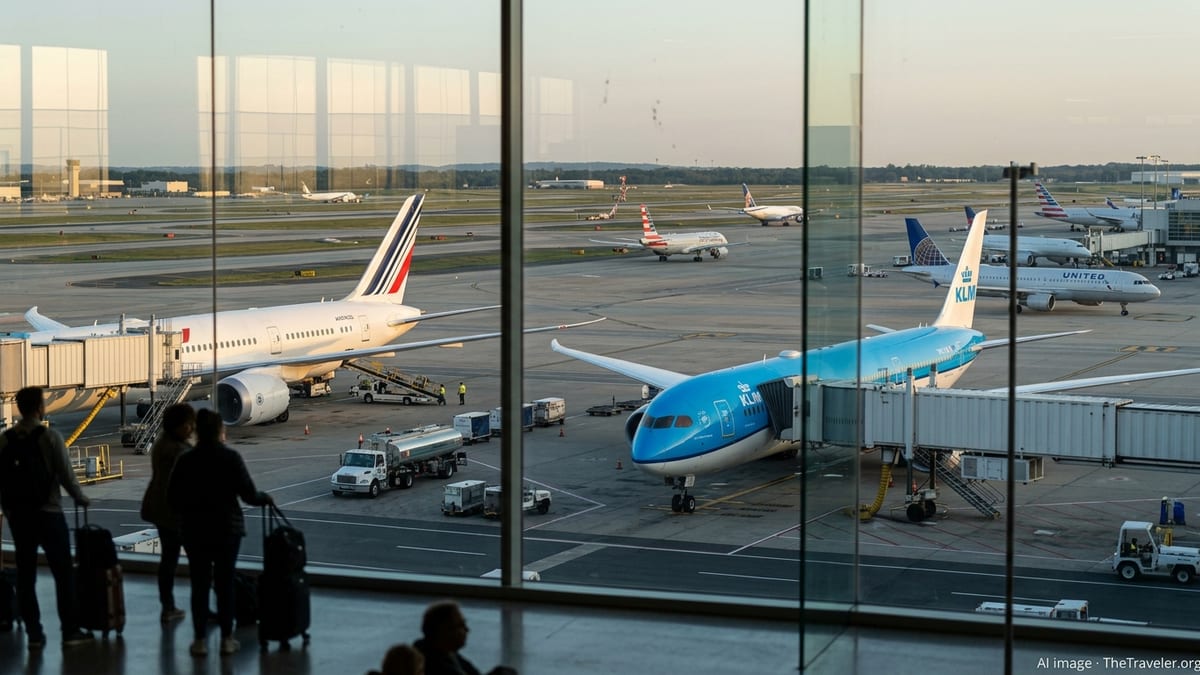
Winter 2026-27: A Bigger Long-Haul Bet from Paris and Amsterdam
Recent network updates from Air France-KLM indicate that the group is planning a further step-up in long-haul capacity into late 2026 and winter 2026-27, building on several years of incremental growth on intercontinental routes. Industry coverage points to higher seat supply across North America, the Caribbean, the Indian Ocean, and selected African and Asian markets, with France and the Netherlands jointly positioned as a core hub pair for winter-sun and VFR traffic.
Reports on Air France’s network planning show that the airline has been steadily adding winter seats to leisure destinations including Punta Cana in the Dominican Republic and to Mauritius, often with larger widebody aircraft and more frequent rotations. Similar trends have appeared in schedules to the United States, where capacity toward cities such as Los Angeles and other major gateways has been rising, supported by transatlantic joint ventures and onward connectivity in Tahiti and beyond.
KLM’s recent winter announcements from Amsterdam Schiphol highlight a broad long-haul portfolio, with nearly seventy intercontinental destinations served in the latest winter plan and noticeable increases toward popular sun markets such as the Caribbean and key parts of Asia. That pattern is expected to carry forward into 2026-27, with more seats to high-demand leisure points at the same time as corporate demand on North Atlantic and Asia routes rebounds.
For travelers, the practical impact is more choice of departure points in continental Europe, more nonstops into classic winter-sun destinations, and additional one-stop options from cities across France, the Netherlands, and connecting markets such as the United States.
Indian Ocean and Caribbean: More Seats to Maldives, Mauritius, and Punta Cana
The Indian Ocean and Caribbean are among the main beneficiaries of the winter 2026-27 build-up. Air France has already expanded its long-haul offer in winter 2025-26 to the Maldives and Mauritius, and trade publications tracking forward schedules report that Mauritius in particular is set for denser operations, often using Airbus A350-900 and Boeing 777-300ER aircraft with upgraded cabins.
In the Caribbean, Punta Cana in the Dominican Republic has been a focal point of growth, with additional winter frequencies from Paris Charles de Gaulle and cross-promotion through partner networks in Europe and North America. KLM, for its part, has been increasing capacity into the wider Caribbean region from Amsterdam, reflecting strong demand from Dutch, French, German, and Scandinavian travelers seeking winter beach holidays.
These islands are also increasingly embedded in broader tourism strategies. French policy documents describing the “Destination France” plan emphasize higher-value and more sustainable tourism, while reports on the Maldives and Mauritius highlight diversification of source markets, including Europe and North America, to reduce reliance on any single region. As a result, airlines are tailoring capacity to capture premium leisure travelers and longer-stay visitors, particularly during the northern winter.
However, the attractiveness of these destinations comes with practical constraints. Entry requirements, resort availability, and potential environmental levies can change between seasons, and seat demand is highly peaked around Christmas, New Year, and late-January school holidays in Europe. Early booking and flexible dates are increasingly important for securing preferred flights and accommodation.
United States and Tahiti: Transatlantic Growth and Pacific Connections
Across the Atlantic, Air France-KLM is aligning its networks with national tourism strategies in both France and the United States that aim to lift international arrivals and visitor spending through 2027. Corporate filings from the group show that North America has been one of its strongest-growing long-haul regions in recent years, with seat capacity growth outpacing some other markets and benefiting from alliance partners.
Air France has continued to expand services from Paris Charles de Gaulle to major U.S. hubs, and schedule data filed for the late-2026 and early-2027 period indicate further reinforcement of routes that feed onward leisure markets. One example is the Paris Los Angeles service that connects with flights to Papeete in French Polynesia, where winter demand from Europe for Tahiti and nearby islands has remained resilient.
KLM’s long-haul plans also show sustained focus on North America, taking advantage of its Amsterdam hub and joint transatlantic ventures. As new aircraft enter the fleet, more U.S. routes are expected to feature updated cabins, making Amsterdam an alternative gateway for U.S.-bound travelers originating in France or other European states, and for Americans heading to Indian Ocean and Caribbean destinations via Europe.
For travelers, this transatlantic and Pacific connectivity means more options to combine city breaks in Paris or Amsterdam with onward winter-sun escapes, but also more complex fare structures. Pricing is likely to remain highly dynamic, with periods of aggressive promotional activity and frequent-flyer award sales interspersed with tight availability on peak holiday dates.
New Aircraft, Upgraded Cabins, and What It Means On Board
The winter 2026-27 expansion coincides with a significant fleet transition at both Air France and KLM. Publicly available fleet data show that the group has placed large orders for Airbus A350-900 and A350-1000 aircraft and is progressively retiring older Airbus A330 and selected Boeing 777-200ER jets. KLM expects its first A350-900s to enter service from late summer 2026, with early deployment signaled on routes such as Toronto and Cape Town before the type spreads across more long-haul destinations.
Air France has already been using the A350-900 and its newest 777-300ER cabins on several leisure-heavy routes, including Mauritius and parts of Latin America. Network and fleet planning documents suggest that by late 2026 and into 2027, a higher share of long-haul flights will offer the latest business-class suites, premium economy products, and improved inflight connectivity, in line with goals to have the full long-haul fleet refurbished or renewed by the latter half of the decade.
For passengers, this means that the on-board experience can vary significantly depending on aircraft type and configuration. On some routes to the Maldives, Mauritius, the Dominican Republic, and U.S. gateways, travelers may find modern suites with direct aisle access, large screens, and enhanced Wi-Fi. On other rotations, particularly during shoulder periods when older aircraft are still in service, the product may be more basic and less consistent with the newest marketing imagery.
Careful attention to aircraft type in the booking engine, and reviewing seat maps or cabin descriptions before purchase, can help travelers align expectations with reality. As the fleet transition accelerates into 2027, the gap between the newest and oldest cabins should narrow, but for winter 2026-27, differences will still be noticeable.
What Travelers Need to Check Before Booking for Winter 2026-27
As capacity grows and networks become more complex, travelers planning winter 2026-27 trips to France, the Netherlands, the Maldives, the Dominican Republic, Mauritius, the United States, or connecting destinations should pay close attention to several practical factors before booking. First is schedule stability. While Air France-KLM has filed extended timetables into 2027 on core routes, long-haul services remain exposed to regulatory changes, airport slot constraints, and demand swings, which can lead to time changes or occasional cancellations.
Second, entry and transit rules can differ markedly between destinations and are still evolving. France and the Netherlands are part of the Schengen area, while the Maldives, Dominican Republic, Mauritius, and the United States each maintain their own visa, health, and security requirements. Published government information and airline travel advisories should be checked close to departure, especially for travelers combining multiple jurisdictions on a single itinerary.
Third, fare conditions and loyalty benefits are tightening. Reports from frequent-flyer communities suggest that complimentary long-haul upgrades and last-minute mileage redemptions are harder to secure on high-demand winter routes than in the past, even when premium cabins are not fully sold. Travelers who place a high value on cabin class or seat selection may need to book earlier, choose more flexible fare types, or accept higher prices in exchange for greater certainty.
Finally, travelers should be aware that growing capacity does not automatically translate into lower prices. While additional frequencies to leisure destinations can create competitive pressure at certain times, strong seasonal demand and rising operating costs can offset these effects. Comparing routings via both Paris and Amsterdam, monitoring fare sales across Air France, KLM, and partners, and considering shoulder-season travel dates can help secure better value during the 2026-27 winter expansion.