


More news on this day
American Airlines is drawing praise for a compassionate response in the midst of tragedy, as a recent act of kindness during a dark moment in transit has sparked public recognition for the carrier and its frontline crew.
Get the latest news straight to your inbox!
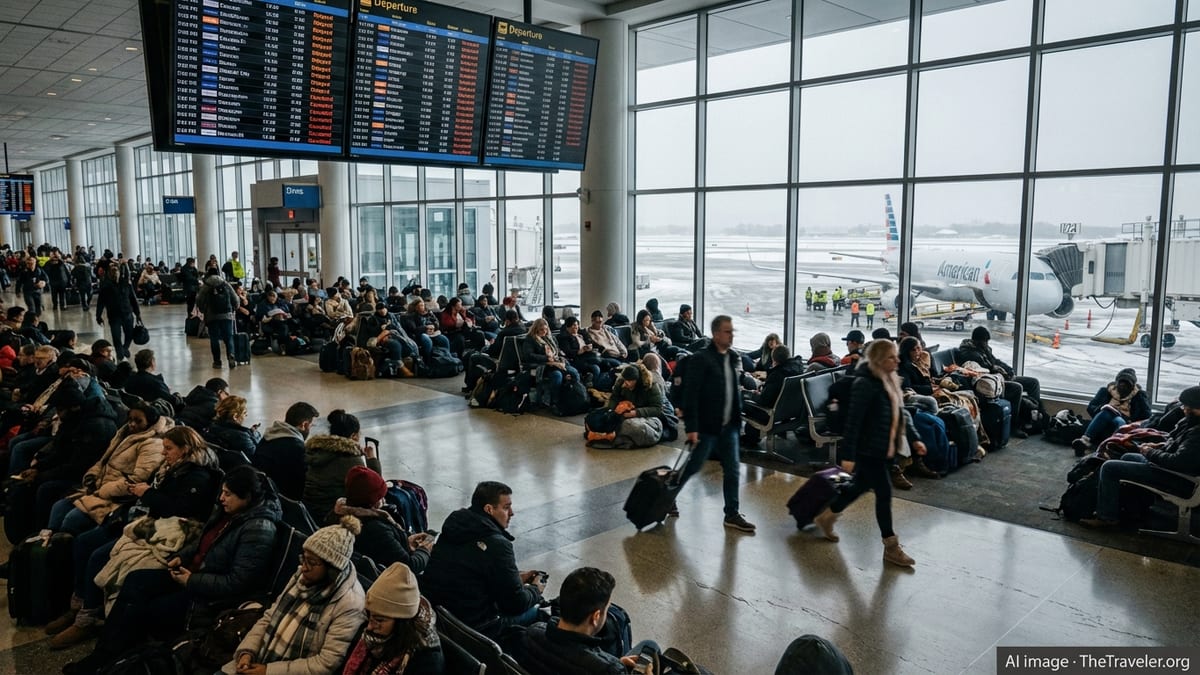
A Quiet Act That Resonated Worldwide
Reports indicate that an American Airlines crew recently responded to a grieving family on board with unscripted compassion, transforming an otherwise routine flight into a moment of shared humanity. The gesture, described in public posts and subsequent coverage, involved crew members recognizing the family’s loss and offering discreet comfort rather than simply following standard onboard procedures.
Witness accounts describe the interaction as low-profile but deeply meaningful, focusing on respectful recognition of the passengers’ grief and small, thoughtful gestures intended to make a painful journey more bearable. The incident stood in stark contrast to the perception that modern air travel is dominated by rigid rules, limited time and transactional interactions.
As the story circulated more widely, readers and travelers highlighted the episode as an example of how airline employees can play a vital role in some of the most difficult days of a person’s life. Many responses emphasized that, while delays and service frustrations tend to dominate headlines, it is often these quieter moments of care that travelers remember longest.
Recognition for Kindness in a Dark Moment
Publicly available information shows that the airline’s response has been acknowledged both by the affected passengers and by a broader online community that has amplified the account. In discussion forums and social media posts, travelers have urged that the crew members involved be formally recognized by the airline for their poise, empathy and discretion under emotionally charged circumstances.
Although the episode did not involve a life-threatening emergency or a highly visible rescue, observers have argued that it reflects a form of service that is just as important: the ability to perceive distress and respond with compassion. In an era when many interactions in travel are automated or compressed into brief exchanges, the story has been hailed as proof that individual employees can still make space for humanity.
The call for recognition aligns with a growing trend in the aviation industry toward honoring not only operational excellence but also emotional intelligence. For American Airlines, the attention has underscored how its front-line teams can embody the company’s stated purpose of caring for people on life’s journey, particularly when that journey includes grief, uncertainty or fear.
A Culture of Formal and Informal Honors
Beyond individual incidents, American Airlines maintains a range of internal programs designed to spotlight employees who go beyond their daily responsibilities. Public documents describing the carrier’s recognition structure reference honors such as the Chairman’s Award and the Circle of Excellence, which celebrate long-term performance, leadership and customer care across the network.
Additional initiatives, highlighted in corporate responsibility reports, include targeted awards for staff who intervene in medical or security emergencies, as well as peer-nominated recognition for colleagues whose behind-the-scenes efforts support both customers and co-workers. These programs, while primarily internal, help establish a framework in which acts of courage or compassion can be formally acknowledged.
In practice, these systems work alongside more informal channels. Travelers routinely share positive experiences in letters, online posts and customer feedback submissions, calling out specific flight attendants, gate agents and pilots by name. While such messages may not carry the prominence of a corporate honor, they often help leadership identify crew members whose conduct reflects the airline’s values in difficult or emotionally charged situations.
Kindness in the Context of Crisis Response
The kind act now associated with American Airlines has also drawn attention to the broader infrastructure the carrier has built for crisis situations. Publicly available information describes the company’s specialized CARE Team, a volunteer group of trained employees who are deployed to support passengers, families and colleagues after serious incidents. Recent coverage has detailed how this team assists with logistics, communication and emotional support when travelers are facing sudden loss, injury or uncertainty.
While the recent episode occurred in the course of a regular commercial flight, observers see it as consistent with the philosophy behind such programs: that air travel intersects with some of the most intense moments in people’s lives, including bereavement, medical emergencies and urgent family travel. The airline’s broader record includes participation in large-scale humanitarian and repatriation efforts, which similarly require staff to combine technical expertise with empathy.
Industry analysts note that this combination is increasingly central to how airlines are judged, particularly following years of heightened scrutiny on customer experience. In that context, the recognition of American Airlines for a compassionate response in a dark moment has been framed as part of a larger conversation about what “service” should mean when passengers are at their most vulnerable.
Why Travelers Notice When Compassion Shows Up
The story of American Airlines being honored for a kind act has resonated in part because it challenges the assumption that air travel has become purely transactional. For many passengers, especially those traveling under duress, a simple acknowledgment of their situation can carry more weight than any onboard amenity. When crews take the initiative to offer that acknowledgment, it can transform an otherwise anonymous journey into a moment of genuine connection.
Travelers who shared and reacted to the account have pointed out that acts of kindness in flight are often quiet and unpublicized. They may involve a crew member sitting briefly with a nervous passenger, adjusting onboard procedures for a family in crisis, or coordinating with airport staff to ensure a dignified arrival for someone facing loss. Even when these gestures occur out of public view, word-of-mouth and online testimonials ensure that they are not entirely invisible.
In highlighting this particular episode, commentators have suggested that formal recognition can serve a broader purpose by signaling to other employees that such behavior is noticed and valued. For American Airlines, the recent attention serves as a reminder that, even amid operational pressures and complex logistics, its reputation can hinge on how its people choose to respond in someone’s darkest hour.