


More news on this day
Passengers on an Air India flight from Delhi to San Francisco faced hours of uncertainty after a mid-air technical issue forced the Boeing 777 to abandon its trans-Pacific journey and return to India, triggering an unplanned turnaround, fuel dumping and a fresh wave of scrutiny of the carrier’s long-haul operations.
Get the latest news straight to your inbox!
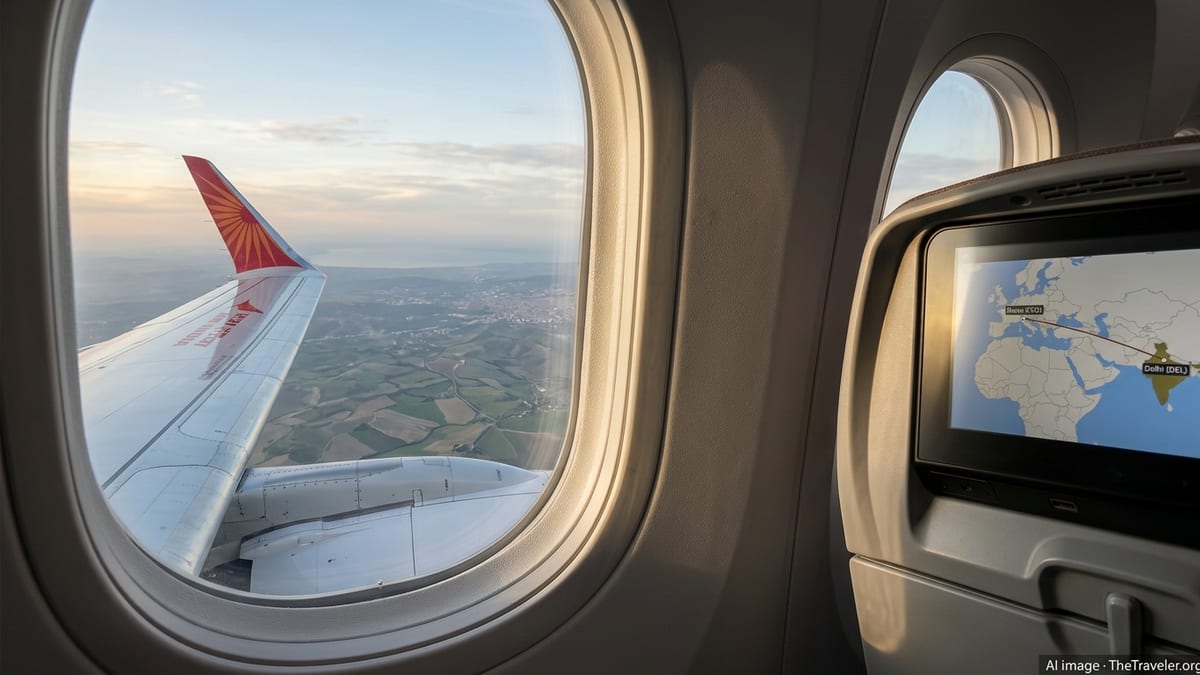
Mid-Air Technical Glitch Forces Long-Haul Turnback
The flight, operating as AI173 on May 27 from Delhi to San Francisco, departed Indira Gandhi International Airport as part of Air India’s flagship non-stop services to the United States. Publicly available flight-tracking data shows the Boeing 777-300ER climbed out on its usual northeasterly routing toward East Asia, carrying around 230 passengers for the nearly 16-hour journey.
Several hours into the flight, however, the aircraft developed what reports describe as a technical issue while cruising in Chinese airspace. Rather than continue across the Pacific or divert to a closer airport, the flight crew opted to turn back toward Delhi in line with established procedures, converting what was meant to be an ultra-long-haul westbound crossing into a prolonged mid-air loop for those on board.
Tracking data indicates the aircraft spent more than eight hours in the air before ultimately landing back in Delhi. Aviation coverage notes that an emergency was not declared and the jet followed standard protocols, including fuel management steps to ensure the aircraft was within safe landing weight limits before touching down.
Air India has stated in public information that the aircraft landed safely and is undergoing a detailed technical inspection. The airline has not disclosed the nature of the malfunction, a common practice in early stages of an internal technical review.
Passengers Face Unforeseen Travel Chaos on the Ground
For the roughly 230 travelers expecting to arrive in San Francisco on the same calendar day, the mid-air return translated into a cascade of missed connections, disrupted holidays and upended business schedules. By the time AI173 rolled to a stop back in Delhi, passengers had already spent the better part of a workday airborne without reaching even an intermediate destination.
Accounts shared through social media posts and online forums describe confusion as the flight path on tracking apps began to arc back toward India and cabin announcements referenced a technical problem. While the landing itself was routine, the real disruption began once the cabin doors opened and travelers confronted the reality that they were back where they started, with international plans suddenly in limbo.
According to published coverage, Air India ground teams in Delhi moved to arrange refreshments, hotel accommodation and rebooking options. The carrier has indicated that alternative flights are being organized to ensure passengers eventually reach San Francisco, although the exact re-accommodation timelines appear to vary based on onward itineraries and available seats.
For many affected passengers, the disruption extended far beyond a single delayed arrival. Long-haul routes such as Delhi to San Francisco are often tightly integrated into complex itineraries across North America, meaning even a one-day slip can mean multiple missed segments, visa considerations and significant added costs at the destination.
What the Turnaround Reveals About Ultra-Long-Haul Risk
The AI173 incident has renewed attention on the operational challenges of ultra-long-haul flying. Non-stop sectors between India and the United States stretch aircraft and crew across thousands of nautical miles, leaving fewer convenient diversion points once flights commit to the polar or Pacific tracks.
Aviation analysts note that when a technical snag emerges relatively early on such routes, returning to the origin airport can sometimes be operationally preferable to diverting to a midway stop, especially if maintenance support, spare parts and substitute aircraft are more readily available at the home base. In this case, public trajectory data suggests the decision to turn around was taken while the aircraft was still over East Asia, offering a feasible route back to Delhi.
However, the optics for passengers can be stark: an itinerary sold as a non-stop gateway to the US West Coast instead becomes an eight-hour aerial loop followed by a scramble for new seats. For travelers already wary of disruptions on some India–US services, the incident reinforces the reality that ultra-long-haul operations, while routine from an aviation safety standpoint, carry higher stakes when things go wrong.
Safety specialists consistently emphasize that precautionary returns and diversions are an expected part of commercial flying, particularly when cockpit indications suggest a system anomaly requiring further inspection. Industry data shows that in such scenarios, the vast majority of events end with uneventful landings and no injuries, as was the case with AI173.
Air India’s Strained US Network Under Added Pressure
The disruption comes at a delicate moment for Air India’s transcontinental network. In recent months, the carrier has been adjusting its US schedules, including reductions on some India–America routes and a tighter focus on key hubs such as San Francisco. Regular travelers have reported a series of retimings, cancellations and rebookings across the network.
Recent public notices and passenger communications highlight that selected US services have been rationalized through the peak summer period, with some frequencies cut and others consolidated. Travellers on online forums have voiced frustration at seeing carefully planned trips restructured or rerouted to alternate US gateways, sometimes thousands of kilometers away from their original destination.
Against that backdrop, the high-profile return of a headline Delhi–San Francisco flight adds another operational challenge to an already complex puzzle. Re-accommodating several hundred passengers from a full long-haul widebody can ripple through seat availability for days, particularly when remaining services on the route are already heavily booked during the busy travel season.
For Air India, now under the Tata Group’s ownership and in the midst of an ambitious multi-year transformation, such events underscore the need to balance fleet utilization with resilience. Ensuring spare aircraft, robust maintenance planning and clear communication channels becomes especially critical when serving demanding ultra-long-haul markets.
Managing Expectations and Passenger Rights After Major Disruptions
The AI173 turnaround also spotlights the often misunderstood territory of passenger rights and airline responsibilities during major disruptions. While regulatory frameworks differ between India, the United States and other jurisdictions, consumer advocates generally note that airlines are expected to provide reasonable care, information and rebooking options when technical issues derail scheduled services.
Based on publicly available statements, Air India is offering hotel stays, meal vouchers and re-accommodation to affected travelers from AI173. Some passengers commenting online report being placed on later non-stop departures to San Francisco, while others mention routings via alternate hubs depending on availability.
Travel experts suggest that in such situations, passengers should retain boarding passes, receipts and any written communication from the airline, as documentation can be important when seeking refunds, compensation where applicable, or insurance claims. They also advise regularly checking both airline apps and flight-tracking platforms, which can sometimes reflect schedule changes before formal notifications are issued.
As the airline completes its technical inspection of the 777 involved and works through the backlog of disrupted itineraries, the AI173 episode serves as a reminder of both the resilience and fragility of modern long-haul travel. Aircraft and crews are trained to manage complex technical situations safely, yet a single mid-air snag can still cascade into hours of uncertainty and days of logistical challenges for passengers scattered across continents.