


More news on this day
Hundreds of air passengers have been left scrambling for alternatives across Mexico after widespread delays and cancellations hit key airports in Mexico City, Cancun, Monterrey, Guadalajara and Tijuana, disrupting at least 221 flights and forcing 22 outright cancellations on services operated by VivaAerobus, Southwest Airlines, AeroMéxico, Volaris and other carriers.
Get the latest news straight to your inbox!
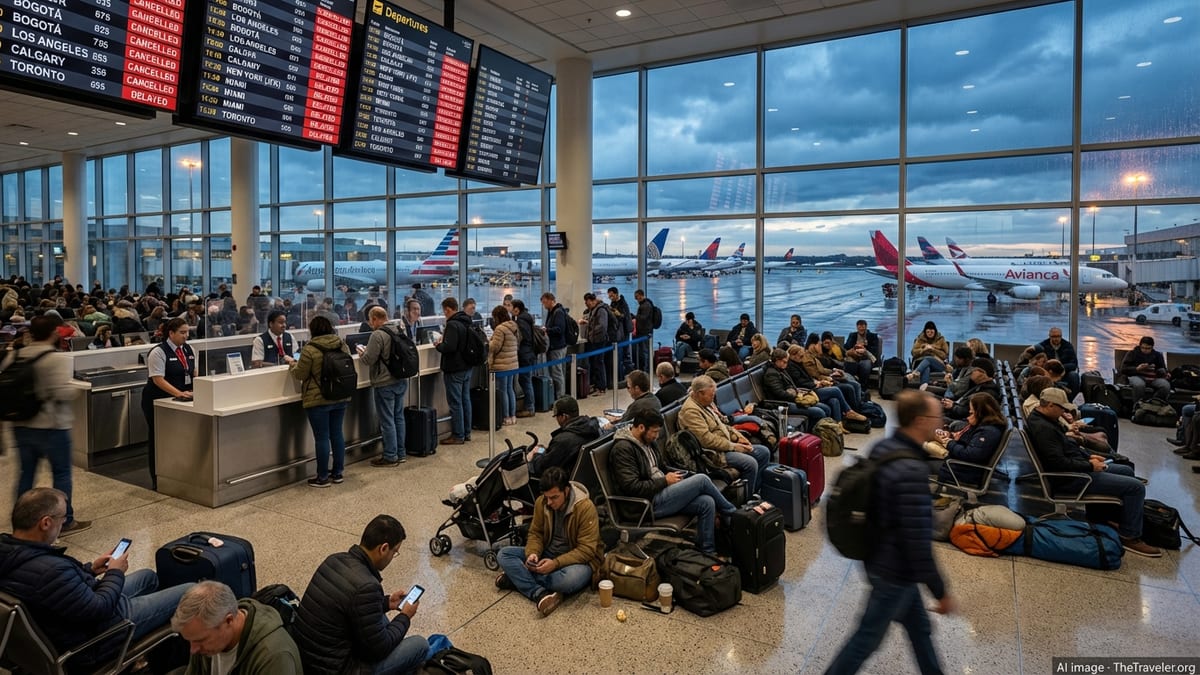
Major Hubs Buckle Under Wave of Disruptions
Publicly available airport data and local media coverage indicate that Mexico’s five busiest air gateways have experienced cascading operational problems, with a concentrated spike in delayed departures and arrivals. Mexico City’s main airport, the country’s primary hub for both domestic and international traffic, has reported dozens of affected services across multiple airlines.
Similar disruption has been reported at Cancun, a key leisure gateway for North American and European travelers, and at Monterrey, Guadalajara and Tijuana, which are central to Mexico’s domestic network and cross border links. Together, these airports normally handle thousands of weekly flights, so even a few hundred irregular operations can quickly ripple through airline schedules and passenger plans nationwide.
While exact passenger counts have not been disclosed, typical load factors on Mexico’s main domestic routes suggest that several hundred, and potentially many more, travelers have faced missed connections, overnight delays or outright trip cancellations as a result of the irregular operations.
According to published airport and flight tracking information, disrupted flights have included both domestic services within Mexico and international routes to the United States, compounding the impact for travelers who rely on tight connections or limited vacation windows.
Low Cost and Legacy Carriers Equally Affected
The disruptions have not been confined to a single airline or market segment. Flight tracking data and press coverage show that ultra low cost carriers VivaAerobus and Volaris, full service flag carrier AeroMéxico, and U.S. airline Southwest have all been affected, alongside several smaller operators.
VivaAerobus and Volaris, which together operate dense point to point networks linking secondary Mexican cities with the main hubs, appear particularly exposed when irregular operations strike multiple airports at once. Their high utilization models mean that a delayed aircraft in one city can quickly translate into a cascade of late departures on subsequent rotations.
AeroMéxico, with a hub and spoke structure centered on Mexico City, faces its own vulnerabilities when disruptions coincide at the capital’s crowded terminals. Even when long haul flights remain on schedule, knock on effects on feeder flights from cities such as Guadalajara, Monterrey and Tijuana can leave travelers misaligned with their onward connections.
Southwest Airlines, which operates selected cross border routes linking U.S. cities with Mexican leisure and business destinations, has also been caught in the turbulence. Publicly available information on recent operational days shows affected services involving Mexican gateways where local conditions and airspace congestion have combined to slow the entire system.
Knock On Effects for Domestic and International Travelers
The operational strain at Mexico’s main hubs has highlighted how interdependent domestic and international air traffic has become. Mexico City, Cancun, Guadalajara, Monterrey and Tijuana serve as critical transfer points for travelers moving between interior states and major foreign destinations, particularly in the United States and Canada.
When delays accumulate at one of these hubs, travelers attempting to connect onto long haul flights can quickly find themselves stranded, especially where there are only one or two daily departures on a specific route. Reports from affected passengers describe missed connections, rebookings onto next day services and unplanned overnight stays near airports.
Travel forums and social media posts reflect growing frustration among some travelers over limited rebooking options on peak dates, particularly on low cost carriers that operate fewer daily frequencies on certain routes. In several cases, public comments suggest that passengers were required to wait many hours for the next available departure or accept routings through alternate airports far from their original plans.
For inbound international visitors, the disruptions have raised concerns about missed tours, hotel nights and connecting bus or ferry departures from resort areas. Tourism dependent regions, including beach destinations served via Cancun and cross border markets linked through Tijuana, are particularly sensitive to extended irregular operations during busy travel periods.
Operational and Structural Pressures on Mexico’s Air Network
Analysts who follow Mexico’s aviation sector note that the country’s rapid growth in air connectivity over recent years has outpaced infrastructure and staffing in some locations. Published connectivity reports show that Mexico’s main airports now support dozens of domestic and international routes each, with Mexico City, Cancun, Guadalajara, Monterrey and Tijuana among the busiest.
This expansion has intensified pressure on runways, terminals and air traffic control, leaving less margin to absorb disruptions caused by weather, airspace holds, or localized security events. When multiple airlines schedule peak hour departures from the same city pairs, any delay in aircraft turnaround, ground handling or crew availability can quickly propagate through the system.
Public statements from regulatory and consumer protection agencies in Mexico in recent months have emphasized closer monitoring of flight delays, cancellations and overbooking at major airports. These agencies have reported an increase in traveler complaints involving schedule changes, missed connections and difficulties accessing timely assistance at airport service counters.
Industry observers also point to the competitive dynamic between ultra low cost carriers and the national flag carrier as a factor shaping schedule density and turnaround targets. In a bid to offer lower fares and more choices, airlines often run tight operational windows, which become especially vulnerable when several airports simultaneously experience congestion or adverse conditions.
What Stranded Travellers Can Do Now
Consumer advocacy guidance in Mexico recommends that affected passengers first verify the current status of their flight through official airline channels, then document all communications, boarding passes and receipts associated with delays or cancellations. Keeping a clear record can be important when seeking refunds, vouchers or other remedies.
Publicly available information on Mexican aviation and consumer regulations indicates that airlines bear defined responsibilities when flights are significantly delayed, cancelled or overbooked for reasons within their control. These may include options for rebooking, reimbursement or assistance with meals and accommodation, depending on the circumstances and length of delay.
Travel specialists advise that, where possible, passengers should proactively explore alternative routings via other Mexican hubs, particularly when an original connection through Mexico City or Cancun becomes unworkable. In some cases, routes via Guadalajara, Monterrey or Tijuana may offer earlier departures, even if they involve additional stops.
Looking ahead, experienced travelers to and within Mexico are increasingly building greater buffer time into itineraries that rely on tight domestic connections to international flights. The latest wave of disruptions across Mexico’s key gateways serves as a reminder that, in a densely scheduled network, even a few dozen cancellations and a couple of hundred delayed flights can leave hundreds of travelers unexpectedly grounded.