


More news on this day
Etihad Airways has issued a travel alert for passengers on its Abu Dhabi–Taipei route as Super Typhoon Bavi disrupts operations across Taiwan and parts of eastern China, prompting widespread transport cancellations and emergency preparations for what regional reports describe as one of the most powerful storms in decades.
Get the latest news straight to your inbox!
Etihad Alters Abu Dhabi–Taipei Schedule As Storm Closes In
Publicly available travel updates from Etihad Airways indicate that at least two Abu Dhabi–Taipei services have been rescheduled around the approach of Super Typhoon Bavi, with one flight brought forward and another delayed to avoid the worst of the weather over northern Taiwan. The airline has advised customers booked on affected services to check the latest status of their flights and to allow additional time for connections, as knock-on delays are likely while the storm moves through the region.
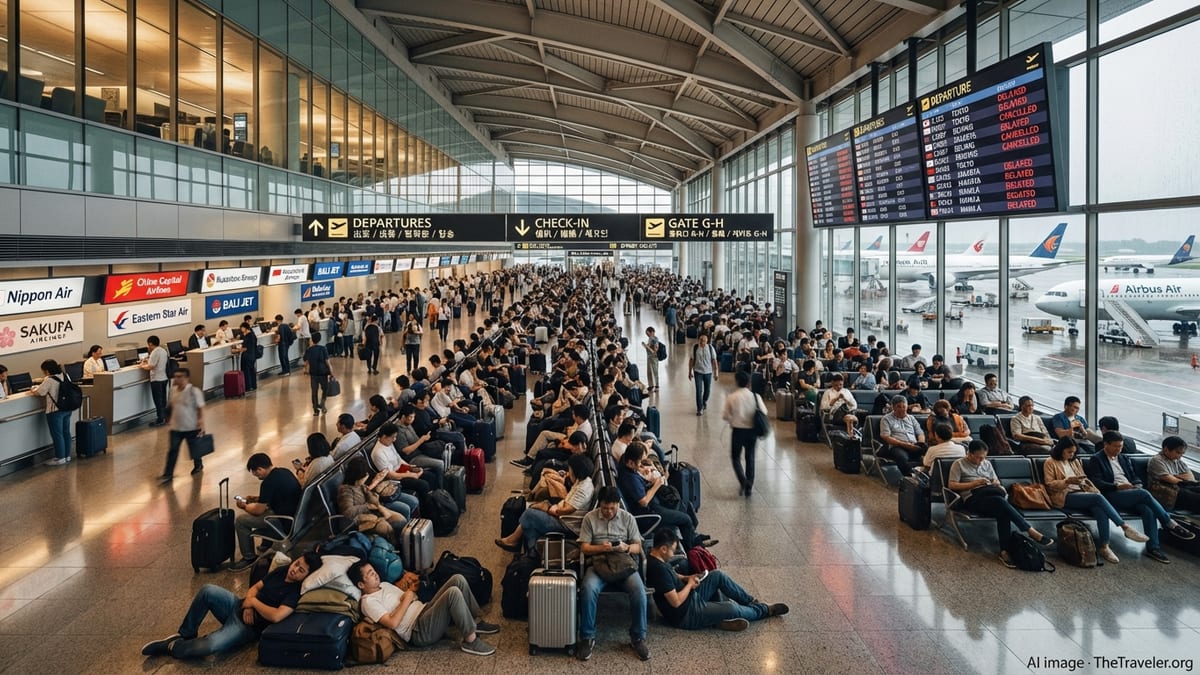
The adjustments come as Taipei Taoyuan International Airport experiences heavy disruption, with Taiwanese media reporting hundreds of flight cancellations and diversions as Bavi’s outer rain bands sweep across the island. Airline advisories show that other regional carriers have also suspended or consolidated services to and from Taipei, Kaohsiung and several East Asian hubs, creating a ripple effect for travelers transiting through the area.
Etihad’s alert emphasizes that safety remains the primary consideration in any schedule change and notes that further adjustments are possible at short notice. Passengers traveling between Abu Dhabi and Taipei over the weekend are being urged to monitor their booking status closely and to ensure contact details are up to date in airline systems so that any changes can be communicated quickly.
Taiwan Braces For Severe Winds, Record Rainfall
Meteorological data from Taiwan’s Central Weather Administration and international forecasting centers show Bavi retaining significant strength as it tracks near the island, with sustained winds at typhoon intensity and a wide storm radius encompassing much of northern and northeastern Taiwan. Local coverage describes the system as one of the largest and most powerful storms to threaten the island in many years, with particular concern focused on mountainous counties and the densely populated Taipei metropolitan area.
Sea and land warnings have been issued across northern and eastern Taiwan, with authorities suspending classes and work in several cities, including Taipei and New Taipei, at various points during the storm’s passage. Publicly available information indicates that emergency shelters have been prepared, riverbanks and landslide-prone slopes are under close surveillance, and low-lying coastal communities have been advised to remain on alert for storm surges and localized flooding.
Forecasts highlight the risk of intense rainfall totals, particularly in the north and along the east coast, where orographic effects can rapidly amplify precipitation. Earlier typhoons have shown how quickly rivers and mountain streams in Taiwan can rise, and official bulletins are encouraging residents and visitors to stay away from riverbanks, beaches and hiking trails until the system has fully cleared the area.
China Activates Emergency Plans Along Eastern Seaboard
As Bavi curves toward the northwest, large portions of China’s eastern coastline are preparing for the storm’s impact. Reports from state-linked outlets and international news agencies indicate that mass evacuations have been undertaken in several coastal provinces, with more than a million residents moved from exposed areas ahead of expected landfall. Port operations in key hubs along the East China Sea have been scaled back, and some container terminals have temporarily suspended work as winds strengthen and sea conditions deteriorate.
Flood control authorities are drawing attention to the combined threat of storm surge and heavy inland rainfall, particularly in river deltas and urban centers that have already experienced significant flooding from earlier seasonal storms. Rail and road operators have announced precautionary service reductions in certain coastal corridors, while power utilities and emergency crews are being positioned to respond quickly to downed lines and blocked roads once conditions allow.
The wider logistics sector is also bracing for disruption. Industry bulletins and regional shipping advisories note that some ocean carriers are altering routes or delaying sailings that would have transited near Taiwan and eastern China, raising the prospect of short-term delays for cargo movements across the western Pacific.
What Etihad Passengers And Holidaymakers Need To Know
For travelers booked on Etihad’s Abu Dhabi–Taipei services over the coming days, the most important step is to stay informed. Airline updates stress that published schedules may change at short notice as Bavi’s track and intensity evolve, and that flights may be retimed, rerouted or, in some cases, canceled to protect passengers and crew. Travelers are advised to monitor their reservation through official airline channels, keep an eye on departure and arrival boards, and consider enabling notifications on mobile apps for real-time alerts.
Passengers connecting in Abu Dhabi to or from long-haul services, including those bound for Europe, North America or the Middle East, should be prepared for extended layovers if the Taipei leg of their journey is delayed. Travel insurance policies commonly cover weather-related disruptions, but terms vary, so travelers may wish to review their coverage for provisions on missed connections, extra accommodation and rebooking costs.
In Taiwan, domestic travel is also being significantly affected. Local news reports list widespread cancellations of domestic flights, inter-island ferries and some rail services as the storm environment intensifies. Holidaymakers already on the island are being encouraged to follow local advisories, remain indoors during the period of strongest winds, and avoid unnecessary journeys, particularly in coastal or mountainous areas where landslides and falling debris are a concern.
Planning Ahead As Bavi Moves Toward The Mainland
While Bavi is expected to weaken gradually as it continues toward the Chinese mainland, forecasters point out that the size of the storm means disruptive conditions can persist over a broad area even as peak winds decline. Travelers planning trips to or through Taiwan, eastern China, Okinawa or nearby regions over the next several days may face residual delays as airports clear backlogs, airlines reposition aircraft, and rail and ferry services work to restore full timetables.
Prospective visitors are being urged by tourism boards and transport operators to keep flexible itineraries where possible, build in additional time for connections, and remain ready to adjust plans if local warnings are extended. In particular, those with nonessential leisure trips are being advised by publicly available guidance to consider postponing travel into the immediate impact zone until after the storm has fully passed and infrastructure has been assessed.
For now, Etihad’s travel alert on the Abu Dhabi–Taipei corridor underscores the wider reality across the region: as Super Typhoon Bavi tests coastal defenses and transport networks from Taiwan to eastern China, staying informed and flexible is likely to be the key for passengers and holidaymakers hoping to keep their journeys on track.