


More news on this day
Travellers across the United States, Australia, Europe and large parts of Asia are bracing for a turbulent peak summer season after Air India confirmed a sweeping reduction of long haul services from June 2026, including cuts to key routes serving San Francisco, Sydney, Paris, Vienna and other major hubs.
Get the latest news straight to your inbox!
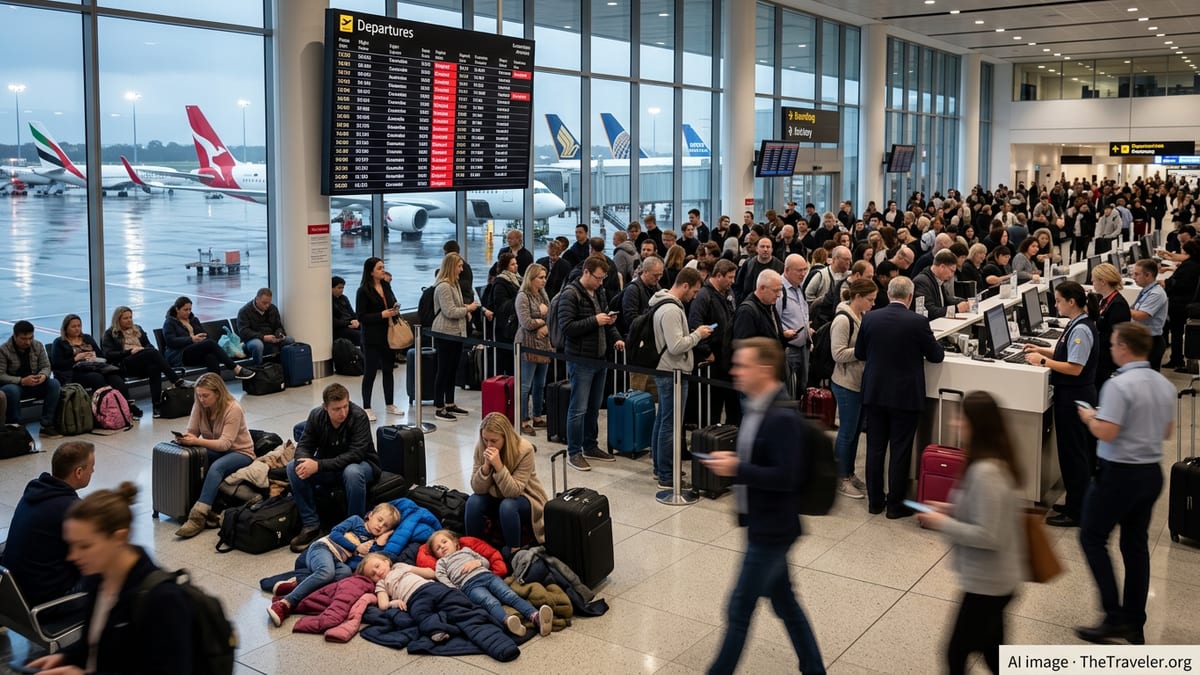
What Air India Is Changing From June 2026
According to published schedules and airline announcements, Air India will temporarily rationalise parts of its international network between June and August 2026, cancelling or reducing hundreds of long haul flights each month. Publicly available information shows that the move affects routes across North America, Europe, Australia and Asia, with a particular impact on passengers who rely on the carrier for nonstop or one‑stop links between India and key global capitals.
Coverage in Indian and international media indicates that the changes include a full suspension of the Delhi–Chicago service and reduced frequencies on several high profile routes instead of blanket withdrawals. These cuts are timed for the northern summer peak, a period that typically sees heavy demand from tourists, students and visiting friends and relatives, which means disruption is likely to be felt widely among leisure and business travellers alike.
Air India’s own route updates describe the measures as temporary and linked to specific operational and economic pressures. At the same time, the carrier emphasises that it expects to continue operating more than 1,200 international flights every month through this period, maintaining a five‑continent footprint even as certain long haul city pairs are scaled back.
Impact on the United States and Canada
North America is among the hardest hit regions. Reports summarising the revised schedule show that services from Delhi to San Francisco, Toronto and Vancouver will see fewer weekly frequencies between June and August 2026. While nonstop links are not being withdrawn entirely, the reduction means fewer options for travellers connecting between India and major technology and business centres on the US and Canadian west coasts.
The suspension of Delhi–Chicago removes a direct link to the American Midwest for the first time in several seasons. Passengers from cities such as Chicago, Milwaukee, Minneapolis and St. Louis who previously used the route to access India now face a reshuffle of their plans, with connections likely to move through alternative hubs in the Gulf, Europe or via other North American gateways such as New York and Newark.
US‑based Indian diaspora communities, as well as students and tech workers who regularly travel between Silicon Valley or Toronto and Indian metros, will need to adjust to narrower date and time choices. Travel agents and fare‑search platforms are already flagging a potential squeeze on nonstop capacity that may translate into higher prices on peak dates, as remaining seats on Air India and rival carriers are absorbed.
Despite the cuts, Air India’s long haul network data suggests that North America remains a strategic focus, with dozens of weekly flights retained to the United States and Canada. However, the pattern of service is shifting toward fewer ultra‑long sectors and a greater reliance on select trunk routes that can support higher load factors under current cost and routing constraints.
Australia, Europe and Asia Also Feel the Strain
Australia, a key market for Indian students and migrants, is also seeing adjustments. Travel industry coverage notes that flights between India and Sydney will operate with reduced frequencies during the June to August window, with some departures removed from the schedule. Melbourne and other Australian points continue to be served, but with a tighter timetable that may limit flexibility for travellers seeking specific connection times onward to North America or Southeast Asia.
Across Europe, Air India is trimming rather than eliminating many services. Media reports list Paris, Vienna, Milan, Copenhagen, Zurich and Rome among destinations where weekly flights are being cut back. For passengers in France, Italy, Austria, Denmark and neighbouring countries who rely on Air India’s network to connect to South Asia and beyond, this means fewer direct options and an increased likelihood of routing via alternative European or Gulf carriers.
Within Asia, several sectors such as Shanghai, Singapore and Dhaka are seeing suspensions or significant frequency reductions, according to updated schedules. This has implications not only for point‑to‑point traffic but also for travellers from countries including China, Vietnam and Thailand who use India as a transit point or who combine South Asian and Southeast Asian destinations in a single trip.
Travel analysts note that the combined effect of these changes is a modest but noticeable thinning of India‑centric capacity across multiple continents at the height of the global summer holiday period. While the airline stresses that the cuts are temporary, the timing amplifies their impact on tourism flows, student travel and visiting‑family trips.
Why Air India Is Pulling Back on Long Haul Routes
Publicly available statements from the airline and aviation consultancies attribute the network rationalisation to a mix of economic and operational pressures. Record high prices for international jet fuel have sharply increased the cost of operating long haul and ultra‑long haul flights, particularly on routes where aircraft already face range and payload limitations.
At the same time, continued airspace restrictions over parts of West Asia and Eastern Europe have forced many airlines, including Air India, to adopt longer, more circuitous routings on some of their busiest corridors. These detours lengthen flight times, increase fuel burn and can push crew duty hours to regulatory limits, all of which erode the commercial viability of marginal services.
Fleet constraints play a role as well. Air India is in the midst of a multi‑year cabin retrofit and fleet renewal programme, which temporarily takes widebody aircraft out of service for refurbishment. Industry commentary suggests that, as a result, the airline is prioritising aircraft deployment on the most profitable or strategically important routes and reducing exposure on thinner, high‑cost sectors until more efficient jets are available in greater numbers.
These factors combine to create what some analysts describe as a squeeze on long haul operations, where costs are rising faster than yields on particular city pairs. Trimming frequencies, they argue, allows the airline to consolidate demand onto fewer flights, improving load factors and preserving cash while maintaining a basic level of connectivity to major markets.
What Travellers Should Expect and How to Prepare
For passengers in the United States, Canada, Australia, Europe and Asian markets such as China, Vietnam and Thailand, the most immediate effect will be reduced choice of departure dates and times on Air India‑operated flights from June 2026 onward. Travellers holding tickets on affected services are likely to see rebooking options onto remaining Air India departures or, in some cases, onto partner carriers, though specific arrangements will depend on fare rules and inventory.
Industry observers advise that those planning peak summer trips involving key routes such as Delhi–San Francisco, Delhi–Toronto, Delhi–Vancouver, Delhi–Sydney, Delhi–Paris or Delhi–Vienna should monitor schedule updates closely and allow additional flexibility in their itineraries. Booking earlier than usual and being open to one‑stop alternatives via other hubs may help mitigate the risk of higher fares or limited availability.
Travel search data already indicates shifting patterns, with more itineraries being built around Gulf, European and East Asian hubs as travellers look for alternatives to trimmed India‑centric nonstops. This could temporarily benefit competing airlines that retain or increase capacity on overlapping routes during the same period.
Air India, for its part, presents the June to August rationalisation as a short‑term adjustment rather than a wholesale retreat from global ambitions. The airline continues to promote upcoming fleet enhancements and future network growth once operational conditions stabilise. Until then, international passengers across multiple continents should be prepared for a leaner summer schedule and the need to plan around a more constrained set of long haul options.