


More news on this day
Travelers heading to Egypt from August 2026 are set to encounter a transformed arrival experience at Cairo International Airport, as the country prepares to launch a fully digital visa-on-arrival system designed to cut queues, speed up processing and modernize one of the region’s busiest gateways.
Get the latest news straight to your inbox!
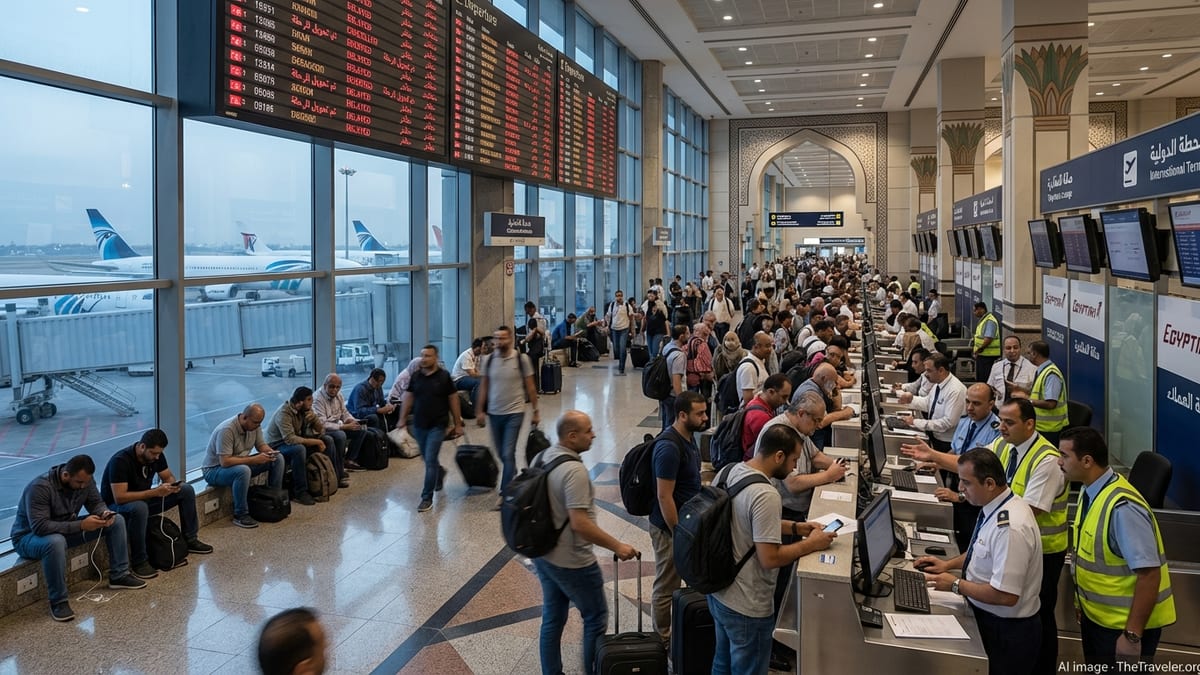
A New Phase in Egypt’s Airport Digital Transformation
According to recent government releases and local media reports, Egypt has finalized agreements to introduce a digital visa-on-arrival platform at Cairo International Airport, with the rollout scheduled to begin in August 2026 across all terminals. The initiative is presented as a core pillar of a broader shift toward automated border control and paperless travel procedures at the country’s largest international hub.
The new system will replace the familiar paper visa sticker currently purchased from bank counters inside the arrivals hall. Instead, eligible visitors will obtain an electronic visa-on-arrival through a secure digital process linked to their passport data, supported by banking services from major state-owned financial institutions. Publicly available information indicates that the platform is being developed with a focus on cybersecurity, real-time validation and seamless integration with existing border-control systems.
This move builds on a wider modernization effort at Egyptian airports, where authorities have already begun phasing out paper arrival and departure cards and expanding the use of automated e-gates. Cairo, Hurghada and Sharm El Sheikh have all seen new digital infrastructure introduced in recent months, positioning the capital’s main airport as the testing ground for the next generation of passenger processing.
By launching the digital visa-on-arrival first at Cairo International Airport before extending it to other gateways, Egypt is effectively using its primary hub as a live pilot for future nationwide adoption. If successful, officials are expected to broaden the platform’s coverage to additional airports in stages after the initial launch period.
How the Digital Visa-on-Arrival Will Work
Public descriptions of the system suggest that incoming tourists who are eligible for a visa on arrival will follow a streamlined, largely digital workflow. Instead of queuing at bank windows for paper stamps, travelers will be directed to dedicated digital visa stations where their passport will be scanned and their visa fee processed electronically, with payment options anticipated to include cards and other cashless methods.
Once approved, the visa will be issued in digital form and associated with the traveler’s passport through a secure record, replacing the adhesive sticker or paper stamp historically used at Egyptian entry points. Some reports also point to the use of QR codes and machine-readable tokens to authenticate the visa at subsequent checkpoints inside the airport, allowing border officers and automated gates to verify a visitor’s status in seconds.
The platform is expected to work in tandem with Egypt’s existing e-visa services rather than replace them. Travelers who prefer or are required to obtain a visa before departure will still be able to apply online in advance, while the digital visa-on-arrival will target passengers who decide to finalize their documents at the airport. Industry observers suggest that combining both options could give Egypt more flexibility in managing surges in demand and accommodating different traveler profiles.
Implementation details on specific user interfaces, language support and customer assistance tools have not yet been fully disclosed. However, technology partners involved in the project have signaled that the system is being designed for high volumes and peak-period resilience, with an emphasis on minimizing bottlenecks in the arrivals hall.
Faster Entry, Shorter Queues and a New First Impression
The digital visa-on-arrival is being framed as a key measure to improve Egypt’s first impression for international visitors. For years, travelers arriving in Cairo at busy times have reported congestion at bank counters, long lines for visa stickers and inconsistent guidance through the arrivals process. The incoming platform aims to reduce these pain points by turning what was a multi-stop, paper-based routine into a single, digitally managed flow.
By consolidating payment, data capture and visa issuance into a unified system, the new approach is intended to cut the time passengers spend standing in line before reaching passport control. This is expected to be particularly significant for late-night and peak-season arrivals, when several widebody aircraft may land within a short window and strain existing facilities.
Tourism-sector analysis suggests that gains in speed and predictability at the border can influence travelers’ overall perception of a destination. A quicker, more transparent arrival process can make long-haul journeys feel less exhausting and reduce anxiety for first-time visitors unfamiliar with local procedures. For transit passengers connecting onward within Egypt, smoother entry could also help reduce missed connections and pressure on ground staff.
While Egypt has already seen improvements from earlier steps such as eliminating paper immigration forms, industry commentary indicates that digitizing the visa-on-arrival itself is a more visible upgrade from the traveler’s perspective. The change turns a previously manual, cash-heavy transaction into a modern, contact-minimized interaction more in line with current global aviation standards.
Positioning Cairo as a Regional Aviation and Tourism Hub
Cairo International Airport has long served as one of Africa and the Middle East’s busiest crossroads, linking Europe, the Gulf, Africa and Asia. In recent years, Egypt has sought to reinforce that position through infrastructure expansions, new terminals and the deployment of smart airport technologies. The digital visa-on-arrival platform fits into this strategy by focusing directly on the passenger-facing side of border formalities.
Government statements and aviation briefings have highlighted that Cairo has recorded rising passenger volumes and flight movements since 2025, with particular growth in inbound tourism and regional connections. In that context, the shift to a fully digital visa-on-arrival model is being interpreted as a preemptive step to manage future demand rather than a short-term response to existing congestion alone.
Sector observers note that Egypt’s move aligns with a broader international trend toward digital travel credentials, automated identity checks and advance data sharing between airlines and border services. By accelerating its own adoption of these tools, Egypt is positioning Cairo as a hub that can interoperate more smoothly with carriers and partner countries that are also rolling out digital identity and travel systems.
The planned expansion of the platform from Cairo to other airports after the August 2026 launch further underscores the country’s intention to establish a unified national model for tourist entry. Once extended to major Red Sea and Mediterranean gateways, the system could support more consistent standards across Egypt’s most visited regions.
What Travelers Should Expect Ahead of August 2026
With several months remaining before the digital visa-on-arrival goes live at Cairo International Airport, detailed user guidance for travelers has not yet been fully published. However, based on current information and parallel changes already implemented in Egypt’s airports, visitors can expect a more digital-first environment when they arrive from mid-2026 onward.
Paper arrival and departure cards have already been phased out, and documentation processes are shifting toward electronic data capture at counters and e-gates. As the new visa-on-arrival platform comes online, passengers are likely to encounter clearly marked digital visa areas, updated signage and airport staff directing eligible travelers toward the new stations instead of legacy bank windows for visa stickers.
Travel industry advisories suggest that visitors should check the latest entry rules, eligible nationalities and visa fees with official Egyptian channels and airlines before departure, particularly during the initial months following launch. As the system is gradually expanded and refined, some processes may be adjusted to balance throughput, security and user experience.
For Egypt, the August 2026 debut of the digital visa-on-arrival at Cairo International Airport represents more than just a technology upgrade. It is a visible signal that one of the world’s most historically rich destinations is reshaping its gateway to match contemporary expectations of speed, clarity and digital convenience, with the potential to redefine how millions of tourists begin their journeys into the country each year.