


More news on this day
American Airlines has tightened how it measures refund eligibility, shifting from a more flexible interpretation of 24-hour cancellation protections to a second-based clock that narrows the window for travelers seeking their money back.
Get the latest news straight to your inbox!
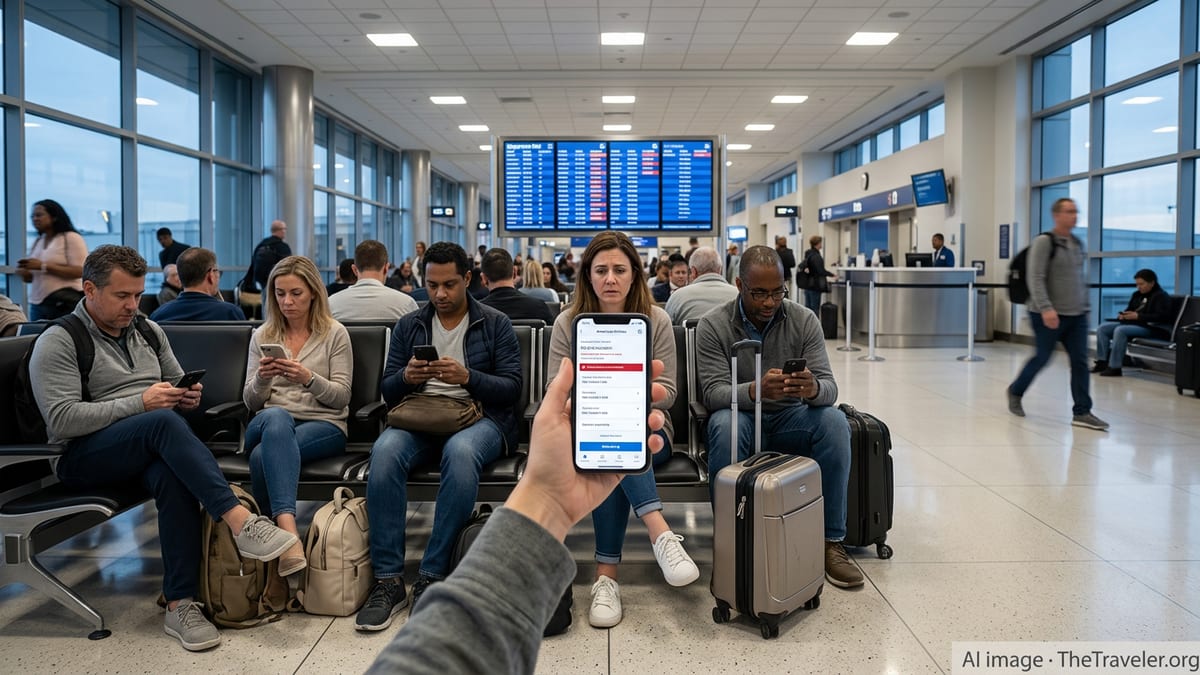
A Precise Clock On “24-Hour” Flexibility
Publicly available policy summaries and consumer guidance indicate that American Airlines continues to honor a 24-hour cancellation period for many tickets, but it is increasingly tying that promise to the exact time a booking is created. Instead of treating “24 hours” as a practical one-day grace period, the airline is applying the rule literally down to the second, with eligibility expiring at the precise moment the 24-hour mark passes.
This shift matters most when customers book late at night, close to departure, or across time zones. A traveler who books at 11:52 p.m., for example, may find that canceling just after that time the next calendar day is too late. Reports circulating in traveler forums describe cases where refund requests were denied because they were submitted minutes after the 24-hour threshold, even though they fell comfortably within the next business day.
Travel industry commentary suggests this more exact timing dovetails with a wider tightening of refund and credit rules across the sector. While federal regulations require airlines to offer either a 24-hour hold or a 24-hour free cancellation for certain tickets purchased at least seven days before departure, carriers have broad latitude to define how that clock is measured, and American appears to be using that flexibility with increasing precision.
For passengers, the practical effect is that the once forgiving “day-after booking” safety net is shrinking. The time stamp on the original purchase has become a critical data point, and any delay in canceling can have immediate financial consequences.
Interaction With Federal Refund Rules
The tightening of American’s internal timing practices is unfolding against the backdrop of new federal refund regulations that took effect in 2024 and 2025. Those rules, from the U.S. Department of Transportation, require automatic cash refunds in specific circumstances such as cancellations and significant schedule changes, but they do not alter how airlines count voluntary 24-hour grace periods for eligible purchases.
Company filings and regulatory summaries show that American Airlines has adjusted its systems to comply with these federal mandates while still structuring its own voluntary refund offerings. In practical terms, the carrier can meet its legal obligations on involuntary changes while simultaneously setting more exacting criteria on when a customer-initiated cancellation qualifies for a refund versus a travel credit.
Analysts note that this dual-track approach can be confusing. A traveler might assume that broad media coverage of “stronger refund rules” means more leeway in all situations, when in fact the federal protections are tightly defined. Outside those specific scenarios, American’s internal policy language applies, and that is where the second-by-second countdown has become more visible.
Consumer advocates monitoring airline practices say the gap between legally mandated refunds and company-specific rules has become a key friction point. When a customer misses American’s precise 24-hour deadline by moments, the outcome can be a denied refund request even if the flight is still months away and seats remain available for sale.
Real-World Impact On Travelers
Recent traveler accounts shared in online forums describe an environment in which seemingly minor timing missteps can convert a flexible ticket into a locked-in obligation. Several customers recount booking itineraries, reconsidering plans the following day, and discovering that the exact booking time had already passed, leaving only the option of a trip credit instead of cash back.
Those experiences are occurring alongside separate frustrations tied to downgrades from premium cabins, missed connections and equipment changes. In parallel policy updates, American has clarified that some refunds for downgraded segments can be calculated as a fixed percentage of the fare for the affected leg, rather than based on what a customer originally paid for a higher cabin. Combined with a stricter 24-hour cancellation cutoff, this approach has led some frequent flyers to characterize the overall system as less forgiving than in previous years.
For leisure travelers who book far in advance, the tightened refund deadline may be less noticeable so long as they act quickly after purchase. Business travelers and those making last-minute bookings, however, often rely on the flexibility of being able to reverse a decision within a day if meetings, approvals or travel conditions change. For them, the precise expiration of the 24-hour window can carry outsized financial risk.
The stories circulating online highlight another theme: the growing importance of documentation. Travelers are increasingly urged by peers to keep screenshots of booking times, cancellation attempts and any confirmation pages that show when a refund request was submitted, in case they need to contest the outcome.
What The Stricter Window Means For Booking Strategy
The emergence of a second-based refund cutoff is reshaping how many travelers approach American Airlines tickets. Travel advisers and experienced flyers posting publicly suggest that customers treat the 24-hour period as a true countdown, setting reminders to review their plans and finalize decisions well before the deadline hits.
One practical adjustment is to avoid waiting until the end of the grace period to cancel. Because systems process transactions in queues and time zones can complicate the apparent local time, a request entered at what appears to be the last possible minute may be recorded after the threshold has passed. Acting several hours earlier reduces the risk that technical delays, website glitches or time conversion issues will tip a request into ineligible territory.
Another emerging strategy is to pay close attention to whether a ticket is sold with cash refund rights, travel-credit options or fare-class restrictions. Some higher-priced products on American now carry more generous refund and change terms, while lower-cost options may hinge almost entirely on that initial 24-hour window. The more narrowly that clock is enforced, the more valuable those flexible fare types become for travelers who anticipate potential changes.
Travel planning experts also point out that new federal rules on automatic refunds for significant schedule changes do not replace the need for vigilance when a trip is still on track. Unless a flight is canceled or substantially altered in a way that triggers those protections, the onus remains on passengers to act within American’s self-imposed deadline if they want money returned to their original form of payment.
Growing Scrutiny Of Airline Timing Practices
As American Airlines and other large carriers refine the fine print of their refund policies, timing has emerged as one of the most consequential levers. The precise measurement of a “day,” whether in seconds or more forgiving calendar terms, directly shapes how much flexibility a customer actually experiences after clicking “purchase.”
Policy analysts and travel commentators increasingly frame these issues as part of a broader transparency debate. The rules may be published, but their real-world impact often surfaces only when travelers discover too late that an assumed grace period has already expired. That mismatch between expectation and enforcement is prompting calls for clearer disclosures at checkout, including explicit countdowns to the refund deadline.
For now, publicly available information suggests that American’s approach reflects a broader industry trend toward maximizing revenue certainty while staying within the letter of consumer-protection rules. By tightening refund eligibility to the second, the airline reduces its exposure to last-minute cancellations that would otherwise free up seats only after demand has shifted.
For passengers, the development underscores a simple but increasingly vital rule of modern air travel: once a ticket on American Airlines is issued, the clock is not just ticking, it is counting every second. Those who want the full protection of the 24-hour refund promise must move just as precisely.