


More news on this day
Eye-catching business and first class prices are popping up on airline booking screens, promising lie-flat beds and champagne for less. But a closer look at new “light,” “base” and “basic business” fares shows many of these premium deals come with strings attached that travelers might not spot until after they have paid.
Get the latest news straight to your inbox!
Premium Perks Shrink As Airlines Chase Price-Sensitive Luxury
Major carriers on both sides of the Atlantic are reshaping how they sell the front of the plane. Instead of a single, all-inclusive business or first class ticket, several airlines now slice premium cabins into multiple branded fare types, each with different rules and inclusions. Publicly available fare charts and announcements indicate that these structures are designed to catch the eye of travelers who want a flat bed and quiet cabin, but are willing to give up flexibility and extras in exchange for a lower headline price.
Lufthansa Group airlines, including Lufthansa, SWISS, Austrian and Brussels Airlines, have introduced “Business Light” and similar stripped-down products on selected routes. These fares book passengers into the same business class seats as higher-paying travelers, but typically exclude services such as free advance seat selection and generous change options, and can carry strict refund penalties. At the same time, the group continues to sell “Classic” and “Flex” business fares with more traditional benefits, at higher prices.
In the United States, United Airlines has begun rolling out tiered fare categories for its Polaris business class and Premium Plus cabins on long-haul international and selected domestic routes. New “base,” “standard” and “flexible” options provide the same seat on board, but differ sharply in areas like lounge access, baggage allowances, change rights and upgrade eligibility. Consumer-focused travel coverage notes that base tickets are positioned as the cheapest way into Polaris, while limiting some of the perks that helped define the product when it launched.
More recently, Delta Air Lines has moved in a similar direction, adding lower-priced tiers for some of its most premium products, including Delta One. Regional business press reports describe a new “basic” style offering in premium cabins that keeps the lie-flat seat and onboard service but pares back flexibility and ground benefits. The pattern is clear: airlines are leaning on fare design to appeal to both cost-conscious leisure travelers and corporate buyers, without cutting the official sticker price of their flagship cabins.
The Hidden Trade-Offs Behind “Cheap” First and Business
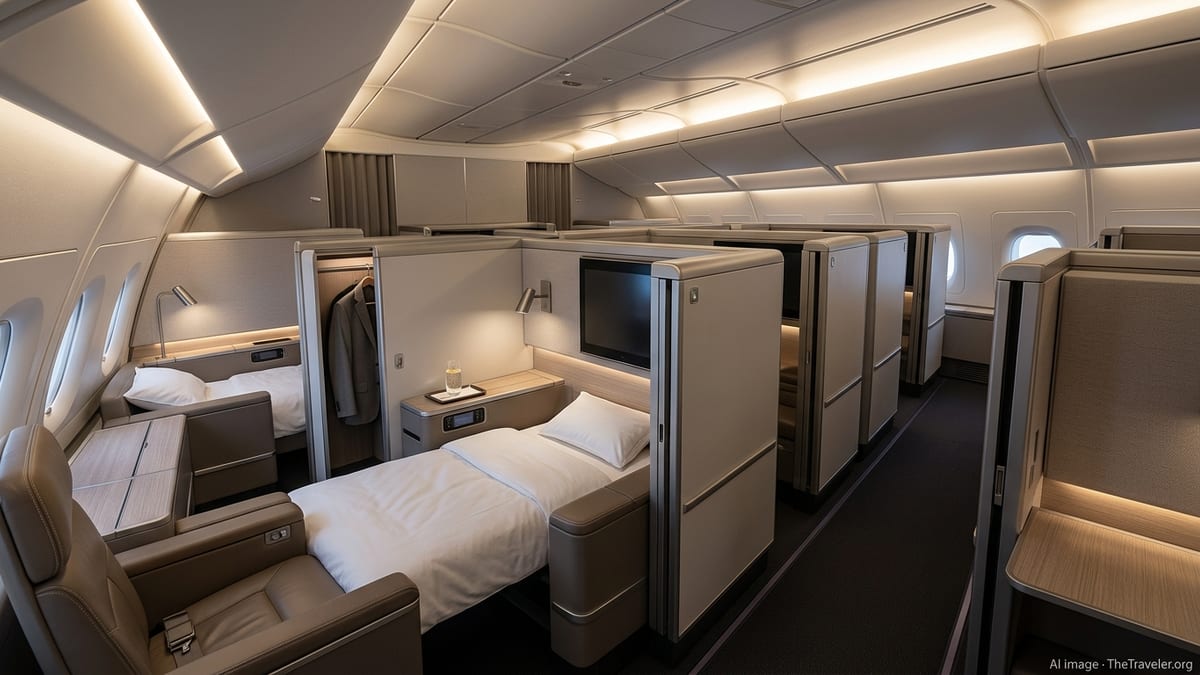
For travelers comparing prices on a search engine or corporate booking tool, the differences between these new premium fare types are not always obvious. The seat photo may be the same, the cabin name may still say “business,” and the price may look attractive compared with what travelers remember from just a few years ago. The catch lies in the fine print.
In United’s new Polaris structure, reports indicate that base fares on long-haul routes can exclude access to Polaris lounges, remove the ability to make voluntary changes, and require passengers to pay extra to choose a specific seat in advance. Mileage earning rates can be lower, and some upgrade pathways are narrowed or closed altogether. Travel analysts have described this as a reshuffling of benefits that makes the entry-level business fare look more like an economy ticket with a premium seat than the comprehensive premium experience many customers expect.
Within the Lufthansa Group, Business Light fares are typically marketed without free checked baggage beyond a limited allowance, with no free advance seat reservation and with tighter conditions on cancellations and changes. Documentation aimed at travel agents highlights that seat selection can carry hefty fees even in the front cabin, depending on route and seat type. The upshot is that a traveler who later decides to change flights, pick a specific seat or add bags may find their apparent savings eroded by ancillary charges.
For passengers booking through corporate tools, the proliferation of branded premium fares can also create confusion. On American Airlines, internal product overviews show multiple business fare names such as Business, Flagship Business and various promotional or flexible versions, each with different refundability and change terms. While American has not introduced a widely publicized “basic business” product on the scale of its competitors, its detailed fare grid underscores how complex premium ticket conditions have become even before new stripped-down tiers arrive.
Why Airlines Are Unbundling the Front of the Plane
The push toward cheaper premium fares with fewer perks is emerging after a period of rapid capacity growth and softening demand on some international routes. Industry data cited in aviation forums and fare analyses suggests that transatlantic markets saw record seat supply heading into recent summer seasons, while advance bookings from key U.S. gateways lagged. Airlines have responded by filing more discounted business class inventory, particularly in lower booking classes, but they are reluctant to dilute the perceived value of their flagship products.
By introducing base and light fares in business and first, carriers can advertise starting prices that appear significantly lower without fully matching those discounts at the top of the fare ladder. The most restrictive fares become a tool to fill otherwise empty premium seats with leisure travelers who might have previously flown premium economy or economy, while higher corporate and fully flexible fares preserve revenue from customers who need changes, refunds and full benefits.
Unbundling also allows airlines to monetize ancillaries in the front cabin. Instead of including lounge access, seat selection and multiple checked bags for every business passenger, airlines can charge separately for these elements, much as they do in economy cabins. For example, public information on Lufthansa Group’s seat reservation policies shows substantial fees for selecting preferred or extra-legroom business seats on certain routes, particularly for light or saver fares. United’s base Polaris tickets, meanwhile, create new opportunities to sell seat assignments and lounge access on an à la carte basis.
This strategy mirrors earlier moves in economy, where “basic economy” fares initially appeared as a niche option but have since become a common pricing anchor. Travel experts point out that many travelers focus on the lowest price they see on a comparison screen, even if the restrictions are severe. By applying the same logic to premium cabins, airlines are betting that most buyers will either accept the trade-offs or upgrade to higher, more profitable fare types once they understand the limitations.
How Travelers Can Decode the New Premium Fares
For passengers, the new landscape makes careful research essential before clicking “buy” on what looks like a bargain business or first class ticket. The most basic step is to confirm whether the fare is labeled as light, base, saver or a similar term, and to read the airline’s breakdown of what is included. Travelers should pay particular attention to lounge access, seat selection rules, baggage allowances, same-day changes and refundability, all of which can differ sharply between tiers.
Using recent changes at United as an example, Polaris base customers may not have access to Polaris lounges even on eligible routes, while standard and flexible fares retain that benefit. Where lounge access has become a prized part of the premium journey, losing it can significantly change the overall experience, especially on long connections. Likewise, a business class ticket that does not permit free changes or has heavy cancellation penalties behaves more like a discount economy fare when plans shift.
On European carriers offering Business Light, travelers should be prepared for additional charges if they want to reserve a specific seat in advance or bring more checked luggage. Some passengers report that once they add these extras, a higher fare category with more inclusive benefits would have been cheaper overall. Corporate travelers may need to work closely with travel managers to ensure their company policies consider not just the ticket price but the total cost and risk of restrictive terms.
Frequent flyers also need to watch how these fares interact with loyalty programs. Base and light tickets can earn fewer miles or points, reduce elite qualification credit, or limit the use of systemwide upgrades and certificates. Over the course of a year, choosing the cheapest premium fare each time could slow progress toward elite status compared with booking standard or flexible options, even if the seat on board is identical.
A Premium Seat No Longer Guarantees a Premium Journey
The rise of cheaper premium fares underlines a shift in how airlines define first and business class. Where the traditional model bundled together a spacious seat, fine dining, generous baggage, lounge access and maximum flexibility, the new approach treats these elements as separate components that can be dialed up or down depending on what a traveler pays. The result is that the label on the ticket matters less than the specific fare rules behind it.
For some travelers, especially those on fixed dates who value the onboard experience more than flexibility, these new fares can still represent good value. A discounted Polaris or Business Light seat can be a significant comfort upgrade over economy on an overnight flight, even without lounge access or free changes. For others, particularly those whose plans may shift or who rely on lounge access for work and rest, the same fare could turn into an expensive compromise.
As more airlines experiment with unbundled premium cabins, travelers are likely to see even wider price spreads within first and business class, along with greater variation in what each ticket actually delivers. The one constant is that the lowest advertised price is rarely the whole story. Understanding the fine print has become as important at the front of the plane as it already is in the back.