


More news on this day
When a U.S.-based traveler opened an email from Air India advising them to accept a revised itinerary after a schedule change, it appeared to be a sensible solution. Instead, the passenger says following that guidance led to more than 2,000 dollars in unexpected costs for new tickets, extra hotel nights and ground transport.
Get the latest news straight to your inbox!
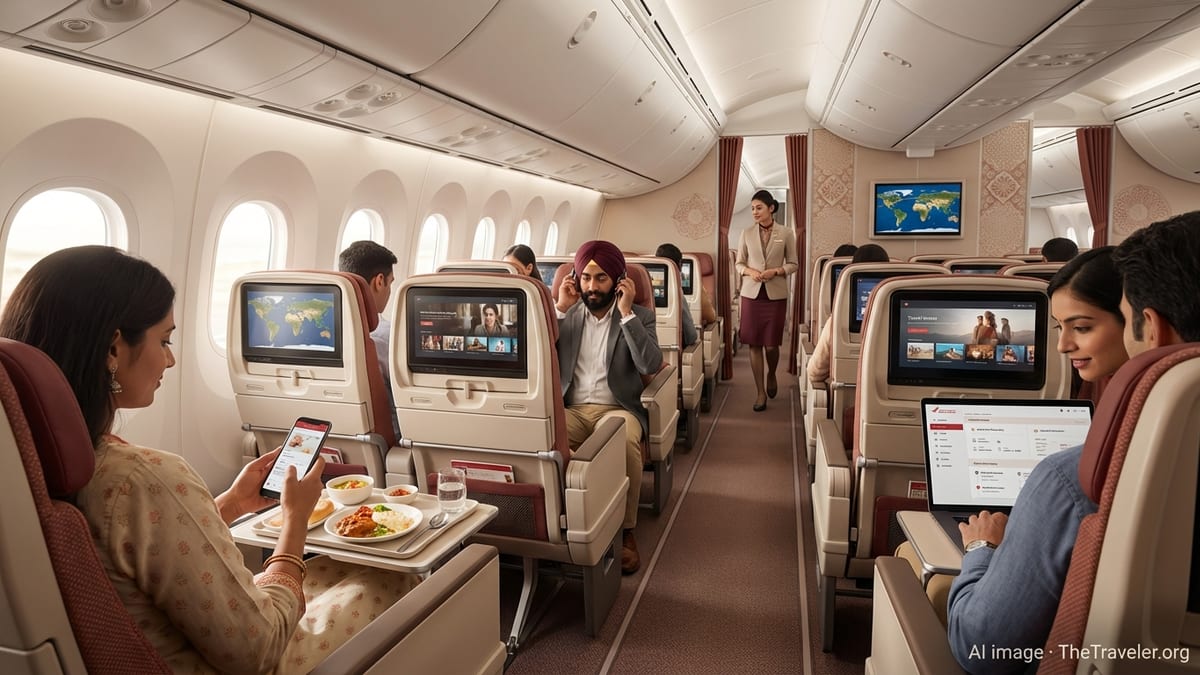
From Schedule Change Email to a Costly Chain Reaction
Published complaints and forum posts indicate that Air India has recently generated frustration among passengers after significant schedule changes left travelers scrambling to salvage trips. In this case, the traveler had booked a multisegment itinerary between North America and India months in advance, only to receive a message shortly before departure advising them to accept a substituted connection and revised timing.
The replacement itinerary extended total travel time by nearly a full day and created an overnight layover that was not part of the original plan. According to the traveler’s description, Air India’s digital tools highlighted the new routing as the primary option, with language suggesting that accepting the change online would resolve the disruption efficiently.
Once the traveler accepted the automated rebooking, other parts of the trip began to unravel. The longer journey conflicted with separate, nonrefundable bookings on partner airlines and a prepaid hotel stay at the final destination. To avoid losing the entire vacation, the traveler ultimately purchased alternative flights on another carrier and added an extra hotel night, pushing the total additional outlay to about 2,000 dollars.
Similar narratives appear across consumer forums and complaint boards, where passengers describe schedule changes that introduce lengthy layovers, additional connection points or departures shifted by a day or more, followed by costly last minute adjustments to their wider travel plans.
How Air India Rebooking Policies Frame Passenger Choices
Air India’s publicly available policies for schedule changes and disruptions outline circumstances in which passengers can be rebooked or refunded. The carrier’s schedule change and irregular operations policy describes re-accommodation rules, including options for moving customers to alternative flights within a set window around the original travel date, subject to seat availability and fare conditions.
The airline also promotes a self-service re-accommodation platform for disrupted flights, which allows customers to select an alternative option when Air India cannot operate the original service. Official guidance indicates that passengers can receive an updated itinerary by choosing from available alternatives, while separate policy documents describe when additional change fees may be waived and when fare differences still apply.
However, real-world experiences shared online suggest that travelers sometimes interpret these options as endorsements or advice to accept specific routings, even when those routings create new problems. Some passengers report that once a revised Air India itinerary is confirmed, it becomes much harder to argue for a different solution, request a later refund or seek help with knock on costs such as missed hotel nights or separate onward tickets.
Several complaints describe confusion over whether a schedule change entitles the traveler to a full refund instead of rebooking. Passengers also report uncertainty about how accepting a rebooked flight might affect their ability to claim compensation under consumer protection rules in different jurisdictions, including India, the European Union and the United States.
Consumer Rights When a Flight Is Significantly Changed
Consumer protection regimes generally draw a distinction between a voluntary itinerary change requested by the passenger and an involuntary schedule change initiated by an airline. When a carrier cancels or significantly alters a flight, regulators in some markets state that travelers may be entitled to a refund if they choose not to travel, even when the airline offers alternative transportation.
Guidance from the United States Department of Transportation, for example, notes that a consumer is entitled to a refund if a carrier significantly changes a flight and the traveler declines the new itinerary. The agency points out that a significant change can include much longer travel times, extra connections or airport changes, though the exact threshold is assessed case by case.
In practice, passengers who accept an airline’s rebooking may find that they have effectively given up the option of a cash refund for that portion of the trip. If they later decide to abandon the new flight and buy a separate ticket on another carrier, they may be left bearing both the original fare and the cost of the replacement journey. That is the situation the Air India passenger describes, having followed what appeared to be a straightforward online prompt to accept a new connection.
Legal outcomes can differ sharply across jurisdictions, as shown in recent rulings and consumer disputes involving Air India. Some travelers have secured partial compensation or refunds from tribunals and consumer commissions after arguing that significant delays and reroutings amounted to a deficiency in service, while others report long delays or denials when seeking redress directly from the airline.
Air India’s Broader Record on Disruption Handling
Air India’s evolving network and operational challenges since its change of ownership have drawn intense scrutiny from frequent flyers. Online communities devoted to Indian aviation are replete with accounts of late schedule changes, cancelled direct services and extended layovers, particularly on long haul routes between India, Europe and North America.
Some passengers describe being rebooked onto itineraries with layovers exceeding 20 hours or transferred from nonstop flights to one stop journeys that add many hours of travel time. Others say they were not offered seats on partner airlines even when same day alternatives existed, and instead were steered toward Air India operated flights on later dates.
Consumer complaint filings also highlight communication gaps. Travelers report automated emails that arrive close to departure, links to self service portals that show no viable alternatives and difficulty reaching human agents who can discuss options beyond what the algorithm proposes. In a number of cases, passengers state that they only learned about major schedule changes when they proactively checked their reservations online.
These experiences align with broader concerns about airline disruption management worldwide, as carriers rely increasingly on automated tools to rebook large numbers of affected passengers. Scholars studying airline operations note that such systems are optimized to minimize cost and maintain schedule integrity, which can leave individual travelers with options that are technically compliant with policy but poorly aligned with their personal needs.
How Travelers Can Protect Themselves When Rebooking
The experience of the Air India passenger who spent 2,000 dollars after accepting rebooking advice underscores the importance of pausing before clicking on an automated itinerary change. Travel advocates generally recommend that passengers first determine whether they would prefer a refund instead of a revised journey, especially when a schedule change adds substantial time, extra connections or an overnight stay.
Before accepting any rebooked itinerary, passengers can review the airline’s schedule change policies, check regulator guidance for the regions involved and compare same day options on other carriers. If a full or partial refund is available, purchasing a fresh ticket elsewhere may offer more control, even if the new fare is higher, and some credit card protections may help with the cost.
Travelers are also encouraged to consider how accepting an airline’s new itinerary could affect nonrefundable elements of their trip. Separate tickets on partner airlines, hotel reservations and prebooked ground transport may be difficult or impossible to change without fees. In complex itineraries, the combined financial impact of those changes can quickly surpass the value of any voucher or goodwill gesture offered by the airline.
For passengers flying with Air India or any other carrier, the message from recent disputes is clear: an automated rebooking may solve the airline’s operational problem, but it might not be the best solution for the traveler. Carefully weighing the alternatives before agreeing to a new flight plan can help avoid the kind of costly outcome described by the traveler who followed Air India’s advice and paid dearly for it.