


More news on this day
Air India’s mounting fuel and operating costs are forcing sharp reductions in long-haul services, tightening vital air corridors between India, Canada and major hubs in the United States, United Kingdom, Europe and Asia just as global travel demand remains high.
Get the latest news straight to your inbox!
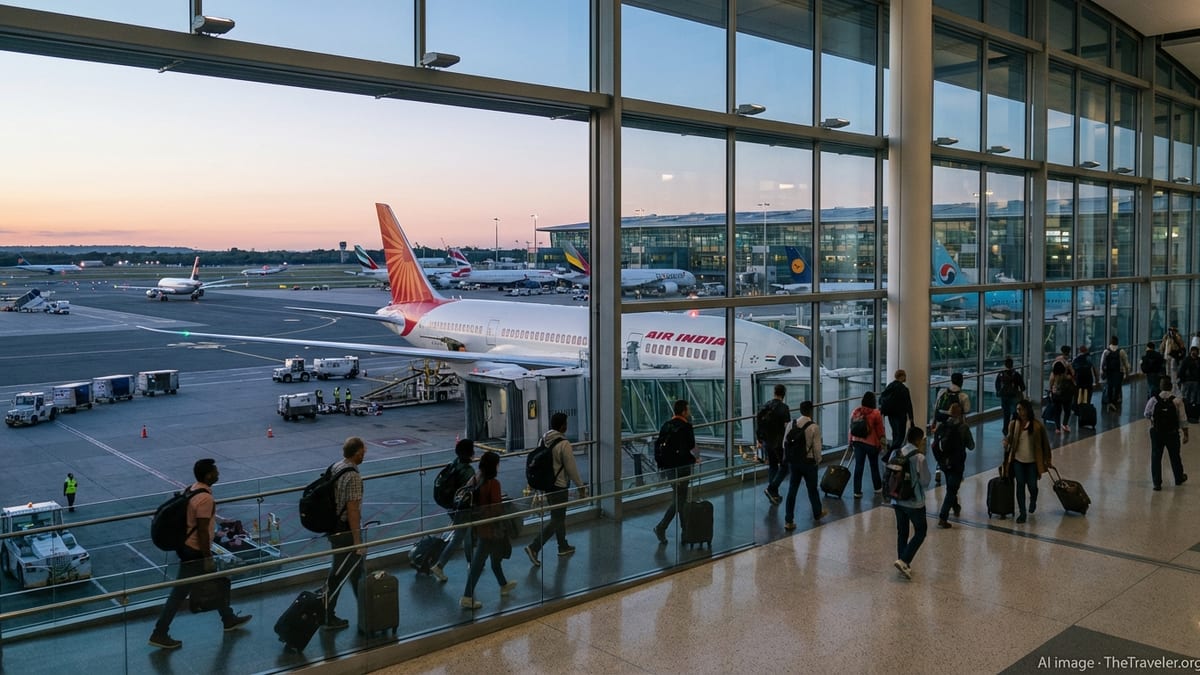
Fuel Surge and Rerouting Push Air India Into Deeper Strain
Publicly available data from Air India and industry trackers indicate that the carrier is under increasing financial pressure as aviation turbine fuel prices climb and war-related airspace closures add hours to many long-haul routes. On some Europe and North America services, aircraft are now flying significantly longer paths to avoid restricted skies, a change that directly increases fuel burn and crew costs at a time when margins were already thin.
Reports from aviation outlets describe fuel as the single largest line item in Air India’s cost base, with recent spikes eroding the profitability of long sectors that have historically underpinned the airline’s international strategy. At the same time, passengers show signs of resistance to further fare hikes, limiting the extent to which the carrier can simply pass these higher costs on to travelers.
Internal messaging referenced in published coverage suggests that Air India’s leadership has ordered a tighter focus on spending and warned that some ultra long-haul routes are no longer commercially viable under current conditions. That assessment is now translating into visible flight cuts across multiple continents and timetable changes running at least through July 2026.
Canada Joins List of Countries Affected by Capacity Cuts
Recent schedule filings compiled by specialist route-monitoring services show that Canada is among the markets most affected by Air India’s latest round of capacity reductions. Over the coming months, frequencies on key India–Canada nonstop links are being scaled back, with some analysts estimating that roughly one third of the airline’s Canadian capacity is being withdrawn for the northern summer period.
The impact is particularly acute on nonstops connecting Delhi with Toronto and Vancouver, which serve large Indian diaspora communities and corporate traffic in both directions. These flights have been popular for offering direct links without European or Gulf connections, and their reduction will likely push more passengers onto one-stop itineraries via Europe, the Middle East or East Asia.
Canadian travelers are responding to the developments in real time. Online discussions and local coverage describe passengers confronting sudden schedule changes, longer journey times and steeper fares as remaining seats on other carriers fill quickly. Travel planners warn that the squeeze on nonstop capacity could ripple into higher prices across the transatlantic and transpacific networks touching Canada.
US, UK, France, Italy, Austria, Singapore and Beyond Face Disruptions
The fallout is not limited to Canada. Timetable data and industry reporting point to widespread reductions across Air India’s long-haul portfolio, including routes to the United States, United Kingdom, France, Italy, Austria, Australia and Singapore. Analysts note that many of these flights now operate on detoured routings that lengthen block times, making them some of the costliest sectors in the network.
Reports indicate that nonstops to major North American gateways such as New York, Chicago and San Francisco, as well as European cities including Frankfurt and Vienna, are among those seeing trimmed frequencies or temporary suspensions. In Southeast Asia and the Pacific, destinations like Singapore and Australian cities are also affected, tightening capacity at a time when demand between India and these markets remains robust.
Travelers across these regions are experiencing a familiar pattern: reduced choice of departure days, limited last-minute availability and more reliance on connections via third-country hubs. Airlines based in the Gulf, Europe and East Asia may benefit from additional transfer traffic, but the overall result for passengers is often longer journeys and higher average ticket prices.
Passenger Experience: Longer Journeys and Higher Fares
For individual travelers, Air India’s capacity cuts translate into immediate and practical challenges. Published accounts from passenger advocacy groups and travel forums describe cases of itineraries being pushed back by days or even weeks, as rebooking onto alternative flights proves difficult in already busy travel windows.
The reduction in nonstop options between India and Canada, the United States and parts of Europe is expected to concentrate demand onto the remaining direct services and a handful of key hubs. As a result, fare comparison data cited in recent coverage already point to upward pressure on prices, especially in premium cabins and around school holidays and festival periods when demand traditionally spikes.
In addition to cost, journey time is emerging as a major concern. With more flights operating on elongated routings or via intermediate hubs, travelers report overnight layovers, extra airport transfers and added complexity for families and business travelers on tight schedules. For some, particularly in smaller Canadian and European cities that rely on a single long-haul connection, even a modest reduction in frequency can mean substantially fewer practical options.
Governments and Regulators Weigh Consumer Protections
As disruptions mount, consumer protection frameworks in Canada, the United States, the United Kingdom, the European Union and other jurisdictions are coming under renewed scrutiny. Publicly available guidance from regulators emphasizes that passengers whose flights are cancelled or significantly rescheduled may be entitled to refunds or rebooking options, and in some cases compensation, depending on where their journey begins and the governing rules.
In Europe and the United Kingdom, for example, established passenger rights regulations can require airlines to provide care and, in certain scenarios, financial compensation when departures from European airports are cancelled at short notice. Canadian rules focus on rebooking obligations and refund rights, while US regulations center primarily on the right to a refund when an airline cancels or significantly changes a flight.
Legal experts cited in recent analysis suggest that the cross-border nature of Air India’s long-haul network will make outcomes highly dependent on each itinerary’s origin, destination and ticketing conditions. Travelers are being encouraged to review the terms attached to their bookings and to document any disruptions, in case they need to pursue claims or complaints through regulators or alternative dispute channels.
Network Reshaping and the Global Travel Outlook
Industry observers note that Air India’s capacity cuts are part of a wider pattern of network reshaping as airlines worldwide confront volatile fuel prices and shifting geopolitical risks. Carriers in North America, Europe and Asia have all announced selective route suspensions or frequency reductions in recent months, particularly on fuel-intensive long-haul and ultra long-haul sectors.
For India in particular, the current pressures arrive during an ambitious multi-year transformation of its flag carrier and a broader effort to position the country as a global aviation hub. With Canada, the United States, the United Kingdom, France, Italy, Austria, Singapore and other key partners now feeling the effects of Air India’s retrenchment, questions are emerging about how quickly the airline can restore growth once fuel markets stabilize and airspace restrictions ease.
In the near term, the message for travelers is clear: direct capacity between India and several major global markets will remain constrained through at least the middle of 2026. Passengers planning trips on affected corridors are being advised, in publicly accessible travel guidance, to book well in advance, remain flexible on dates and routings, and monitor schedules closely as airlines continue to adjust their operations in response to an uncertain operating environment.