


More news on this day
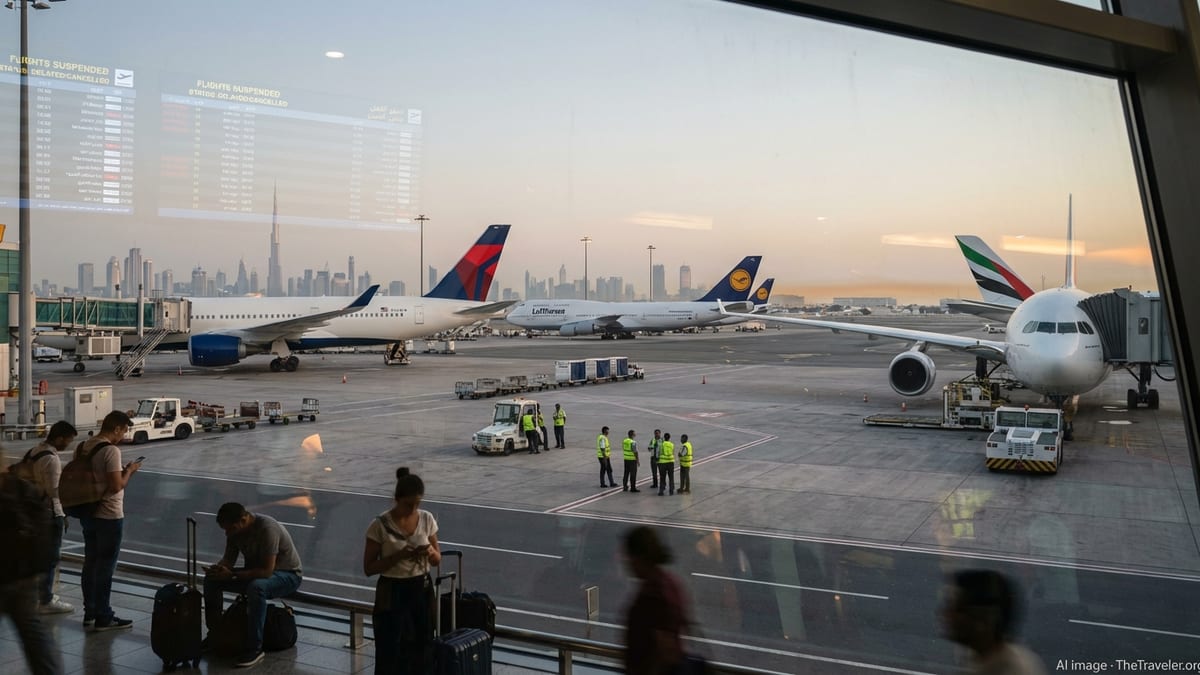
Passengers across Europe are facing another bruising day of disruption as more than 30 flights are cancelled and at least 13 more suffer prolonged delays, with services operated by Finnair, British Airways and Ryanair particularly affected on routes linking Finland, Belgium, the United Kingdom, Italy, France, Greece and Spain.
Get the latest news straight to your inbox!
Patchwork of Disruption Across Seven Key Markets
Real-time tracking data and published operations updates indicate that cancellations and extended delays are scattered across multiple hubs rather than concentrated at a single airport, creating a patchwork of disruption that has proved especially challenging for connecting passengers. The latest figures show around 30 flights taken off the board and more than a dozen additional services operating with significant hold-ups on intra-European routes.
Finland features prominently, with Helsinki and regional airports seeing a fresh round of schedule changes after a winter and early spring marked by recurring operational strains, including earlier waves of delays and cancellations affecting more than a hundred movements in a single day. In recent months, Finnair has already had to trim and re-time services as it contends with knock-on effects from staffing constraints and altered long-haul patterns.
In Belgium and the wider Benelux region, Brussels Airport remains vulnerable to irregular operations following a series of labour-related disruptions and ground-handling bottlenecks documented over the past travel peaks. Recent holiday periods there generated hundreds of delays and dozens of cancellations across European carriers, and analysts note that today’s cancellations are landing on a network that has already been operating with little spare resilience.
The United Kingdom, with London Heathrow and Gatwick among Europe’s busiest hubs, is again appearing near the top of the disruption tables. Earlier this spring, aviation data providers recorded more than 1,600 delayed flights across Europe within a single 24-hour period, with those two London hubs suffering the heaviest impact. Those patterns continue to echo through current schedules, with tightly timed short-haul rotations leaving airlines little margin to absorb fresh shocks.
Finnair, British Airways and Ryanair at the Centre of the Turbulence
Finnair, British Airways and Ryanair are emerging as some of the most exposed carriers in the latest wave, not necessarily because they are performing worse than peers, but because their networks are deeply embedded in the countries most affected. Publicly available route maps and destination lists show Finnair connecting Helsinki with multiple cities in France, Italy, Spain and the United Kingdom, meaning any operational issue in Finland can quickly spill over onto pan-European itineraries.
British Airways continues to carry a heavy share of traffic at Heathrow, where earlier episodes of bad weather and air-traffic restrictions triggered hundreds of delays in a single day, particularly on short-haul shuttles to continental Europe. Reports indicate that today’s cancellations and long delays are again clustering around high-frequency links to major business and leisure destinations in France, Italy and Spain, magnifying inconvenience for passengers relying on tight connections.
Ryanair, which operates thousands of short-haul flights daily across more than 40 countries, is also prominently involved. The Irish low-cost carrier has previously reported that air-traffic control strikes in France alone could force it to cancel well over a hundred flights in a single day, disrupting tens of thousands of passengers and affecting not just French departures but overflights between the United Kingdom, Spain, Ireland and Greece. Current disruption patterns show that similar vulnerabilities remain, with a relatively small number of cancelled sectors rippling across its dense point-to-point network.
Industry specialists point out that the same carriers often reappear at the top of disruption statistics simply because of their scale. AirHelp and other passenger-rights organisations have repeatedly listed British Airways and Ryanair among airlines logging triple-digit daily disruption tallies during major weather or air-traffic events, and Finnair’s role as Finland’s primary long-haul and regional operator ensures it carries much of the local burden when irregular operations strike.
Impact on Major Routes Linking France, Greece, Italy and Spain
The latest cancellations and delays are affecting some of Europe’s busiest leisure and business flows, particularly those connecting the United Kingdom and Northern Europe with Mediterranean destinations in France, Italy, Greece and Spain. Recent disruption summaries highlight recurring pressure points at airports such as Barcelona, Rome and Athens, where staffing shortages, weather constraints and strikes have all played a role at various points in the past year.
Published travel disruption reports for April 2026, for example, describe storms and air-traffic control staffing gaps contributing to more than 1,600 delayed flights across Europe in a single day, with significant knock-on effects at hubs in Spain, Italy, Austria, Greece and the United Kingdom. Those same routes are once again featuring in the latest wave of problems, with late-running morning departures pushing crew duty times and forcing further re-timings later in the day.
France’s central role in the European air-traffic network is also a recurring theme. When French air-traffic controllers stage nationwide stoppages, it does not only affect flights departing or arriving in France; carriers such as Ryanair have previously warned that thousands of overflying passengers on routes from the United Kingdom to Spain and Greece can also be caught up in the disruption. Today’s cancellations and long delays on Franco-British and Franco-Iberian sectors underscore how quickly issues in one country can reverberate across the continent.
For passengers heading to or from Greece, the impact can be particularly acute during shoulder and peak seasons when alternatives are limited. Earlier pan-European data sets have shown Greece edging towards the top of the charts for the proportion of disrupted departures, and the current batch of cancellations is once again affecting links between Greek island gateways and major Western European capitals.
Why European Aviation Keeps Hitting Turbulence
Observers note that the latest disruptions form part of a broader pattern of fragility in the European aviation system rather than a single isolated incident. Throughout the past two years, periodic reports have pointed to a combination of factors: chronic ground-handling staff shortages, congested airspace, weather volatility and industrial disputes among airport and air-traffic personnel.
During late 2025, for example, nationwide industrial action in Belgium triggered at least 60 cancellations and more than 170 delays in a single day at Brussels Airport, while separate holiday-period shortages there contributed to hundreds more delays and dozens of cancellations across European hubs. Christmas and Boxing Day operations at Heathrow and other major European airports were similarly affected by a mix of fog and staffing constraints, with nearly 1,500 delays recorded at nine key airports on Christmas Day alone.
More recently, dedicated disruption reports for early 2026 have documented storms sweeping across central Europe, combined with air-traffic control staffing gaps, generating well over a thousand delays and hundreds of cancellations in one 24-hour period. Airlines operating high-density short-haul schedules have been particularly vulnerable, as a 30-minute early-morning delay can cascade through four or five subsequent rotations when there is little slack in the timetable.
Aggregated data from passenger-rights organisations further indicate that structural disruption has become a feature of the market rather than an exception. One 2025 country-by-country analysis ranks Finland, Belgium, France, Greece, Spain and the United Kingdom among European states with disruption rates approaching or exceeding a quarter of all departing passengers, underscoring why even a relatively modest number of new cancellations can quickly translate into crowded terminals and missed connections.
What Stranded Passengers Can Expect Under EU261 and UK261
With dozens of flights cancelled and many more severely delayed, passenger entitlements under EU261 and its UK counterpart, UK261, are again coming into focus. Publicly available guidance from regulators and claims firms stresses that travellers departing from any airport in the European Union, as well as those flying from the United Kingdom or on EU and UK carriers into the region, may be eligible for assistance and, in some circumstances, financial compensation.
For long delays, airlines are generally expected to provide so-called “care and assistance,” which typically includes meals, refreshments and, when necessary, hotel accommodation and transfers. When a delay exceeds five hours, passengers are usually entitled to choose between continuing their journey on an alternative flight or receiving a refund for the unused portion of their ticket, regardless of the original fare conditions.
Compensation, which can reach up to several hundred euros per person on some itineraries, is more tightly defined. Many recent disruptions have been linked to bad weather or air-traffic control restrictions, which are commonly classed as extraordinary circumstances and may limit compensation even when passengers still qualify for care. However, when delays or cancellations can be traced to factors within the airline’s control, such as crew misallocation or certain technical issues, travellers may have stronger grounds to seek payouts.
Passenger-rights organisations continue to advise affected travellers to gather as much evidence as possible, including boarding passes, written notifications, photographs of departure boards and receipts for essential expenses. With the latest round of cancellations and knock-on delays again leaving thousands of passengers stranded or badly delayed across Finland, Belgium, the United Kingdom, Italy, France, Greece and Spain, that documentation is likely to prove vital in any subsequent claim.