


More news on this day
Royal Air Maroc is preparing to relaunch nonstop flights between Casablanca and Pointe-Noire, restoring a key Morocco–Central Africa link seven years after the route was last served and signaling renewed ambitions for regional tourism and trade growth.
Get the latest news straight to your inbox!
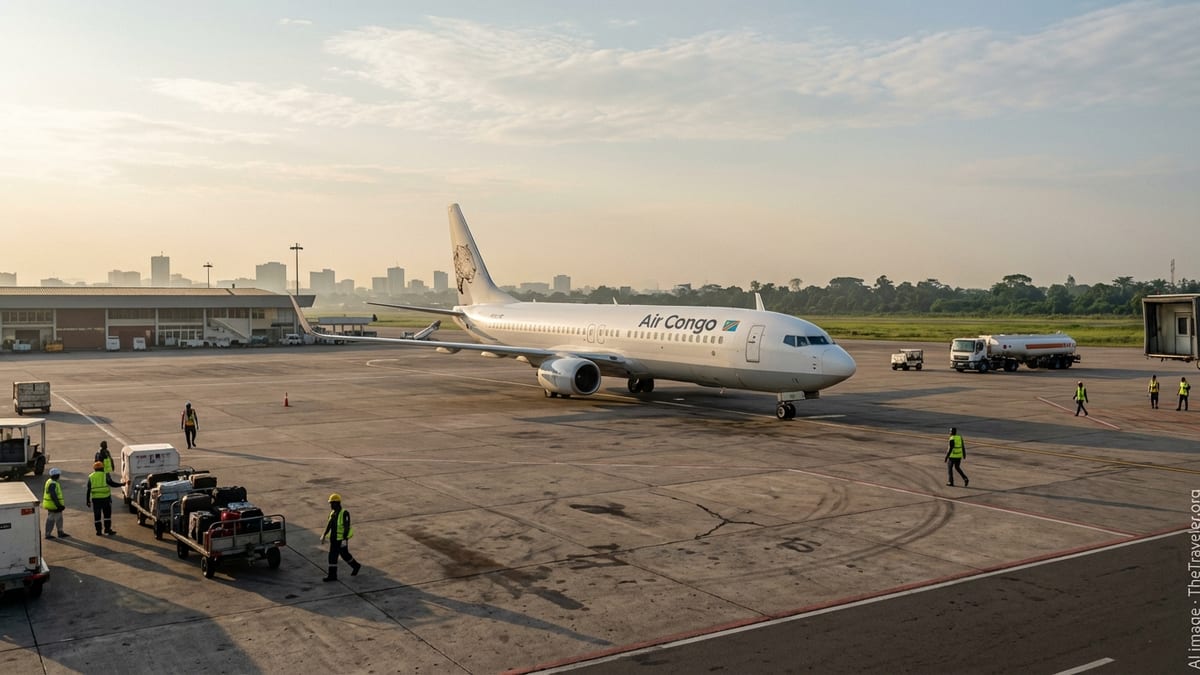
Route returns to Royal Air Maroc’s network after long hiatus
According to industry schedule data and network updates, Royal Air Maroc plans to resume its Casablanca–Pointe-Noire service at the start of the Northern Hemisphere winter 2026/27 season. Operational information currently indicates two weekly flights from 25 October 2026, using Boeing 737 MAX 8 aircraft on the roughly six-hour-forty-minute sector between Mohammed V International Airport and Pointe-Noire Airport.
Specialist route trackers note that the Congolese coastal city disappeared from the carrier’s timetable several years ago, with the last regular services ending in early 2019 after an earlier launch in the previous decade. The forthcoming restart effectively brings Royal Air Maroc back to the Republic of the Congo’s main economic hub after an absence of around seven years.
Flight-planning platforms show the revived route operating as a nonstop link, positioning Casablanca once again as an intermediate hub between West and Central Africa on one side and Europe and North America on the other. The new schedule is being introduced alongside a wider 2026 capacity build-up that includes long-haul expansion and additional African frequencies.
The move follows a broader strategy in which Royal Air Maroc is rebuilding and extending its network after the pandemic years, with an emphasis on Africa as a core market. Publicly available corporate material and aviation association briefings describe Pointe-Noire as one of several routes being added or restored as part of this multi-year growth plan.
Strengthening Morocco–Central Africa connectivity
The reinstated Casablanca–Pointe-Noire flights are expected to tighten air links between Morocco and Central Africa, where direct options have historically been limited. Casablanca already functions as a key transfer point for passengers from West and North Africa, and the return of Pointe-Noire adds another spoke into Central Africa’s energy, mining and logistics corridor.
Airline network maps list Pointe-Noire among Royal Air Maroc’s African destinations, alongside cities such as Douala, Brazzaville and Cotonou, reflecting a strategy of stitching together major business and diaspora markets on the continent. With the new schedule, travelers from the Republic of the Congo gain one-stop access via Casablanca to a wide range of European, North American and Middle Eastern cities served by the Moroccan flag carrier and its partners.
From Morocco’s perspective, the restored link reinforces the country’s role as an aviation gateway between Africa and the wider world. Casablanca’s Mohammed V International Airport has been steadily growing its reach, and the return of Pointe-Noire contributes to positioning the hub as a competitive alternative to West African and Gulf-based connecting points for traffic to and from Central Africa.
Regional air travel observers suggest that these additional connections may also support business flows tied to energy, construction and services sectors active in both Morocco and the Republic of the Congo. Improved connectivity can lower travel times and reduce the need for circuitous routings through European hubs, potentially improving the competitiveness of regional operators.
Tourism and diaspora markets set to benefit
While Pointe-Noire is primarily known as an energy and port city, tourism stakeholders see potential benefits from more regular and reliable air links. The Republic of the Congo has been seeking to diversify its economy and promote eco-tourism based on its forests, national parks and Atlantic coastline. Easier access via Casablanca could help international tour operators package Central African itineraries that connect through Morocco.
Travel industry commentary indicates that Royal Air Maroc’s broader African network is frequently used by diaspora travelers visiting family or combining trips between multiple African countries and Europe or North America. The resumption of Pointe-Noire services gives Congolese communities abroad another one-stop option, particularly from major European cities and, increasingly, from North American gateways that Royal Air Maroc has been adding or upgrading.
Moroccan tourism bodies and airlines have also been promoting combined city-break and onward-journey products, in which travelers stop in Casablanca or other Moroccan destinations before continuing to sub-Saharan Africa. The reinstated route could support such stopover programs by adding an additional Central African destination to the map, potentially lengthening stays in Morocco and increasing visitor spending.
For Pointe-Noire itself, additional long-haul connectivity via Casablanca may make the city more visible to international leisure travelers seeking off-the-beaten-path coastal experiences in Central Africa. Although the market is likely to remain niche, even modest increases in high-yield tourism can bring incremental revenue to hotels, guides and local service providers.
Part of a broader 2026 network expansion
The return of Pointe-Noire is one element in a wider 2026 expansion by Royal Air Maroc, described in aviation association briefings and trade press coverage as a scale-up of the carrier’s long-term development plan. Other initiatives for the 2026 period include new long-haul routes and additional capacity on select African and European sectors, aimed at reinforcing Casablanca’s role as a connecting hub.
Publicly available statements from the airline and government officials in recent years have outlined an ambition to more than double Royal Air Maroc’s fleet over the next decade, with Africa identified as a priority growth region. The resumption of a specialized Central African market such as Pointe-Noire fits within that framework of deepening continental coverage rather than focusing solely on larger capitals.
Aviation analysts note that successfully managing such expansion will require careful attention to fleet deployment, schedule robustness and service reliability, particularly given the operational challenges associated with smaller but strategically important routes. The choice of the 737 MAX 8 for Casablanca–Pointe-Noire suggests an attempt to balance capacity and range while limiting unit costs on a long narrow-body sector.
As airlines across Africa compete to capture connecting traffic and support national tourism strategies, the restoration of links like Casablanca–Pointe-Noire highlights how individual route decisions can have outsized significance for regional connectivity. Royal Air Maroc’s move indicates confidence that demand between Morocco, the Republic of the Congo and onward markets is strong enough to sustain the service after its seven-year pause.
Outlook for regional air links and passenger demand
Looking ahead to the winter 2026/27 launch, booking patterns and forward demand will determine how quickly the Casablanca–Pointe-Noire route can mature. Travel-data providers typically track load factors and fare levels in the first seasons of a restored service to gauge whether additional frequencies or seasonal adjustments are warranted.
Observers point out that macroeconomic conditions in Central Africa, commodity prices and infrastructure investment in the Republic of the Congo could all shape underlying demand. At the same time, factors such as evolving visa policies, marketing efforts by tourism boards and the performance of connecting routes through Casablanca may influence how attractive Royal Air Maroc’s network appears to both leisure and corporate travelers.
If the relaunch proves successful, it could encourage further Morocco–Central Africa developments, including deeper cooperation between Moroccan travel companies and Congolese partners. Conversely, persistent volatility in regional markets could test the airline’s commitment to smaller destinations as it pursues ambitious global growth targets.
For now, the scheduled return of Royal Air Maroc to Pointe-Noire marks a symbolic and practical step in reweaving air links within Africa. With new flights set to depart from late October 2026, passengers, businesses and tourism operators across both countries will be watching closely to see how the revived route reshapes travel patterns between Morocco, Central Africa and beyond.