


More news on this day
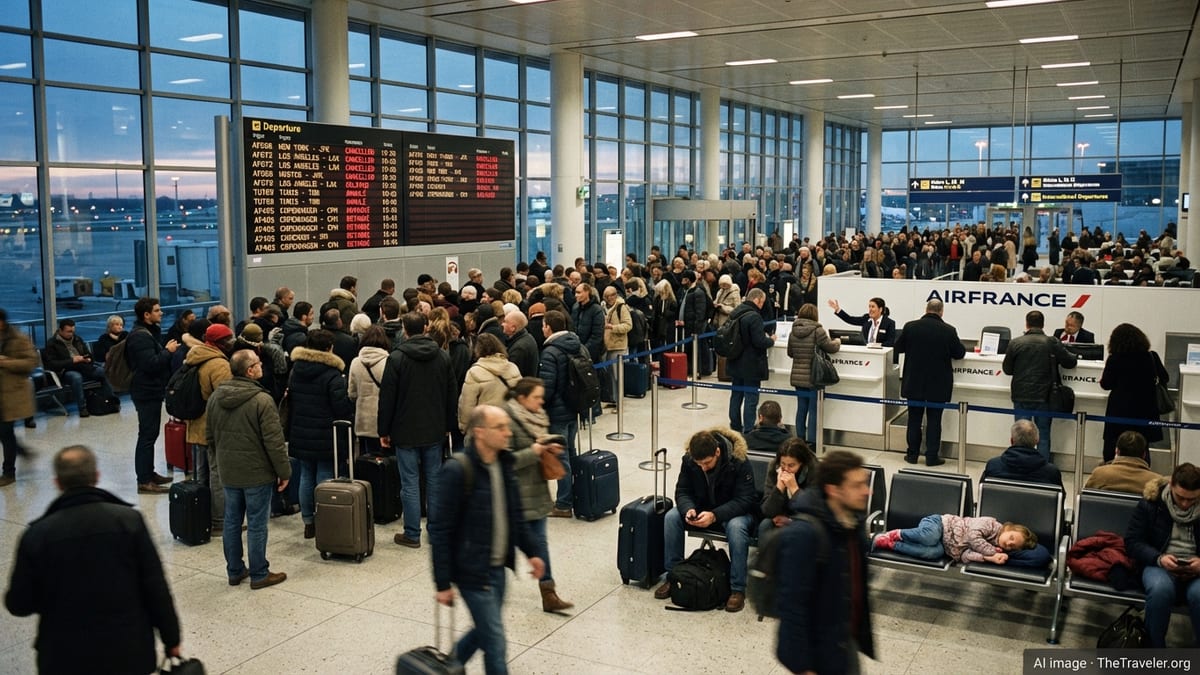
Passengers across Europe are facing a fresh wave of disruption as cancellations and delays involving carriers such as Ryanair, British Airways, Iberia, Swiss and Air France ripple through airports in the United Kingdom, Spain, France, Belgium, Italy and beyond.
Get the latest news straight to your inbox!
Disruptions Mount From Brussels to Rome
Reports from aviation trackers and airport updates indicate that at least 36 flights operated by major European carriers have been cancelled and a further three dozen delayed, leaving passengers stranded in key hubs including Brussels, London, Madrid, Paris and Rome. The latest problems come during an already fragile period for the region’s aviation network, with industrial action, fuel-related capacity cuts and isolated technical incidents converging into a broader pattern of disruption.
In Belgium, operations at Brussels South Charleroi Airport were halted for 12 May after a national strike left the airport without sufficient staff for safe operations. Publicly available airport information shows that all departures and arrivals at the low cost hub were scrubbed, affecting services for carriers including Ryanair and diverting additional pressure to Brussels Airport’s main facility.
Italy is also experiencing significant turbulence. A nationwide aviation strike on 11 May involving air traffic controllers, security personnel and ground staff led to hundreds of cancellations and reroutings, with flag carrier ITA Airways forced to ground a large share of its schedule and foreign airlines adjusting routings through Italian airspace. The knock on effects are being felt in Rome and Milan and on connecting services across the continent.
These localized shocks feed into wider scheduling fragility as carriers try to protect their summer timetables. Recent capacity reductions at large airline groups, introduced in response to jet fuel constraints and cost pressures, have reduced the number of spare aircraft and seats available to absorb disruptions, making each cancellation or technical issue more likely to strand travelers.
Ryanair and Low Cost Networks Under Pressure
Ryanair, which operates one of Europe’s densest short haul networks, has been particularly exposed to the cascading effect of strikes and airspace constraints. Recent data collated by passenger rights platforms lists multiple cancellations and multi hour delays on routes linking London, Rome and other major cities, often tied to industrial action or congestion at busy hubs.
Coverage from European media also highlights isolated operational incidents adding to the carrier’s backlog. In one case this week over the English Channel, a Ryanair service returning to its UK base after a declared in flight issue disrupted onward rotations, reducing the number of aircraft available for subsequent legs between the United Kingdom and Spain. That kind of single aircraft problem can affect several flights in one day when schedules are tightly built.
Strikes in Belgium and Italy are amplifying the impact. Travellers on Ryanair services from Brussels and Charleroi to destinations such as Madrid and Barcelona face last minute cancellations as airports scale back or suspend operations on designated strike days. Similar patterns emerge on Italian routes, where rolling work stoppages among air traffic and ground staff force low cost carriers to trim frequencies or consolidate services at short notice.
For passengers, the result is extended waits for rebooking, limited same day alternatives and, in some cases, the prospect of being stranded for several days in cities like Brussels or Rome when subsequent flights are already heavily booked with summer traffic.
Legacy Carriers Adjust Schedules and Face Knock On Delays
Legacy airlines are not immune to the disruption. British Airways has been managing sporadic cancellations on long haul and European sectors, with recent weeks bringing isolated long haul cancellations out of London that required complex rebooking through alliance partners. Passengers bound for Mediterranean destinations such as Rome have reported being reprotected on different routings or alternative carriers when non stop services were withdrawn.
Air France and Swiss have simultaneously been grappling with broader network constraints. Published company and aviation industry updates show that both carriers have been rebalancing their schedules for the summer period, in part to accommodate route suspensions to the Middle East and to adapt to capacity decisions by their parent groups. These network adjustments, while planned, leave fewer spare aircraft and crew to cover sudden issues on intra European routes between Paris, Brussels, Zurich, London and other hubs.
At Brussels Airport, recent technical incidents have also demonstrated how quickly disruption can escalate. Last month a Swiss service from London to Zurich diverted to Brussels after smoke was detected in the cabin, prompting an emergency landing and subsequent aircraft downtime. While the flight landed safely and passengers disembarked, the unplanned stop added stress to an already busy airport environment and required knock on changes to the carrier’s schedule.
In Paris and Madrid, congestion management and crew availability challenges are contributing to growing numbers of delayed departures, even when flights are not cancelled outright. This pattern particularly affects evening waves of short haul services, where an earlier delay on one leg can quickly translate into missed connections and overnight stays for passengers.
Fuel Constraints and Structural Capacity Cuts
Beyond immediate operational issues, structural capacity cuts are shaping the experience for travelers this spring and summer. Lufthansa Group, which includes Swiss, Brussels Airlines and ITA Airways, recently announced plans to cancel tens of thousands of largely short haul flights between May and October as part of a broader effort to conserve jet fuel and stabilize operations. Public statements from the group indicate that around 5 percent of its summer program will be withdrawn.
Although these cancellations are primarily scheduled well in advance, they reduce the pool of backup options available to stranded passengers across Europe. When airlines like Ryanair, British Airways, Iberia or Air France cancel services at short notice, rebooking is increasingly constrained by the fact that many competitors have already pared their own timetables. Flights that do operate from hubs such as Frankfurt, Paris and Zurich are running with high load factors, leaving fewer empty seats to accommodate disrupted travellers from Brussels, London or Madrid.
Fuel constraints are also influencing load planning and aircraft utilization. Industry analysis suggests that airlines are prioritizing routes with strong demand or higher yields, sometimes at the expense of thinner point to point services that previously offered travellers more flexibility. When a disruption hits, these thinner routes are among the first to be trimmed, which helps explain why some passengers now face gaps of several days before the next available flight.
The cumulative effect is a more brittle network in which routine weather events, air traffic restrictions or technical problems produce more severe consequences for passengers than in previous seasons.
Passenger Rights and Practical Steps for Travellers
The current wave of cancellations and delays is drawing renewed attention to passenger protections under European and United Kingdom regulations. Publicly available guidance on EU261 and UK261 frameworks states that travellers on qualifying flights may be entitled to refunds or compensation when flights are cancelled or significantly delayed, except under certain extraordinary circumstances such as third party strikes or severe weather.
Consumer advocates note that industrial action by airport workers or air traffic controllers is often treated differently from strikes by airline staff themselves, which can limit compensation in some scenarios while still obliging airlines to offer rebooking or refunds. Passengers affected by the recent disruptions in Belgium and Italy are being encouraged through public advisories to retain boarding passes, written delay notices and receipts for hotels or meals to support any subsequent claims.
Travel management firms and rights organisations also emphasize the importance of proactive planning. Recommendations in recent published guidance include checking flight status repeatedly in the 48 hours before departure, registering for airline app notifications and considering more flexible itineraries or rail alternatives on routes where strikes or capacity reductions are widely reported.
For those already stranded in hubs such as London, Paris, Madrid, Brussels or Rome, practical steps include seeking rerouting through secondary hubs, asking about interline alternatives on partner airlines where applicable and monitoring same day departures for last minute seat releases. With schedules tight and summer demand robust, experts suggest that early action can make a critical difference in securing scarce seats when cancellations cascade across multiple carriers.