


More news on this day
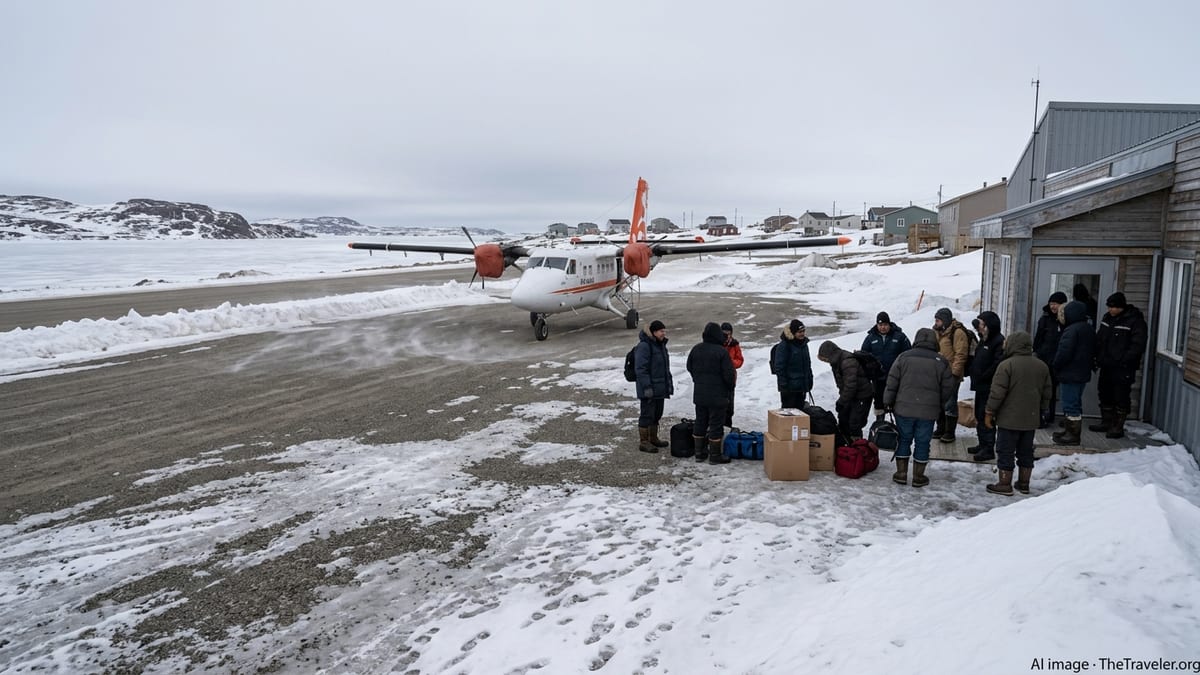
Repeated disruptions on Air Inuit services have triggered severe travel chaos in Kangirsuk, temporarily cutting the Nunavik community off from key links to Montreal and Quebec City and highlighting the fragility of northern air connectivity.
Get the latest news straight to your inbox!
Six Disruptions Fracture a Critical Air Lifeline
According to publicly available flight-tracking data and schedule advisories, at least six Air Inuit flights touching Kangirsuk and its southern connections have been disrupted in recent days, producing a cascading effect on travel and logistics across Nunavik. While the precise mix of cancellations and schedule removals varies by route, the net result has been a near shutdown of Kangirsuk’s access to southern Quebec.
Air Inuit operates Kangirsuk Airport as part of a thin but vital network of regional services that connect small Arctic communities to Kuujjuaq, Montreal and Quebec City. Even minor alterations to those schedules can leave residents with few alternatives, as there are no roads linking Kangirsuk to the rest of the provincial network and maritime options are seasonal.
Reports indicate that the disrupted services include a combination of Kangirsuk shuttle legs and long-haul segments that normally carry passengers and cargo onward to Montreal and Quebec City. With the carrier already adjusting its regular timetable this spring, the additional wave of operational disruptions has intensified uncertainty for travelers who depend on predictable links for medical appointments, work, education and family travel.
Travel industry data providers show that some Air Inuit flights previously listed as operating between Nunavik, Montreal and Quebec City have either been removed from the live schedule or marked as not operating on their usual days, contributing to the perception of a sudden and far-reaching interruption in service.
Community Impact in Remote Nunavik
Kangirsuk, a community of several hundred residents on Quebec’s Ungava coast, relies almost entirely on air transport for year-round access to health care, food, mail and basic supplies. When multiple flights are disrupted in a short period, even for a day or two, essential services can quickly feel the strain.
Local travelers posting on social platforms and travel forums describe difficulty rebooking seats, extended layovers in Kuujjuaq and uncertainty over when reliable southbound connections will resume. Families with medical appointments in Montreal and Quebec City, as well as students and workers commuting south, appear to be among the most acutely affected.
Because freight and passenger operations are closely intertwined in northern aviation, the same aircraft that carry residents south often transport groceries, medicine and time sensitive cargo north. When those rotations are interrupted, shelves in small community stores can thin and deliveries of specialized medical supplies may be delayed.
Publicly available weather data for Kangirsuk shows challenging but not unprecedented Arctic conditions, and there are no broad provincial weather alerts currently in place for Montreal or Quebec City that would explain a complete standstill. The pattern of disruptions instead appears tied to operational and scheduling constraints within a tightly stretched regional fleet.
Ripple Effects on Montreal and Quebec City Links
The severing of Kangirsuk’s effective link to Montreal and Quebec City underlines how dependent Nunavik communities are on a small number of daily flights that feed into major hubs. Air Inuit’s network is structured so that local shuttle segments, such as Kangirsuk to Kuujjuaq, connect into southbound services to Montreal’s main international airport and, on some days, to Quebec City.
Recent schedule bulletins from the airline show broader adjustments to routes along the Ungava Coast and Hudson Bay, including revised departure times and altered flight numbers for Montreal and Quebec City bound services. Analysts note that while such changes are often framed as routine optimization, they can leave very little slack in the system when aircraft or crew availability becomes constrained.
In practice, this means that when a handful of flights are disrupted on consecutive days, the practical outcome for an outlying community can be near isolation from the provincial south. Travelers based in Montreal and Quebec City trying to reach Kangirsuk have reported needing to postpone or cancel trips as multi segment itineraries involving Nunavik stopovers no longer line up.
Travel data from third party tracking platforms suggests that some Montreal and Quebec City rotations that typically connect with Nunavik flights have shown gaps or irregular operation during the current period, reinforcing the sense of a fragmented corridor between northern communities and urban centers.
Operational Strain Across the Northern Network
Air Inuit has been engaged in a series of schedule updates along its northern network this spring, reflecting seasonal adjustments and attempts to better coordinate flights serving multiple small communities on a single run. Industry observers say these changes can improve overall efficiency but also heighten vulnerability when disruptions occur.
Regional airlines in remote areas often operate small fleets on tight cycles, with aircraft running several sectors per day over gravel and short runways. Any one disruption, whether for maintenance, crew duty time, or local conditions, can reverberate along several legs, including Kangirsuk segments that feed southbound flights.
In addition, aviation across Canada has been grappling with broader cost pressures and staffing challenges. Other carriers have recently suspended or reduced regional routes citing jet fuel prices and profitability concerns. Although Air Inuit has not linked its Kangirsuk disruptions to such factors in publicly accessible material, analysts point out that northern operations are especially sensitive to changes in costs and capacity.
For travelers, the effect of these operational strains is experienced in missed connections, short notice schedule changes and, in the present case, a cluster of six disruptions that collectively feel like a shutdown, even if the airline technically maintains service on paper.
Calls for More Resilient Northern Connectivity
The recent turmoil has renewed debate over the resilience of northern air links and the degree to which essential services in isolated communities should rely on a single mainline carrier and a small set of routes. Policy commentators and community advocates have long argued that regions such as Nunavik require additional safeguards, including contingency capacity, infrastructure upgrades and clearer consumer protections tailored to remote travelers.
Some transportation analysts suggest that provincial and federal programs supporting northern aviation could be reassessed to prioritize redundancy on key corridors connecting communities like Kangirsuk to Montreal and Quebec City. Proposals in public discussion include incentives for backup charter capacity, enhanced support for interline arrangements, and improved communication tools for passengers when cascading disruptions occur.
Consumer groups note that, while national and international passenger rights frameworks offer compensation and rebooking rights in certain circumstances, their practical impact can be limited in remote areas where there is often no alternative flight on the same day or even within several days. For Kangirsuk residents, the priority is less about compensation and more about timely restoration of reliable service.
As Air Inuit works through the current wave of flight disruptions, the experience in Kangirsuk is likely to feed into a wider conversation about how Canada’s aviation system can better insulate its most isolated communities from the consequences of even a handful of schedule changes on the vital routes that link them to Montreal, Quebec City and the rest of the country.