


More news on this day
British holidaymakers heading to Europe are being urged to change how they plan and navigate their journeys, as new post-Brexit border checks, staffing pressures and volatile summer weather combine to create long queues and flight delays at major airports across the continent.
Get the latest news straight to your inbox!
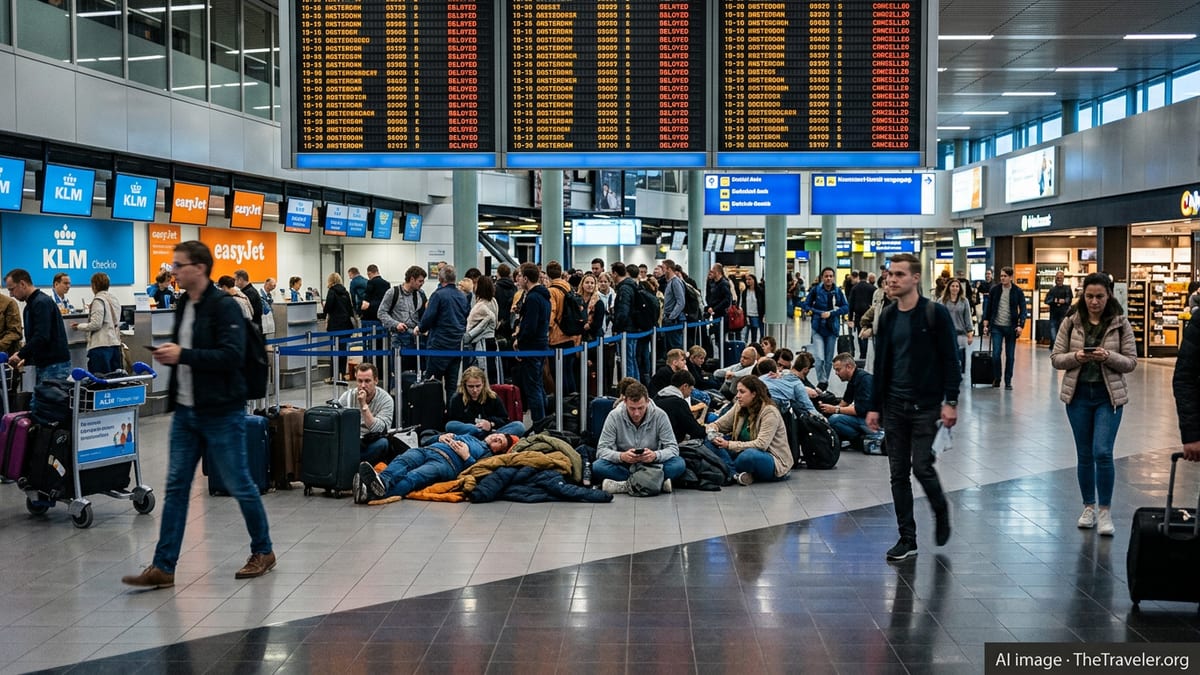
New EU border rules reshape the airport experience
British travellers entering the Schengen area now face stricter digital border procedures under the European Union’s Entry/Exit System, which registers passport details and biometric data for most non-EU visitors. Publicly available information shows that the full rollout of the system in recent months has lengthened processing times at some airports during peak hours, particularly where infrastructure and staffing have struggled to keep pace with demand.
Media coverage from across Europe indicates that airports in Spain, Italy, Germany and France have experienced bottlenecks at manual passport booths when EES equipment or software has been overwhelmed. Reports describe queues stretching for several hours in extreme cases, with late-arriving passengers sometimes unable to reach the gate before boarding closes. Travel industry commentary stresses that these problems are not universal but tend to flare when several wide-body aircraft land in short succession or when staff are redeployed to deal with other disruptions.
Some countries have experimented with temporary workarounds. Coverage from Greece, for example, suggests that local authorities have relaxed or paused EES checks for certain nationalities at busy island airports in order to keep passenger flows moving during the early summer season. However, the European Commission has reiterated that the new system remains a legal requirement, and operators in Portugal and Italy have publicly indicated they will continue to apply biometric procedures for British visitors.
Travel analysts caution that while the technology should eventually shorten queues by automating routine checks, many airports are still in a transition phase. For UK passengers, the practical effect this summer is that border control can be significantly less predictable than in the past, making traditional cut-off times for check-in and security less reliable.
Timing tactics: when to arrive and how to connect
One of the clearest pieces of guidance emerging from airlines and consumer groups is to build in more time than usual at airports, especially when flying home from popular European resorts. Several low-cost carriers and tour operators now advise British passengers to arrive at least three hours before departure, with some airport authorities on the continent recommending up to four hours at peak holiday weekends.
Experts point out a practical complication: airline bag-drop and check-in desks often open only two or three hours before a flight leaves. Passengers who arrive significantly earlier may still end up queuing in the public hall, then having to re-queue for security and border checks once desks open. Travel advisers therefore suggest checking in online whenever possible, travelling with cabin baggage only on short breaks, and closely monitoring the opening times for bag-drop counters listed in airline communications.
Industry specialists are also warning British travellers to reconsider tight self-booked connections through major European hubs. Reports from airports including Frankfurt, Amsterdam and Barcelona highlight cases where queues at non-EU passport control have wiped out the typical two-hour buffer that many passengers once considered safe. Travel planners now generally recommend allowing a significantly longer layover for any itinerary that involves crossing an external Schengen border mid-journey, or using through-tickets from a single airline so that missed connections are automatically reprotected.
For short-haul flights back to the UK, passenger rights groups say that those with onward trains or ferries should consider adding an extra hour or two at the end of their journey, reflecting the knock-on effect that even small morning delays can have on the rest of the day’s schedule across Europe’s congested airspace.
Choosing airports and flights to cut queue risk
Travel experts note that not all European airports are experiencing the same level of disruption. Larger hubs handling multiple long-haul arrivals in concentrated waves tend to see more severe pressure on non-EU passport queues, while some mid-sized regional airports have adapted more quickly by adding extra staff or dedicating more booths to British and other third-country nationals.
Specialist travel press coverage indicates that UK holidaymakers bound for Spanish islands, the Greek archipelago or Italy’s coastal resorts often face the most variable conditions, since local airports must balance seasonal peaks with limited terminal capacity. By contrast, some major city airports in Northern and Central Europe have reported smoother operations after initial glitches, thanks to more extensive EES investment and longer-standing experience managing high volumes of transfer traffic.
Analysts suggest that British travellers who have flexibility can reduce risk by choosing off-peak flight times and less congested gateways. Early-morning departures from the UK can still be affected by overnight weather or air-traffic-control restrictions, but they are more likely to benefit from on-time first rotations. Midweek travel, particularly on Tuesdays and Wednesdays, is also associated with slightly lower passenger loads on many leisure routes, which can ease pressure on security lanes and passport control.
Where itineraries allow, consumer advocates recommend favouring direct flights over multi-stop journeys, even if the headline fare is marginally higher. The reasoning is that each additional airport introduces a new queue, a new security check and a new opportunity for disruption, all of which are magnified under the new border regime.
Practical steps to speed the journey
Beyond timing and routing decisions, travel advisers are emphasising a series of small, practical measures that can collectively shave minutes off each stage of the airport process. One basic rule is to ensure that passports meet both UK and EU validity requirements well ahead of travel, avoiding last-minute refusals at check-in. Guidance from European tourism bodies underlines that many Schengen countries operate strict rules on minimum validity and maximum time since issue for third-country passports.
At security, passengers who pre-pack liquids in regulation-sized containers, keep electronics easily accessible and minimise metal items in clothing tend to move through checkpoints faster. Some airports now promote dedicated fast-track lanes that can be pre-booked for a fee; travel commentators say these can offer value at the busiest holiday gateways, though the benefit varies depending on local staffing levels and whether border control remains a bottleneck further along the route.
Once abroad, British travellers are advised to build their return journey around the most accurate, real-time information available. That includes monitoring airline apps for gate changes and boarding-time adjustments, checking airport operator updates on queue lengths where offered, and heeding any advisories about earlier arrival times on specific days following bad weather or industrial action.
Consumer organisations also recommend carrying essentials such as medication, a change of clothes and key documents in hand luggage, in case delays spill over into overnight stays or missed connections. While such preparations cannot eliminate queues created by systemic factors like new border technology or air-traffic constraints, they can make unexpected waits less stressful and reduce the impact of missed or heavily delayed flights.
What this summer means for future travel
Industry observers describe this summer as a test of how well airports, airlines and border agencies can adapt to a more complex operating environment following Brexit and the introduction of new security systems. Early signs from some hubs suggest that processes are gradually improving as staff become more familiar with EES equipment and passenger flows stabilise, but isolated incidents of extreme queues and missed departures continue to surface in public reports.
For British holidaymakers, the experience is prompting a reassessment of what constitutes a “normal” airport day in Europe. Travel forums and consumer columns reflect a growing acceptance that queues at peak times may remain longer than in the pre-pandemic era, with more travellers now treating generous buffer times as a standard part of trip planning rather than an optional extra.
Analysts expect that continued investment in automated gates, expanded border facilities and better passenger-information tools will eventually reduce the risk of headline-grabbing gridlock. In the meantime, experts say that those who understand the new rules, arrive earlier, choose routes carefully and stay flexible stand the best chance of turning a potential summer ordeal into a relatively smooth start and finish to their European break.