


More news on this day
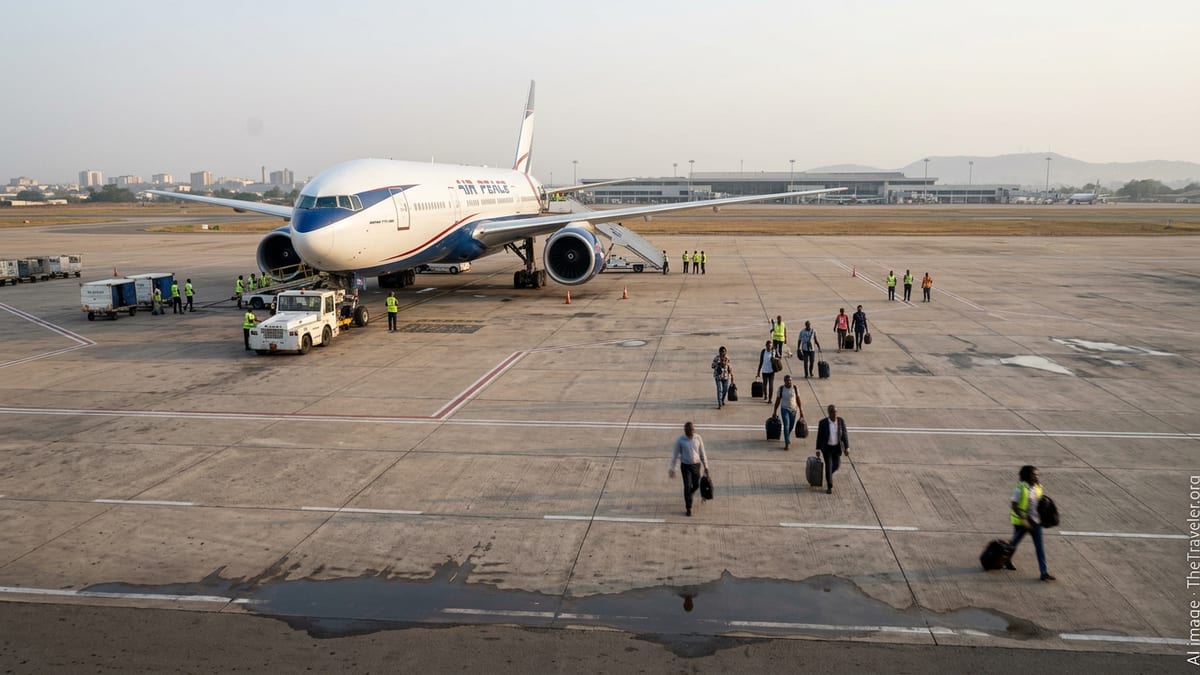
Air Peace has pushed back against a widely circulated Nigeria Civil Aviation Authority (NCAA) disruption scorecard for August 2026, describing the regulator’s published delay figures as “inaccurate” and warning that how the data is presented can shape traveler perceptions about what actually caused operational setbacks.
Get the latest news straight to your inbox!
What the NCAA’s August disruption summary shows
Published coverage indicates the NCAA released a month-by-month operational snapshot for August 2026 showing the scale of domestic delays and cancellations across Nigeria’s scheduled airlines. Multiple outlets reported the regulator’s headline totals at 7,961 domestic flights, with 4,765 recorded as delayed and 36 as cancelled during the month.
In those same reports, Air Peace was shown as the highest-volume operator in August, with 1,864 flights recorded and 1,330 delays, a delay ratio that was widely summarized as roughly seven out of every 10 flights. The table format and social-media sharing of the figures helped turn the dataset into a de facto ranking for travelers trying to gauge reliability before booking tight itineraries.
The NCAA also published the disruption summary through its official communications channels, and the agency’s media page listed the August 2026 disruption summary as a downloadable attachment. However, the underlying graphic attachment was not reliably retrievable at the time of writing due to repeated timeouts, limiting the ability to independently verify every row of the table directly from the NCAA’s own hosted file.
Air Peace’s objection: “inaccurate” flight volume and cause attribution
Air Peace’s central claim, according to published reporting, is that the NCAA’s August dataset undercounted the airline’s total flying for the month, which would inflate the apparent share of delayed flights when readers calculate delay rates. One frequently cited comparison in coverage is Air Peace’s stated figure of 2,564 flights operated in August versus 1,864 listed in the NCAA’s summary.
Beyond the flight-count dispute, Air Peace’s response also focuses on interpretation. Reports describe the airline’s view that a month-level disruption table can be mistakenly read as a pure measure of airline-responsible performance even when delays may have multiple contributing causes, including factors outside an operator’s control.
Some coverage also frames the disagreement as a broader data-quality issue: if the public is using simplified scorecards to make travel decisions, the metrics and definitions need to be clear enough to separate schedule density, airport constraints, weather, and air-traffic management from disruptions rooted in airline resourcing, aircraft availability, or turnaround planning.
Why disruption data matters to travelers booking within Nigeria
For travelers, especially those connecting between Nigeria’s largest domestic markets or coordinating same-day meetings, reported delay rates can influence everything from check-in timing to whether to book the first flight of the day. In Nigeria, where air travel often substitutes for long overland journeys, schedule reliability affects not only convenience but also onward connections, hotel check-in plans, and event attendance.
Even without a universal global standard for what counts as a “delay” in public-facing summaries, consumer-rights frameworks generally turn on concrete thresholds such as the expected length of the delay, the time of day, and whether the carrier provides timely information and assistance. Nigeria’s aviation regulator maintains a Consumer Protection Department portal for passenger complaints and publishes guidance on passenger entitlements tied to disruption scenarios.
The current dispute also underscores how easily a single percentage can become the dominant narrative. A high month-level delay share may reflect concentrated operational stress at key airports, disruptions cascading through tight fleet rotations, or uneven infrastructure constraints. Without additional fields such as median delay duration, percentage of flights departing within a defined window, and a standardized breakdown of delay causes, travelers may struggle to convert the headline number into practical trip-planning decisions.
What to watch next: data clarity, enforcement, and passenger remedies
Published coverage suggests the argument is not only about optics but also about how Nigeria’s aviation system communicates performance and accountability. If airlines and regulators continue to release tables that are widely shared as rankings, travelers and consumer advocates are likely to push for clearer definitions, consistent counting of scheduled versus operated flights, and explanations of methodology.
At the same time, enforcement remains part of the wider consumer-protection context. Recent reporting on NCAA actions in other cases, including sanctions tied to consumer-protection violations, has kept attention on how quickly complaints are resolved and how remedies are applied when standards are not met.
For now, the August 2026 scorecard remains a flashpoint: it is a simple snapshot that can help travelers compare disruption levels across carriers, but it is also a blunt tool. The immediate next development to monitor is whether the NCAA offers additional methodological detail or revised figures, and whether Air Peace provides verifiable operational records that reconcile the reported flight-volume gap.