


More news on this day
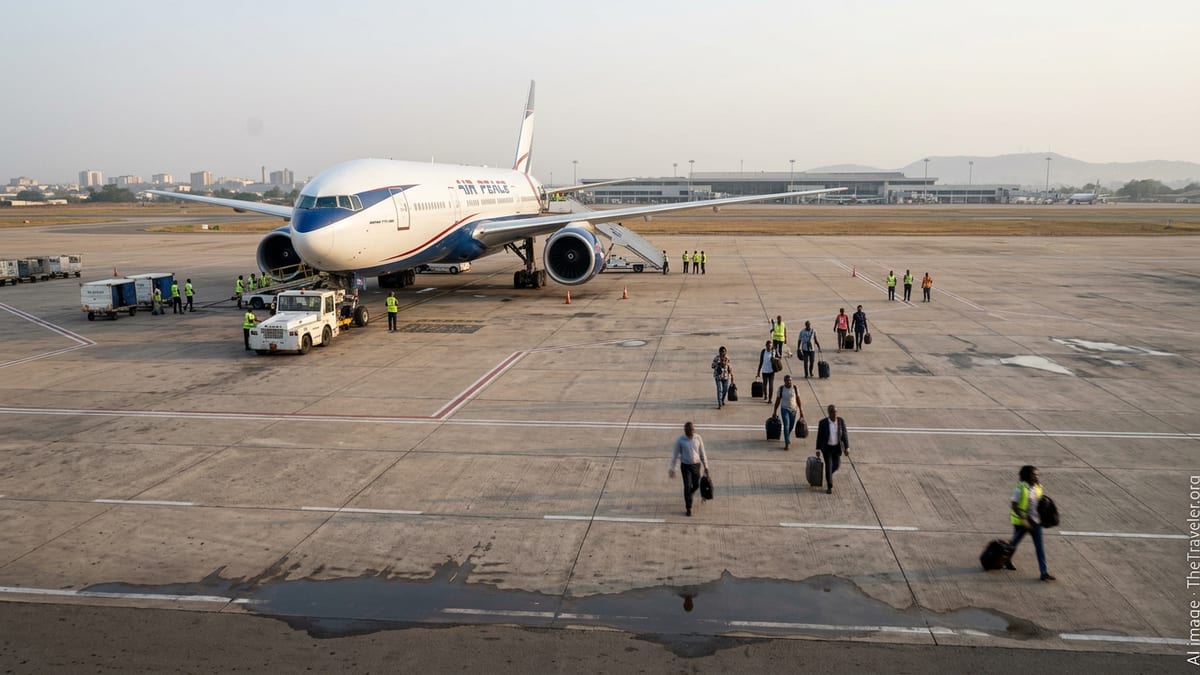
Air Peace and United Nigeria Airlines are facing renewed scrutiny over flight disruptions in Nigeria after the Nigeria Civil Aviation Authority (NCAA) published an August 2026 disruption snapshot, prompting the carriers to challenge the accuracy and interpretation of the data.
Get the latest news straight to your inbox!
What the NCAA’s August snapshot shows
Published coverage indicates the NCAA released a Summary of Domestic Airline Disruption Operations for August 2026 on September 13, 2026, presenting a market-wide count of domestic flights, delays, and cancellations for the month.
According to reporting that cited the NCAA’s published figures, 15 domestic carriers operated 7,961 flights in August 2026, with 4,765 flights delayed and 36 cancelled. That implies roughly six in 10 domestic flights were affected by delays during the month, a disruption level that can ripple across a network where many routes rely on tight aircraft rotations.
The same coverage indicates Air Peace operated the highest volume at 1,864 flights and recorded 1,330 delays, a 71.4% delay rate as presented in the NCAA summary. United Nigeria Airlines was reported as another major contributor to delays by volume, reflecting its sizable domestic schedule and the concentration of traffic on trunk routes such as Lagos to Abuja and other high-frequency city pairs.
Air Peace disputes the figures and the way delays are attributed
Air Peace has publicly challenged the disruption snapshot, arguing that the dataset understates how many flights it operated in August and therefore overstates its delay rate. A statement attributed in Nigerian media to the airline’s leadership said Air Peace operated 2,564 flights in August 2026, not the 1,864 flights shown in the NCAA report, and that omitting more than 700 flights distorts performance calculations.
Beyond the flight-count dispute, the airline’s position, as reflected in published coverage, is that the scorecard does not separate airline-caused delays from disruptions driven by factors outside a carrier’s control. In that account, Air Peace described a split between internal causes such as technical and fuel-related issues and external constraints such as airport congestion, infrastructure limitations, adverse weather and bird strikes.
One example highlighted in the same coverage was a bird-strike-related aircraft repair claim involving a specific aircraft registration and a reported repair cost estimate. Because such incident-level figures can vary by source and are not fully verifiable from the NCAA’s monthly summary alone, travelers are likely to see continued debate around how much of a disruption score should reflect airline controllables versus constraints embedded in the operating environment.
United Nigeria faces regulatory pressure to scale operations and meet refund timelines
Separate from the August scorecard debate, the NCAA has issued a directive to United Nigeria Airlines to improve operations and avoid expanding routes beyond available fleet capacity. An NCAA notice dated September 10, 2026 describes a consultative meeting held in Abuja on September 9, 2026, and frames the order around sustainability, efficiency, and compliance with passenger rights protections under Nigeria’s consumer rules.
The same NCAA notice outlines specific areas of concern, including how passengers are informed during disruptions, assistance for stranded travelers, and compliance with refund processes. The NCAA document also references Part 19 of the Nigeria Civil Aviation Regulations (Nig. CARs) 2023 as the consumer protection framework used to assess airline obligations.
In the NCAA’s account of the meeting, United Nigeria Airlines indicated it would resolve pending ticket refund cases within 14 days, a timeline presented as the official refund window. For passengers, that detail matters because disruptions often become most expensive when refunds, rebookings, and ancillary costs such as hotels and ground transport pile up.
Why the “data argument” matters to travelers
For travelers, a dispute over disruption data is not just a reputational battle. A single headline delay percentage can influence booking choices, corporate travel policies, and expectations about buffer time for connections, same-day business trips, and onward international departures.
At the same time, aggregate delay totals do not explain whether a delay was 20 minutes or five hours, nor whether it resulted in missed appointments, hotel nights, or forfeited tickets on separate itineraries. Some Nigeria-focused coverage has noted that the NCAA’s monthly disruption snapshot did not provide cause codes for individual delays, limiting how precisely travelers can interpret which airline behaviors are most responsible.
The dispute also highlights a measurement issue common in many aviation markets: whether performance reporting should be based on flights scheduled versus flights actually operated, and whether cancellations should be treated distinctly from delays. If an airline argues that the denominator is incomplete, passengers are left with a practical takeaway: treat monthly scorecards as a directional indicator, not a route-by-route reliability forecast.
Practical steps for passengers during disruption-heavy periods
In disruption-heavy months, travelers can reduce risk by building more time into itineraries, especially around high-demand corridors and airport peak periods. Nigeria’s domestic system concentrates volume through hubs such as Lagos and Abuja, where congestion and knock-on delays can quickly affect later departures.
Passengers dealing with delays or cancellations can also document timelines carefully, including the published schedule, notification time, and any rebooking or refund commitments. The NCAA operates a Consumer Protection Department portal for complaints, and the regulator’s public communications emphasize consumer protection enforcement under Part 19 of the Nig. CARs 2023.
For travelers, the broader story is that disruption reporting is becoming more visible, and enforcement posture appears more active than in prior years, even as airlines contest how performance should be calculated. Until reporting includes clearer definitions and a cause split, the most reliable way to manage uncertainty remains proactive trip planning and rapid action when schedules change.