

More news on this day
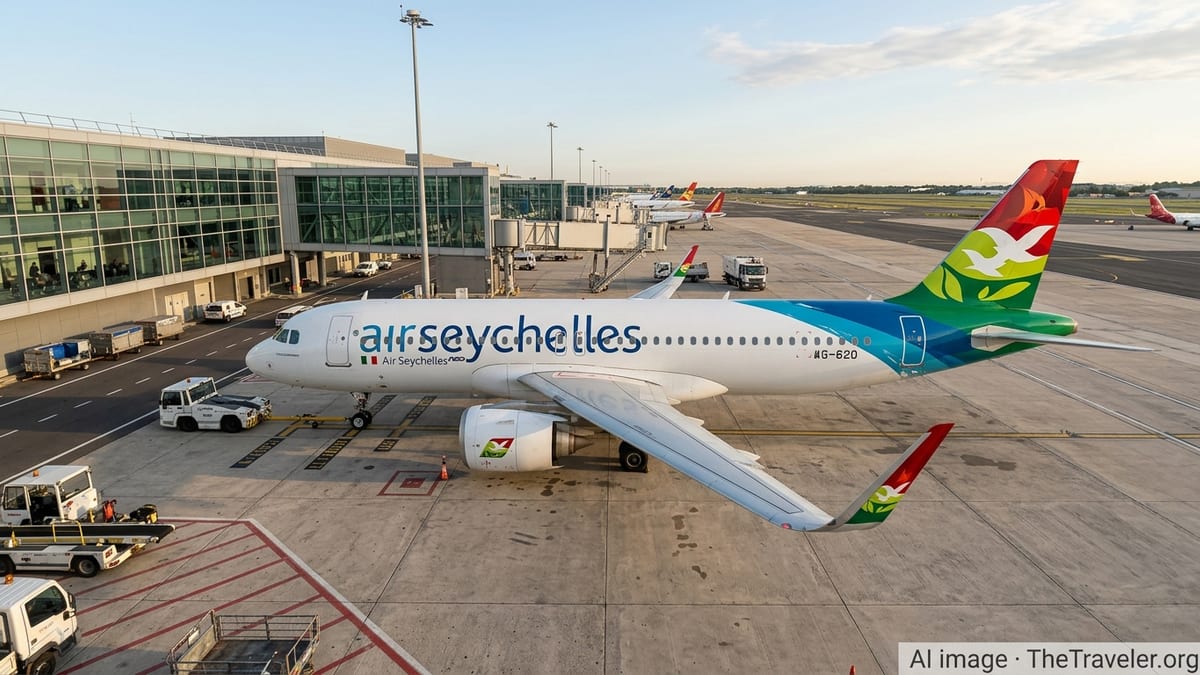
Air Seychelles is introducing a new service between Mahé and Istanbul, a move expected to bolster Seychelles’ tourism sector and widen the archipelago’s air links with key European markets.
Get the latest news straight to your inbox!
Seasonal Link Targets Peak Demand and Tourism Growth
According to recent industry coverage, the new Seychelles–Istanbul service is planned as a seasonal operation timed around peak travel demand. Reports indicate that flights are scheduled to run twice weekly from early May to late June, capturing a period when European travelers traditionally look for warm-weather island escapes. By aligning capacity with seasonal patterns, the airline aims to maximize load factors while testing longer-term appetite for direct links to Turkey.
Publicly available information shows that the route will be operated with a widebody Airbus A330-300 on a wet-lease basis from specialist carrier HiFly. The larger aircraft type allows Air Seychelles to offer additional seat capacity compared with its narrowbody fleet, positioning the route to handle both point-to-point holiday traffic and connecting passengers traveling onward into Europe.
Travel and aviation reports suggest that the launch of the Istanbul service comes at a time when Seychelles is actively safeguarding visitor arrivals amid shifting regional traffic flows. Direct capacity from a new gateway in Turkey offers an additional stream of inbound tourists, diversifying beyond traditional reliance on Gulf and European hubs.
Tourism observers note that Seychelles’ visitor economy is highly sensitive to air access, with airlift often described as the “lifeblood” of the destination. The new link from Istanbul is therefore viewed as more than a schedule adjustment; it is part of a broader strategy to maintain the islands’ competitiveness in a crowded long-haul leisure market.
Istanbul’s Strategic Role as a European Gateway
Industry analyses describe Istanbul as one of the world’s most important aviation crossroads, connecting Europe, Asia and the Middle East. For Seychelles, tapping into this hub significantly broadens its potential catchment area, particularly across Central and Eastern Europe, where interest in Indian Ocean destinations has been steadily rising.
Reports indicate that the Mahé–Istanbul flights are expected to feed into a wider European network via Turkey’s established long-haul and regional connections. This means that travelers from cities across Germany, France, Italy, Eastern Europe and the Balkans will have an additional one-stop option to reach Seychelles, often with competitive journey times compared with routings through other hubs.
Publicly available route maps show that Istanbul offers strong connectivity into secondary European cities that may not yet have seamless links to the Indian Ocean. By adding Seychelles to this web of connections, Air Seychelles is effectively bringing the archipelago closer to mid-sized and emerging outbound markets, not only the primary capitals.
Analysts suggest that, in the medium term, positioning Seychelles within Istanbul’s hub network could help smooth seasonal swings in visitor arrivals. With access to a broader mix of source markets, the destination may be better able to offset softer demand in any single region, supporting more stable year-round tourism performance.
Codeshares and Partnerships Extend the Route’s Reach
Coverage of the launch highlights that the new service is expected to be supported by a codeshare partnership with Turkish Airlines, leveraging the larger carrier’s extensive global footprint. Such cooperation typically allows passengers to book itineraries that combine sectors on both airlines under a single ticket, with coordinated schedules and through-checking of baggage.
Air Seychelles has a track record of using partnerships to extend its network, including codeshare and interline agreements with carriers in the Gulf, South Asia and Southern Africa. Industry commentators view the Istanbul development as a continuation of this strategy, using collaboration rather than rapid fleet expansion to reach new markets efficiently.
By placing its code on connecting flights beyond Istanbul, Air Seychelles can effectively “virtually” serve multiple European cities without operating its own aircraft to each destination. This asset-light approach is seen as particularly important for smaller national airlines facing high fuel costs and evolving demand patterns.
For travelers, the arrangement translates into greater choice of departure points and more seamless travel experiences. For Seychelles’ tourism sector, it means wider visibility in airline distribution systems across Europe, improving the destination’s chances of being selected by customers and travel agents planning long-haul holidays.
Supporting Seychelles’ Position as a High-Value Island Destination
Seychelles markets itself as an upmarket, sustainable island escape, and international air connectivity is central to that positioning. Data from tourism authorities and global travel research firms consistently show that convenient non-stop or one-stop access is a key factor in destination choice for long-haul leisure travelers.
The addition of Istanbul complements existing links from the Middle East, Africa and Europe, allowing Seychelles to frame itself as a well-connected yet exclusive destination. Industry reports point out that, as more premium carriers and major hubs connect into the archipelago, Seychelles gains visibility among higher-spending segments such as honeymooners, luxury travelers and small-group experiential tourists.
Observers also underline that improved air access tends to lift not only visitor numbers but also average length of stay and spending, as travelers can combine Seychelles with city breaks or multi-country itineraries. A traveler might, for example, spend several days in Istanbul before flying on to Seychelles, adding value to both tourism economies.
While Seychelles remains committed to managing visitor growth carefully to protect its natural environment, aviation planners note that targeted, well-timed capacity increases like the Istanbul route can help the islands optimize yields rather than simply pursuing volume. The route’s seasonal nature gives the airline and tourism stakeholders flexibility to adjust based on demand and sustainability considerations.
Air Seychelles’ Broader Network Expansion Strategy
The move into Istanbul is part of a wider phase of network development for Air Seychelles. In recent seasons, the airline has added or expanded services to destinations in the Middle East, Southern Africa and Europe, backed by new aircraft and operational partnerships. Trade publications depict a carrier working to balance regional connectivity for residents with long-haul access for tourists.
Recent route announcements, including additional links into Europe, indicate that Air Seychelles is increasingly focused on building a diversified portfolio of markets rather than relying on a narrow range of gateways. The Istanbul service fits into this pattern by adding a new geographic axis into the network, connecting the Indian Ocean directly with a major transcontinental hub.
Aviation analysts note that the decision to operate the route with a leased widebody offers operational flexibility. Should demand prove stronger than expected, the airline could consider extending the season or exploring similar partnerships on other long-haul sectors. Conversely, if market conditions change, the wet-lease model allows adjustments without the long-term commitments associated with owning additional aircraft.
As the new Seychelles–Istanbul flights prepare to enter operation, industry observers will be watching booking trends and load factors closely. For Air Seychelles and the wider tourism sector, strong performance on the route would reinforce the country’s strategy of using targeted air links and partnerships to secure its status as one of the Indian Ocean’s leading island destinations for European travelers.